Authentic Vyshyvanka & Ie Blouses 2026: Buyer & Styling Guide
The Enduring Legacy of Eastern European Embroidery
In 2026, the global slow-fashion movement has deeply intersected with Eastern European heritage, bringing traditional garments like the Ukrainian Vyshyvanka and the Romanian Ie to the forefront of conscious wardrobes. These are not merely blouses; they are woven manuscripts of cultural identity, regional history, and ancestral protection. As interest in authentic European folk dress surges, the market has become saturated with mass-produced, machine-embroidered imitations. For collectors, cultural enthusiasts, and modern stylists, understanding the nuances of handcrafted Slavic and Balkan textiles is essential. This comprehensive guide will help you navigate the 2026 market, authenticate genuine pieces, and style these historic garments for contemporary wear.
Decoding the Romanian Ie: Structure and Symbolism
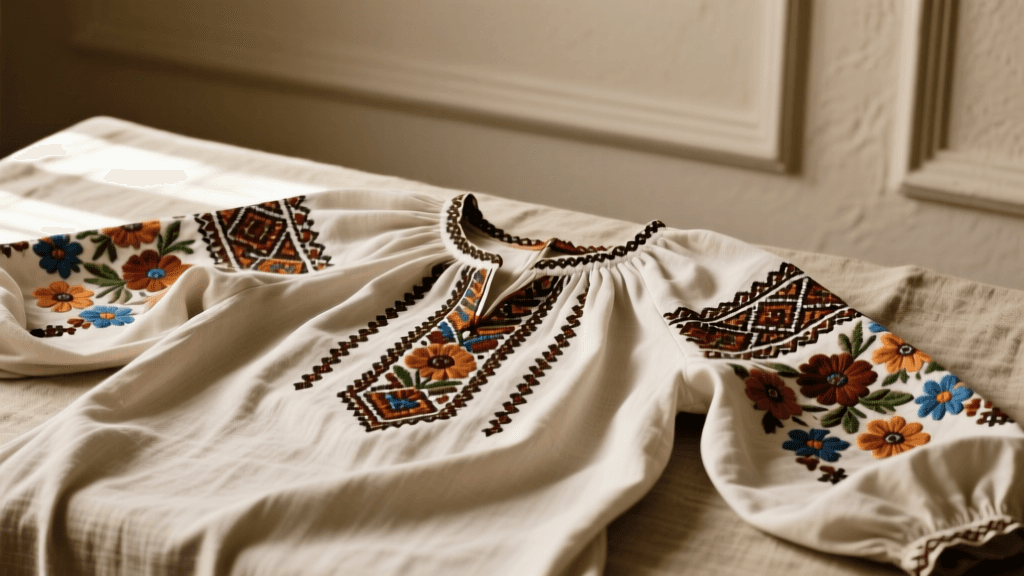
The traditional Romanian blouse, known as the Ie, is a masterpiece of structural embroidery. Recognized for its profound cultural significance, institutions like the National Museum of the Romanian Peasant have long preserved its intricate regional variations. The architecture of an authentic Ie is strictly divided into three main components, each carrying distinct symbolic weight:
- Altița (The Shoulder): This is the most complex and heavily embroidered section, located on the upper shoulder. It represents the sky and the heavens, often featuring dense geometric patterns or solar motifs.
- Increțul (The Gather): Situated just below the altița, this narrower band acts as a transitional element, symbolizing the earth and the horizon.
- Râurile (The Rivers): These are the diagonal or vertical bands of embroidery that flow down the sleeves. They represent the rivers of life, fertility, and the continuous flow of time.
In 2026, authentic artisans are reviving the use of natural dyes, such as madder root for deep reds and woad for indigo blues, returning the Ie to its pre-industrial color palette. The base fabric, traditionally hand-woven hemp or linen (pânză), is now highly sought after by sustainable fashion advocates.
The Ukrainian Vyshyvanka: Regional Masterpieces
The Vyshyvanka is far more than a national symbol; it is a diverse tapestry of regional techniques. According to archives maintained by The Ukrainian Museum, there are hundreds of distinct regional stitching styles. When sourcing a Vyshyvanka in 2026, buyers should look for specific regional hallmarks:
- Poltava White-on-White: A highly sophisticated technique relying on texture rather than color. Artisans use up to 180 different stitches to create shadow and light effects on pure white linen.
- Hutsul Geometric: Originating from the Carpathian Mountains, these blouses feature dense, vibrant cross-stitch patterns in red, black, and yellow, heavily utilizing diamond and star motifs for spiritual protection.
- Borshchiv Blackwork: A striking and somber tradition from the Ternopil region, featuring heavy black wool embroidery on white linen, historically linked to periods of mourning and resilience.
Authentic Ukrainian embroidery relies on specific counting stitches like nyz (a darning stitch that creates a reversible pattern) and zavolikannya (a running stitch that mimics woven fabric). Machine embroidery cannot replicate the reversible nature of a true nyz stitch.
2026 Buyer’s Guide: Authentic Handcrafted vs. Mass-Produced
The 2026 heritage textile market is robust, but buyers must be vigilant. Mass-market brands often use polyester threads and computerized multi-head embroidery machines to mimic folk patterns. Below is a comparative analysis to help you evaluate potential purchases.
| Feature | Authentic Handcrafted (2026 Market) | Machine-Made Imitation |
|---|---|---|
| Price Range | $250 - $800+ USD | $35 - $90 USD |
| Thread Material | Silk, wool, or hand-dyed cotton | Polyester or synthetic rayon |
| Reverse Side | Neat, nearly identical to the front (reversible stitches) | Messy, with visible jump threads and bobbin backing |
| Base Fabric | Hand-woven linen, hemp, or raw cotton | Factory-milled cotton blends or synthetic voiles |
| Production Time | 40 to 120+ hours of hand-stitching | Under 2 hours of machine programming and stitching |
7 Red Flags When Sourcing Heritage Blouses Online
When shopping on global marketplaces or boutique heritage sites, keep an eye out for these warning signs that indicate a garment is not authentically handcrafted:
- Perfect Symmetry in Complex Motifs: Human hands make microscopic variations. If a highly complex floral or geometric pattern is mathematically perfect down to the millimeter, it is likely machine-guided.
- Availability of 'S-XL' in Handmade Stock: True artisans weave and cut fabric to specific traditional measurements. A seller offering a full modern size run of 'handmade' blouses in high quantities is likely dropshipping factory goods.
- Glossy Thread Sheen: Traditional wool and cotton have a matte finish. A high, synthetic sheen indicates polyester thread.
- Lack of Regional Attribution: Authentic sellers will proudly state the specific village or region (e.g., 'Olt County' or 'Chernihiv region') the pattern originates from. Vague descriptions like 'Eastern European Style' are a red flag.
- Overlocked Seams: Traditional blouses use flat-felled seams or hand-whipped edges to prevent fraying. Modern serged (overlocked) seams indicate factory production.
- Unrealistic Pricing: In 2026, the cost of raw European linen alone has risen. A fully embroidered linen blouse selling for under $100 cannot possibly account for the artisan's labor.
- Printed 'Embroidery': Some fast-fashion brands have resorted to digitally printing embroidery patterns onto fabric. Always check the product zoom photos for actual thread texture.
Caring for Artisanal Linen and Natural Dyes
Investing in an authentic Ie or Vyshyvanka requires specialized textile care to preserve the integrity of the fibers and the natural dyes.
- Washing: Never machine wash hand-embroidered heritage pieces. Hand wash in cool water (below 30°C) using a pH-neutral, conservation-grade textile soap. Avoid harsh detergents that strip natural oils from hand-spun linen.
- Drying: Do not wring the fabric, as this breaks the delicate embroidered threads. Roll the blouse in a clean, dry towel to press out excess water, then lay it flat to dry in the shade. Direct sunlight will rapidly fade natural dyes like madder and weld.
- Ironing: Iron the garment while it is still slightly damp, always on the reverse side, using a pressing cloth to protect the three-dimensional texture of the embroidery.
- Storage: Store your blouses flat in acid-free tissue paper inside a breathable cotton bag. Avoid wire hangers, which can distort the shoulder seams and stretch the delicate altița embroidery over time.
Styling Folk Blouses for Contemporary 2026 Wardrobes
The key to styling traditional Eastern European blouses in 2026 is to treat them as luxury artisanal garments rather than theatrical costumes. The modern approach focuses on juxtaposition—pairing historic, voluminous silhouettes with sharp, contemporary tailoring.
The Elevated Everyday Look
Pair a white-on-white Poltava Vyshyvanka with high-waisted, wide-leg linen trousers in charcoal or navy. Tuck the blouse in slightly at the front to define the waist, and finish the look with minimalist leather loafers. The monochromatic embroidery adds texture without overwhelming a modern minimalist aesthetic.
Evening and Festival Styling
For summer heritage festivals or evening events, a Romanian Ie with deep red and black râuri can be layered over a sleek, black silk slip dress. Allow the embroidered sleeves to drape over the shoulders of the dress. Cinch the waist with a traditional woven sash (brâu) or a modern, structured leather belt to bridge the gap between folk tradition and high fashion.
Winter Layering
Eastern European folk dress was designed for variable climates. In colder months, layer your embroidered blouse under a structured, collarless wool blazer or a traditional sheepskin vest (cojoc). Ensure the cuffs and the collar embroidery remain visible to maintain the cultural narrative of the outfit.
Glossary of Essential Embroidery Terms
To communicate effectively with artisans and authentic dealers in 2026, familiarize yourself with these foundational terms:
- Borshchiv: A region in Ukraine famous for its heavy, dark embroidery, often utilizing black wool.
- Cross-Stitch (Punct în cruciuliță): The most common stitch in Slavic and Balkan folk art, forming X-shaped patterns on a counted-thread grid.
- Nyz: A traditional Ukrainian darning stitch executed from the back of the fabric, creating a reversible geometric pattern.
- Pânză: The Romanian term for the hand-woven cloth, typically linen or hemp, used as the canvas for embroidery.
- Rushnyk: A ritual embroidered towel in Slavic cultures that shares the exact same geometric motifs and protective symbols as the Vyshyvanka.
- Smocking (Creți): A technique used at the neckline and cuffs of the Ie to gather the fabric, creating volume and structural support for the heavy embroidery.
Conclusion
The revival of the Vyshyvanka and the Ie in 2026 represents a powerful reclamation of Eastern European identity and a triumph of sustainable, slow fashion. By learning to identify authentic hand-stitching, understanding the deep symbolism of regional motifs, and caring for these textiles properly, you do more than acquire a beautiful garment—you become a custodian of living history. Whether you are sourcing a piece for a museum-quality collection or styling it for a modern wardrobe, the intricate threads of Slavic and Balkan folk dress continue to weave a compelling narrative of resilience, artistry, and cultural pride.