Sardinian Orbace Wool Garments: 2026 Heritage Brand Guide
The Renaissance of Sardinian Heritage Textiles in 2026
Sardinia’s rugged, wind-swept landscape has historically demanded garments built for survival, warmth, and enduring resilience. Today, as the global fashion industry pivots aggressively toward hyper-local, sustainable, and slow-fashion movements, the traditional textiles of this Italian island are experiencing a profound renaissance. In 2026, discerning collectors and heritage fashion enthusiasts are looking past mainland Italian luxury houses to the ancient weaving cooperatives of Sardinia. Here, master weavers continue to utilize wooden floor looms, natural botanical dyes, and indigenous sheep breeds to create garments that are as functional as they are culturally significant.
For those seeking to invest in authentic European folk dress and heritage outerwear, understanding the nuances of Sardinian textile traditions is paramount. This guide explores the island's most iconic materials—specifically orbace wool and pibiones tapestry—and provides actionable advice on sourcing, pricing, and styling these remarkable garments in the modern wardrobe.
Orbace: Sardinia’s Legendary Water-Resistant Wool
At the heart of Sardinian pastoral dress is orbace (or orbaci), a coarse, densely woven wool fabric that has protected island shepherds from harsh Mediterranean winters for centuries. Unlike the fine merino wools favored in contemporary suiting, orbace is spun from the fleece of indigenous Sardinian sheep breeds. The yarn is thick, irregular, and exceptionally durable.
Historically, the woven orbace cloth was taken to a gualchiera (a water-powered fulling mill), where it was beaten in running water mixed with natural soaps to shrink and felt the fibers. This intense fulling process created a dense, virtually windproof and water-resistant fabric. While traditional water mills are largely historical artifacts today, modern heritage cooperatives in towns like Samugheo and Nule replicate this dense felting through specialized mechanical and hand-finishing techniques, ensuring the 2026 production of orbace maintains its legendary weather-resistant properties.
Contemporary Sardinian heritage brands are now cutting orbace into modern overcoats, capes, and structured jackets. The natural color palette of orbace—ranging from deep charcoal and rich espresso to undyed ecru—requires no chemical processing, making it a highly sought-after material in the 2026 sustainable luxury market.
The Art of Pibiones: Raised-Bump Tapestry
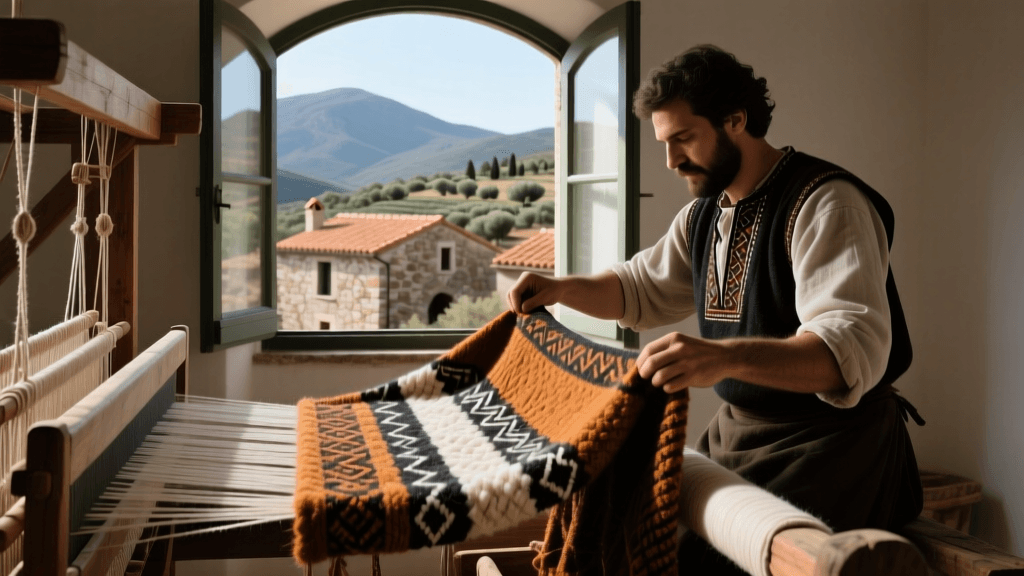
While orbace is the fabric of the fields, pibiones is the fabric of the home and the festival. Translating roughly to "grapes" in the Sardinian dialect, the pibiones technique is a highly specialized form of raised-loop weaving. To create the signature textured bumps, the weaver places a smooth rod—traditionally a branch of myrtle or hazelnut—across the warp threads. The weft yarn is wrapped around the rod, and when the rod is removed, a raised, three-dimensional loop remains on the surface of the textile.
This technique is incredibly labor-intensive. A master weaver operating a traditional wooden floor loom may produce only a few centimeters of complex pibiones fabric in a single day. In 2026, authentic hand-loomed pibiones shawls, runners, and cushion covers are considered wearable art. The geometric patterns often feature stylized flora, fauna, and ancient apotropaic symbols designed to ward off the evil eye. According to cultural preservationists at Sardegna Cultura, the transmission of this specific weaving knowledge from elder artisans to a new generation of apprentices has been a primary focus of regional cultural grants over the last five years, ensuring the survival of the craft.
The Mastruca: The Iconic Sheepskin Vest
No discussion of Sardinian folk dress is complete without the mastruca (or mastruche). This sleeveless vest, crafted from the whole, untreated pelts of Sardinian sheep or goats, is perhaps the most visually striking garment in the regional wardrobe. Historically worn by shepherds with the fleece facing inward for warmth or outward to shed rain, the mastruca is a symbol of pastoral pride.
In the 2026 fashion landscape, heritage designers have adapted the mastruca into a statement piece for high-end winter layering. Modern iterations often feature tailored shoulders and silk-lined interiors, bridging the gap between rustic folk costume and avant-garde outerwear. Sourcing an authentic mastruca requires purchasing from specialized leather and pelt artisans in the Barbagia region, as mass-produced imitations frequently use synthetic blends or imported, lower-grade hides.
2026 Sourcing and Investment Guide
Investing in Sardinian heritage garments requires an understanding of current market pricing and authentication. The table below outlines the average 2026 retail costs for authentic, hand-crafted pieces sourced directly from island cooperatives and recognized heritage brands.
| Garment / Textile | Traditional Use | 2026 Average Price (EUR) | Sourcing & Authentication | Care Instructions |
|---|---|---|---|---|
| Orbace Overcoat | Shepherds' Winter Gear | €650 - €1,400 | Look for ISOLA or ISRE certification tags. | Dry clean only; store with cedar blocks. |
| Pibiones Shawl | Festival / Dowry Wear | €450 - €900 | Verify hand-loomed irregularities; avoid power-loom perfection. | Gentle hand wash in cool water; lay flat to dry. |
| Mastruca Vest | Pastoral Outerwear | €500 - €1,100 | Purchase from Barbagia-based pelteries; check hide suppleness. | Professional leather/fur care; avoid direct heat. |
| Tappeto (Woven Rug) | Floor / Wall Hanging | €1,200 - €3,500+ | Commission directly from Nule or Samugheo cooperatives. | Vacuum without beater bar; professional rug wash. |
How to Verify Authenticity and Avoid Imitations
As the demand for European folk dress has surged, so too has the market for machine-made imitations imported from outside the region. When shopping for Sardinian textiles in 2026, keep the following verification steps in mind:
- Examine the Reverse Side: Authentic hand-loomed pibiones and tapestries will show a slightly messy, organic reverse side with visible knots and thread transitions. Machine-made replicas will look identical or perfectly mirrored on both sides.
- Check the Dyes: Heritage cooperatives still utilize natural dyes. Look for the slightly muted, complex tones of robbia (madder root) for reds, walnut husks for deep browns, and wild chamomile for yellows. Synthetic dyes will appear overly vibrant and uniform.
- Seek Institutional Backing: The most reliable way to guarantee authenticity is to purchase from entities affiliated with the Museo del Costume in Nuoro or the ISOLA (Istituto Superiore Regionale Etnografico) network, which actively audits and certifies traditional artisan workshops.
Styling Heritage Pieces for the Contemporary Wardrobe
Integrating heavy, traditional folk garments into a modern 2026 wardrobe requires a balanced approach to proportion and texture. An orbace wool jacket, with its stiff drape and matte finish, pairs exceptionally well with soft, fluid fabrics like silk or fine-gauge cashmere to create a striking textural contrast. For menswear, a charcoal orbace overcoat worn over a lightweight turtleneck and tailored linen trousers bridges the gap between rustic heritage and modern minimalism.
The mastruca vest is best treated as a focal point. Because the sheepskin is voluminous and visually heavy, it should be layered over sleek, monochromatic base layers—such as a fitted black merino sweater and dark denim—to prevent the silhouette from becoming overwhelming. For womenswear, a hand-woven pibiones shawl can be draped over the shoulders of a structured blazer, introducing a rich, three-dimensional folk art element to professional or evening attire.
Preserving the Future of Sardinian Weaving
Purchasing authentic Sardinian garments is more than a sartorial choice; it is an act of cultural preservation. The compensation provided by the 2026 heritage fashion market directly funds the apprenticeship programs necessary to keep the massive wooden floor looms operational. By investing in orbace wool and pibiones textiles, collectors ensure that the rhythmic clatter of the shuttle and the ancient patterns of the Mediterranean continue to thrive for generations to come.