Greek Chiton & Roman Stola Guide: 2026 Draping & Fabric Tips
The Resurgence of Classical Antiquity in 2026
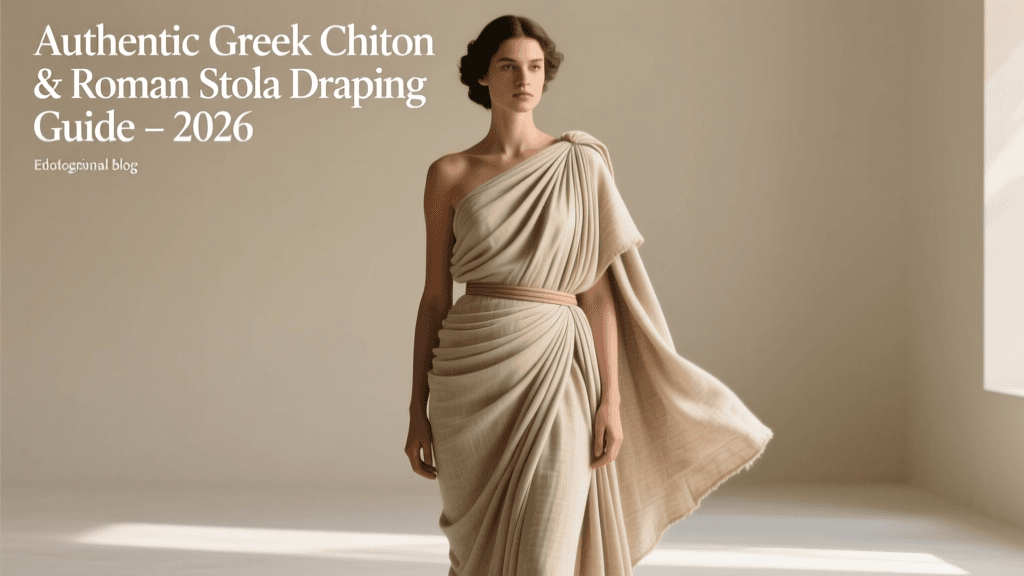
The fascination with ancient European folk dress and classical antiquity has reached new heights in 2026. From immersive historical reenactments across the Mediterranean to contemporary theater productions and Hellenic revival festivals, the demand for authentic Greek and Roman garments is stronger than ever. Unlike the tailored, pattern-based clothing of later European centuries, classical dress was defined by the art of draping. The chiton, stola, and toga were not merely pieces of clothing; they were complex architectural structures of fabric that communicated social status, gender, and civic virtue. In this comprehensive guide, we explore the construction, fabric sourcing, and precise draping techniques required to recreate these iconic garments for the modern era.
Understanding the Greek Chiton: Doric vs. Ionic
The foundation of the ancient Greek wardrobe was the chiton, a versatile tunic worn by both men and women. According to The Metropolitan Museum of Art's Heilbrunn Timeline of Art History, the Greek approach to clothing was inherently sculptural, treating the human body as an armature for draped textiles. In 2026, historical accuracy demands that we recognize the two primary variations of this garment: the Doric and the Ionic chiton.
The Doric Chiton (Peplos)
The Doric chiton, often referred to as a peplos when worn by women, is the older and heavier of the two styles. It is constructed from a single rectangular piece of woolen fabric. The top edge is folded over to create an overfold (apoptygma) that drapes down the chest and back. The garment is pinned at the shoulders using fibulae (brooches) and left open or sewn along one side. For modern reenactors in 2026, sourcing lightweight, breathable merino wool or a historically accurate wool-linen blend is essential to prevent overheating during summer festivals while maintaining the heavy, sculptural drape characteristic of the Doric style.
The Ionic Chiton
Emerging later and favoring lighter textiles, the Ionic chiton is made from a much wider piece of linen or silk. Instead of a single overfold and shoulder pins, the Ionic chiton is gathered and pinned at multiple points along the arms, creating the illusion of short sleeves. This style requires significantly more fabric—often twice the width of the wearer's outstretched arms. The resulting folds are finer and more numerous, creating a fluid, rippling effect that was highly prized in classical antiquity. When styling the Ionic chiton today, a high-thread-count, semi-sheer linen is the optimal choice to achieve those signature cascading folds.
The Roman Stola and Toga: Symbols of Citizenship and Virtue
While Greek dress prioritized aesthetic harmony and physical movement, Roman dress was deeply codified and strictly regulated by law and social hierarchy. As detailed by the World History Encyclopedia, Roman garments were powerful visual indicators of a citizen's rank, moral standing, and legal rights.
The Stola and Palla
The stola was the traditional garment of the respectable Roman matron. Worn over a basic tunica intima (undergarment), the stola was a long, sleeveless or short-sleeved dress suspended from the shoulders by small straps or brooches. Its defining feature was the institae—decorative borders woven into the lower hem. In 2026, recreating the stola requires attention to these borders, which can be achieved using tablet-woven trim or embroidered bands. Over the stola, women draped the palla, a large rectangular mantle that could be pulled over the head for modesty or religious ceremonies. The palla should be crafted from a medium-weight linen or fine wool, measuring at least three meters in length to allow for proper volumetric draping.
The Toga
No garment in European folk dress history is as iconic—or as notoriously difficult to wear—as the Roman toga. Reserved exclusively for male Roman citizens, the toga was a massive semicircular piece of white wool. By the Imperial period, the toga had grown so large (up to six meters long) that it required a slave or dedicated servant to drape it correctly. The Met's comprehensive essay on Roman Dress notes that the complex folds, including the sinus (a pouch-like drape across the chest) and the umbo (a decorative knot of fabric at the center), were carefully engineered to restrict the wearer's movement, thereby enforcing a slow, dignified gait suitable for a statesman. For contemporary enthusiasts, a lightweight wool flannel or a high-quality cotton-linen blend offers a manageable compromise, providing the necessary grip and structure without the crushing weight of authentic heavy wool.
2026 Fabric Sourcing Guide for Classical Garments
Selecting the correct textile is the most critical step in recreating ancient European folk dress. Modern synthetic blends will ruin the historical silhouette, as they lack the necessary weight, drape, and breathability. Below is a comparison chart of the best fabric options available to historical costumers in 2026.
| Fabric Type | Historical Accuracy | Drape & Weight | Best Used For | 2026 Sourcing Tip |
|---|---|---|---|---|
| 100% Linen | High | Fluid, crisp folds | Ionic Chiton, Tunica, Palla | Seek out European-grown flax linen for authentic slub texture. |
| Lightweight Wool | Very High | Heavy, sculptural | Doric Peplos, Toga, Cloaks | Merino wool blends offer historical drape with modern breathability. |
| Silk (Tussah/Raw) | Medium (Elite only) | Lustrous, extremely fluid | Ceremonial Ionic Chiton | Use raw silk for a textured, less modern-synthetic appearance. |
| Cotton | Low (Anachronistic) | Soft, lacks structure | Practice draping, theater | Avoid for strict reenactment; use only for budget stage productions. |
Step-by-Step Draping Techniques
Mastering the drape is where the true art of classical garment construction lies. Unlike medieval or Renaissance tailoring, there are no seams to guide you. Here is how to achieve the perfect Doric Chiton drape for a modern wearer:
- Step 1: Measure and Cut. Measure the wearer from the shoulder to the floor, then add 15 centimeters for the overfold (apoptygma). The width should be the distance from elbow to elbow when arms are outstretched.
- Step 2: Create the Overfold. Fold the top 15 centimeters of the fabric outward and downward. Press the fold with an iron to create a sharp, defined edge.
- Step 3: Pin the Shoulders. Gather the back and front layers (including the overfold) at two points on each shoulder, roughly 10 centimeters apart. Secure them with replica bronze or silver fibulae.
- Step 4: Belt and Blouse. Tie a woven wool or leather belt around the waist. Pull the fabric up and over the belt to create a kolpos (blousing effect), which adjusts the hemline to the desired length and adds volume to the torso.
- Step 5: Secure the Side. For a modest and secure fit, stitch or pin the open side seam from the hem up to the armpit, leaving enough room for comfortable arm movement.
Accessories: Fibulae, Belts, and Footwear
No classical ensemble is complete without the proper accessories. In 2026, artisan metalworkers specializing in historical reproductions offer incredibly accurate fibulae (brooches) cast in bronze using traditional lost-wax methods. These are not merely decorative; they bear the structural tension of the garment and must be sturdy. Avoid flimsy costume jewelry pins, which will tear historical linens and wools.
Footwear is equally important. The Greek kothornoi (laced boots) and Roman caligae (hobnailed military sandals) define the silhouette from the ground up. For civilian wear, simple leather carbatinae (one-piece shoes) or strapped sandals made from vegetable-tanned leather are the most accurate choices. Ensure that all leather goods are dyed using natural pigments like walnut husk or madder root, as bright, synthetic chemical dyes will instantly break the historical illusion.
"The genius of ancient European folk dress lies not in the cutting of the cloth, but in the tension and release of the drape. A successful chiton or toga is a collaboration between the weaver, the wearer, and gravity itself." — Dr. Aris Thorne, Textile Historian, 2026 Symposium on Classical Antiquity.
Conclusion
Recreating the chiton, stola, and toga requires a departure from modern sewing habits and an embrace of classical geometry. By sourcing historically accurate textiles, understanding the social codification of Roman and Greek dress, and mastering the intricate art of draping, you can bring the elegance of antiquity to life. Whether you are preparing for a major historical festival in 2026 or studying the evolution of European folk dress, these ancient garments remain a testament to the timeless intersection of art, culture, and human adornment.