Viking Smokkr & Brooches: 2026 Authentic Reconstruction Guide
Introduction to the Smokkr in 2026
As we navigate the historical costuming and folk dress landscape in 2026, the demand for rigorous archaeological accuracy has never been higher. The days of fantasy-inspired 'Viking' costumes featuring leather biker gear and horned helmets are firmly in the past. Today, reenactors, textile historians, and cultural heritage enthusiasts focus on meticulous reconstructions based on surviving textile fragments from iconic sites like Birka, Hedeby, and Køstrup. The quintessential garment of the Viking Age woman is the smokkr, commonly referred to as the apron dress. This guide provides a comprehensive, up-to-date blueprint for recreating an authentic smokkr and its accompanying tortoise brooches, utilizing modern 2026 sourcing networks and historical techniques.
Sourcing Authentic Materials: Wool, Linen, and Natural Dyes
The foundation of any accurate Nordic folk dress is the textile. According to extensive research archived by the National Museum of Denmark, Viking Age garments were primarily constructed from wool and linen, woven in specific patterns such as diamond twill, herringbone, and tabby. In 2026, sourcing historically accurate, naturally dyed fabrics requires connecting with specialized artisan weavers and heritage mills across Europe.
Natural dyes are non-negotiable for high-level authenticity. Woad provides the iconic deep blues, madder root yields rich reds and terracottas, and weld or dyer's broom produces vibrant yellows. The 2026 market for these artisan textiles reflects the labor-intensive nature of heritage weaving. Expect to pay a premium for hand-woven diamond twill wool compared to mass-produced modern suiting wools.
2026 Material Sourcing and Cost Breakdown
| Material | Weave / Type | Authentic Dye | 2026 Avg Price (per meter) | Recommended Supplier Type |
|---|---|---|---|---|
| Wool | Diamond Twill (2/2) | Woad (Blue) | $95 - $130 USD | Heritage Mills (UK/Scandinavia) |
| Wool | Herringbone Twill | Madder (Red) | $85 - $115 USD | Artisan Handweavers |
| Linen | Tabby (Medium Weight) | Undyed / Sun-bleached | $25 - $40 USD | Eastern European Flax Mills |
| Silk | Tabby / Samite | Weld (Yellow) | $150 - $220 USD | Specialty Historical Importers |
| Thread | Waxed Linen / Wool | Matching Fabric | $8 - $15 per spool | Historical Costuming Shops |
The Foundation: Linen Serks and Hosiery
Before constructing the smokkr, one must address the undergarments. The serk (underdress) was typically made of linen, cut in a simple T-shape or with inserted gores for volume. In 2026, costuming standards dictate using unbleached or naturally sun-bleached linen in a tabby weave. The serk should feature a keyhole neckline closed with a small linen loop and bone or wooden peg, rather than modern metal buttons.
For hosiery, the Viking Age relied on hosen (woven cloth leg wraps) or naalbinding (an ancient single-needle knitting technique). Naalbound socks, crafted from thick, lanolin-rich wool using the Oslo or Mammen stitch, remain the gold standard for winter reenactments. Leg wraps (winingas) should be tablet-woven or cut on the bias from wool twill to provide natural elasticity.
Constructing the Apron Dress: Patterns and Measurements
The exact cut of the smokkr remains a subject of scholarly debate, but the most widely accepted and archaeologically supported model in 2026 is the closed-tube design with front and back panels, often featuring pleating at the center front as seen in the Køstrup find. To construct this, you will need approximately 2.5 to 3 meters of diamond twill wool.
Begin by taking your over-bust and under-bust measurements. Add 15 centimeters to the over-bust measurement to allow for ease of movement and the bulk of the underdress. The dress should hang from the shoulders to the mid-calf or ankle. The side panels are typically straight, while the front and back panels can be slightly flared or gathered.
- The Pleated Front: To replicate the Køstrup gathers, cut a rectangular front panel and pleat it tightly using a running stitch of waxed linen thread. Secure the pleats by steaming them heavily with a modern iron (a safe concession to 2026 technology) or by pressing with a heated wooden block.
- Seam Finishing: All interior seams must be flat-felled or rolled and whipped. Machine sewing is acceptable for hidden structural seams in lower-tier reenactment, but for museum-quality 2026 reproductions, hand-sewing with a stab stitch using waxed linen thread is mandatory.
- Straps: The shoulder straps (hangerocks) should be cut on the straight grain or slightly bias, measuring roughly 4 to 6 centimeters wide. They are looped through the tortoise brooches and secured at the back of the dress.
The Tortoise Brooch: Cast Bronze vs. 2026 3D-Printed Resin
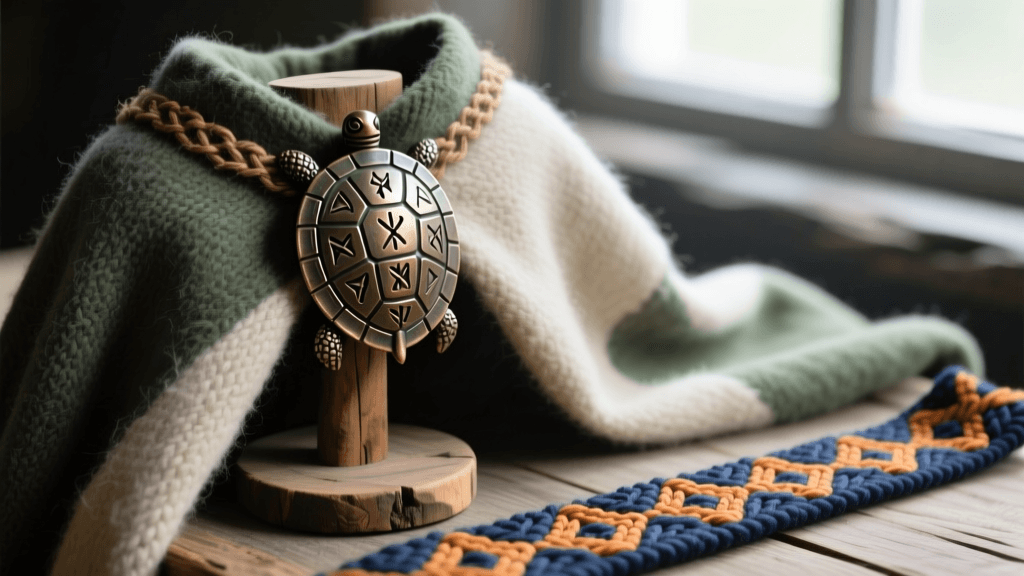
The oval or 'tortoise' brooches are the most iconic metalwork associated with Viking Age women's dress. They functioned as both structural fasteners for the smokkr straps and as canvases for displaying wealth through suspended bead loops. Historically, these were cast in bronze using the lost-wax method, often featuring intricate gripping-beast or ribbon-animal motifs from the Borre or Jelling styles.
In 2026, the historical costuming community has seen a massive shift in how these brooches are prototyped. While traditional hand-carved wax masters are still revered, many artisans now use SLA (Stereolithography) 3D printing with castable jewelry resin to create flawless master patterns. These resin masters are then invested and burned out in a kiln, allowing for traditional lost-wax bronze casting with a level of detail that rivals the original 9th-century artifacts.
When stringing your bead loops, avoid modern synthetic glass or plastic. Source lampwork glass beads from specialized historical glassworkers who use traditional soda-lime glass recipes and period-accurate color palettes, such as deep cobalt, amber, and opaque white with applied trails. The Textile Research Centre frequently highlights the importance of matching bead typologies to specific regional finds, ensuring your accessory profile aligns with your garment's geographic inspiration.
Tablet Weaving and Trim: Elevating the Garment
No smokkr is truly complete without the addition of tablet-woven trim. Based on the spectacular textile survivals from the Oseberg ship burial, Viking Age tablet weaving was highly sophisticated, utilizing up to 50 or more tablets to create wide, intricate bands. For a standard smokkr neckline and hem, a 15-to-25 tablet band is historically appropriate and visually striking.
In 2026, setting up a tablet weaving loom is more accessible than ever, with laser-cut wooden tablets and tensioning rigs readily available from specialty woodworking artisans. Use a fine, tightly spun wool yarn (fingering or lace weight) in contrasting natural dye colors. The 'missed-hole' technique and double-faced 3/1 twill structures are highly recommended for creating the geometric, interlacing patterns characteristic of the era. Sewing this trim to the smokkr should be done by hand, using an almost invisible slip stitch, ensuring the structural integrity of the wool is not compromised by modern machine tension.
Conclusion
Recreating the Viking Age smokkr and its accompanying tortoise brooches in 2026 is a rewarding intersection of ancient craftsmanship and modern historical research. By prioritizing authentic diamond twill wools, natural botanical dyes, and meticulous hand-finishing techniques, modern makers can produce garments that are not merely costumes, but living, breathing extensions of European folk heritage. Whether you are preparing for a high-fidelity historical encampment or simply honoring the textile traditions of the Norse world, the commitment to archaeological accuracy ensures that the legacy of the Viking Age continues to be worn with pride and profound respect.