Kimono & Zen: Mindful Kitsuke Meditation Practices for 2026
The Spiritual Architecture of Japanese Dress
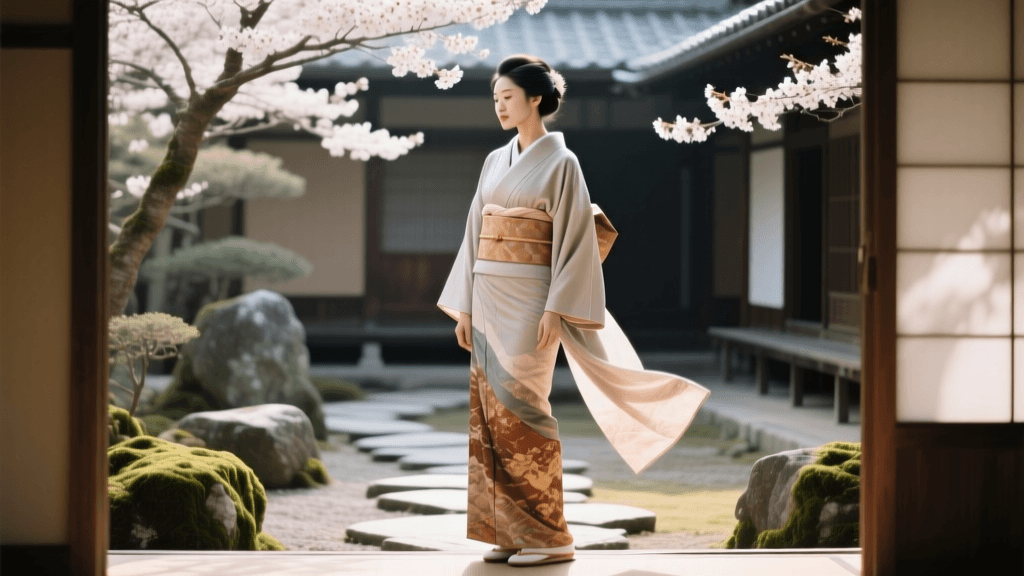
In the rich tapestry of Asian traditions, few cultural practices blend the aesthetic, the physical, and the spiritual as seamlessly as the Japanese kimono. While Western fashion often prioritizes rapid consumption and external projection, traditional Japanese garment culture is deeply rooted in internal reflection. At the heart of this philosophy is Zen Buddhism, a spiritual tradition that emphasizes mindfulness, presence, and the elevation of mundane tasks into profound meditative acts. As we navigate the wellness landscape of 2026, a significant paradigm shift is occurring: the art of kimono dressing, known as kitsuke, is increasingly being recognized not merely as a sartorial requirement, but as a legitimate form of moving meditation.
Zen teaches that enlightenment is not found solely in seated meditation (zazen), but in every action of daily life. According to the San Francisco Zen Center, the concept of Samu (work practice) dictates that sweeping the courtyard, cooking a meal, or dressing oneself are all equal opportunities for spiritual awakening. When applied to the intricate, deliberate process of wearing a kimono, this philosophy transforms a daily routine into a grounding, somatic experience that aligns the body, breath, and mind.
Kitsuke as a Moving Meditation
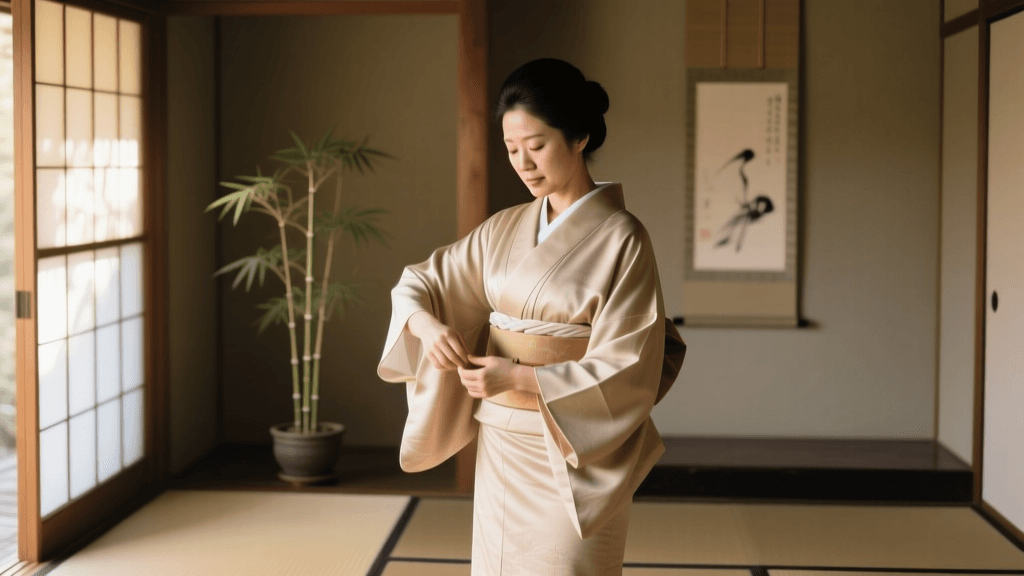
The modern world of 2026 is characterized by digital saturation and chronic distraction. In response, global wellness seekers are turning to tactile, analog traditions to reclaim their attention. Kitsuke requires an extraordinary level of focus. The process involves multiple layers, precise alignments, and the tying of complex knots, all of which demand that the practitioner remain entirely in the present moment. If the mind wanders, the collar will sit unevenly, or the ohashori (the fold at the waist) will be unbalanced.
This requirement for sustained attention mirrors the focus required in zazen. The practitioner must observe the drape of the silk, the tension of the cotton ties, and the symmetry of the sleeves. The Japan National Tourism Organization highlights how traditional Japanese arts, from the tea ceremony to garment wearing, are designed to cultivate ichigo ichie (one time, one meeting)—a deep appreciation for the transient, unrepeatable nature of the present moment. By treating the act of dressing as a sacred ritual, the wearer transitions from a state of passive consumption to active, mindful creation.
The 2026 Revival of Somatic Zen Retreats
Throughout 2026, wellness retreats in cultural hubs like Kyoto, Kamakura, and Kanazawa have introduced "Somatic Zen" programs. These immersive experiences combine traditional seated meditation with mindful kitsuke workshops. Unlike the rushed kimono rental experiences aimed at quick tourism, these retreats allocate up to three hours for the dressing process alone. Participants are guided by Zen monks and master kitsuke instructors who teach the synchronization of breath with movement.
For instance, the act of lifting the arms to adjust the sleeves is coordinated with a deep inhalation, while the smoothing of the fabric down the torso is paired with a slow, controlled exhalation. This deliberate pacing down-regulates the nervous system, shifting the body from a sympathetic (fight or flight) state to a parasympathetic (rest and digest) state before the meditation session even begins.
Sensory Grounding: Choosing Fabrics for Meditation
The tactile experience of the garment plays a crucial role in mindfulness. In 2026, textile artisans and mindfulness experts have collaborated to identify which traditional Japanese fabrics offer the best sensory feedback for meditative wear. The weight, texture, and acoustic properties of the fabric all contribute to the grounding effect.
| Fabric Type | Season | Sensory Profile | Meditative Benefit |
|---|---|---|---|
| Tsumugi (Pongee Silk) | Autumn/Winter | Nubby, textured, heavy, matte finish | Provides deep pressure therapy; the irregular texture keeps the tactile senses engaged and grounded. |
| Chirimen (Crepe Silk) | Spring/Autumn | Smooth but with a subtle, pebbled friction | Creates a soft, whispering acoustic feedback when moving, aiding in auditory mindfulness. |
| Ro (Gauze Weave) | Summer | Lightweight, breathable, semi-translucent | Encourages awareness of the ambient air and body temperature, fostering environmental connection. |
| Jofu (Ramie/Linen) | Summer | Crisp, cool, structured, slightly stiff | Provides structural feedback that naturally corrects slouching and promotes an upright spine. |
A Step-by-Step Guide to Meditative Kitsuke
To practice mindful dressing at home, one must strip away the anxiety of "perfection" and embrace the process. Here is a structured approach to meditative kitsuke suitable for practitioners in 2026:
- Step 1: Mokuso (Quiet Reflection) - Before touching the garments, sit in seiza (kneeling) for two minutes. Close your eyes, focus on your breath, and set an intention for the practice. Acknowledge the artisans who wove the silk and dyed the threads.
- Step 2: The Juban (Undergarment) - As you slip into the nagajuban, focus on the sensation of the fabric against your skin. Align the collar bones carefully, using the physical centerline of the garment to find your own physical center of gravity.
- Step 3: The Kimono Alignment - Wrap the left panel over the right. This is a non-negotiable rule in Japanese culture (the reverse is reserved for the deceased). As you pull the fabric taut, visualize wrapping yourself in a protective, focused energy.
- Step 4: The Datejime (Under-sash) - Tying the first cotton sash requires a firm, secure pull. Exhale sharply as you tighten the knot at the front, symbolizing the binding of your scattered thoughts into a single point of focus.
- Step 5: The Ohashori (Waist Fold) - Adjusting the fold requires patience and micro-movements. If it is uneven, do not feel frustration; simply breathe, loosen the ties, and begin again. This repetition builds resilience and equanimity.
The Obi, Posture, and Embodied Cognition
Perhaps the most profound intersection of kimono and Zen lies in the obi (the wide outer sash). In Zen meditation, maintaining an upright, unsupported spine is essential for the free flow of breath and energy. The Greater Good Science Center at UC Berkeley has published extensive research on embodied cognition, noting that physical posture directly influences mental states, with upright postures correlating to increased alertness and emotional resilience.
The traditional obi, when tied correctly, acts as a somatic feedback tool. It wraps tightly around the core, providing gentle but firm resistance against the abdomen. This physical constraint prevents the wearer from slouching and naturally encourages deep, diaphragmatic breathing. When the mind wanders during meditation and the body begins to slump, the pressure of the obi serves as an immediate, tactile reminder to return to an upright posture and refocus the mind. In this way, the garment itself becomes a meditation teacher, offering continuous, silent corrections throughout the day.
Tabi, Zori, and the Practice of Grounding
Mindful dressing extends beyond the torso to the feet. The traditional split-toe tabi socks and woven zori sandals are designed to promote a specific, deliberate way of walking. Unlike modern rubber-soled shoes that encourage heavy heel-striking, zori require the wearer to lift the foot slightly and place it down with a rolling motion from toe to heel to keep the sandal securely on the foot via the hanao (thong).
This biomechanical requirement naturally slows the wearer down and transforms walking into kinhin (walking meditation). In 2026, podiatrists and mindfulness coaches alike recommend the use of traditional flat footwear for grounding exercises. The thin, woven soles of the zori allow the wearer to feel the texture of the earth, the temperature of the wooden floors, and the subtle shifts in balance, anchoring the wandering mind firmly to the physical environment.
Conclusion: The Garment as a Spiritual Vessel
As we move deeper into 2026, the global conversation around mental health and mindfulness continues to evolve. The integration of traditional Asian garment practices into modern wellness routines offers a powerful antidote to the disembodied nature of digital life. The kimono is not merely a costume or a relic of the past; it is a sophisticated technology for mindfulness. Through the deliberate, sensory-rich, and physically demanding art of kitsuke, practitioners can cultivate a profound sense of presence, proving that the path to Zen can be found in the careful folding of silk and the mindful tying of a sash.