Hanfu Fabric Drape and Comfort Analysis: 2026 Textile Guide
The Evolution of Hanfu Textiles in 2026
As the global appreciation for traditional Asian garments continues to surge in 2026, the Hanfu movement has evolved from a niche historical reenactment hobby into a sophisticated, everyday fashion staple. Central to this evolution is the Xin Zhongshi (New Chinese Style) movement, which seamlessly blends ancient silhouettes with contemporary textile engineering. For modern enthusiasts, understanding the intricate relationship between fabric texture, drape, and comfort is no longer optional—it is essential for curating a wardrobe that honors historical aesthetics while meeting the demands of modern life.
Historically, the flow and structure of Hanfu were dictated by the natural fibers available along the Silk Road. According to the Metropolitan Museum of Art's Heilbrunn Timeline of Art History, silk production and weaving techniques were closely guarded secrets that defined the luxury and fluidity of early Chinese garments. Today, in 2026, we have access to a vast spectrum of materials, from traditional heavy brocades to cutting-edge, temperature-regulating semi-synthetics. This comprehensive analysis breaks down the physics of drape and the metrics of comfort to help you select the perfect fabric for your next Hanfu ensemble.
Understanding Drape: The Physics of Traditional Flow
Drape refers to how a fabric hangs, folds, and moves under its own weight. In textile science, this is often measured by the drape coefficient and bending length. A low bending length indicates a highly fluid fabric that clings and flows, while a high bending length results in a stiff, structured silhouette. For Hanfu, the desired drape depends heavily on the specific garment type and the historical period it represents.
Silk and Charmeuse: The Gold Standard of Fluidity
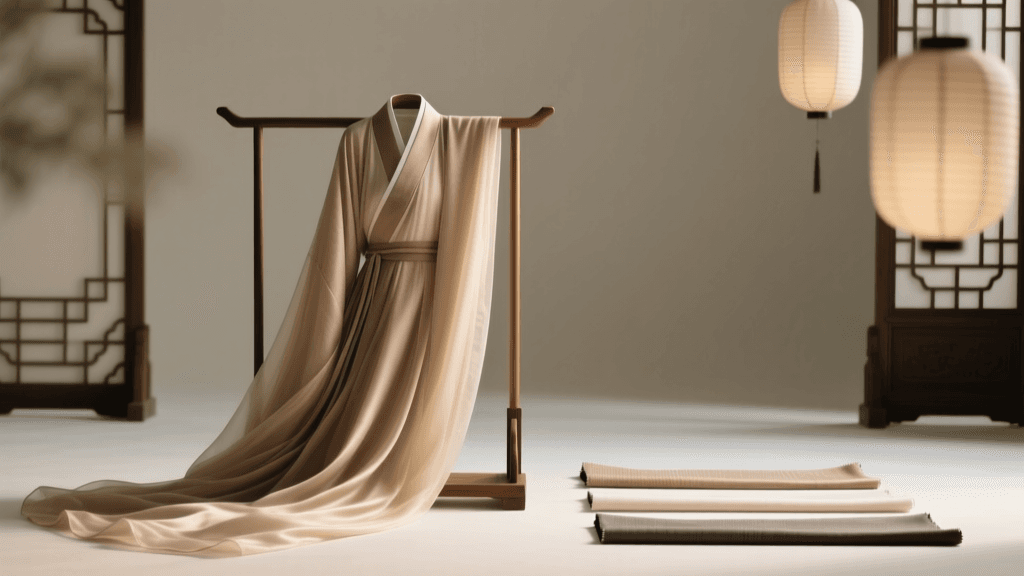
Silk remains the undisputed champion of Hanfu drape. In 2026, the market favors high-momme silk charmeuse and crepe de chine for garments like the Mamianqun (horse-face skirt) and flowing Daxiushan (large-sleeve robes). A 19-momme to 22-momme silk charmeuse offers a liquid-like drape that catches the light beautifully, creating the ethereal, immortal-like aesthetic prized in Wei and Jin dynasty-inspired styles. However, silk's high drape coefficient means it lacks structural integrity, requiring careful pleating techniques and high-temperature steam setting to maintain the sharp folds of a Mamianqun.
Linen, Ramie, and Structured Elegance
Conversely, plant-based fibers like linen and ramie offer a high bending length, resulting in a crisp, structured drape. These fabrics are historically accurate for everyday wear among commoners and scholars during the Song and Ming dynasties. Modern 2026 textile treatments, such as bio-enzyme washing, have significantly softened the hand-feel of ramie without sacrificing its architectural drape. This makes bio-washed linen an excellent choice for Ruqun (blouse and skirt sets) where a clean, A-line silhouette is desired without the fabric clinging to the body.
Comfort Metrics: Breathability, Weight, and Skin-Feel
While drape dictates the visual impact of a Hanfu, comfort determines its wearability. The 2026 consumer demands garments that can transition from a formal tea ceremony to a bustling urban commute. Comfort is evaluated across three primary metrics: breathability (moisture vapor transmission rate), weight (GSM or momme), and skin-feel (surface friction).
Natural fibers like mulberry silk and high-grade linen excel in breathability. Silk's protein structure allows it to absorb up to 30% of its weight in moisture without feeling damp, making it exceptionally comfortable in humid conditions. However, pure silk requires meticulous care. To address this, the 2026 Xin Zhongshi market has seen a massive rise in blended textiles. As noted by the Victoria and Albert Museum's extensive research on Chinese textiles, the historical pursuit of luxurious yet durable fabrics has always driven textile innovation. Today, this innovation manifests in silk-cotton blends and Tencel-silk intersections that offer the skin-feel of pure silk with the machine-washable durability of modern cellulosics.
The Xin Zhongshi Influence: Modern Blends for Everyday Wear
The Xin Zhongshi (New Chinese Style) movement of 2026 has revolutionized Hanfu fabrics by introducing sustainable, semi-synthetic fibers like Cupro and Lyocell (Tencel). Cupro, a regenerated cellulose fiber derived from cotton linter, mimics the silky drape and cool touch of silk but at a fraction of the cost and environmental impact. It is highly favored for modernized Qixiong Ruqun (chest-high skirts) because it drapes heavily, resists static cling, and breathes exceptionally well.
Furthermore, jacquard weaving technology has advanced significantly. Modern digital jacquard looms can produce intricate, multi-layered traditional motifs—such as auspicious clouds and woven dragons—on lightweight Tencel bases. This allows for rich, textured Hanfu that does not suffer from the heavy, suffocating weight of traditional metallic-thread brocades.
Comprehensive Hanfu Fabric Comparison Chart
To help you navigate the 2026 textile market, we have compiled a detailed comparison of the most popular Hanfu fabrics, analyzing their drape, comfort, and ideal use cases.
| Fabric Type | Drape Quality | Breathability | Weight & Feel | Best Hanfu Application |
|---|---|---|---|---|
| Silk Charmeuse (19-22mm) | Highly Fluid, Liquid | Excellent | Lightweight, Smooth, Cool | Daxiushan, Pibo (shawls), Outer layers |
| Bio-Washed Linen | Structured, Crisp | Superior | Medium, Softened texture | Everyday Ruqun, Song Dynasty Beizi |
| Cupro (Bemberg) | Heavy, Fluid | Very Good | Medium, Silky, Anti-static | Mamianqun linings, Modernized Qixiong |
| Tencel Jacquard | Moderate, Textured | Excellent | Medium-Heavy, Soft drape | Fall/Winter Mamianqun, Ao (jackets) |
| Traditional Brocade | Very Stiff, Rigid | Poor | Heavy, Textured, Warm | Ceremonial outerwear, Winter collars |
Practical Advice for Selecting Your Next Hanfu
Seasonal Recommendations
When building a 2026 Hanfu wardrobe, align your fabric choices with the climate. For spring and summer, prioritize high-momme crepe de chine, lightweight ramie, and Tencel blends. These fabrics offer high moisture-wicking properties and a breezy drape that prevents the garment from clinging to sweat-dampened skin. For autumn and winter, transition to brushed cotton blends, heavy linen-cotton intersections, and modern thermal-lined jacquards. The structural drape of heavier fabrics also helps trap body heat while maintaining the dignified, sweeping silhouette characteristic of Ming Dynasty winter wear.
Care and Maintenance for Optimal Drape Retention
The drape of a Hanfu can be permanently altered by improper care. Silk charmeuse must be hand-washed in cold water with a pH-neutral detergent and air-dried in the shade to prevent the fibers from becoming brittle and losing their fluid bend. For pleated garments like the Mamianqun, regardless of whether they are made of polyester blends or pure silk, always store them hanging by the waistband or rolled. Never fold them flat for extended periods, as this will break the pleat lines and ruin the engineered drape coefficient of the skirt.
Conclusion
The intersection of historical reverence and modern textile science has made 2026 an extraordinary year for Hanfu enthusiasts. By understanding the nuanced physics of fabric drape and the biological metrics of comfort, you can curate a collection that is not only visually breathtaking but profoundly comfortable. Whether you are drawn to the liquid elegance of silk charmeuse or the structured, breathable grace of bio-washed linen, the perfect textile awaits to bring your traditional vision to life.