Mindful Kitsuke: Kimono Dressing As Zen Meditation In 2026
The Intersection of Zen and Silk in 2026
As we navigate the hyper-connected, screen-saturated landscape of 2026, the global wellness movement has increasingly turned toward ancient, tactile practices to combat digital fatigue. Among the most profound of these is the intersection of kitsuke (the art of wearing a kimono) and Zen spirituality. Far from being merely a historical costume or a rigid set of sartorial rules, the kimono is increasingly recognized by mindfulness practitioners as a tool for somatic awareness. When approached with intention, the physical act of dressing becomes a moving meditation—a ritual that grounds the nervous system, aligns the breath, and cultivates a deep sense of present-moment awareness.
According to foundational research on somatic awareness highlighted by Mindful.org's guides on mindfulness practices, engaging the body in deliberate, focused movements can significantly reduce cortisol levels and anchor the wandering mind. In 2026, wellness retreats across Kyoto, Kamakura, and even international urban centers are integrating mindful kitsuke into their morning routines, treating the folding, draping, and tying of the garment with the same reverence as a tea ceremony or a session of zazen (seated meditation).
The Philosophy of Mindful Kitsuke
To understand kimono dressing as a spiritual practice, one must look beyond the fabric and embrace the underlying Japanese aesthetic philosophies. Two concepts are paramount in this context: Ma (negative space) and Shibumi (subtle, unobtrusive beauty).
Embracing Ma (Negative Space)
In Zen aesthetics, Ma refers to the pure, essential void between objects. In kitsuke, Ma is found in the space between the body and the fabric, the precise gap at the back of the neck (eri-nuki), and the physical pause between each deliberate movement. When you dress mindfully, you are not just covering the body; you are sculpting the space around it. This requires a heightened state of spatial awareness that naturally pulls the practitioner out of their internal mental chatter and into the physical room.
Cultivating Shibumi (Subtle Beauty)
Shibumi rejects flashy, ostentatious displays in favor of quiet, understated elegance. In a mindful dressing practice, this translates to choosing garments that feel authentic and grounding rather than performative. It is about the tactile sensation of raw silk or woven hemp against the skin, and the quiet rustle of the fabric, rather than the visual impact on an outside observer.
2026 Garment Selections for Zen Practice
While formal, multi-layered silk kimonos are breathtaking, they are often too restrictive for deep meditation or mindful movement. The sustainable fashion and wellness movements of 2026 have popularized specific adaptations and textiles that honor tradition while optimizing for breathability and comfort during Zen practice.
- Organic Asa (Hemp) and Linen Blends: Hemp has been used in Japanese ascetic and monastic clothing for centuries due to its durability and cooling properties. In 2026, modern weaving techniques have softened organic asa, making it the premier choice for summer meditation kimonos. It provides a gentle, grounding weight without trapping heat.
- Washi-Woven Textiles: Innovations in sustainable textiles have brought washi (traditional Japanese paper) threads into mainstream mindful wear. Blended with organic cotton, washi fabrics are incredibly lightweight, antibacterial, and possess a unique, papery texture that heightens sensory awareness during the dressing ritual.
- Ni-Bushiki (Two-Piece Kimonos): Originally designed for ease of wear, the two-piece kimono (featuring a separate skirt and wrap top) has been embraced by the Zen community. It allows for the visual silhouette and overlapping drape of a traditional kimono while permitting the deep, diaphragmatic breathing required for zazen and walking meditation (kinhin).
- The Samue Alternative: For those seeking a more monastic approach, the Samue (traditional Zen work clothing) remains a staple. Typically made from cotton or hemp, its simple tie closures make the act of dressing swift yet deliberate, serving as a bridge between formal kitsuke and everyday mindfulness.
The Step-by-Step Moving Meditation Ritual
Transforming your morning dressing routine into a Zen practice requires slowing down and assigning a specific breath or intention to each movement. Here is a guided ritual for mindful kitsuke.
Step 1: Grounding in Seiza
Begin by kneeling in seiza (the formal Japanese sitting posture) on a zabuton (cushion) or tatami mat. Close your eyes and take five deep, diaphragmatic breaths. Feel the connection between your knees and the floor. Acknowledge the garment resting before you, appreciating the artisans who wove, dyed, and sewed the fabric.
Step 2: The Juban (Undergarment) Alignment
Put on the juban (under-kimono) and hadajuban (undershirt). As you cross the right side over the left (always right over left for the living), synchronize the movement with your exhale. The crossing of the collar represents the closing of the physical self and the opening of the spiritual heart. Adjust the eri-nuki (the space at the nape of the neck) to allow a cool breeze to touch your skin, serving as a sensory anchor.
Step 3: The Kimono Drape and Ohashori
Drape the main kimono over your shoulders. As you pull the fabric taut and align the seams, practice shikantaza (just sitting/just doing). Do not rush to tie the koshihimo (waist cord). Feel the weight of the fabric. When you create the ohashori (the fold at the waist), ensure it is level and smooth. This act of smoothing out wrinkles is a physical metaphor for smoothing out the agitations of the mind.
Step 4: The Obi Tie as a Focal Point
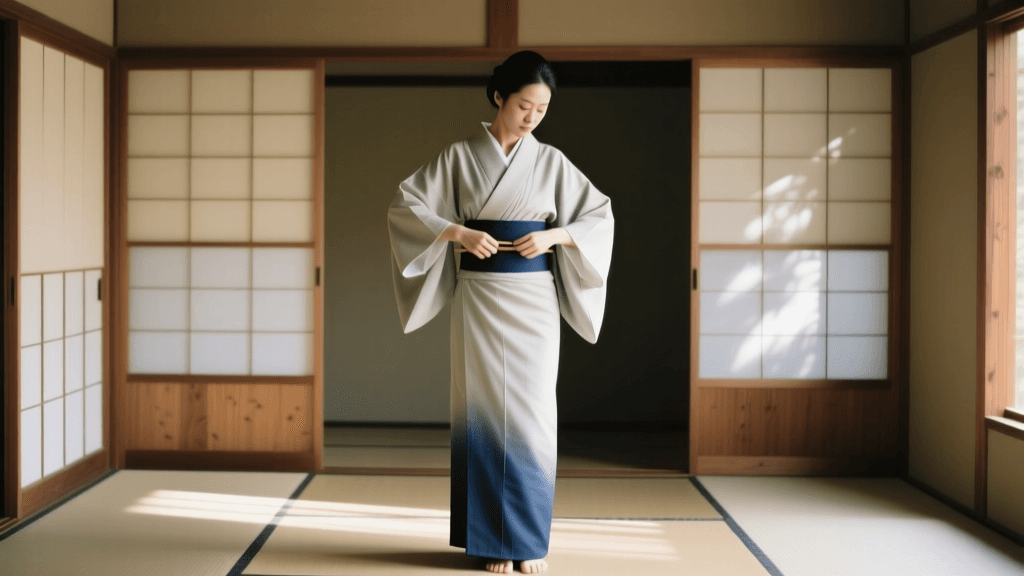
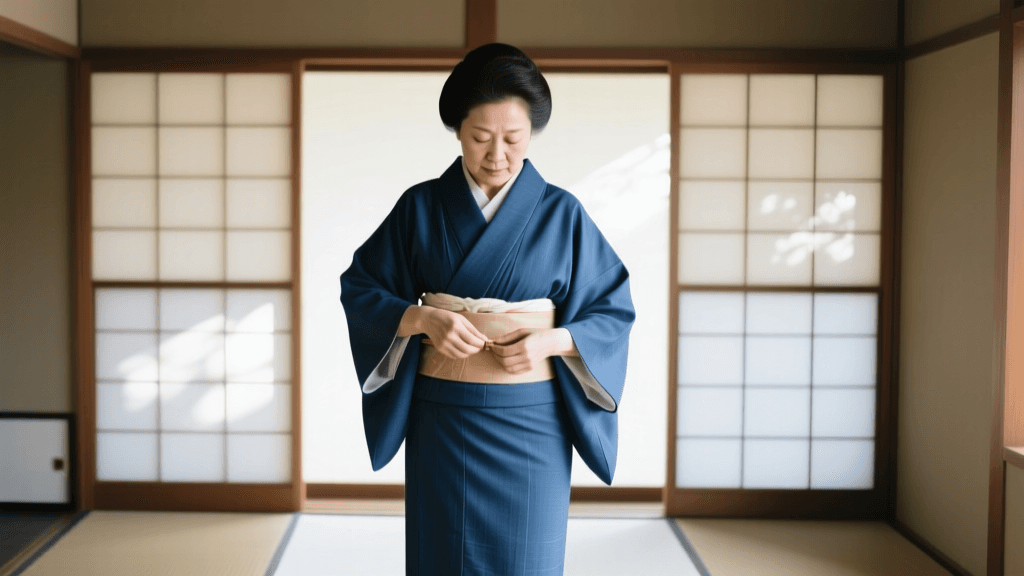
The obi (sash) is the anchor of the kimono and the anchor of your practice. For meditation, avoid tight, restrictive formal knots like the taiko musubi. Instead, opt for a simple, secure bunko (bow) or a soft wrap. As you wind the obi around your core, wrap it on the inhale, and pull it gently taut on the exhale. The pressure around your hara (the physical and spiritual center of gravity, located just below the navel) should feel supportive, not constricting, reminding you to breathe deeply into your belly.
Traditional Formal Kitsuke vs. Mindful Zen Kitsuke
Understanding the distinction between dressing for a formal event and dressing for spiritual practice is crucial for modern practitioners. The table below outlines the key differences in approach and execution.
| Element | Traditional Formal Kitsuke | Mindful Zen Kitsuke (2026 Practice) |
|---|---|---|
| Primary Goal | Aesthetic perfection, adherence to strict seasonal and social rules. | Somatic awareness, breath alignment, and mental grounding. |
| Pacing | Often rushed or assisted by a professional dresser for efficiency. | Deliberately slow, self-directed, synchronized with breathwork. |
| Obi Tightness | Firmly tied to maintain rigid posture and prevent fabric shifting. | Snug but yielding, allowing for full diaphragmatic expansion. |
| Textile Choice | Heavy silks, brocades, and intricate dyed patterns. | Breathable organic hemp, washi blends, and muted, natural tones. |
| Post-Focus | Visual inspection in a mirror to ensure flawless presentation. | Internal body scan to ensure comfort, balance, and energetic flow. |
Curating a Sacred Dressing Environment
The environment in which you practice mindful kitsuke is just as important as the garment itself. In 2026, interior design trends heavily favor biophilic and minimalist spaces that support mental clarity. To create a sacred dressing space, consider the following sensory elements:
- Visual: Remove clutter and digital devices from the room. Use a full-length mirror with a simple, natural wood frame. Allow natural morning light to filter through sheer linen curtains, emphasizing the concept of Ma in your physical space.
- Olfactory: Engage the sense of smell to trigger a Pavlovian relaxation response. Light a stick of traditional kyara or sandalwood incense ten minutes before you begin. The subtle, woody aroma is deeply tied to Japanese temple environments and signals to the brain that it is time to transition into a meditative state.
- Auditory: Embrace silence, or play the faint, ambient sound of a shishi-odoshi (bamboo water fountain) or singing bowls. Avoid lyrical music, which engages the language centers of the brain and distracts from somatic focus.
- Tactile: Ensure your feet touch a natural surface, such as a woven rush tatami mat or a soft, unbleached cotton rug, grounding your physical body to the earth before the first layer of fabric touches your skin.
Conclusion: Wearing Your Practice
The historical evolution of Japanese clothing, as documented in the Metropolitan Museum of Art's historical archives on Japanese clothing, reveals a garment that has always been deeply intertwined with social identity, seasonality, and philosophy. Today, the kimono offers something even more vital: a sanctuary from the ephemeral nature of modern life. By approaching kitsuke not as a chore or a rigid set of rules, but as a moving Zen meditation, you transform the simple act of getting dressed into a daily ritual of self-care and spiritual alignment. In 2026, the most profound luxury is not the price of the silk, but the presence of mind you bring to wearing it.