Mindful Kitsuke: Kimono Dressing as Zen Meditation in 2026
The Intersection of Silk and Stillness: Mindful Kitsuke in 2026
In 2026, the global wellness industry has shifted dramatically toward "analog grounding"—practices that require tactile engagement, deliberate slowness, and physical presence to counteract severe digital fatigue. At the intersection of this modern wellness movement and ancient Japanese tradition lies kitsuke, the art of wearing a kimono. Far from being a mere sartorial choice or a quick tourist photo-opportunity, mindful kitsuke has emerged as a profound form of moving Zen meditation. By transforming the intricate process of dressing into a somatic ritual, practitioners are finding deep psychological centering, improved posture, and a renewed connection to the present moment.
The Philosophy of Mindful Kitsuke
Zen Buddhism has long influenced Japanese aesthetics, emphasizing presence, the beauty of the transient, and the elimination of the ego through focused action. According to The Metropolitan Museum of Art's Heilbrunn Timeline of Art History, Zen arts are designed to cultivate a state of mushin (no-mind), where the practitioner's consciousness merges entirely with the task at hand. When applied to dressing, the kimono becomes a tool for somatic awareness. The garment itself is essentially a flat, two-dimensional canvas of fabric that only gains its three-dimensional form through the intentional, mindful wrapping around the human body. This transformation requires the wearer to be acutely aware of their breath, their posture, and the spatial relationship between their body and the textile.
"The fold of the silk is the fold of the mind. When the fabric is aligned, the spirit is aligned. To rush the tying of the obi is to rush the settling of the soul."
— Traditional Kyoto Kitsuke Proverb, adapted for modern mindfulness practice.
Preparing the Space and the Mind
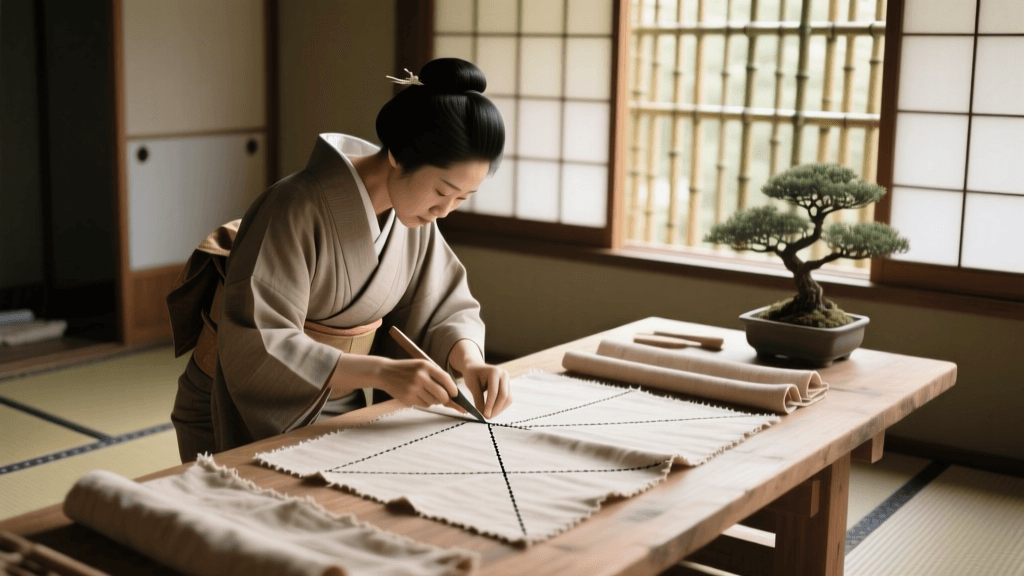
The ritual of mindful kitsuke begins long before the silk touches the skin. In 2026, wellness instructors emphasize the concept of ma (negative space) in the preparation area. To begin, clear a dedicated space on a tatami mat or a clean, uncluttered floor. Lay out your kimono tataki (folding board) and align your garments with geometric precision. Lighting a stick of kyara aloeswood incense or a modern 2026 botanical blend of hinoki cypress helps signal to the nervous system that it is time to transition from the external world to the internal landscape. Stand in shizen-tai (natural standing posture), feet hip-width apart, and take three deep diaphragmatic breaths, feeling the weight of your body pressing into the floor.
The Step-by-Step Moving Meditation
1. The Juban (Undergarment) and Breath Awareness
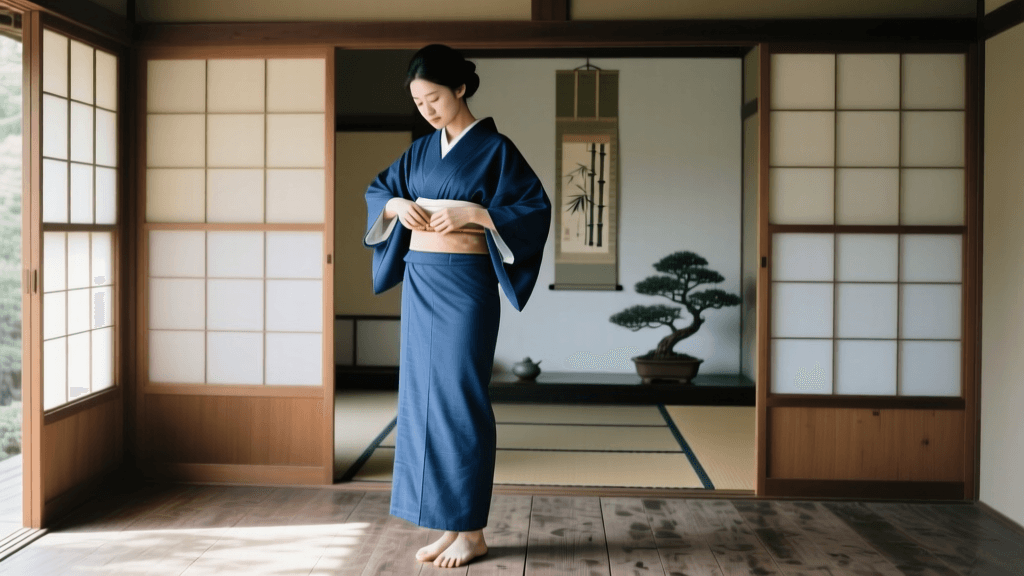
The juban is the thin undergarment worn beneath the main kimono. As you slip your arms through the sleeves, focus entirely on the sensation of the fabric gliding over your skin. This is an exercise in sensory grounding. Notice the temperature of the cloth. As you tie the koshi-himo (the thin cotton waist tie) to secure the juban, synchronize the tightening of the knot with a slow, controlled exhalation. The gentle pressure of the tie around your core serves as a physical reminder to maintain deep, belly-centered breathing throughout the rest of the practice.
2. Aligning the Okumi (Front Panels) and Hemispheric Balance
Draping the main kimono requires crossing the midline of the body. You must always wrap the left panel over the right (wrapping right over left is strictly reserved for dressing the deceased). This deliberate crossing of the body's midline engages both hemispheres of the brain, promoting cognitive balance and focus. As you adjust the okumi (the front vertical panels) to ensure the hem falls perfectly parallel to the floor, move with the slow, deliberate grace of a tai chi practitioner. If the hem is uneven, do not express frustration; simply observe the misalignment, exhale, and gently readjust. This is the practice of non-attachment to immediate perfection.
3. Tying the Obi (Sash) as a Centering Anchor
The obi is traditionally 30 centimeters wide and 4 meters long. Wrapping this substantial length of woven silk or linen around the torso is the physical and spiritual anchor of the entire practice. As you wind the obi around your waist, maintain a straight spine. The physical restriction of the obi naturally forces the wearer to breathe higher in the chest and adopt an upright, dignified posture. Tying the taiko musubi (the classic drum bow) at the back requires a series of precise folds and tucks. Treat each fold as a mantra. By the time the obijime (the decorative cord) is tied securely across the center of the bow, your heart rate should be lowered, and your mind entirely cleared of external anxieties.
Sensory Grounding: Choosing Fabrics for Meditation
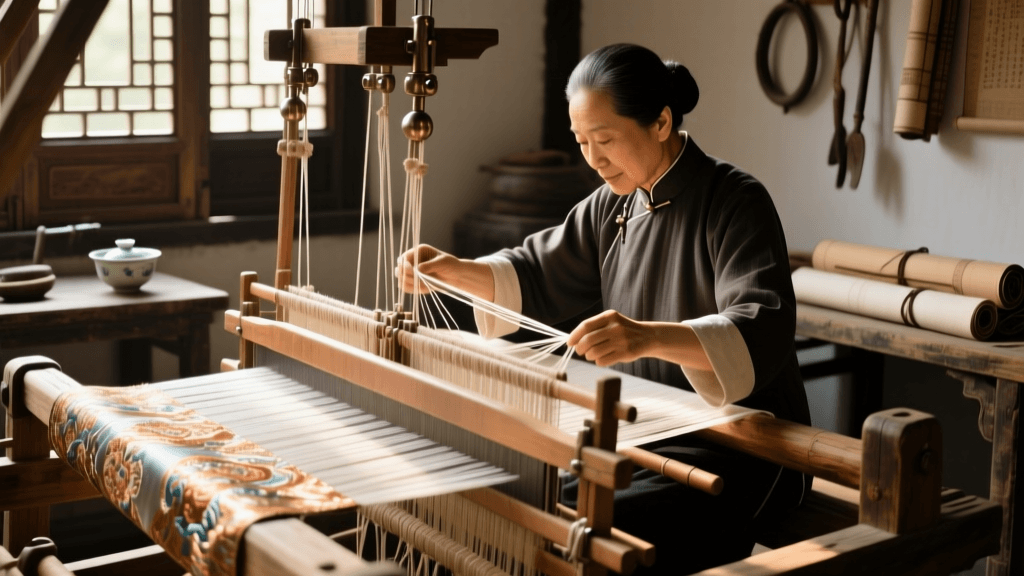
In 2026, somatic therapists and traditional artisans recommend specific textiles for their unique sensory feedback during mindful dressing. The Japanese Ministry of Economy, Trade and Industry (METI) officially recognizes numerous traditional crafts that offer distinct tactile experiences, which can be leveraged for different meditative goals.
| Fabric Type | Sensory Profile | Meditation Benefit |
|---|---|---|
| Ojiya-chijimi Linen | Crisp, highly textured, naturally cooling | Promotes alertness, sharpens breath awareness, ideal for morning zazen. |
| Tamba Silk | Heavy, exceptionally smooth, grounding weight | Encourages deep relaxation, provides a "weighted blanket" effect for the nervous system. |
| Kurume Kasuri Cotton | Soft, matte finish, breathable and forgiving | Offers comfort for extended periods of seated meditation without restrictive friction. |
Standard Dressing vs. Mindful Kitsuke: A Comparison
To truly understand the shift from a utilitarian chore to a spiritual practice, it is helpful to compare the standard approach to dressing with the mindful approach championed in 2026 wellness circles.
| Element | Standard Kitsuke (Utilitarian) | Mindful Kitsuke (Zen Practice) |
|---|---|---|
| Primary Goal | Aesthetic perfection and speed | Somatic awareness and mental centering |
| Pacing | Rushed, often 15-20 minutes | Deliberate, taking 45-60 minutes |
| Breathing | Shallow, sometimes held during tight tying | Deep, diaphragmatic, synced with movements |
| Reaction to Mistakes | Frustration, immediate forceful correction | Observation, gentle readjustment, acceptance |
| Environment | Anywhere, often with background noise | Curated space, incense, silence or nature sounds |
2026 Kyoto Retreats: Immersive Analog Wellness
The demand for authentic, slow-paced cultural immersion has led to the rise of specialized retreats in Japan. The Japan National Tourism Organization (JNTO) highlights how traditional clothing experiences have evolved significantly. In 2026, temples and cultural centers in Kyoto, such as those in the Daitoku-ji complex area, offer "Zen & Silk" half-day workshops. These immersive sessions, typically priced around ¥45,000, begin with morning zazen (seated meditation), followed by a guided, silent kitsuke session led by a master practitioner, and conclude with the preparation and mindful consumption of matcha. Participants report that the physical restriction and elegant posture required by the kimono significantly enhance their ability to remain present during the subsequent tea ceremony.
Conclusion: Wearing Your Practice
Mindful kitsuke proves that fashion is not merely about how we appear to the outside world, but how we feel within our own skin. By treating the kimono not as a costume, but as a meditation tool, we bridge the gap between ancient Japanese spirituality and the modern need for psychological grounding. As you move through your day wrapped in layers of silk or linen, the gentle sway of the sleeves and the firm embrace of the obi serve as continuous, tactile reminders to return to your breath, maintain your posture, and remain anchored in the present moment. In 2026, the most profound luxury is not the cost of the garment, but the stillness of the mind that wears it.