Mindful Kitsuke: Kimono Dressing As Zen Practice 2026
The Intersection of Zen Philosophy and Kitsuke in 2026
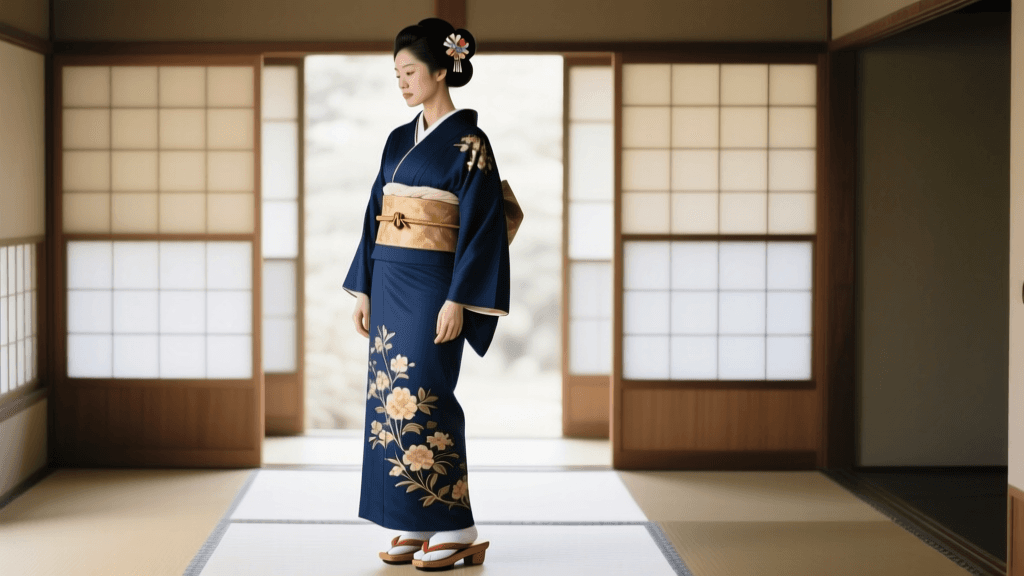
In the hyper-connected, fast-paced digital landscape of 2026, the pursuit of somatic grounding and digital detoxing has led many wellness practitioners back to ancient, tactile traditions. Among the most profound of these is the Japanese art of kitsuke—the formal method of wearing a kimono. While often viewed by outsiders merely as a complex sartorial endeavor, kitsuke is deeply intertwined with Zen spirituality. When approached with intention, the act of dressing becomes a moving meditation, a ritual that demands absolute presence, physical awareness, and mental clarity.
Unlike modern Western fashion, which prioritizes speed, convenience, and external projection, traditional Japanese garment dressing requires the wearer to slow down and engage with every layer, fold, and tie. In 2026, as mindfulness practices continue to evolve beyond the meditation cushion and into daily routines, the kimono offers a unique, full-body sensory experience that anchors the mind in the present moment. This article explores how the physical and spiritual elements of kitsuke serve as a powerful Zen practice for the modern era.
Samu: The Zen Art of Mindful Work
To understand kimono dressing as a spiritual practice, one must first understand the Zen concept of Samu (作務). In Zen monasteries, Samu refers to mindful work—the idea that everyday physical tasks, from sweeping the courtyard to chopping vegetables, are not distractions from meditation, but are meditation itself. The mindfulness traditions taught by global Zen communities emphasize that washing the dishes or folding laundry can be as spiritually potent as seated Zazen, provided the mind is fully anchored in the action.
Kitsuke is the ultimate expression of Samu in the realm of personal adornment. The process cannot be rushed. If a practitioner attempts to hurry while wrapping the nagajuban (under-robe) or tying the koshihimo (cotton waist ties), the fabric will bunch, the collar will sit unevenly, and the final silhouette will be compromised. Therefore, the garment itself enforces mindfulness. It demands Zanshin (continuous, relaxed awareness) and Shoshin (beginner's mind), requiring the wearer to approach the ritual with the same reverence and focus each time, regardless of how many years they have practiced.
Sensory Grounding Through Traditional Textiles
A core tenet of modern somatic therapy and Zen mindfulness is grounding—using the five senses to pull the mind away from anxious future-tripping or regretful past-ruminating. The traditional kimono provides a masterclass in sensory grounding. In 2026, contemporary artisans in weaving districts like Tango and Nishijin have placed a renewed emphasis on organic, unbleached silks and naturally dyed linens that heighten this tactile feedback.
When practicing mindful kitsuke, the practitioner tunes into specific sensory inputs:
- Auditory: The crisp, distinct sound of silk rubbing against silk, known as kinu-zure, serves as an auditory anchor, similar to the sound of a singing bowl.
- Tactile: The contrast between the smooth, cool silk of the outer kimono and the textured, breathable cotton of the hadajuban (skin undergarment) creates a layered sensory map across the body.
- Olfactory: Traditional kimono are stored in wooden tansu chests with camphor and sandalwood. The subtle scent released when unfolding the garment triggers a Pavlovian response, signaling to the brain that it is time to enter a meditative state.
- Proprioceptive: The weight of the silk and the gentle, firm pressure of the ties provide deep-pressure stimulation, which calms the nervous system.
The Mindful Kitsuke Progression
Transforming the act of getting dressed into a meditation requires a structured approach to each layer. Below is a guide to the mindful progression of kitsuke, aligning physical actions with specific Zen meditation focuses and breathwork patterns.
| Garment Layer | Physical Action | Zen Meditation Focus | Breath Pattern |
|---|---|---|---|
| Hadajuban & Susoyoke | Wrapping the skin-layer garments and securing the waist. | Grounding: Feeling the boundary between the self and the external world. | Deep diaphragmatic breathing; exhaling fully to release morning tension. |
| Nagajuban | Aligning the under-robe collar and securing the datejime. | Alignment: Straightening the spine, stacking the vertebrae, finding physical center. | Inhale to lift the sternum; exhale to relax the shoulders away from the ears. |
| Kimono (Outer Robe) | Wrapping the silk, adjusting the ohashori (waist fold), and balancing the hem. | Embracing: Wrapping the self in compassion; adjusting to the concept of Ma (space). | Slow, rhythmic breathing; matching the sweep of the fabric to the length of the exhale. |
| Obi & Obijime | Folding, wrapping, and tying the heavy sash at the core. | Centering: Activating the Hara (lower abdomen); cultivating inner stillness. | Sharp, focused exhalations during the tightening of the knots; resting breath after. |
By following this progression, the practitioner moves from the external boundaries of the skin to the deep, spiritual center of the core, mirroring the journey of a traditional seated meditation retreat.
Posture, the Hara, and the Obi
In Zen Buddhism, the Hara (located roughly two inches below the navel) is considered the physical and spiritual center of gravity. In seated Zazen meditation, practitioners are instructed to breathe deeply into the Hara to cultivate stability, courage, and presence. The kimono is uniquely designed to support and emphasize this anatomical and spiritual center.
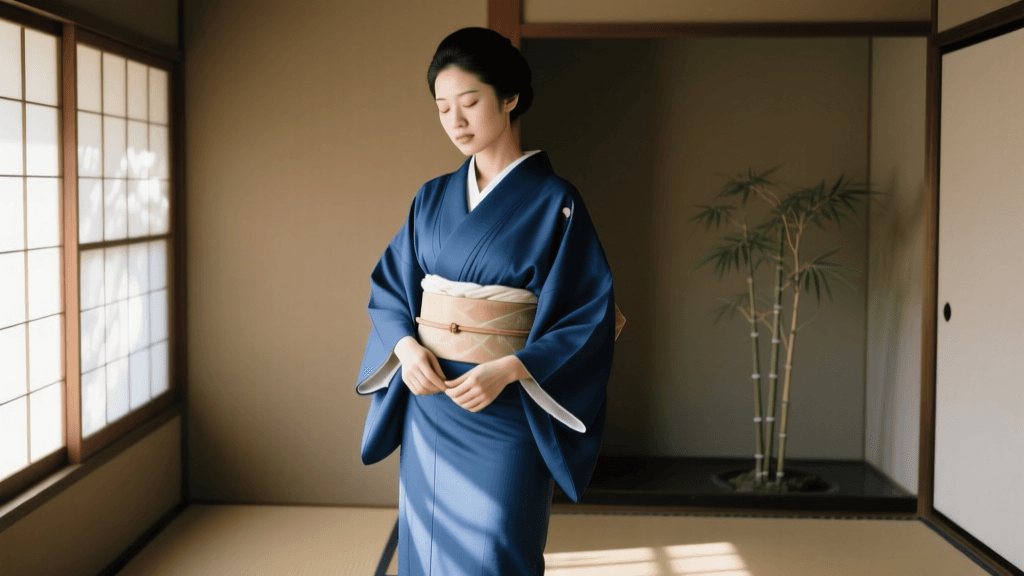
The Obi, the wide sash worn around the midsection, acts as a physical manifestation of the Hara. When the Obi is tied correctly, it provides firm, supportive pressure to the lower abdomen and lumbar spine. This physical feedback loop forces the wearer to maintain an upright posture and prevents slouching. More importantly, the gentle compression of the Obi makes the wearer hyper-aware of their breath. Every inhalation expands the abdomen against the silk sash, creating a continuous, tactile reminder to breathe deeply and remain present. In 2026, many wellness retreats in Kyoto utilize Obi-tying workshops specifically as a tool for teaching diaphragmatic breathing to beginners.
Embracing Ma (Negative Space) in Garment Styling
A crucial element of Japanese aesthetics and Zen philosophy is Ma (間)—the concept of negative space, or the pause between things. Ma is not merely emptiness; it is a pregnant void full of energy and possibility. In the context of kitsuke, Ma is essential to both the physical comfort and the spiritual lightness of the garment.
The most prominent example of Ma in kimono dressing is the eri-nuki, the deliberate gap left between the nape of the neck and the collar of the kimono. Pulling the collar back to expose the nape is not just a stylistic choice; it creates a physical space that allows the wearer to feel the air on their skin, preventing the garment from feeling suffocating. Spiritually, this space represents an open mind, free from the rigid dogma of clinging too tightly to the ego. Similarly, the tamoto (the deep, open pouch of the kimono sleeve) relies on empty space to create its elegant, swinging silhouette. Mindful dressing requires the practitioner to respect these voids, understanding that the space left empty is just as important as the fabric that covers the body.
Creating a Sacred Space for 2026 Practitioners
To fully integrate kitsuke into a modern mindfulness routine, the environment in which one dresses must be curated with intention. The Japan National Tourism Organization frequently highlights the importance of environmental harmony in traditional arts, noting that the space surrounding an activity is inextricably linked to the activity itself.
For the modern practitioner in 2026, creating a sacred dressing space does not require a sprawling traditional tatami room. It requires intentional boundaries. Begin by clearing the physical space of digital distractions—leave smartphones and smart-mirrors in another room. Lay out the kimono, the obiita (sash board), and the ties in a deliberate, orderly fashion, treating the preparation of the tools as the first step of the meditation. Lighting a subtle stick of byakudan (sandalwood) incense can help transition the brain from the chaotic frequency of modern life into the slow, deliberate rhythm of the tea house or the Zen temple.
Conclusion: The Garment as a Teacher
As we navigate the complexities of 2026, the kimono offers a profound counter-narrative to the culture of instant gratification. It is a garment that cannot be conquered; it must be collaborated with. Through the mindful practice of kitsuke, the silk, the cotton, and the negative space become teachers of Zen philosophy. They instruct us in the art of slowing down, the necessity of proper alignment, the beauty of empty space, and the vital importance of returning, breath by breath, to the center of our being. In this light, wearing a kimono is not merely an act of preserving Asian traditions; it is a radical, daily commitment to spiritual presence.