Traditional Chinese Footwear 2026: Cloud Shoes & Boots Guide
The Resurgence of Heritage Footwear in 2026
The global fashion landscape has witnessed a profound shift toward cultural authenticity and sustainable craftsmanship, and nowhere is this more evident than in the maturation of the Xin Zhongshi (New Chinese Style) movement. As we navigate the Spring and Summer 2026 fashion weeks in Shanghai and Paris, traditional Chinese footwear has transcended its status as a niche historical curiosity to become a staple of avant-garde and everyday wardrobes alike. Modern consumers are no longer satisfied with superficial motifs; they demand structural integrity, historical accuracy, and ergonomic comfort. This comprehensive guide explores the intricate world of traditional Chinese footwear in 2026, focusing on the iconic Yunxie (cloud shoes) and Xuezi (embroidered boots), offering actionable advice on purchasing, styling, and preserving these wearable pieces of art.
Yunxie (Cloud Shoes): Walking on Heritage
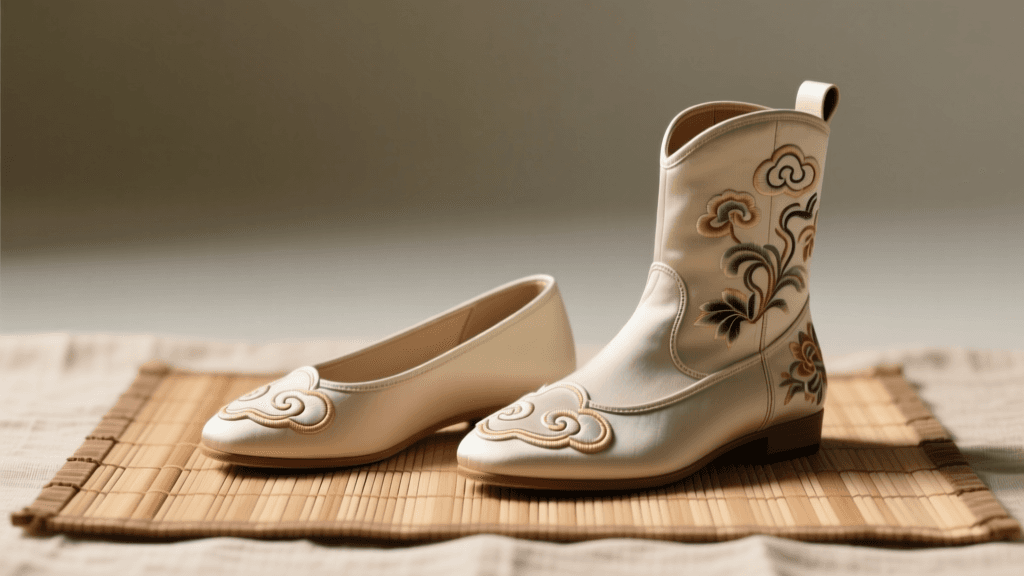
The Yunxie, literally translating to 'cloud shoe,' is perhaps the most recognized silhouette in Han Chinese footwear history. Originating in the Ming Dynasty and evolving through the Qing era, these shoes are characterized by their upturned toes and the legendary qiancengdi (thousand-layer sole). Historically, the creation of a single qiancengdi sole required a master cobbler to stitch together dozens of layers of cotton cloth, bonded with natural wheat paste, and secured with dense, water-resistant hemp stitching. The result was a sole that was remarkably shock-absorbent, breathable, and durable.
Modern 2026 Innovations in Cloud Shoes
In 2026, artisanal cooperatives in Beijing and Suzhou have successfully bridged the gap between ancient techniques and modern podiatry. While the exterior of the sole remains a meticulously hand-stitched cotton masterpiece, the interior core now frequently incorporates bio-based memory foam and ergonomic arch supports. This hidden innovation allows wearers to navigate modern urban environments—such as concrete sidewalks and subway grates—without sacrificing the traditional aesthetic. Furthermore, the uppers of 2026's premium Yunxie are crafted from sustainably farmed mulberry silk and upcycled vintage brocades, featuring embroidery that utilizes cruelty-free, high-tensile synthetic threads that resist fading under harsh UV exposure.
Xuezi (Embroidered Boots): From Equestrian Courts to Urban Streets
While cloud shoes dominated Han civilian life, the Xuezi (boot) holds a prestigious lineage rooted in the equestrian and military traditions of northern nomadic tribes, later formalized in the Manchu court of the Qing Dynasty. According to Encyclopedia Britannica's overview of Qing dynasty dress, footwear was strictly codified by rank, with court officials wearing boots featuring thick, white-soled bases made of layered paper and cloth, while the nobility adorned theirs in lavish silk embroidery.
The 2026 Boot Revival
Today's interpretation of the Xuezi boot strips away the rigid, heavy paper soles of the imperial court, replacing them with lightweight, vulcanized rubber and cork composites. The 2026 collections from leading heritage brands feature ankle-height boots with subtle side-zippers concealed beneath traditional fabric frogs (pankou). The embroidery has also evolved; rather than solely depicting imperial dragons or phoenixes, modern Xuezi often feature botanical motifs like plum blossoms, bamboo, and orchids, rendered in tonal, matte-finish threads that appeal to minimalist sensibilities. These boots pair exceptionally well with wide-leg linen trousers, tailored wool coats, and contemporary Xin Zhongshi wrap dresses.
2026 Buying Guide: Price & Material Comparison
Navigating the market for authentic traditional footwear requires an understanding of materials and craftsmanship tiers. Mass-produced costume shoes often use synthetic satin and glued foam soles, which degrade quickly and lack historical merit. Below is a comparative breakdown of what to expect when investing in authentic heritage footwear in 2026.
| Footwear Type | Traditional Material | 2026 Modern Adaptation | Avg. Price (USD) | Best Use Case |
|---|---|---|---|---|
| Yunxie (Cloud Shoe) | Mulberry Silk, Cotton Paste Sole | Brocade upper, hidden memory-foam core | $180 - $350 | Daily wear, cultural events, tea ceremonies |
| Xuezi (Court Boot) | Heavy Brocade, Paper/Leather Sole | Vegan silk, cork-rubber composite outsole | $250 - $450 | Winter styling, formal streetwear, fashion week |
| Huapenxi (Flower Pot) | Satin, Wooden Platform Base | Carved lightweight balsa wood, silk wrap | $200 - $300 | Stage performance, photography, editorial shoots |
| Caixie (Woven Sandal) | Straw, Hemp Cord | Upcycled organic cotton rope, leather footbed | $90 - $140 | Summer casual, resort wear, indoor lounging |
Sizing, Fit, and Wearability
One of the most common hurdles for international buyers is navigating traditional Chinese sizing. In 2026, most reputable heritage brands provide dual-sizing charts, but understanding the foundational metrics is crucial. Traditional Chinese shoe sizing is typically measured in millimeters (mm) or centimeters (cm), corresponding directly to the length of the foot. For example, a foot measuring 245mm translates to a Chinese size 24.5, which roughly equates to a US Women's 7.5 or a EU 39.
However, the last (the foot mold used to shape the shoe) of a traditional Yunxie is inherently narrower and more tapered at the toe than Western footwear. If you possess a wider forefoot, it is highly recommended to size up by half a centimeter (5mm) or seek out brands that offer 'wide-last' adaptations specifically designed for the global 2026 market. Furthermore, because traditional silk and cotton uppers do not stretch like modern leathers, ensuring a precise fit at the point of purchase is non-negotiable.
Care and Maintenance for Traditional Footwear
Investing in handcrafted silk and cotton footwear requires a commitment to proper maintenance. The natural materials used in Yunxie and Xuezi are highly susceptible to moisture, direct sunlight, and friction. To ensure your footwear lasts for years, adhere to the following 2026 best practices for garment and footwear preservation.
- Moisture Control: Never wear traditional cotton-soled shoes in heavy rain. The qiancengdi sole will absorb water, which can lead to interior mold and the breakdown of the natural wheat paste binders. If they become damp, stuff them with unbleached archival tissue paper and allow them to air dry in a shaded, well-ventilated room.
- Silk Cleaning: Avoid harsh chemical spot cleaners on embroidered silk uppers. Instead, use a soft-bristled makeup brush to gently dust away dry dirt. For stubborn stains, consult a specialist in historic textile conservation rather than attempting a DIY water-based cleaning, which can cause the silk dyes to bleed.
- Structural Support: Insert custom-carved cedar shoe trees immediately after wearing. Cedar naturally absorbs ambient moisture and odors while maintaining the structural integrity of the tapered toe box, preventing the silk from creasing or collapsing.
- UV Protection: Prolonged exposure to direct sunlight will degrade the protein structure of mulberry silk, leading to brittleness and color loss. Store your footwear in breathable cotton dust bags inside a climate-controlled wardrobe, away from windows.
'The true mastery of the qiancengdi sole lies not just in its density, but in its breathability. When we integrate modern ergonomic cores in 2026, we must ensure we do not compromise the micro-climate of the foot that our ancestors so perfectly engineered.' — Master Cobbler Lin Wei, Beijing Heritage Footwear Cooperative.
The Future of Intangible Craftsmanship
The preservation of traditional footwear-making is deeply tied to global efforts to protect intangible cultural heritage. As noted by the UNESCO Convention for the Safeguarding of the Intangible Cultural Heritage, the transmission of specialized artisanal skills from master to apprentice is vital for maintaining cultural diversity in an era of mass production. By choosing to invest in authentic, ethically produced Yunxie and Xuezi, consumers in 2026 are directly funding the survival of these ancient guilds.
Furthermore, the intersection of traditional textiles and modern footwear engineering continues to push boundaries. As highlighted by the Metropolitan Museum of Art's Heilbrunn Timeline regarding the historical significance of Chinese silk, the material has always been at the forefront of global trade and innovation. Today, that innovation manifests in bio-engineered silks and zero-waste pattern cutting, ensuring that the cloud shoe remains not just a relic of the past, but a dynamic, forward-looking element of the 2026 global wardrobe.
Styling Your Heritage Footwear
Integrating Yunxie and Xuezi into a contemporary wardrobe requires a balance of proportions. Because cloud shoes feature a distinct, grounded silhouette with an upturned toe, they pair beautifully with flowing, wide-leg silhouettes that allow the shoe's embroidery to peek out with every step. For the Xuezi boots, lean into textural contrasts: pair the lustrous silk brocade of the boot with matte, heavy-weight fabrics like raw denim, brushed wool, or textured linen. In 2026, the most compelling Xin Zhongshi outfits do not rely on head-to-toe historical replication; rather, they use heritage footwear as the anchoring statement piece that elevates a modern, minimalist ensemble into a work of sartorial art.