Zen Mindful Dress: Kimono Kitsuke Meditation Guide 2026
The Intersection of Zen Spirituality and Traditional Japanese Garments
In the fast-paced landscape of 2026, the global wellness movement has increasingly turned toward ancient practices that ground the mind and body. Among the most profound of these is the intersection of Zen spirituality and traditional Japanese garments. While the kimono is globally recognized as a masterpiece of textile art and cultural heritage, the act of wearing it—known as kitsuke—is rarely discussed as a spiritual discipline. Yet, within the walls of Zen monasteries and the quiet homes of mindful practitioners, dressing is not merely a preparatory task; it is a moving meditation.
Zen Buddhism emphasizes the concept of Samu (physical work done mindfully) and the idea that enlightenment is found in everyday activities. According to the Stanford Encyclopedia of Philosophy, Zen practice dissolves the boundary between the sacred and the mundane, elevating routine actions into profound spiritual exercises. When applied to the meticulous, layered process of Japanese traditional dress, this philosophy transforms the act of getting dressed into a deliberate, breath-aligned ritual of self-respect and presence.
Samue and Yukata: The 2026 Mindful Meditation Wardrobe
While the formal silk kimono is reserved for ceremonies, the garments most closely associated with daily Zen practice and mindful meditation are the Samue and the Yukata. In 2026, as sustainable and 'slow fashion' movements reach their zenith, these traditional garments have seen a massive resurgence among lay practitioners and wellness tourists visiting temples in Kyoto and Kamakura.
The Samue: Monastic Roots for Modern Mindfulness
The Samue (作務衣) translates literally to 'work clothes.' Originally designed for Buddhist monks to wear while performing daily chores like sweeping the temple grounds, chopping wood, or tending to gardens, the Samue consists of a loose-fitting jacket and matching trousers tied at the ankles and waist. The design allows for unrestricted movement, making it the premier garment for active mindfulness. In 2026, authentic Samue crafted from traditional Kurume-gasuri (cotton ikat) or premium Ojiya-chijimi (linen crepe) are highly sought after. A high-quality, artisan-woven hemp-blend Samue from a Kyoto-based atelier currently retails for approximately ¥32,000 to ¥45,000, reflecting a modern commitment to ethical, slow-fashion textiles that honor the earth.
The Yukata: Breathable Focus for Zazen
For seated meditation (Zazen), particularly during the humid Japanese summers, the cotton Yukata provides an ideal balance of structure and comfort. Unlike formal silk kimonos that require complex undergarments and rigid obi knots, the Yukata allows for a simplified, mindful dressing process. The crisp sound of the cotton, the natural breathability of the weave, and the gentle friction against the skin serve as continuous sensory anchors, keeping the practitioner's mind tethered to the present moment.
The Kitsuke Ritual: A Step-by-Step Moving Meditation
To practice mindful dress, one must abandon the modern urge for speed. The kitsuke ritual requires a quiet room, a centered posture, and synchronized breathing. As noted by the Metropolitan Museum of Art's Heilbrunn Timeline of Art History, the evolution of Japanese dress is deeply tied to social rituals and bodily awareness. The physical act of wrapping the body in yards of continuous, uncut fabric requires an intimate understanding of one's own geometry and center of gravity.
Aligning the Body and the Fabric
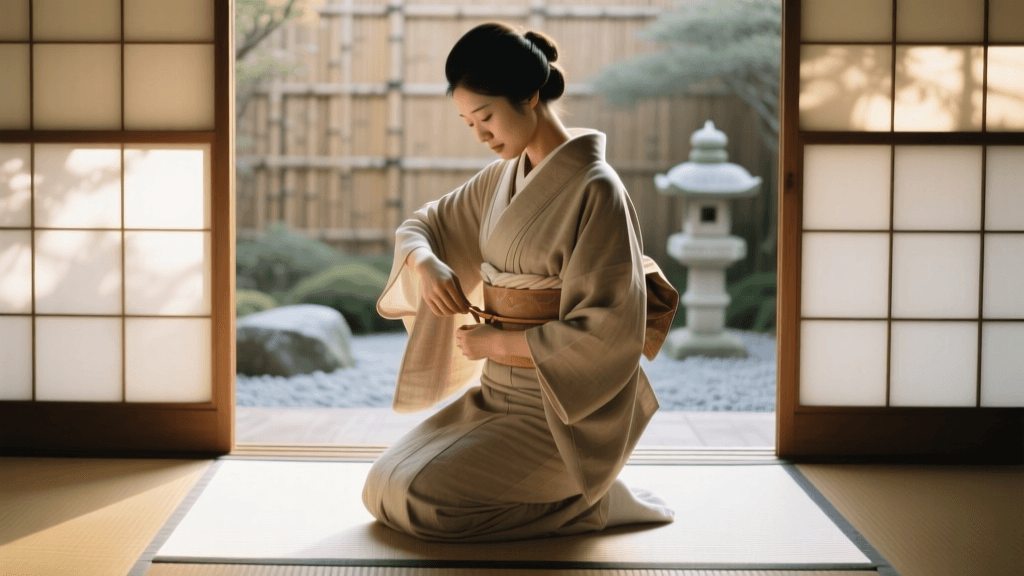
The process begins in Seiza (the traditional kneeling posture) or a grounded standing position. The practitioner focuses on the Juban (undergarment), smoothing it over the skin with deliberate, sweeping strokes that mimic the calming of a disturbed mind. When donning the outer robe, the left side is always wrapped over the right—a vital cultural rule that, when performed mindfully, reinforces respect for tradition and the continuity of life.
The tying of the Koshihimo (the thin cotton cords used to secure the garment at the waist) is where the meditation deepens. The practitioner must inhale deeply, expanding the diaphragm, and exhale slowly while pulling the cord taut. This ensures the garment is secure enough to hold the fabric in place, but loose enough to allow for deep, meditative breathing during Zazen. The tension of the cord becomes a physical manifestation of the 'Middle Way'—avoiding the extremes of too tight (attachment/struggle) and too loose (apathy/laxity).
Table: Kitsuke Stages and Zen Mindfulness Parallels
| Kitsuke Stage | Physical Action | Zen Mindfulness Parallel |
|---|---|---|
| Preparation (Junbi) | Laying out the garment, smoothing wrinkles, aligning the collar. | Shoshin (Beginner's Mind): Approaching the day with a blank slate, clearing mental clutter before action. |
| Wrapping (Matoi) | Draping the fabric over the shoulders, aligning the back seam with the spine. | Postural Awareness: Aligning the physical spine to allow the flow of energy (Ki) and maintain alertness. |
| Securing (Musubi) | Tying the Koshihimo and Obi cords with synchronized exhalations. | Breath Control (Anapanasati): Using the breath to regulate tension, finding the balance between effort and ease. |
| Final Adjustment (Naoshi) | Smoothing the front panels, ensuring the collar rests perfectly at the nape of the neck. | Kanso (Simplicity/Elegance): Removing the superfluous, accepting the present form without further alteration. |
The Sensory Experience of Mindful Dressing
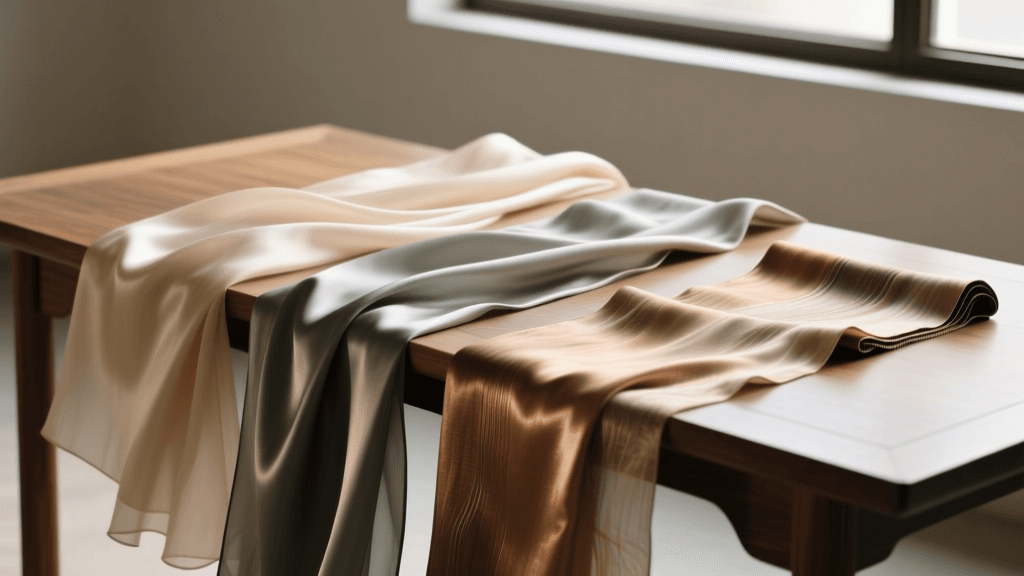
In 2026, somatic therapy and sensory grounding techniques are widely prescribed for anxiety and digital burnout. Traditional Japanese garments offer an unparalleled somatic experience. The textiles used in authentic kitsuke are rarely synthetic; they are living materials. Hemp, ramie, silk, and cotton react to the body's temperature and humidity.
When practicing mindful dress, the practitioner is encouraged to engage all five senses. Feel the cool touch of the silk or the textured slub of linen against the wrist. Listen to the soft rustle—known as kinagashi—when the sleeves move. Notice the subtle scent of natural indigo dye or the faint, woody aroma of the camphor wood storage box. This sensory immersion forces the brain out of its default mode network (where rumination occurs) and anchors it firmly in the physical environment, a core objective of Zen mindfulness.
Integrating Mindful Dress into Your 2026 Daily Routine
You do not need to be a monk in a remote mountain temple to experience the benefits of mindful kitsuke. The Japan National Tourism Organization highlights that cultural immersion and traditional arts are central to the modern Japanese lifestyle, and this extends to domestic routines. Here is how you can integrate this practice into your life today:
- The Morning Anchor: Dedicate 15 minutes each morning to dress without the distraction of podcasts, music, or screens. If you do not own a kimono, a modern Samue or a high-quality cotton wrap robe can serve the same psychological function.
- The Transition Ritual: Use the act of changing into your meditation garments as a psychological threshold. The moment the obi or waist tie is secured, signal to your brain that the time for worldly concerns has passed and the time for inner observation has begun.
- Mindful Folding (Tatamu): The meditation does not end when the garment is removed. The traditional method of folding a kimono or Samue into a perfect, flat rectangle requires immense concentration and geometric precision. Treat the evening folding process as a closing meditation, a way to gracefully conclude the day and restore order to your environment.
Conclusion: The Garment as a Spiritual Vessel
As we navigate the complexities of 2026, the ancient wisdom embedded in Asian traditions offers a sanctuary of calm. The kimono, the Samue, and the Yukata are not merely historical artifacts or fashion statements; they are spiritual vessels. By approaching the act of dressing as a deliberate, mindful ritual, we honor the artisans who wove the fabric, the ancestors who refined the form, and the quiet, centered self that exists beneath the layers. In the mindful wrap of the fabric, we find not just clothing, but a profound embrace of the present moment.