Zen Kitsuke: Mindful Kimono Dressing & Meditation Guide 2026
The Intersection of Zen Spirituality and Kitsuke in 2026
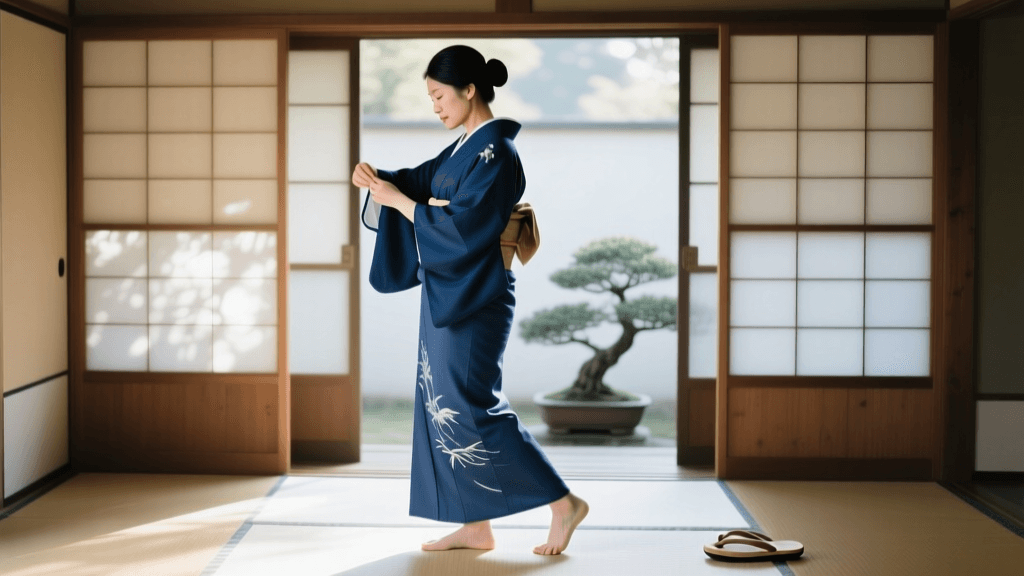
In an era defined by digital overload and rapid consumption, the global wellness movement of 2026 has seen a profound shift toward tactile, slow-living rituals. Among the most transformative of these practices is kitsuke—the traditional Japanese art of wearing the kimono. Far from being a mere exercise in historical fashion, kitsuke is increasingly recognized by mindfulness practitioners and cultural historians as a form of moving Zen meditation. The physical constraints, deliberate pacing, and sensory richness of dressing in a kimono demand a level of present-moment awareness that mirrors seated zazen (Zen meditation).
Historically, the kimono was the everyday dress of Japan, but its underlying geometry and the rituals of wearing it were deeply influenced by Zen Buddhism. As noted by the Metropolitan Museum of Art, the kimono's flat, uncut fabric structure forces the wearer to adapt their body to the garment, rather than the garment adapting to the body. This inversion of modern fashion logic requires the wearer to cultivate patience, posture, and breath control. In 2026, modern mindfulness coaches and traditional sensu (fan) and tea ceremony masters are collaborating to teach kitsuke not as a performance, but as a daily spiritual grounding technique.
The Philosophy of Mindful Dressing: Ma and Shibui
To approach kitsuke as a meditation, one must first understand two core Japanese aesthetic and spiritual concepts: Ma (negative space) and Shibui (subtle, unobtrusive beauty). In Zen philosophy, Ma is the pregnant void, the space between things that gives them meaning. When dressing in a kimono, Ma is physically manifested in the space between the collar and the neck, the drape of the sleeve, and the intentional folding of the excess fabric at the waist (ohashori).
Mindful dressing requires you to honor this space. You are not simply covering your body; you are architecting a sacred geometry around it. The concept of Shibui reminds us that true beauty does not shout. In 2026, the trend in meditative kitsuke leans heavily toward komon (fine pattern) and tsumugi (slubbed silk) textiles in muted, earthy tones that encourage inward reflection rather than outward validation. According to resources on Zen Buddhism and traditional arts, the repetitive, focused actions of traditional arts are designed to quiet the ego and bring the practitioner into a state of mushin (no-mind).
Preparing Your Zen Dressing Environment
Before touching a single piece of silk or cotton, you must curate your environment. A meditative kitsuke session should take place in a quiet, uncluttered room. If you do not have traditional tatami mats, a clean wooden floor or a natural fiber rug will suffice. The sensory experience is paramount to anchoring your mind.
- Olfactory Anchoring: Light a stick of high-quality, low-smoke incense 20 minutes before you begin. In 2026, the Shoyeido 'Daily Incense' line, particularly the 'Zu-en' (profound grace) scent, remains a favorite for its grounding sandalwood and clove profile, which signals to the brain that it is time to transition into a meditative state.
- Auditory Anchoring: Eliminate digital noise. If you require sound, opt for the natural acoustics of your own breathing, or a subtle, non-melodic ambient track featuring the sound of a shishi-odoshi (bamboo water fountain) or singing bowls.
- Visual Anchoring: Lay out your garments in the exact order of use, from innermost to outermost, on a clean cloth. This visual order prevents the mind from scrambling for the next item, maintaining a continuous flow of mindfulness.
Step-by-Step Zen Kitsuke Routine
The following routine integrates specific breathwork with the physical steps of kitsuke. Allocate at least 45 minutes for this practice; rushing is the antithesis of Zen.
1. Grounding with the Hadajuban and Nagajuban
Begin seated in seiza (kneeling) or cross-legged. Hold the hadajuban (undergarment) in your hands. Take three deep, diaphragmatic breaths, feeling the texture of the fabric. Slip it on, tying the front strings with a simple square knot. As you put on the nagajuban (the robe worn directly beneath the kimono), focus on the sensation of the silk or hemp against your skin. Adjust the collar so that it sits exactly one fist-width away from the nape of your neck. This space is your first physical encounter with Ma.
2. Wrapping the Kimono: Left Over Right
Stand with your feet shoulder-width apart. Drape the kimono over your shoulders, letting the sleeves fall. Grasp the front panels. Bring the right panel to your left hip, then wrap the left panel over it. (Wrapping right-over-left is strictly reserved for the deceased; maintaining the left-over-right rule is a mindful acknowledgment of life and vitality). As you pull the fabric taut, exhale slowly, imagining any mental tension being pulled out through the hem of the garment.
3. Tying the Koshihimo: The Breath of Tension
The koshihimo (hip cord) secures the kimono. This step often causes anxiety for beginners, leading to restricted breathing. Approach this mindfully. Wrap the cord around your waist, crossing it at the front. As you pull the cord tight, use the 4-7-8 breathing technique: inhale for 4 seconds, hold for 7 seconds, and exhale for 8 seconds while tying the knot. The cord should be firm enough to hold the heavy silk, but you must be able to slide two fingers comfortably between the cord and your body. If you cannot, untie and repeat. This teaches the mind to find the balance between discipline and self-compassion.
4. The Nagoya Obi as a Meditative Anchor
The obi (sash) is the heaviest and most complex garment. Using a 30cm wide Nagoya obi, fold the otaiko (drum) knot. The physical weight of the obi resting on your lower back serves as a somatic anchor, similar to a weighted blanket, stimulating the parasympathetic nervous system. As you tie the obijime (the decorative cord over the obi), focus entirely on the friction of the braided silk. The final knot is pulled tight on a long, slow exhale, sealing the practice.
Recommended Garments for Meditative Kitsuke in 2026
Not all kimonos are suited for meditation. Heavy, heavily embroidered brocades can cause physical fatigue, distracting the mind. For a Zen practice, you want garments that offer tactile feedback, breathability, and a fluid drape. Below is a comparison of ideal textiles for mindful dressing available in the 2026 market.
| Garment Layer | Material Recommendation (2026) | Weight (g/m²) | Meditative Focus & Benefit | Approx. Cost (USD) |
|---|---|---|---|---|
| Hadajuban | Organic Hemp-Cotton Blend | 120 | Skin grounding; excellent moisture wicking during deep breathing. | $45 - $70 |
| Nagajuban | Washable Habotai Silk | 45 | Fluid movement; reduces friction, allowing focus on posture. | $120 - $180 |
| Hitoe Kimono | Tsumugi (Pongee) Silk | 180 | Posture alignment; the slight stiffness provides gentle somatic feedback. | $400 - $850 |
| Nagoya Obi | Raw Silk with subtle weave | 250 | Breath anchoring; the weight acts as a calming pressure point. | $150 - $300 |
| Zori (Footwear) | Woven Igusa (Rush Grass) | N/A | Earthing; the natural grass texture stimulates acupressure points on the foot. | $60 - $110 |
Note: Prices reflect 2026 market rates for high-quality, ethically sourced, or meticulously restored vintage pieces from reputable Kyoto and Tokyo ateliers.
The Neuroscience of Restrictive Garments and Mindfulness
Why does wearing a kimono induce a meditative state? Modern neuroscience offers compelling insights. The kimono restricts the stride length and requires the wearer to maintain a straight spine to keep the collar aligned and the ohashori (waist fold) neat. This physical restriction limits the 'fidgeting' that often accompanies a restless mind.
When your physical movements are constrained and deliberate, your brain's motor cortex sends continuous, low-level feedback to the prefrontal cortex, reinforcing a state of focused attention. Furthermore, the tactile sensation of the obi pressing against the hara (the lower abdomen, considered the center of spiritual energy in Japanese philosophy) encourages deep, diaphragmatic breathing. Shallow chest breathing is physically uncomfortable when an obi is tied correctly, naturally forcing the practitioner into the deep, rhythmic breathing patterns associated with lowered cortisol levels and heightened alpha brain waves.
Integrating Kitsuke into Your 2026 Wellness Routine
You do not need to wear a kimono every day to reap the benefits of Zen kitsuke. Many practitioners in 2026 designate one morning a week—often a Sunday—as their 'Slow Dressing' day. This ritual replaces the morning scroll through smartphones with an hour of tactile, intentional living.
'The kimono does not just clothe the body; it clothes the mind in stillness. Every fold is a breath, every tie is a boundary against the chaos of the outside world.' — Master Yoko Sato, Kyoto Kitsuke & Mindfulness Institute, 2026.
For those looking to deepen their practice, several retreat centers in Kamakura and Kyoto now offer 'Silent Kitsuke' weekends, where participants spend three days learning to dress in complete silence, guided only by the subtle cues of their instructors and the rhythm of their own breath. Whether you are practicing alone in your bedroom or in a traditional machiya townhouse, the Zen of kitsuke remains a profound, accessible pathway to inner peace in our modern age.