Shichi-Go-San and Seijin-shiki: Children's and Coming-of-Age Kimono
The Cultural Significance of Milestone Celebrations
Japanese culture places profound importance on life transitions, marking them with intricate rituals, specific garments, and deep familial reverence. Among the most visually stunning and culturally significant of these milestones are Shichi-Go-San (The Seven-Five-Three Festival) and Seijin-shiki (Coming-of-Age Day). These events are not merely photo opportunities; they are deeply rooted in historical rites of passage that signify a child's survival, growth, and eventual integration into adult society. For parents and young adults navigating these traditions, understanding the specific garment requirements, layering systems, and financial investments is essential.
Shichi-Go-San: The Seven-Five-Three Festival
Celebrated annually on November 15th (though often observed on the nearest weekend), Shichi-Go-San is a traditional rite of passage for three- and seven-year-old girls, and five-year-old boys. Historically, childhood mortality was high, and these specific ages were considered critical milestones where children were deemed to have survived the most vulnerable years of early life. According to cultural historians and resources like Japan Guide's overview of Shichi-Go-San, families visit Shinto shrines to pray for the continued health, longevity, and prosperity of their children. The attire worn during this festival is highly specific to the age and gender of the child.
Age-Specific Garments and Symbolism
- Three-Year-Old Girls (Kamioki): Historically, this marked the age when children were allowed to grow their hair out. Today, three-year-old girls wear a standard children's kimono paired with a hifu—a padded, sleeveless silk vest worn over the obi. The hifu is designed to hide the stiff obi knot, making the outfit more comfortable for a toddler while maintaining a festive, elegant silhouette.
- Five-Year-Old Boys (Hakamagi): This ceremony marks the first time a boy wears a hakama (pleated, wide-legged trousers). The outfit consists of a kimono, a haori (a short jacket) adorned with the family crest (kamon), and the hakama. They also carry a traditional folding fan (sensu) and wear zori sandals.
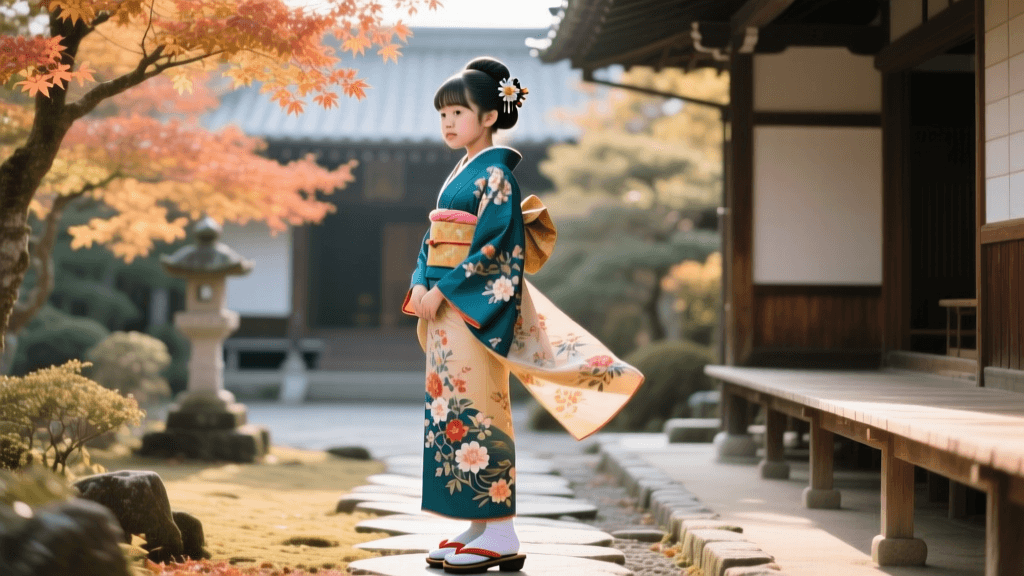
- Seven-Year-Old Girls (Obitoki): This milestone signifies the transition from wearing simple, tied sashes to wearing a formal, adult-style obi. Seven-year-olds wear a full-length, intricately dyed Yuzen kimono, tied with a real obi in a decorative knot (often a fukura-suzume or sparrow knot). A red silk sash called a shigoki is tied below the obi, and a decorative charm (hako-seko) is tucked into the front of the collar.
Practical Guide: Renting vs. Buying for Shichi-Go-San
Because children outgrow these garments rapidly, the vast majority of modern Japanese families opt to rent rather than purchase Shichi-Go-San attire. Rental packages typically include the kimono, undergarments, obi, zori sandals, and traditional hair accessories.
- Rental Costs: A complete 3-year-old girl's package (including hifu) typically ranges from ¥5,000 to ¥10,000 ($35 to $70 USD). For 5-year-old boys and 7-year-old girls, packages range from ¥8,000 to ¥20,000 ($55 to $140 USD), depending on the textile quality and brand.
- Purchasing Costs: Buying a brand-new, silk 7-year-old girl's set with a formal obi can cost anywhere from ¥50,000 to over ¥150,000 ($350 to $1,000+ USD). Synthetic washable alternatives are available for ¥15,000 to ¥30,000 ($100 to $200 USD).
Seijin-shiki: The Coming-of-Age Ceremony
Held on the second Monday of January, Seijin-shiki celebrates young adults who have reached the age of majority. While Japan's legal age of adulthood was lowered to 18 in April 2022, most municipalities continue to hold the Coming-of-Age ceremonies for 20-year-olds to avoid conflicting with university entrance exams and job hunting seasons. As noted in Japan Guide's feature on Coming-of-Age Day, this event is a vibrant display of traditional fashion, particularly for young women.
The Furisode and Hakama
For young women, Seijin-shiki is synonymous with the furisode, a formal kimono characterized by its dramatically long, swinging sleeves. The furisode is the highest rank of formal dress for unmarried women. The sleeves can measure anywhere from 95 cm to over 114 cm in length, symbolizing youth and availability for marriage in historical contexts. The textiles are often lavishly decorated with auspicious motifs like cranes, pine trees, peonies, and flowing water, utilizing techniques such as shibori (tie-dye), yuzen (resist dyeing), and heavy gold leaf embroidery.
Young men traditionally wear a montsuki haori hakama—a formal black kimono featuring five family crests, paired with a stiff, striped silk hakama and a haori jacket. However, in contemporary Japan, it is increasingly common for men to wear formal Western business suits to the ceremony, though traditional rental shops still see a steady demand for hakama.
Investing in Seijin-shiki Attire
The financial commitment for Seijin-shiki is significantly higher than for children's festivals, as it involves professional hair styling, makeup, and the services of a professional kimono dresser (kitsuke-shi).
- Women's Furisode Rental Packages: A standard package (furisode, obi, undergarments, zori, dressing, hair, and makeup) starts around ¥50,000 ($350 USD) for synthetic or basic silk sets. High-end, vintage, or designer silk furisode packages easily range from ¥100,000 to ¥300,000 ($700 to $2,000+ USD).
- Men's Hakama Rental: Full traditional sets rent for approximately ¥15,000 to ¥30,000 ($100 to $200 USD).
Comprehensive Sizing and Measurement Chart
Kimono sizing differs vastly from Western clothing. Rather than relying on standard S/M/L metrics, kimono are measured by mitake (total length from shoulder to hem) and yuki (sleeve length from the center back of the neck to the wrist). Below is a practical sizing guide for milestone garments.
| Age / Event | Gender | Primary Garment | Sleeve Length (Sode) | Standard Height Range |
|---|---|---|---|---|
| 3 (Shichi-Go-San) | Girls | Kimono with Hifu | ~57 cm (Standard) | 90 - 100 cm |
| 5 (Shichi-Go-San) | Boys | Haori & Hakama | ~57 cm (Standard) | 105 - 115 cm |
| 7 (Shichi-Go-San) | Girls | Full Obi Kimono | ~57 cm (Standard) | 115 - 125 cm |
| 20 (Seijin-shiki) | Women | Furisode | 100 - 114 cm | 150 - 170 cm |
| 20 (Seijin-shiki) | Men | Hakama / Suit | N/A (or standard) | 165 - 185 cm |
Essential Undergarments and Accessories
The beauty of a kimono relies heavily on what lies beneath. The layering system creates the iconic cylindrical silhouette, flattening the body's natural curves to provide a smooth canvas for the textile art.
- Susoyoke and Hadajuban: For women, the base layer consists of a susoyoke (a wrap-around half-slip) and a hadajuban (a thin cotton camisole). These absorb sweat and protect the expensive silk outer layers.
- Nagajuban: The nagajuban is the under-kimono. Only the collar (han-eri) and the very edge of the sleeves are visible beneath the outer kimono. For formal events, the nagajuban is often made of silk or high-quality synthetic crepe, and the han-eri is heavily embroidered.
- Datejime and Koshihimo: These are the ties and sashes used to secure the layers in place. Multiple koshihimo (thin cotton ties) are used to bind the garments, while a wider datejime is used to flatten the bust and waistline.
- Tabi and Zori: Split-toe tabi socks are mandatory for formal wear. They are typically stark white and made of stiff cotton or silk. Footwear consists of zori (flat, vinyl or brocade sandals) for women and girls, while boys and men may wear setta (leather-soled sandals) with their hakama.
Planning Timelines and Etiquette
Securing the perfect kimono requires advanced planning, especially for Seijin-shiki. Because the ceremony occurs nationwide on the same January morning, professional dressers and high-quality furisode are in incredibly high demand.
For Seijin-shiki: Young women should begin browsing rental catalogs and booking appointments in the spring of their 19th year (a full 9 to 10 months in advance). Popular designs and morning time slots (which are preferred so the wearer can attend the official municipal ceremony before the obi becomes uncomfortable) sell out almost immediately.
For Shichi-Go-San: Parents should secure rentals by late summer (August) for the November festival. While the demand is slightly more distributed across October and November weekends, premium 7-year-old silk sets in popular colors like deep crimson or auspicious purple are reserved early.
Understanding the nuances of children's kimono and coming-of-age furisode allows families to participate in these timeless traditions with confidence. Whether wrapping a toddler in a padded hifu or watching a young adult step into the sweeping sleeves of a furisode, these garments serve as wearable archives of Japanese history, artistry, and familial love.