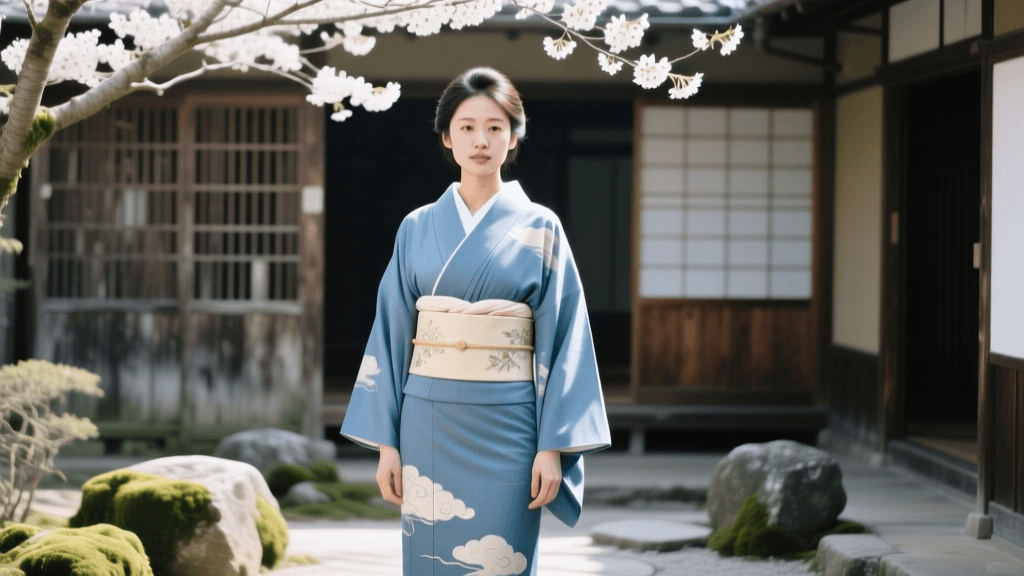
Mindful Kimono Dressing: 2026 Zen Meditation Guide
The Intersection of Sartorial Art and Zen Spirituality
In the hyper-connected, digital-first landscape of 2026, the global wellness community has increasingly turned to analog, tactile practices to anchor the mind. Among the most profound of these is the traditional Japanese art of kitsuke (kimono dressing), reimagined not merely as a method of getting clothed, but as a moving meditation. When approached through the lens of Zen Buddhism, the meticulous layering, folding, and tying of the kimono and its accompanying obi (sash) become a masterclass in mindfulness, intentionality, and somatic grounding.
According to the Stanford Encyclopedia of Philosophy, Zen practice emphasizes the integration of meditative awareness into everyday actions, dissolving the boundary between the sacred and the mundane. The physical constraints and precise requirements of wearing a kimono naturally enforce this awareness. You cannot rush the tying of an obi; you cannot slouch when a perfectly aligned back seam rests against your spine. In 2026, wellness retreats from Kyoto to California are formally incorporating mindful kitsuke into their morning routines, recognizing that the garment itself can serve as a wearable meditation bell, calling the wearer back to the present moment with every deliberate movement.
Sensory Grounding Through Traditional Textiles
The foundation of mindful dressing begins with the selection of the textile. The sensory experience of natural fibers against the skin acts as a continuous grounding mechanism, pulling the practitioner out of anxious thought loops and into physical reality. The Metropolitan Museum of Art's Heilbrunn Timeline of Art History notes that the historical evolution of Japanese textiles was deeply intertwined with social rituals and spiritual purity, a legacy that modern practitioners can harness for psychological regulation.
Below is a guide to selecting the appropriate traditional fabric for your meditative practice in 2026, based on sensory feedback and Zen alignment:
| Fabric Type | Japanese Term | Sensory Profile | Zen Meditation Alignment |
|---|---|---|---|
| Silk | Kinu | Smooth, cool, temperature-regulating, fluid drape. | Mushin (No-Mind): Encourages a fluid, unattached state of consciousness, allowing thoughts to pass without friction. |
| Linen | Asa | Crisp, textured, highly breathable, structured. | Zanshin (Relaxed Alertness): The slight stiffness provides continuous physical feedback, keeping the mind sharply anchored to the body. |
| Cotton | Momen | Soft, forgiving, warm, gentle against the skin. | Maitri (Loving-Kindness): Promotes self-compassion and comfort, ideal for longer, restorative seated meditation sessions. |
| Pongee | Tsumugi | Slubbed, rustic, slightly heavy, matte finish. | Wabi-Sabi: The irregularities in the weave celebrate imperfection, helping the practitioner release the need for absolute control. |
Step-by-Step Mindful Kitsuke Routine
To transform the act of dressing into a formal Zen practice, one must slow down the process significantly. A standard kitsuke might take 15 minutes; a mindful kitsuke should take 30 to 45 minutes. Follow this structured routine to integrate breathwork with garment placement.
Step 1: Centering and Posture (Junbi)
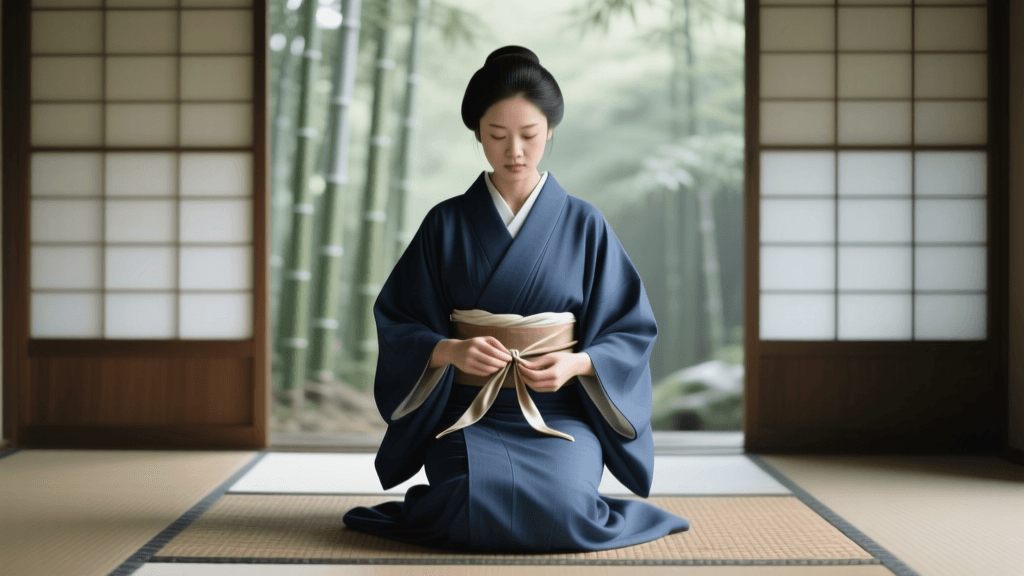
Before touching the fabric, sit in seiza (traditional kneeling posture) on a zabuton cushion. Close your eyes and take ten deep, diatonic breaths. Visualize the day ahead and set a singular intention (e.g., patience, clarity, or gratitude). This separates the mundane act of waking up from the sacred act of preparing your physical vessel.
Step 2: The Juban and the Breath
The juban (undergarment) is the first layer of silk or cotton against the skin. As you slip your arms through the sleeves, synchronize your movements with your breath. Inhale as you gather the fabric, and exhale as you smooth it over your shoulders. Pay acute attention to the eri (collar). Aligning the collar perfectly at the nape of the neck requires fine motor control, which naturally quiets the brain's default mode network.
Step 3: Wrapping the Kimono (Left Over Right)
Drape the kimono over your shoulders, holding the collar ends evenly. Wrap the right side of the kimono across your body first, followed by the left side over the right. (Note: Right over left is strictly reserved for dressing the deceased in Japanese culture, making this a vital point of mindful awareness). As you pull the fabric taut across your hips, feel the weight of the garment. The heavy drape of traditional silk provides a mild form of deep pressure stimulation, similar to a weighted blanket, which has been clinically shown to lower cortisol levels.
Step 4: Tying the Koshihimo (The Anchor)
The koshihimo is a thin cotton or silk tie used to secure the kimono at the hips. This is where many beginners rush and create uneven folds. Approach this step with the 4-7-8 breathing technique:
- Inhale quietly through the nose for 4 seconds while gathering the excess fabric at your side seams.
- Hold the breath and the fabric tension for 7 seconds, ensuring the back seam is perfectly centered with your spine.
- Exhale slowly through the mouth for 8 seconds while crossing the koshihimo at your front and pulling it snugly to the sides.
- Repeat this breathing cycle as you tie the flat knot at the front.
Step 5: The Obi and Final Integration
The obi is the spiritual and physical core of the kimono. For a mindful practice, a standard 300cm hanhaba obi (half-width sash) is recommended for its versatility and ease of self-tying. As you wrap the obi around your waist, feel it acting as a physical corset that naturally enforces an upright, dignified posture. The tightness of the obi restricts shallow chest breathing, forcing you to breathe deeply into your lower abdomen (the hara, or spiritual center in Japanese philosophy). Tying the final otaiko (drum) or bunko (bow) knot requires reaching behind your back, demanding a profound level of bodily awareness and trust in your muscle memory.
Integrating Mindful Dress into Modern Life
As we move through 2026, the concept of 'sartorial mindfulness' is expanding beyond the walls of traditional tea houses. Psychologists and somatic therapists are increasingly recognizing the value of structured, ritualistic dressing for individuals dealing with anxiety, dissociation, or ADHD. The kimono provides a physical boundary—a beautifully woven container—that helps regulate the nervous system.
'When I tie my obi, I am not just securing a piece of cloth. I am gathering my scattered thoughts and binding them into a single, focused point of energy. The garment holds me, so I can hold my mind.' — Anonymous Kyoto-based Zen practitioner, 2026.
Conclusion: The Garment as a Teacher
The kimono does not forgive haste. If your mind wanders, the collar will gap, the back seam will twist, and the obi will sit unevenly. In this way, the garment acts as an honest mirror, reflecting your internal state back to you in real-time. By embracing the meticulous, time-honored steps of mindful kitsuke, you transform a daily chore into a profound Zen meditation. You step into the world not just clothed in silk and linen, but armored in presence, intention, and unshakeable calm.