Mindful Kitsuke: Kimono Dressing For Zen Meditation In 2026
The Intersection of Sartorial Ritual and Stillness
In the hyper-connected, digitally saturated landscape of 2026, the pursuit of mindfulness has evolved beyond simple breathing exercises into deeply embodied, tactile practices. Among the most profound of these is the integration of kitsuke (the art of kimono dressing) with Zen meditation. Far from being merely a historical fashion statement, the kimono is a complex architectural garment that demands physical awareness, deliberate movement, and deep concentration. When approached as a moving meditation, the act of wrapping, folding, and tying the kimono becomes a powerful prelude to zazen (seated Zen meditation), bridging the gap between the external world and internal stillness.
According to the Soto Zen Buddhism network, proper physical posture is the foundational pillar of meditation, directly influencing the flow of breath and the clarity of the mind. The traditional kimono, with its precise geometries and structured undergarments, naturally enforces the spinal alignment required for deep meditative states. In 2026, practitioners and cultural preservationists alike are increasingly recognizing kitsuke not as a prerequisite to meditation, but as the first stage of the meditation itself.
The Somatic Anchor: How Kimono Structure Aids Zazen
The physical construction of the kimono provides unique somatic feedback that aids the meditator. Unlike modern Western clothing, which often accommodates slouching or asymmetrical postures, the kimono requires a centered, balanced approach to wear correctly. This begins with the juban (undergarment) and the alignment of the collar.
Cervical Alignment and the Y-Mono Balance
The collar of the kimono and juban must be crossed in a precise 'Y' shape, known as Y-mono. To achieve the perfect angle at the nape of the neck, the wearer must elongate their cervical spine and tuck their chin slightly. This micro-adjustment perfectly mirrors the postural instructions given in Zen monasteries: keeping the head balanced as if suspended by a thread from the ceiling. By physically locking the collar into place, the wearer creates a gentle, continuous reminder to maintain cervical alignment throughout their seated practice.
Core Compression and Lumbar Support
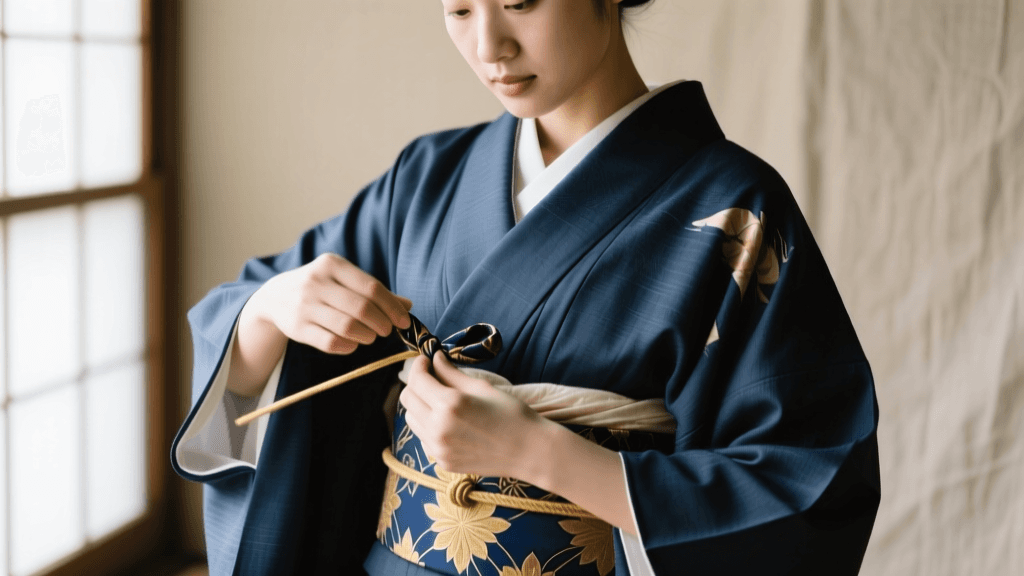
The obi (sash) and the koshihimo (waist ties) act as a supportive corset that engages the core muscles without restricting the diaphragm. When tied with mindful intention, the datejime (a thin silk tie used to secure the obi) provides lumbar support that prevents the lower back from rounding during extended periods of cross-legged sitting. This physical compression acts as a somatic anchor; whenever the mind wanders during zazen, the gentle, grounding pressure of the silk against the torso serves as a tactile cue to return to the present moment and the breath.
Selecting the Right Garments for Seated Meditation in 2026
Not all kimono are suited for the rigors of seated meditation. Highly formal garments, such as the heavy, stiff brocades of a uchikake or the restrictive maru obi, can impede circulation and distract from the meditative experience. In 2026, the focus for meditation-grade kimono is on organic, breathable textiles that offer structural integrity while allowing the hips and knees to rest comfortably in the lotus or half-lotus position.
The preservation of these specialized weaving techniques is vital. As noted by the Ministry of Economy, Trade and Industry (METI), traditional crafts like Tsumugi (pongee silk) are experiencing a renaissance among younger generations seeking sustainable, analog experiences in a digital world. These textiles offer the perfect balance of durability and softness required for mindful movement.
| Fabric Type | Breathability | Zazen Suitability | 2026 Avg. Price (USD) |
|---|---|---|---|
| Ojiya Chijimi (Linen) | High | Excellent (Summer/Hot Climates) | $850 - $1,200 |
| Yuki Tsumugi (Pongee Silk) | Medium | Superior (All-Season, molds to body) | $1,500 - $3,500 |
| Ro (Gauze Silk) | Very High | Good (High Heat, less structural support) | $600 - $900 |
| Organic Cotton Meisen | High | Very Good (Beginner, easy care) | $300 - $550 |
A Step-by-Step Mindful Dressing Ritual
To transform kitsuke into a Zen practice, one must slow down the process, synchronizing each physical action with the breath. The Victoria and Albert Museum's extensive research on the structural elements of the kimono highlights the complex layering involved in traditional dress. Here is how to approach these layers mindfully:
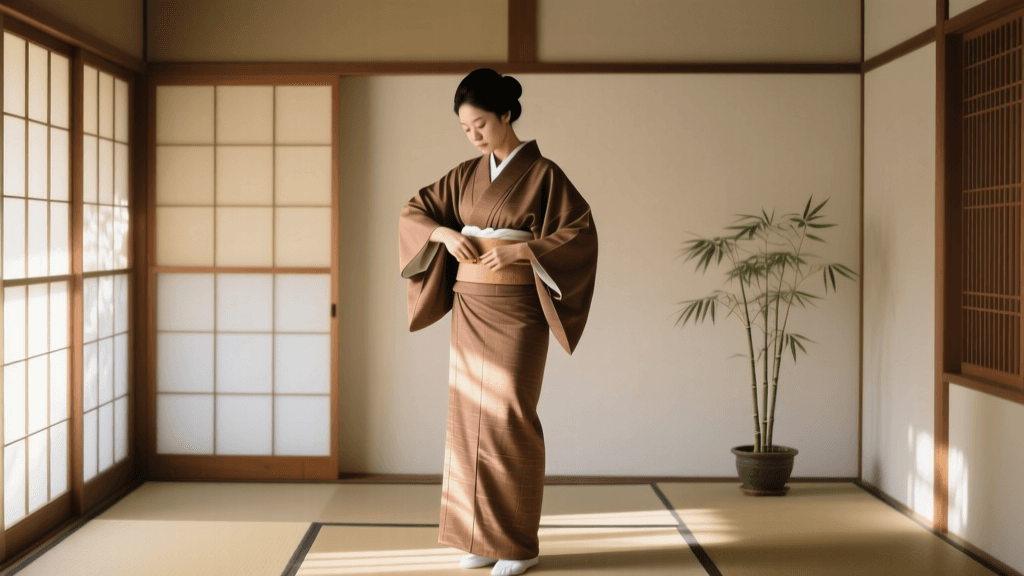
- Grounding (The Juban): Before touching the silk, stand in shizentai (natural, relaxed posture). Take three deep, diaphragmatic breaths. As you slip on the juban, focus on the sensation of the fabric against your skin. Smooth the front panels with slow, deliberate downward strokes, exhaling as your hands move toward your hips.
- Wrapping (The Kimono Body): Drape the kimono over your shoulders. As you pull the right panel across your body, inhale deeply. As you wrap the left panel over the right (the universal rule for the living), exhale slowly, visualizing the shedding of external anxieties. The physical crossing of the panels represents the closing off of worldly distractions.
- Securing (The Koshihimo): Take the first koshihimo (cotton waist tie, typically 90cm in length). Wrap it around your waist, crossing it at the back. As you pull the ends to the front to tie, do not yank. Instead, use a steady, continuous tension synchronized with a long, slow exhalation. Tie a simple square knot, ensuring it sits comfortably below the hip bones to allow for cross-legged sitting.
- Aligning (The Ohashori): Adjust the ohashori (the fold at the waist) so it is perfectly level. This requires meticulous attention to detail and visual balance. Use this step to practice single-pointed focus (joriki), noticing the precise geometry of the folds.
- The Final Anchor (The Obi): For meditation, a soft, unlined hanhaba obi (half-width sash, approx. 15cm wide) or a supple hakata obi is recommended. Wrap it firmly around the core. The final tightening should coincide with the deepest part of your inhalation, expanding your ribcage against the silk, followed by a relaxing exhalation that settles the sash into its supportive position.
“The robe is not merely a covering; it is the boundary where the chaotic world ends and the disciplined mind begins. To dress with intention is to arrive at the cushion before you have even sat down.” — Contemporary Zen Sartorial Philosophy, 2026.
The Sensory Experience: Sound and Tactility
Zen places immense importance on sensory awareness—not as a distraction, but as a gateway to presence. The kimono provides a rich sensory landscape. The subtle rustle of silk, known as kinu-zure, is a sound deeply embedded in Japanese aesthetic consciousness. During walking meditation (kinhin), the rhythmic swishing of the kimono sleeves and hem provides an auditory metronome, helping to pace the practitioner's steps and maintain a steady, walking trance.
Furthermore, the tactile sensation of the obi-jime (the decorative cord tied over the obi) resting against the solar plexus serves as a physical anchor. In 2026, many mindfulness coaches specializing in somatic therapy recommend weighted or textured garments for anxiety relief. The traditional kimono naturally provides this deep-pressure therapy, wrapping the nervous system in a secure, swaddling embrace that lowers cortisol levels and prepares the brain for theta-wave meditation states.
Modern Retreats: Blending Sartorial Tradition and Stillness
Recognizing the profound psychological benefits of this practice, several boutique retreats in Kyoto and Kamakura have introduced 'Mindful Kitsuke and Zazen' programs in 2026. These retreats cater to international visitors and local professionals suffering from digital burnout. Participants spend the first hour of the morning in silent, guided dressing, treating the folding of the haori and the tying of the tabi (split-toe socks) as a sacred ritual. Only after the physical armor of the kimono is properly secured do they enter the meditation hall.
This integration of fashion and spirituality highlights a broader 2026 cultural shift: the rejection of 'fast fashion' and disposable mindfulness apps in favor of rigorous, embodied, and historically rooted practices. The kimono demands patience; it cannot be rushed. In a world obsessed with speed, the thirty minutes required to properly dress in a kimono is a radical act of rebellion—a forced deceleration that perfectly primes the mind for the absolute stillness of Zen.
Conclusion
The kimono is far more than a beautiful textile; it is a tool for physical and mental alignment. By approaching kitsuke as a deliberate, mindful ritual, practitioners can leverage the garment's unique structural properties to deepen their zazen practice. As we move further into 2026, the synthesis of traditional Japanese sartorial arts and Zen spirituality offers a profound, tactile antidote to the disembodied nature of modern life, proving that the path to enlightenment can indeed be woven from silk, cotton, and mindful intention.