Bunka Kimono Pattern Drafting & Online Workshops 2026
The landscape of traditional Japanese garment education has undergone a remarkable transformation by 2026. As the global fashion industry pivots toward sustainability, zero-waste design, and slow fashion, the ancient techniques of Japanese garment construction have moved from niche cultural preservation to the forefront of modern design curricula. For international students, aspiring designers, and textile enthusiasts, accessing this knowledge no longer requires relocating to Tokyo or Kyoto for years on end. Today, a hybrid ecosystem of prestigious Japanese fashion school workshops and specialized online learning platforms offers unprecedented access to the mastery of kimono pattern drafting, shibori dyeing, and traditional hand-sewing methods.
The Renaissance of Traditional Garment Education
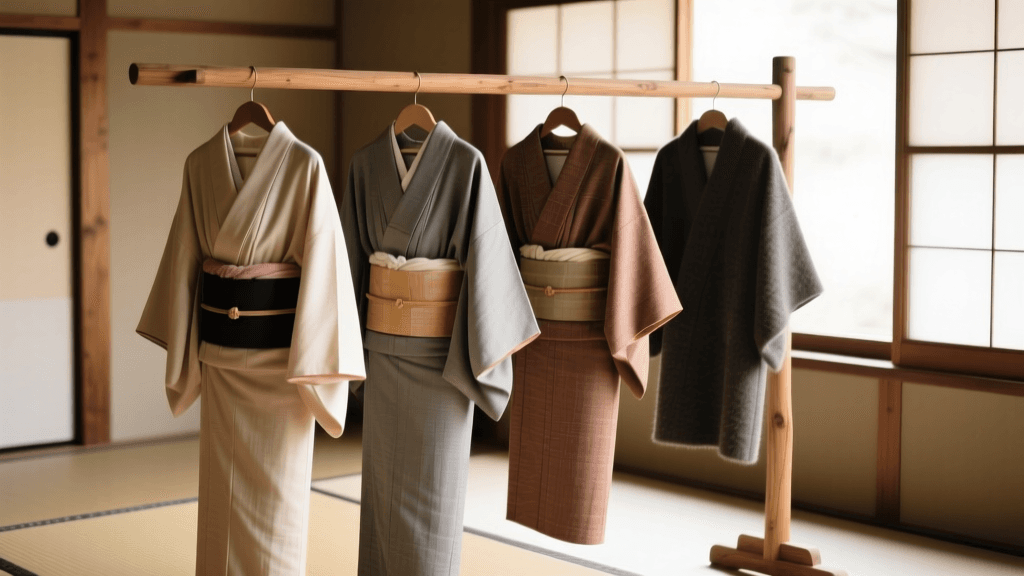
In 2026, the study of traditional Japanese clothing—ranging from the formal kimono to the casual summer yukata and jinbei—is driven by a desire to understand zero-waste pattern making. Unlike Western tailoring, which relies on complex curved seams and generates significant fabric waste, traditional Japanese garments are constructed from straight cuts of tanmono (narrow bolt fabric). This modular approach means a kimono can be entirely disassembled, cleaned, resized, or repurposed without damaging the textile. According to cultural initiatives supported by The Japan Foundation, international interest in these sustainable heritage crafts has surged, prompting top-tier educational institutions to digitize their archives and offer hybrid learning models that cater to a global audience.
Bunka Fashion College: Bridging Heritage and Technology
Bunka Fashion College in Tokyo remains the undisputed gold standard for fashion education in Japan. While globally renowned for its avant-garde Western tailoring alumni, Bunka’s Department of Traditional Japanese Dressmaking has radically updated its curriculum for 2026. The school now offers a hybrid 'Traditional Garment Construction Certificate' that blends ancient hand-sewing techniques with modern digital visualization.
Students enrolled in the 2026 cohort begin with physical or mailed material kits containing authentic cotton tanmono and specialized tools. The in-person intensive workshops, held bi-annually in Tokyo's Shibuya campus, focus on the tactile mastery of chakunui (traditional kimono hand-sewing). Instructors emphasize the kuke technique, an invisible blind-stitching method used for hems and linings that allows the fabric to drape naturally without puckering. For international students unable to attend the Tokyo intensives, Bunka’s synchronized online modules feature multi-angle 4K camera setups, allowing remote learners to observe the exact needle tension and fabric manipulation required for perfect straight-line stitching.
Kyoto Seika University & Regional Craft Workshops
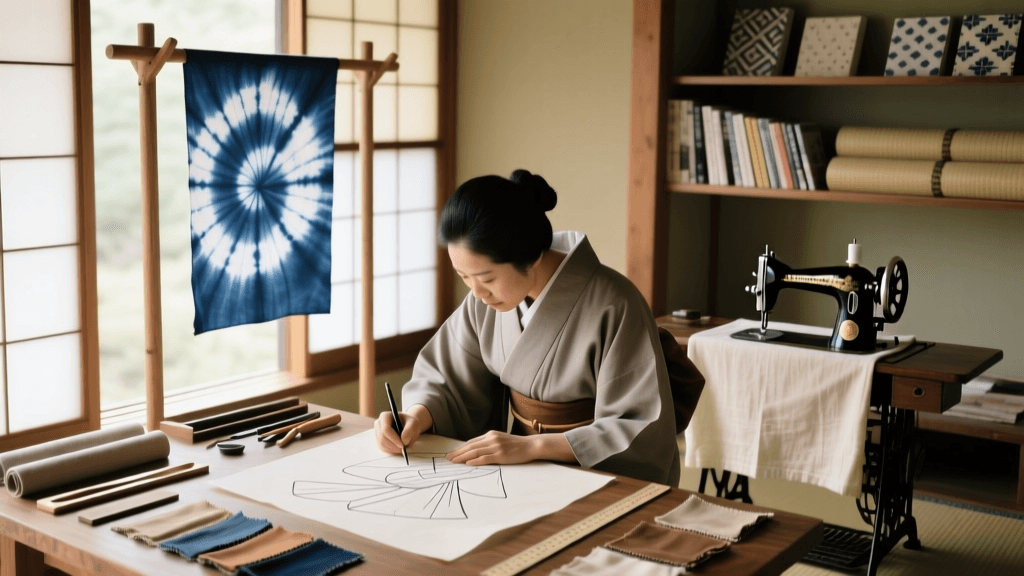
While Tokyo excels in structural pattern drafting and sewing, Kyoto remains the beating heart of textile dyeing and surface design. Kyoto Seika University offers highly sought-after summer intensives focusing on the intersection of traditional textiles and modern garment application. Their 2026 'Shibori and Yuzen Application' workshop is a three-week immersive program where students learn to resist-dye their own tanmono bolts before cutting and assembling them into unlined summer yukata.
These regional workshops are critical for students who want to understand the complete lifecycle of a garment. Participants work alongside local artisans in Kyoto’s Nishijin district, learning how the stiffness of silk crepe versus the softness of indigo-dyed cotton dictates the drape and movement of the final garment. Because these workshops are highly localized and rely on physical dye vats and steamers, they remain strictly in-person, offering a vital counterbalance to the rise of digital learning.
Online Learning Platforms for Global Students
For those seeking foundational knowledge before committing to expensive university intensives, 2026 has seen a maturation of specialized online platforms. Vogue Gakuen Online, the digital arm of Japan’s premier crafting and sewing school, offers modular courses in 'Kimono Remake and Upcycling.' This is particularly relevant in 2026, as the market for vintage kimono has exploded, and designers are learning how to deconstruct damaged silk garments to create modern haori jackets or wide-leg trousers without wasting the precious vintage textiles.
Additionally, platforms like Domestika and specialized Patreon communities hosted by independent Japanese masters have democratized access to niche skills. Courses focusing on Sashiko (functional embroidery) and Boro (mending) are incredibly popular, teaching students how to reinforce and decorate garments using traditional running stitches. These online courses are highly affordable and provide immediate, actionable skills that can be applied to both traditional and contemporary wardrobes.
2026 Program Comparison: Workshops vs. Online Learning
Choosing the right educational path depends on your budget, location, and specific design goals. Below is a comparison of the top Japanese garment construction programs available in 2026.
| Program Name | Institution / Platform | Format | Est. Cost (2026) | Primary Focus Area |
|---|---|---|---|---|
| Traditional Dressmaking Cert. | Bunka Fashion College | Hybrid (Online + 2-week Tokyo Intensive) | $2,800 USD | Pattern Drafting, Chakunui Sewing |
| Summer Shibori Intensive | Kyoto Seika University | In-Person (3 weeks in Kyoto) | $3,200 USD | Resist Dyeing, Textile Prep |
| Kimono Remake & Upcycling | Vogue Gakuen Online | 100% Online (Self-Paced) | $350 USD | Vintage Deconstruction, Modernizing |
| Zero-Waste Tanmono Drafting | Domestika | 100% Online (Pre-Recorded) | $45 USD | Straight-Line Cutting, Math |
| Sashiko & Boro Mending | Independent Master Patreon | Online (Live Monthly Q&A) | $15 USD / month | Embroidery, Structural Mending |
The Tanmono Challenge: Pattern Drafting Without Waste
The most profound lesson taught across all these 2026 programs is the philosophy of the tanmono. Traditional Japanese fabric is woven in narrow bolts, typically measuring between 36 and 40 centimeters in width and roughly 12 meters in length. Western pattern drafting relies on laying out curved paper patterns on wide fabric and cutting away the negative space. Japanese pattern drafting, conversely, uses the entire width of the bolt.
Students learn to calculate their body measurements and map them onto the 36cm width using a series of folds and straight cuts. The sleeves (sode), body panels (migoro), and collars (eri) are all derived from these continuous straight lines. If a student’s hips are wider than the standard panel width, they do not cut a larger curve; instead, they learn to add a secondary side panel or adjust the overlap of the front panels. This mathematical approach to garment construction is a revelation for Western-trained designers, forcing them to think in terms of modular geometry rather than organic sculpting.
Essential Tools for the Modern Kimono Maker
To succeed in either an in-person workshop or an online course, students must acquire specific tools that differ vastly from Western sewing kits. In 2026, sourcing these tools internationally has become easier through specialized global exporters, but knowing exactly what to buy is crucial.
- Shozaburo Tailor Shears (240mm): The absolute standard for cutting silk and cotton. Unlike Western shears that leave micro-serrations, Shozaburo blades are finished to slice through delicate fibers cleanly, preventing fraying on the edges of the tanmono.
- Hera (Marking Spatula): A small, smooth tool traditionally made from bamboo, ivory, or high-density resin. Instead of using chalk or ink that might stain vintage silk, students use the hera to press a temporary, visible crease into the fabric to mark seam allowances.
- Take-jaku (Bamboo Ruler): A long, flexible bamboo measuring stick. Bamboo is preferred because it does not stretch or warp with humidity, ensuring that the 12-meter bolt is measured with millimeter precision.
- Kukeshin (Blind Stitch Needle): An exceptionally fine, short needle designed specifically for the invisible hemming techniques required when attaching the silk lining (hakkake) to the outer shell of a formal kimono.
Career Paths and the Future of Heritage Fashion
The skills acquired through these 2026 workshops and online programs extend far than making a single traditional garment. Graduates are increasingly applying zero-waste tanmono drafting to contemporary streetwear, creating modular, size-inclusive clothing lines that generate zero textile waste. Furthermore, the mastery of chakunui hand-sewing has created a niche but highly lucrative career path in the conservation and restoration of museum-quality textiles and vintage archives.
Whether you are logging into a Vogue Gakuen module from your living room or sitting on the tatami mats of a Kyoto dyeing studio, the study of Japanese garment construction in 2026 offers a masterclass in patience, precision, and profound respect for materials. It is a discipline that teaches designers not just how to make clothes, but how to ensure those clothes can endure, adapt, and be reborn for generations to come.