Everyday vs Ceremonial Hanbok: 2026 Styling & Fabric Guide
The Evolution of Hanbok in 2026
As we navigate the fashion landscape of 2026, the Korean hanbok continues to experience a profound global renaissance. No longer confined strictly to historical dramas or ancestral rites, this iconic garment has bifurcated into two distinct yet equally important categories: the ceremonial Myeongjeol (festive) hanbok and the modernized Saenghwal (everyday) hanbok. Understanding the structural, textile, and stylistic differences between these two variations is essential for anyone looking to invest in authentic Korean traditional wear this year.
According to the Britannica comprehensive guide to Hanbok, the foundational structure of the garment—comprising the jeogori (jacket) and chima (wrap skirt) for women, or baji (trousers) for men—has remained conceptually intact for centuries. However, the 2026 interpretations of these garments diverge wildly based on their intended use. Whether you are attending a traditional Chuseok celebration, preparing for a modern Korean wedding, or simply looking to integrate subtle East Asian heritage into your daily wardrobe, this guide will break down exactly what you need to know.
The Ceremonial Hanbok: Opulence and Tradition
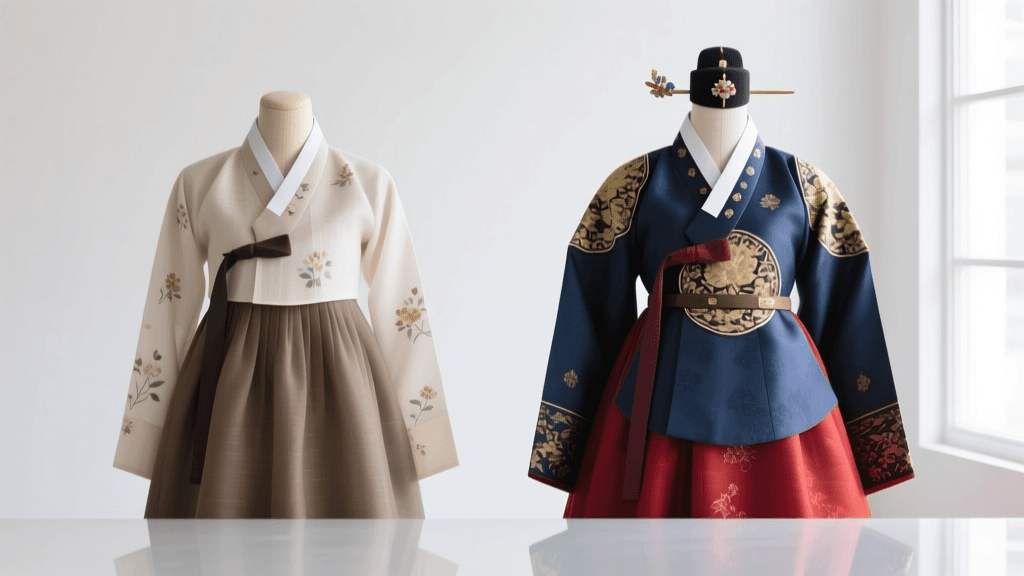
Ceremonial hanbok is designed to command attention, preserve historical accuracy, and project a sense of solemnity and joy. In 2026, high-end ceremonial sets remain the standard for weddings, first birthday celebrations (doljanchi), and major lunar holidays.
Luxurious Fabrics and Embellishments
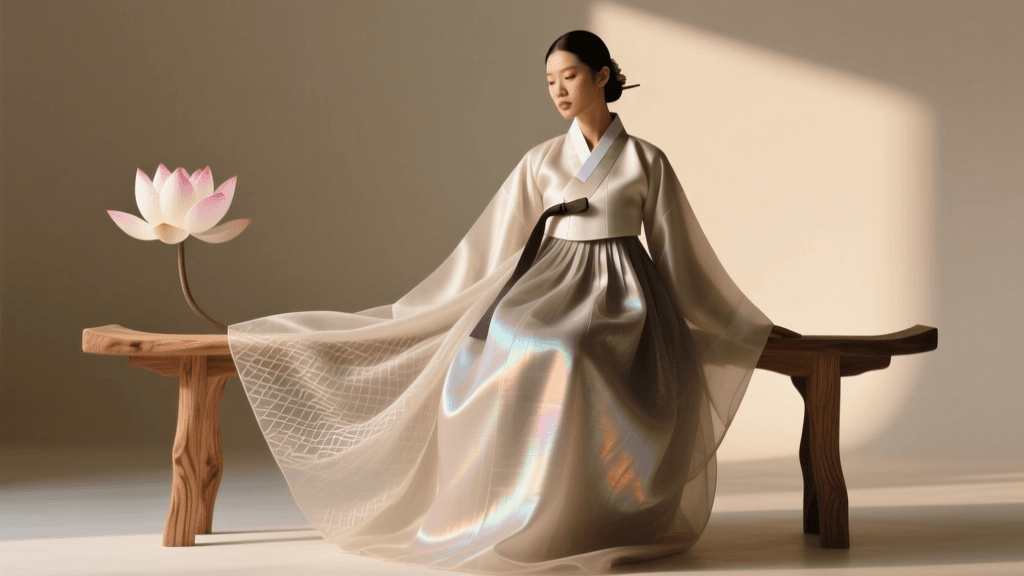
The hallmark of a ceremonial hanbok is its textile. Artisans in 2026 continue to favor Myeongju (a tightly woven, lustrous silk) and high-grade Sa (gauze silk) for summer ceremonies. For winter and autumn events, heavily brocaded silks interwoven with metallic threads are preferred. A defining feature of premium ceremonial wear is Geumbak—the delicate art of stamping gold leaf onto the silk. In 2026, eco-friendly, non-toxic gold leaf adhesives have become the industry standard, ensuring that the intricate floral and geometric patterns on the jeogori sleeves and chima hems remain vibrant without harming the environment.
Voluminous Silhouettes and Structure
The silhouette of a ceremonial hanbok relies heavily on volume and rigid structural lines. The chima is exceptionally full, often requiring up to eight meters of fabric to achieve the signature bell-like shape that gathers gracefully under the bust. The jeogori is traditionally cut short, with curved sleeves (baerae) that mimic the gentle slope of traditional Korean temple eaves. To maintain the stiffness of the collar (dongjeong) and the dramatic flow of the ribbon ties (goreum), ceremonial garments are heavily interfaced and lined, making them breathtaking but notably heavy and restrictive for prolonged physical activity.
The Everyday Hanbok: Functionality Meets Heritage
The Saenghwal (everyday) hanbok has exploded in popularity over the last decade, and by 2026, it has matured into a highly sophisticated sub-genre of slow fashion. Everyday hanbok is designed for the modern commuter, the creative professional, and the cultural enthusiast who values mobility, comfort, and machine-washability.
Modernized Textiles and Dyes
Unlike the high-maintenance silks of ceremonial wear, 2026 everyday hanbok collections heavily feature Tencel, washed cotton-linen blends, and even recycled polyester crepes. These fabrics offer the beautiful drape required for a flattering chima but can withstand the rigors of a washing machine. Furthermore, modern natural dyeing techniques using indigo, persimmon tannin, and mugwort have been stabilized, allowing everyday garments to resist fading even with frequent laundering.
Functional Design Tweaks
The most striking difference in everyday hanbok lies in its tailoring. Designers in 2026 have shortened the goreum (ties) significantly, transforming them from long, sweeping ribbons into neat, minimalist bows or even hidden magnetic clasps disguised as traditional knots. The chima is cut much narrower—often utilizing an A-line or pleated midi-skirt silhouette—and frequently incorporates hidden side pockets, a non-negotiable feature for the modern wearer. The jeogori is often elongated slightly to meet the natural waistline, allowing it to be worn untucked over contemporary trousers or paired seamlessly with modern knitwear.
2026 Comparison Chart: Ceremonial vs. Everyday Hanbok
To help you make an informed purchasing decision, we have compiled a direct comparison of the two styles based on current 2026 market standards.
| Feature | Ceremonial Hanbok (Myeongjeol) | Everyday Hanbok (Saenghwal) |
|---|---|---|
| Primary Fabrics | Myeongju silk, Brocade, Ramie (Mosi) | Washed cotton, Tencel, Linen blends |
| Silhouette | Voluminous, floor-length, rigid structure | A-line midi, tailored, relaxed fit |
| Closure System | Long traditional Goreum (ribbon ties) | Shortened ties, hidden hooks, or zippers |
| Maintenance | Professional dry cleaning only | Machine washable (gentle cycle) |
| 2026 Avg. Price (USD) | $600 - $1,800+ (Custom) | $120 - $350 (Ready-to-wear) |
| Best Occasions | Weddings, Chuseok, Lunar New Year | Office wear, cafes, museum visits, travel |
Sourcing and Pricing in 2026
If you are looking to acquire a hanbok in 2026, the market offers diverse avenues depending on your budget and authenticity requirements. For ceremonial garments, bespoke tailoring remains the gold standard. Boutiques in Seoul's Insadong and Bukchon Hanok Village offer custom measurements, fabric selection, and hand-stitched detailing. Expect to pay upwards of $800 for a high-quality silk set, with wedding Hollyebok easily exceeding $2,000 due to the inclusion of elaborate outer robes like the hwarot or dangui.
For everyday hanbok, the e-commerce landscape is thriving. Brands specializing in modern fusion hanbok release seasonal capsule collections that sell out rapidly. When shopping online, pay close attention to the garment's measurement chart. Unlike Western clothing, hanbok sizing is often based on the chima length and the jeogori bust/waist ratio rather than standard S/M/L designations. A proper everyday chima should sit just below the bust bone and fall gracefully to the mid-calf, allowing for comfortable movement and the wearing of modern footwear like loafers or low-block heels.
Care and Maintenance Protocols
The longevity of your garment depends entirely on adhering to the correct care protocols. Ceremonial silks are highly susceptible to water spotting and structural warping. Never attempt to hand-wash a Myeongju silk hanbok. In 2026, specialized heritage dry cleaners use ozone-cleaning technologies that remove odors and refresh the fibers without the harsh chemicals that strip gold leaf Geumbak embellishments. Store ceremonial sets flat in breathable cotton garment bags, stuffed with acid-free tissue paper to maintain the skirt's bell shape.
Everyday hanbok, while robust, still requires mindful care. Wash cotton and Tencel blends on a cold, delicate cycle using a neutral pH detergent. Avoid the tumble dryer entirely; the high heat will shrink the natural fibers and distort the jeogori seams. Instead, shake the garments out vigorously and hang them on padded hangers in the shade. The dongjeong (white collar) is prone to foundation and skin oil stains; in 2026, many everyday sets feature detachable, snap-on collars that can be easily removed and bleached separately, preserving the vibrant dyes of the main jacket.
Integrating Hanbok into a Global Wardrobe
The beauty of the 2026 hanbok movement is its fluidity. You do not need to wear a full set to honor the tradition. Fashion stylists increasingly recommend mixing and matching. Pair an everyday cotton jeogori with high-waisted wide-leg denim trousers for a striking East-meets-West silhouette. Alternatively, wear a modernized, solid-colored chima with a crisp, oversized white button-down shirt and a leather belt cinched at the high waist. As documented by the Metropolitan Museum of Art's Heilbrunn Timeline of Korean Dress, the hanbok has always been a living garment, adapting to the socio-cultural shifts of its time while retaining its fundamental architectural grace.
Whether you choose the breathtaking opulence of a ceremonial silk set or the understated elegance of a Tencel everyday wrap skirt, investing in hanbok in 2026 is an investment in wearable art. By understanding the distinct purposes, fabrics, and care requirements of each style, you can confidently build a collection that respects Korean heritage while seamlessly fitting into your contemporary life.