Exploring China's Premier Hanfu and Silk Heritage Museums
The Intersection of Hanfu and Institutional Heritage
The modern Hanfu revival is not merely a fashion trend; it is a profound cultural renaissance rooted in historical research, archaeological discovery, and institutional preservation. For enthusiasts, historians, and designers, understanding the structural layering, seasonal fabric choices, and intricate weaving techniques of traditional Chinese clothing requires moving beyond digital forums and stepping into the physical archives. China's premier textile and Hanfu museums serve as the ultimate sanctuaries for this knowledge, safeguarding the intangible heritage crafts that make authentic Hanfu possible.
Visiting these heritage sites offers actionable insights into the evolution of garments like the Ming dynasty Mamianqun (horse-face skirt), the Tang dynasty Banbi (half-sleeve jacket), and the Han dynasty Shenyi (deep robe). This guide provides a comprehensive, practical overview of the three most important Hanfu and silk heritage museums in China, complete with travel logistics, exhibit highlights, and tips for integrating your museum visits with the modern Hanfu community.
Top 3 Must-Visit Hanfu and Textile Museums
1. China National Silk Museum (Hangzhou)
Located near the scenic West Lake in Hangzhou, the China National Silk Museum is the largest silk museum in the world and a cornerstone for understanding the foundational textiles of Hanfu. The museum's permanent exhibition, 'The Silk Road,' traces the journey of silk from ancient sericulture to global trade. For Hanfu enthusiasts, the highlight is the 'Chinese Silk and Costume' gallery, which features meticulously preserved garments from the Qing and Ming dynasties, alongside archaeological replicas of earlier Han and Tang textiles.
The museum frequently hosts temporary exhibitions dedicated to specific Hanfu silhouettes and historical weaving techniques. According to UNESCO's Intangible Cultural Heritage records, the sericulture and silk craftsmanship of China are foundational to these garments, and this museum actively demonstrates these ancient techniques through live weaving demonstrations and interactive loom exhibits.
Practical Details:
- Admission: Free, but advance booking is required via the museum's official WeChat mini-program using a Chinese ID or Passport.
- Time Required: 3 to 4 hours to fully explore the main galleries and the textile conservation center.
- Best Time to Visit: Tuesday to Thursday mornings to avoid weekend crowds and school tour groups.
2. Nanjing Yunjin Museum (Nanjing)
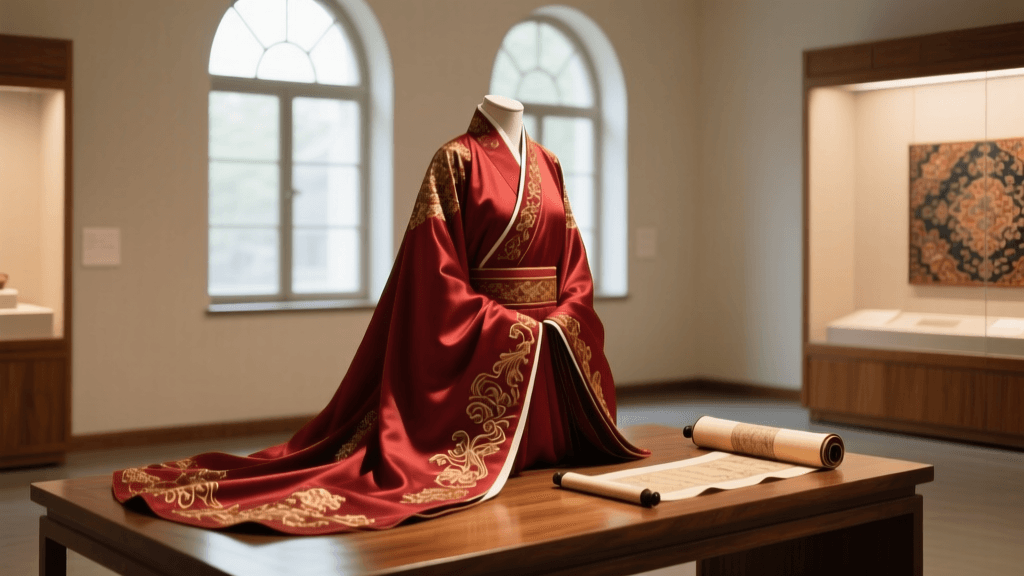
Yunjin, translating to 'cloud brocade,' represents the pinnacle of Chinese silk weaving and was historically reserved for imperial court Hanfu, particularly during the Ming Dynasty. The Nanjing Yunjin Museum is dedicated entirely to this opulent fabric, characterized by its use of gold and silver threads, peacock feathers, and complex Jacquard-style drawlooms. Understanding Yunjin is critical for anyone studying the structural layering and heavy, luxurious fabrics used in formal Ming court attire and high-status ceremonial Hanfu.
The museum's centerpiece is a massive, fully operational wooden drawloom that requires two artisans to operate simultaneously—one sitting atop the loom to pull the complex thread harnesses, and another below to weave the shuttle. As noted by UNESCO's recognition of the Nanjing Yunjin brocade weaving technique, this painstaking process yields only five to six centimeters of fabric per day, highlighting the immense value and institutional importance of these historical garments.
Practical Details:
- Admission: Free (reservation required via WeChat).
- Time Required: 2 hours.
- Highlight Exhibit: The replica of the Ming Emperor's Dragon Robe, showcasing the precise motif placement required for imperial Hanfu etiquette.
3. Chengdu Shu Brocade Museum (Chengdu)
Shu brocade, originating from the Sichuan region, is one of the oldest and most celebrated silk crafts in China, dating back over two millennia. The Chengdu Shu Brocade Museum focuses on the vibrant, warp-faced weaves that were highly prized during the Han and Three Kingdoms periods. For Hanfu practitioners interested in early historical accuracy, this museum provides essential visual data on the geometric patterns, rich color palettes, and draping qualities of fabrics used in early Ruqun (blouse and skirt) and Shenyi (one-piece robe) ensembles.
Practical Details:
- Admission: Approximately 30 RMB (subject to change, bookable on-site or via travel apps like Trip.com).
- Time Required: 1.5 to 2 hours.
- Unique Feature: The museum includes a retail and workshop section where visitors can purchase authentic, small-batch Shu brocade fabric directly from resident artisans for custom Hanfu tailoring.
Museum Comparison Chart
| Museum Name | Location | Primary Hanfu Focus | Entry Cost | Best Season to Visit |
|---|---|---|---|---|
| China National Silk Museum | Hangzhou, Zhejiang | Comprehensive Silk History, Tang/Song aesthetics | Free (Booking required) | Spring (March-May) |
| Nanjing Yunjin Museum | Nanjing, Jiangsu | Ming Dynasty Court Attire, Heavy Brocades | Free (Booking required) | Autumn (Sept-Nov) |
| Chengdu Shu Brocade Museum | Chengdu, Sichuan | Han Dynasty Patterns, Early Ruqun Textiles | ~30 RMB | Winter (Dec-Feb) to avoid summer humidity |
Practical Guide: Planning Your Heritage Tour
Integrating a museum tour into your Hanfu journey requires some logistical foresight, especially regarding cultural etiquette and modern digital infrastructure in China.
Wearing Hanfu to Museums
Most major textile museums in China actively encourage visitors to wear Hanfu, viewing it as a living extension of their exhibits. However, there are strict protocols to follow:
- Photography Rules: Flash photography is strictly prohibited to protect light-sensitive antique textiles. Tripods and selfie sticks are generally banned in exhibition halls to prevent accidental damage to display cases.
- Garment Lengths:When wearing trailing Hanfu skirts (such as the Ming dynasty Mamianqun or Tang dynasty floor-length skirts), be mindful of museum staircases and heavy glass doors. Pinning or holding the hem is considered proper modern Hanfu etiquette in crowded public spaces.
- Seasonal Fabric Choices:Chinese museums are heavily climate-controlled to preserve artifacts (usually kept around 20°C / 68°F with strict humidity control). If visiting in the peak of summer, wear breathable linen or cotton Hanfu undergarments and structural layers, as you will transition between sweltering outdoor heat and cool, dry museum interiors.
Booking and Navigation
Foreign visitors must be prepared for China's digital-first ticketing system. Most free museums do not accept walk-ins. You must download WeChat, search for the museum's official Mini-Program (小程序), and book a time slot up to 7 days in advance. You will need to input your passport number exactly as it appears on your travel document, and you must bring your physical passport to the entrance for ID verification.
Global Exhibitions and the Hanfu Movement
While China's domestic museums are the primary custodians of Hanfu heritage, international institutions also play a vital role in contextualizing traditional Chinese dress within global art history. The Metropolitan Museum of Art in New York, for instance, provides extensive academic resources on historical Chinese dress. According to the Met Museum's Heilbrunn Timeline of Art History, the structural evolution of Chinese garments reflects deep philosophical concepts regarding the relationship between the human body, nature, and the cosmos, moving beyond mere aesthetics to institutional and ritual significance.
Understanding Hanfu is not simply about recreating a silhouette; it is about engaging with a continuous lineage of textile engineering, ritual etiquette, and cultural identity that spans millennia.
For the serious Hanfu researcher, combining visits to local Chinese heritage sites with international academic exhibitions provides a holistic view of the garment's evolution. Whether you are studying the drape of a Han dynasty sleeve, the complex gold-weaving of a Ming collar, or the modern e-commerce supply chains that bring these historical fabrics to a new generation, these museums are the indispensable starting point for your journey into Asian traditions.