2026 Guide to Vintage Yuzen Silk Kimono Mold Care
The Delicate Balance of Preserving Yuzen Silk
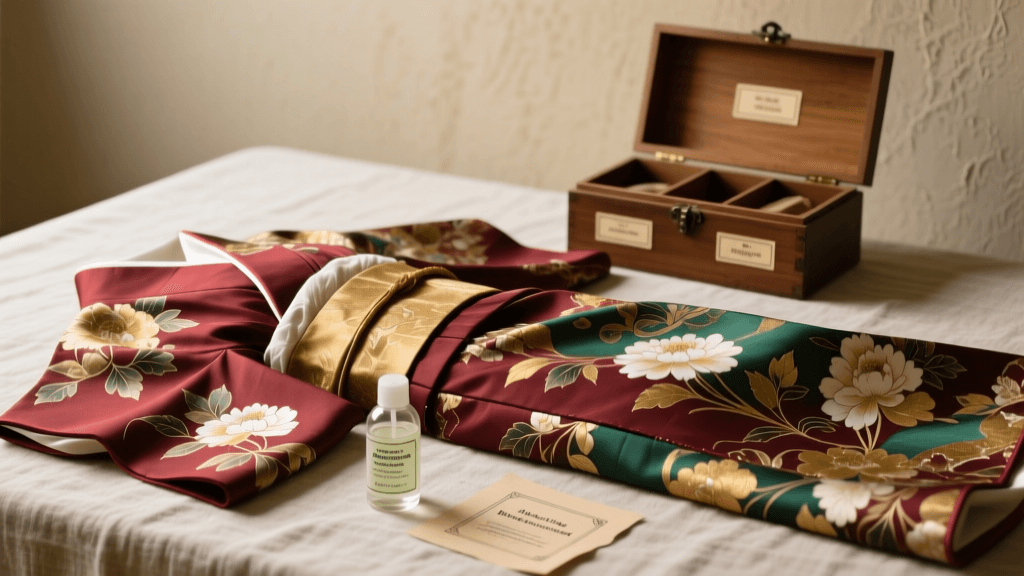
Preserving vintage Yuzen silk kimonos requires a delicate balance between honoring traditional Japanese garment care and utilizing modern conservation science. Yuzen dyeing, a technique dating back to the Edo period, produces breathtakingly intricate patterns on delicate silk crepe (chirimen) and satin (rinzu). However, the protein-based nature of silk fibroin makes these garments highly susceptible to environmental degradation, particularly from mold and mildew. As collectors and cultural institutions navigate the climate challenges of 2026, understanding how to safely remediate mold damage and establish archival storage protocols is more critical than ever.
Unlike synthetic fibers, silk is an organic protein that absorbs moisture readily. When relative humidity fluctuates or storage environments lack proper airflow, dormant fungal spores can quickly activate. According to the Metropolitan Museum of Art's conservation department, textile conservation requires a proactive approach to environmental monitoring, as once mold penetrates the silk's structural matrix, the damage can become irreversible. This comprehensive guide outlines the 2026 standards for identifying, treating, and storing vintage Yuzen kimonos to ensure they survive for future generations.
Identifying Mold Damage on Vintage Silk
Before initiating any remediation process, it is vital to accurately identify the type and extent of fungal growth. Mold on Yuzen silk typically manifests in three distinct ways, each requiring a different conservation approach:
- Surface Sporulation (White or Gray Fuzz): This is active, surface-level mold, often caused by Penicillium or Aspergillus species. It appears as a powdery or fuzzy layer and can usually be removed without damaging the underlying Yuzen dyes if caught early.
- Foxing and Staining (Brown or Black Spots): These are localized stains caused by the metabolic byproducts of fungi or the oxidation of metallic mordants used in the dyeing process. Foxing is notoriously difficult to reverse on silk without harsh chemical bleaches, which are strictly avoided in modern conservation.
- Structural Degradation (Brittleness and Shattering): In advanced stages, mold consumes the sericin and fibroin proteins, leaving the silk brittle. If the fabric shatters when gently manipulated, the garment has suffered irreversible structural loss and requires immediate professional stabilization rather than standard cleaning.
The Victoria and Albert Museum's conservation guidelines emphasize that attempting to wipe active mold with liquid solutions will only drive the hyphae deeper into the silk weave, setting the stains permanently. Dry, mechanical removal is the only safe first step for vintage textiles.
2026 Eco-Friendly Remediation Protocols
Modern textile conservation has moved away from harsh fungicides, which can degrade silk proteins and cause Yuzen dyes to bleed. In 2026, the standard protocol for mold remediation relies on mechanical removal, cryogenic treatment, and specialized enzymatic stabilization.
Step 1: Isolation and HEPA Micro-Vacuuming
The first step is to isolate the garment in a low-humidity quarantine room (below 40% RH) to halt active fungal growth. Using a conservation-grade HEPA micro-vacuum equipped with a variable suction dial and a soft goat-hair brush attachment, gently lift the surface spores. The vacuum must be held slightly above the fabric surface to prevent pulling the delicate silk threads. Never use standard household vacuums, as their high suction and lack of true HEPA filtration will damage the textile and redistribute spores into the air.
Step 2: Cryogenic Spore Eradication
To kill the remaining microscopic spores embedded in the weave, the kimono undergoes cryogenic treatment. The garment is carefully rolled with unbuffered, acid-free tissue paper and sealed in a breathable polyethylene bag. It is then placed in a specialized conservation freezer at -20°C (-4°F) for 72 hours. This rapid temperature drop destroys the cellular structure of the mold spores without introducing moisture or chemicals to the silk. After freezing, the garment is allowed to acclimate to room temperature slowly over 24 hours to prevent condensation.
Step 3: Soft Brushing and Enzymatic Stabilization
Once acclimated, the dead spores are gently brushed away using a traditional Japanese tsujiya brush made from ultra-soft goat hair. For garments with minor foxing or residual organic matter, 2026 conservation kits utilize plant-based enzymatic sponges. These sponges absorb particulate matter through dry capillary action, lifting dirt and dead mold without the use of water, thereby protecting the water-sensitive Yuzen dyes from bleeding.
Archival Storage Solutions and Material Comparison
Proper storage is the cornerstone of garment preservation. The traditional Japanese method of storing kimonos in tansu (chests) made of Paulownia wood remains highly relevant, but it must be paired with modern archival materials. The Smithsonian Museum Conservation Institute notes that the choice of storage enclosures directly impacts the off-gassing and acidity levels surrounding historic textiles.
| Storage Material | Pros for Yuzen Silk | Cons & Limitations | 2026 Best Practice Recommendation |
|---|---|---|---|
| Paulownia Wood (Tansu) | Naturally regulates humidity; repels insects; breathable. | Can emit trace tannins if unsealed; heavy and expensive. | Use kiln-dried, unvarnished Paulownia boxes lined with unbuffered tissue. |
| Acid-Free Cardboard Boxes | Cost-effective; rigid support; chemically stable. | Vulnerable to water damage; does not buffer humidity fluctuations. | Use only unbuffered (pH neutral) boxes; buffered boxes will degrade silk proteins. |
| Sealed Plastic Bins (Polypropylene) | Protects against pests and liquid spills; inexpensive. | Traps moisture leading to micro-climates; off-gasses VOCs over time. | Strictly avoid for long-term silk storage; use only for short-term transport. |
| Cotton Muslin Garment Bags | Breathable; protects from dust and light. | Offers no structural support; cotton can harbor pests if not washed. | Use unbleached, pre-washed muslin only as an outer dust cover inside a box. |
When folding a Yuzen kimono for storage, sharp creases must be avoided to prevent permanent fiber breakage. Conservators use the "tube rolling" method or pad the folds with crumpled unbuffered acid-free tissue paper to create soft, rounded edges. Never use standard tissue paper, as its high acidity will cause yellowing and silk degradation within a few years.
Climate Control Metrics for 2026
Even the best archival boxes cannot compensate for a poorly controlled room environment. Silk is highly hygroscopic, meaning it expands and contracts with changes in moisture. In 2026, smart home integration allows collectors to maintain precise micro-climates within their storage rooms.
The ideal environment for vintage Yuzen silk is a stable temperature of 65°F to 68°F (18°C to 20°C) with a relative humidity (RH) strictly maintained between 45% and 55%. Fluctuations greater than 5% in a 24-hour period can cause mechanical stress on the silk fibers. Modern wireless hygrometers with Bluetooth-enabled alerts can notify collectors instantly if the HVAC system fails or if a humidity spike occurs, allowing for immediate intervention before mold spores can reactivate.
Professional Arai-Hari vs. Spot Cleaning Costs
For kimonos that have suffered extensive mold damage, deep staining, or structural soiling, surface remediation is insufficient. The traditional Japanese technique of Arai-Hari (washing and stretching) remains the gold standard for comprehensive restoration. This process involves carefully unpicking the kimono's seams to return it to its original flat fabric panels. The panels are then washed using specialized, pH-neutral surfactants and stretched on wooden boards (itabari) using natural rice starch paste to dry.
In 2026, the integration of UV-filtered climate chambers allows specialists to simulate the traditional sun-drying process without exposing the delicate Yuzen dyes to ultraviolet degradation. The costs for professional services reflect the intense labor and expertise required:
- Localized Spot Cleaning & Mold Remediation: $150 to $350 USD per garment, depending on the severity of the surface mold and the number of panels affected.
- Full Arai-Hari (Traditional Wash and Stretch): $800 to $1,500 USD. This price includes the meticulous unpicking, washing, stretching, drying, and professional re-sewing of the garment by licensed kimono artisans.
- Fabric Stabilization and Lining Replacement: $400 to $600 USD additional, required if the inner silk lining (habutae) has shattered due to advanced mold degradation or metallic thread oxidation.
Conclusion
The preservation of vintage Yuzen silk kimonos is a profound responsibility that bridges the gap between historical artistry and modern science. By understanding the biological mechanisms of mold, utilizing eco-friendly dry remediation techniques, and investing in proper archival storage materials, collectors can protect these masterpieces from environmental decay. As conservation standards continue to evolve in 2026, prioritizing stable climates and seeking out traditional restoration methods like Arai-Hari ensures that the vibrant colors and intricate narratives woven into Asian silk garments will endure for centuries to come.