Mastering Yuzen Dyeing: Japan's Artisan Silk Workshops
The Art of Yuzen: A Legacy of Silk Dyeing
When discussing the zenith of Japanese textile artistry, few techniques command as much reverence as Yuzen dyeing. Originating in the late 17th century, this intricate method of resist-dyeing silk was pioneered by Miyazaki Yuzensai, a fan painter from Kyoto whose revolutionary techniques allowed for the creation of vibrant, pictorial designs on silk garments. Prior to Yuzen, Japanese textiles were largely limited to woven patterns, tie-dye (shibori), or simple stencil work. Yuzen liberated the artisan, transforming the surface of a kimono into a sprawling canvas for nature-inspired motifs, flowing landscapes, and auspicious symbols.
At the heart of this tradition is the tanmono, the standard bolt of silk fabric used for kimono. A traditional tanmono measures precisely 36 centimeters in width and roughly 12 meters in length. Because the fabric is woven to this specific dimension, the artisan must meticulously plan the placement of every dyed motif so that it aligns perfectly with the garment's seams, collar, and hem when the kimono is eventually tailored. Today, experiencing the creation of these masterpieces firsthand through artisan workshops offers a profound appreciation for the patience, precision, and heritage embedded in Japanese traditional crafts.
Kyo-Yuzen vs. Kaga-Yuzen: A Comparative Guide
While Yuzen dyeing is practiced in various regions, the two most prominent and historically significant styles are Kyo-Yuzen (from Kyoto) and Kaga-Yuzen (from Kanazawa in Ishikawa Prefecture). Though they share the same foundational resist-dyeing techniques, their aesthetic philosophies and finishing touches differ dramatically. According to the Ministry of Economy, Trade and Industry (METI), both are designated as official Traditional Craft Products of Japan, yet they cater to distinct artistic sensibilities.
| Feature | Kyo-Yuzen (Kyoto) | Kaga-Yuzen (Kanazawa) |
|---|---|---|
| Aesthetic Style | Stylized, elegant, and highly decorative. Often incorporates courtly or classical motifs. | Naturalistic, realistic, and botanical. Focuses on the accurate depiction of local flora and fauna. |
| Color Palette | Vibrant and diverse, frequently utilizing soft pastels alongside bold, contrasting hues. | Grounded in the 'Kaga Gosai' (five colors): indigo, crimson, ochre, grass green, and deep purple. |
| Embellishments | Heavy use of gold leaf (haku), silver, and intricate embroidery to add opulence. | Avoids gold leaf and embroidery. Relies entirely on the mastery of dye and brushwork. |
| Unique Technique | Extensive use of 'bokashi' (gradation) and elaborate background dyeing. | Famous for 'mushikui' (insect-eaten leaves), depicting botanical imperfections for realism. |
Inside the Artisan Workshop: The Yuzen Process
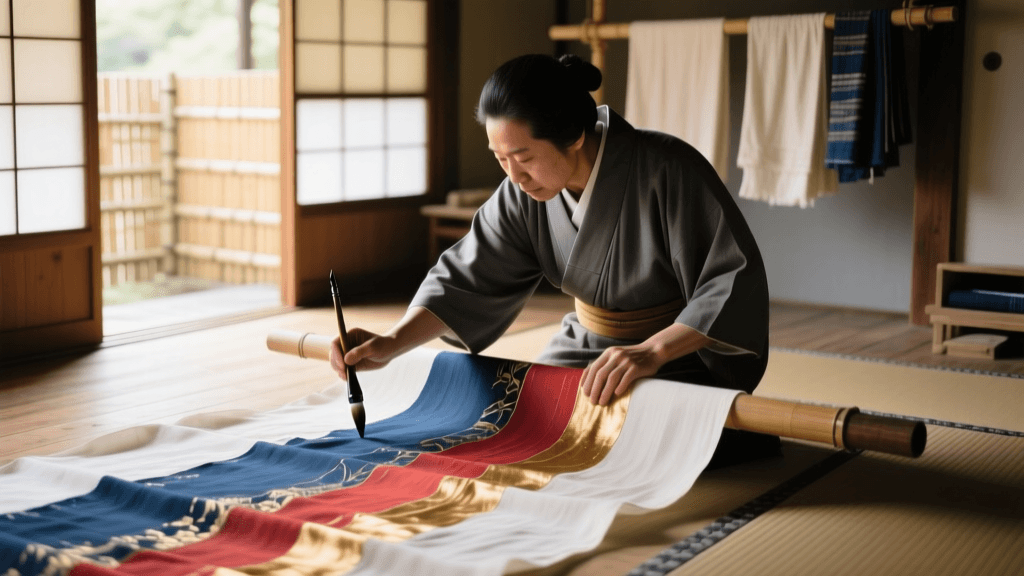
The creation of a hand-painted Yuzen kimono (known as tegaki yuzen) is a staggering endeavor that involves up to 20 distinct steps, often requiring the collaboration of multiple specialized artisans. The process begins with shitae, where the artist sketches the design directly onto the stretched silk using a pale blue flower juice (aobana) that washes away later.
The most critical step is itome-nori. The artisan uses a metal-tipped paper cone to apply a fine line of rice-bran resist paste along the outlines of the sketch. This paste acts as a dam, preventing the dyes from bleeding into one another when they are applied. Once the resist dries, the colors are painstakingly painted in by hand using delicate brushes. The silk is then steamed to set the dyes, followed by the iconic yuzen-nagashi—the washing of the fabric in cold, running river water to remove the rice paste and excess dye. While modern workshops often use artificial water tanks for washing, the historical image of silk bolts floating down Kyoto's Kamo River remains a defining symbol of the craft.
Experiencing Yuzen: Practical Guide to Workshop Tours
For textile enthusiasts and travelers, participating in a Yuzen workshop is an essential cultural immersion. Most workshops cater to international visitors, providing English instructions and pre-stenciled outlines so that beginners can focus on the delicate art of brush coloring. Below is a practical guide to two of the most accessible and authentic workshops in Japan.
1. Marumasu Nishimuraya (Kyoto)
Located in the historic Nishijin weaving district, this establishment has been operating since the early Showa period. They offer hands-on experiences where visitors can dye items ranging from silk fans to tote bags.
- Available Items & Costs: Silk folding fan (sensu) for 2,750 JPY; cotton tote bag for 4,400 JPY; silk scarf for 6,600 JPY. Custom kimono commissions start around 400,000 JPY.
- Timing: A standard dyeing session takes 60 to 90 minutes. The drying and finishing process takes an additional hour, during which you can explore the Nishijin neighborhood.
- Booking Advice: Reservations must be made at least 3 weeks in advance via their official website. Walk-ins are rarely accommodated due to the preparation required for the resist paste and dye mixing.
2. Kaga Yuzen Kimono Center (Kanazawa)
This center serves as both a museum and an active workshop, dedicated to preserving the Kaga-Yuzen style. It is an excellent destination for those wanting to understand the naturalistic, five-color palette unique to the region.
- Available Items & Costs: Handkerchief dyeing for 1,500 JPY; traditional cloth wrapping (furoshiki) for 3,500 JPY. They also offer kimono rental experiences starting at 5,000 JPY per day.
- Timing: Sessions run for approximately 2 hours. The center is open year-round but closes on Wednesdays and during the New Year holidays.
- Booking Advice: Because Kanazawa is a smaller city than Kyoto, workshop slots fill up rapidly during the spring cherry blossom and autumn foliage seasons. Book 4 to 6 weeks ahead.
Buying Authentic Yuzen: What to Look For
If you are looking to purchase an authentic Yuzen-dyed garment, it is crucial to understand the difference between tegaki (hand-painted) and kata-yuzen (stencil-dyed). Kata-yuzen uses paper stencils to apply the resist paste and dyes, allowing for mass production and significantly lower prices. While beautiful, it lacks the soul and minute variations of hand-painted silk.
To authenticate a hand-painted piece, look closely at the edges of the dyed motifs. You should be able to spot the itome—the tiny, crisp white lines where the rice paste resisted the dye. In hand-painted works, these lines may have microscopic variations in thickness, revealing the human hand behind the brush. Furthermore, the Kyoto Museum of Traditional Crafts (Fureaikan) is an invaluable resource for buyers. Visiting the museum before making a purchase allows you to study authenticated masterpieces up close, training your eye to recognize the subtle gradations (bokashi) and the depth of color that only master artisans can achieve.
'A true Yuzen artisan does not merely color the silk; they breathe life into the thread, ensuring that the cherry blossoms will bloom on the silk just as vibrantly as they do in the Kyoto spring.'
Whether you are commissioning a bespoke kimono, dyeing a silk fan in a Kanazawa workshop, or simply admiring the meticulous craftsmanship of a museum piece, Yuzen dyeing remains one of Japan's most breathtaking artistic achievements. By supporting these traditional workshops, collectors and travelers alike play a vital role in ensuring that the legacy of Miyazaki Yuzensai continues to flow through the generations.