2026 Guide To Traditional Chinese Cloud Shoes And Boots
The 2026 Renaissance of Traditional Chinese Footwear
The Xin Zhongshi (New Chinese Style) movement has completely transformed the global fashion landscape in 2026. No longer confined to historical reenactments, museum exhibitions, or ceremonial wear, traditional Chinese garments are now everyday staples for a generation that values cultural heritage and artisanal craftsmanship. At the foundation of this sartorial shift is traditional footwear. From the elegantly upturned toes of Yunxie (cloud shoes) to the grounded, structured silhouettes of Xuezi (scholar boots), historical footwear is experiencing a massive commercial and cultural revival.
In the 2026 fashion ecosystem, consumers are demanding authenticity paired with modern ergonomics. Heritage brands and contemporary designers are collaborating to produce footwear that honors ancient weaving and embroidery techniques while incorporating sustainable materials and orthotic support. Whether you are looking to complete a traditional Hanfu ensemble, add a statement piece to a tailored suit, or simply invest in wearable art, understanding the nuances of traditional Chinese footwear is essential. This comprehensive guide explores the anatomy, styling, and purchasing considerations for cloud shoes and traditional boots in the current market.
Yunxie (Cloud Shoes): Walking on Heritage
Yunxie, literally translating to 'cloud shoes,' are characterized by their distinctive upturned toes, known as qiaotou. Historically, the height and curve of the toe indicated the wearer's social status and the formality of the occasion. The upturned design was not merely aesthetic; it served a practical purpose in ancient times by preventing the wearer from tripping over the long, flowing hems of traditional robes and skirts.
According to academic archives, such as the University of Washington's Visual Sourcebook of Chinese Civilization, footwear in imperial China was heavily regulated by sumptuary laws, with specific colors, motifs, and toe-shapes reserved for the nobility and scholars. Today, these strict rules have been replaced by personal expression, but the visual poetry of the cloud shoe remains intact.
Embroidery and Artisanal Techniques
The upper part of a traditional cloud shoe is a canvas for some of China's most revered embroidery styles. In 2026, the most sought-after pieces feature Su Xiu (Suzhou embroidery), known for its incredibly fine, split-silk threads that create photorealistic floral and avian motifs. Another popular technique is Da Zi Xiu (seed stitch), which creates a textured, three-dimensional surface that is highly durable and resistant to snagging. Modern artisans are also integrating metallic threads and recycled glass beads to catch the light, giving the ancient cloud shoe a contemporary luminescence.
The 2026 Ergonomic Update
Historically, traditional shoes were flat and lacked arch support, which could lead to foot fatigue. The most significant innovation in the 2026 market is the integration of hidden orthotic technology. Leading heritage brands now mold the traditional silk or brocade uppers over ergonomic, memory-foam insoles with reinforced arch support and shock-absorbing EVA midsoles. This means you can walk through a modern city all day while appearing to glide on ancient clouds.
Xuezi and Traditional Boots: Grounding the Modern Wardrobe
While cloud shoes offer a delicate, feminine, or scholarly elegance, traditional boots provide structure, warmth, and a commanding presence. The two most prominent styles making a comeback in 2026 are Xuezi (scholar boots) and Chaoxue (court/equestrian boots).
Xuezi (Scholar Boots)
Xuezi are typically ankle-high or mid-calf boots made from black cotton, satin, or soft leather. They feature a rounded toe and a distinct, layered cloth sole that is stitched together using a meticulous, weather-resistant technique. Historically worn by literati and officials, the Xuezi projects an aura of quiet intellect and understated wealth. In 2026 streetwear, black satin Xuezi are frequently paired with wide-leg linen trousers and structured, mandarin-collar jackets, bridging the gap between ancient academia and modern minimalism.
Chaoxue (Court and Equestrian Boots)
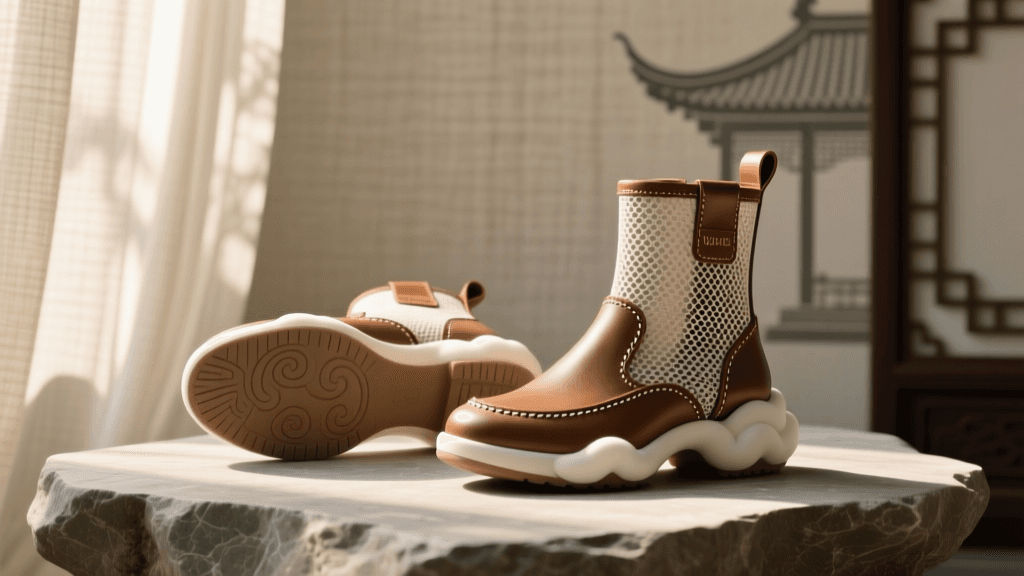
For a bolder silhouette, the Chaoxue boot is the ultimate statement piece. These boots feature a thick, multi-layered sole (often white cotton bound with sturdy hemp) and a slightly upturned toe. The uppers are traditionally crafted from stiff brocade or leather, adorned with intricate cloud and dragon motifs. Contemporary designers have adapted the Chaoxue by introducing side zippers for easy wear and utilizing lightweight, high-density rubber for the thick soles, reducing the overall weight of the boot by nearly 40% compared to historical replicas.
Material and Craftsmanship Comparison
When shopping for traditional Chinese footwear in 2026, understanding the material composition is crucial for determining the shoe's longevity, weather resistance, and appropriate use case. The China Silk Museum in Hangzhou notes that modern advancements in textile treatment have made delicate silks far more resilient than their historical counterparts.
| Material | Traditional Use | 2026 Modern Application | Avg. Price (USD) | Durability & Care |
|---|---|---|---|---|
| Song Brocade (Song Jin) | Formal court shoes, winter boots | Statement Yunxie, structured Xuezi | $180 - $350 | High. Water-resistant treatments applied. Spot clean only. |
| Heavy Silk Satin | Summer scholar shoes, indoor wear | Embroidered cloud shoes, bridal wear | $120 - $250 | Medium. Prone to water spotting. Requires silk-safe dry cleaning. |
| Waxed Cotton / Canvas | Everyday commoner footwear, travel | Casual Xuezi, streetwear fusion boots | $80 - $150 | Very High. Machine washable (gentle), highly weather-resistant. |
| Vegan Lotus Leather | N/A (Modern Innovation) | Weatherproof boots, ethical fashion lines | $200 - $400 | High. Wipe clean with damp cloth. Sustainable and cruelty-free. |
Styling Formulas for the Contemporary Wardrobe
Integrating traditional footwear into a 2026 wardrobe requires a balance of proportions and textures. Here are three highly effective styling formulas championed by contemporary Xin Zhongshi stylists:
- The Urban Scholar (Xuezi + Wide-Leg Linen): Pair black cotton Xuezi with high-waisted, wide-leg linen trousers in charcoal or ivory. Allow the trousers to drape slightly over the top of the boot. Add a tailored, sleeveless vest with a subtle jacquard pattern. This look is perfect for gallery openings, creative workplaces, and upscale dining.
- The Modern Court (Yunxie + Mamianqun): The Mamianqun (horse-face skirt) is a staple of the modern Hanfu wardrobe. Pair a heavily embroidered, upturned-toe Yunxie with a pleated silk Mamianqun. Ensure the hem of the skirt rests exactly one inch above the ground to showcase the intricate embroidery on the shoe's heel and side panels.
- Streetwear Fusion (Chunky-sole Yunxie + Cargo): For an avant-garde, gender-neutral look, opt for a modernized cloud shoe with a thick, lug-sole rubber base. Pair this with oversized, technical cargo pants and a cropped, mandarin-collar puffer jacket. The juxtaposition of ancient silk embroidery with modern utilitarian nylon is a defining aesthetic of the 2026 fashion season.
Sizing, Fit, and Maintenance
Purchasing traditional footwear, especially from heritage ateliers, requires careful attention to sizing. Unlike mass-produced Western footwear, many traditional Chinese shoes are crafted on straight lasts (meaning there is no distinct left or right foot shaping in the most authentic historical replicas, though 2026 commercial versions usually feature anatomical left/right shaping).
How to Measure for the Perfect Fit
- Stand on a piece of paper with your heel against a wall and trace the outline of your foot.
- Measure the distance from the heel to the tip of your longest toe in centimeters.
- If you plan to wear traditional Buzi (thick cloth socks) or modern wool socks with your boots, add 0.5 cm to 1.0 cm to your measurement.
- Consult the specific artisan's sizing chart. A standard 24.5 cm foot usually translates to a Chinese size 39, but bespoke brocade shoes often run slightly narrow in the toe box due to the stiff embroidery backing.
Storage and Longevity
Proper maintenance is vital to preserve the structural integrity and vibrant colors of your footwear. For Yunxie made of silk or brocade, never store them in direct sunlight, as UV rays will rapidly degrade the natural dyes and cause the silk fibers to become brittle. Use acid-free tissue paper to stuff the toe box, maintaining the iconic qiaotou curve and preventing creases.
For Xuezi and thick-soled boots, invest in cedar shoe trees. Cedar naturally absorbs the moisture accumulated during wear and repels insects that might be attracted to the natural starches used in the traditional multi-layered cloth soles. If the layered cloth soles become frayed at the edges, do not attempt to trim them with scissors; instead, take them to a specialist cobbler who understands traditional hemp-binding techniques to reseal the edges.
The Future of Heritage Footwear
The trajectory of traditional Chinese footwear in 2026 points toward a beautiful synthesis of preservation and innovation. As consumers become more educated about the cultural significance of their garments, the demand for ethically sourced silk, natural plant-based dyes, and fairly compensated artisanal labor has reached an all-time high. The Metropolitan Museum of Art's Heilbrunn Timeline highlights the historical importance of the silk trade in shaping global fashion; today, that legacy continues not through mass exportation, but through a deep, localized appreciation for the artistry of the weave and the stitch.
Whether you are stepping into a pair of meticulously embroidered cloud shoes for a wedding, or lacing up a pair of sturdy scholar boots for a brisk autumn walk in the city, traditional Chinese footwear offers a profound connection to the past. By choosing pieces that honor historical construction while embracing modern comfort, you are not just wearing a shoe—you are participating in the living, breathing evolution of Asian sartorial traditions.