2026 Guide to Traditional Chinese Footwear: Cloud Shoes & Boots
The Renaissance of Traditional Chinese Footwear in 2026
The global fashion landscape of 2026 has seen an unprecedented surge in the Xin Zhongshi (New Chinese Style) movement, a cultural phenomenon that seamlessly blends historical Asian garments with contemporary urban aesthetics. While the Mamianqun (horse-face skirt) and the modernized Ruqun have dominated headlines, the true anchor of any authentic heritage outfit lies at the ground level. Traditional Chinese footwear, specifically Yunxie (cloud shoes) and Xue (traditional boots), have experienced a massive revival, transitioning from museum displays and martial arts studios to the bustling streets of Shanghai, Tokyo, and New York.
As consumers increasingly seek sustainability, artisanal craftsmanship, and cultural storytelling in their wardrobes, heritage footwear offers a unique intersection of art and utility. According to recent cultural heritage reports tracked by institutions like The Metropolitan Museum of Art's Asian Art Department, the appreciation for historical Asian textiles and accessories has deeply influenced modern luxury and indie design houses alike. This comprehensive guide explores the anatomy, modern adaptations, and styling rules for traditional Chinese footwear in 2026.
Yunxie (Cloud Shoes): Anatomy and Modern Evolution
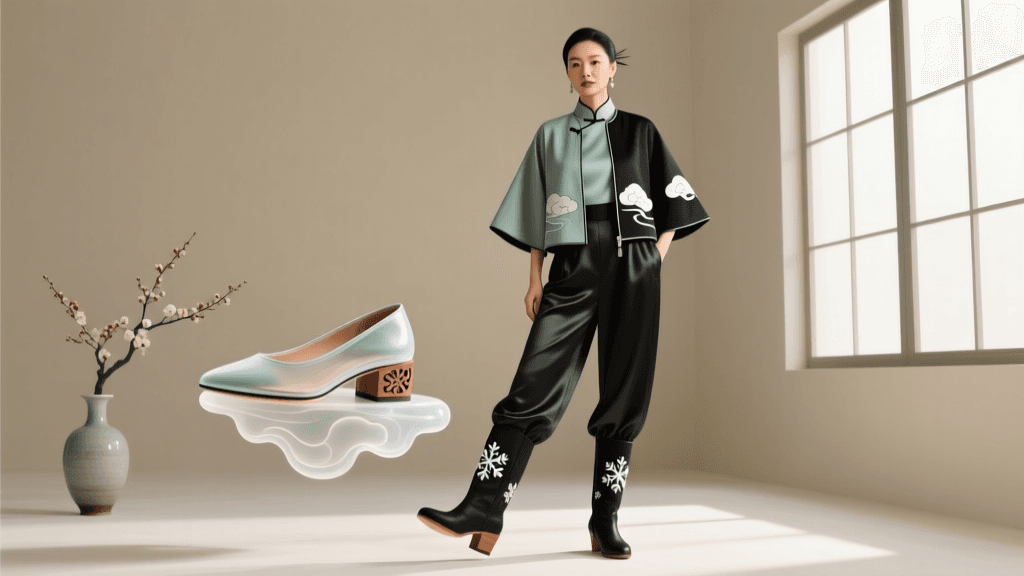
Yunxie, literally translating to 'cloud shoes,' are characterized by their slightly upturned toes and intricate embroidery. Historically popularized during the Ming and Qing dynasties, these shoes were worn by both men and women, though the motifs and color palettes often denoted social status and regional origins.
The Thousand-Layer Sole (Qianceng Di)
The most defining feature of authentic Yunxie is the Qianceng Di, or 'thousand-layer sole.' Artisans create this by pasting dozens of layers of cotton cloth together using natural wheat starch paste. Once dried, the sole is stitched together using thick hemp thread. This technique, recognized for its cultural significance on platforms such as the UNESCO Intangible Cultural Heritage lists, provides exceptional breathability, shock absorption, and a distinct, grounded walking experience.
In 2026, heritage brands have innovated this ancient technique to meet modern urban demands. While purists still commission fully handmade hemp-stitched soles (which can take an artisan over a week to complete), contemporary Xin Zhongshi brands now offer hybrid soles. These feature a traditional cotton-layered topsole for moisture-wicking and aesthetics, fused with a lightweight, waterproof EVA foam or 3D-printed bioplastic outsole for durability on wet city pavements.
Xue (Traditional Boots): From Equestrian Roots to Runways
While cloud shoes represent the delicate artistry of southern Chinese textile traditions, Xue (boots) reflect the robust, equestrian, and martial influences of northern and imperial court cultures. Traditionally crafted from silk, brocade, or treated leather, these boots feature thick, multi-layered soles and a straight, cylindrical shaft.
The 2026 Boot Revival
In 2026, the traditional Xue boot has been reimagined as a statement piece for gender-fluid and avant-garde fashion. Designers are utilizing sustainable lotus-fiber silks and upcycled leathers to craft boots that reach just below the calf. The upturned toe, a hallmark of imperial court boots designed to prevent slipping from stirrups, has been subtly smoothed out in modern iterations to accommodate the natural biomechanics of walking on flat concrete.
Martial arts boots, traditionally made of black cotton with white layered soles, have also crossed over into mainstream streetwear. Paired with wide-leg tailored trousers or deconstructed denim, these boots offer a striking monochromatic contrast that appeals to the minimalist ethos of the 2026 fashion cycle.
Comparative Guide to Traditional Chinese Footwear
Understanding the distinct types of historical footwear is crucial for accurate styling and cultural appreciation. Below is a comparison of the primary styles available in the 2026 market.
| Footwear Type | Historical Origin | Key Characteristics | 2026 Modern Application | Average Price (USD) |
|---|---|---|---|---|
| Yunxie (Cloud Shoes) | Ming / Qing Dynasty | Upturned toe, embroidered silk uppers, thousand-layer cotton sole. | Daily wear, tea ceremonies, paired with Mamianqun. | $120 - $450 |
| Xue (Silk/Leather Boots) | Liao / Jin / Qing | Cylindrical shaft, thick white layered sole, durable uppers. | Streetwear, avant-garde fashion, winter layering. | $180 - $600 |
| Gongxie (Court Shoes) | Imperial Courts | Black satin, minimal embroidery, rigid structure for officials. | Formal events, modern suiting, gender-neutral formalwear. | $150 - $350 |
| Cloth Slippers (Ta) | Various Dynasties | Backless, soft-soled, indoor-focused, high embroidery. | Luxury loungewear, indoor hospitality, spa resorts. | $45 - $120 |
The Xin Zhongshi Market Boom and Artisanal Preservation
The commercial success of the Xin Zhongshi movement has had a profound economic impact on rural artisan communities. According to industry analyses frequently covered by heritage institutions like The Bata Shoe Museum, the global appreciation for specialized footwear craftsmanship is helping to preserve endangered techniques. In provinces like Guizhou and Shanxi, cooperatives of female artisans who specialize in Qianceng Di sole stitching and regional embroidery (such as Miao cross-stitch) are now partnering directly with urban design studios.
This direct-to-consumer model in 2026 ensures that artisans receive fair compensation, with a portion of the proceeds funding apprenticeship programs. When purchasing authentic Yunxie today, consumers are not just buying a garment; they are actively participating in the preservation of intangible cultural heritage.
Sizing, Fit, and Maintenance for Handmade Soles
Transitioning from modern sneakers to traditional cloth-soled footwear requires an adjustment period and specific care routines. Handmade cotton soles are highly susceptible to moisture and require mindful maintenance to ensure longevity.
Sizing and Fit
- The Break-In Period: Unlike synthetic shoes, hemp-stitched cotton soles mold to the wearer's foot over time. Expect a stiff first week. Artisans recommend wearing them indoors on carpets for two hours a day to allow body heat and pressure to shape the sole.
- Sizing Up: Traditional lasts (shoe molds) are generally narrower than Western standards. In 2026, most heritage brands recommend sizing up by a half or full size, especially if you plan to wear them with thick wool socks during winter.
Care and Storage
- Moisture Avoidance: Never wear traditional Qianceng Di soles in heavy rain. If they become damp, stuff them with untreated cedar wood shavings or dry newspaper and let them air-dry away from direct heat, which can warp the cotton paste.
- Cleaning Embroidery: Do not machine wash. Use a soft-bristled brush (like a horsehair shoe brush) to gently remove dust from the silk uppers. For stains, consult a professional textile conservator.
- Rotation: Allow the shoes to 'rest' for 24 hours between wears. The natural cotton layers need time to release absorbed moisture from the foot.
Styling Traditional Footwear for 2026
Integrating Yunxie and Xue into a modern wardrobe requires a balance of proportions and textures. The goal of the 2026 Xin Zhongshi aesthetic is not to look like a historical reenactor, but to create a dialogue between the past and the present.
Styling Yunxie (Cloud Shoes)
Cloud shoes are best showcased when the hemline of your garment allows the intricate embroidery and upturned toe to remain visible. Pair them with a modern, ankle-grazing Mamianqun or wide-leg linen trousers. For a contemporary office look, a tailored wool midi-skirt with a subtle side slit paired with monochromatic black Yunxie creates an elegant, understated profile. Avoid pairing them with tight-fitting jeans, as the visual weight of the traditional shoe will clash with the modern silhouette.
Styling Xue (Boots)
Traditional boots command attention and serve as the focal point of an outfit. In 2026, the most popular styling method involves tucking relaxed-fit cargo pants or structured denim into the shaft of the boot. For a high-fashion editorial look, pair black satin court boots with an oversized, deconstructed blazer and a silk slip dress. The juxtaposition of the rigid, historical boot against fluid, modern fabrics captures the essence of the New Chinese Style movement.
Conclusion
Traditional Chinese footwear is no longer confined to the realms of history or performance art. In 2026, Yunxie and Xue stand as testaments to the enduring appeal of artisanal craftsmanship, offering a sustainable, culturally rich alternative to mass-produced fast fashion. By understanding their construction, respecting their maintenance needs, and styling them with modern intention, you can step confidently into the future while honoring the profound heritage of Asian sartorial traditions.