Ming Dynasty Mamianqun: Court Fashion to Modern Hanfu Revival
The Origins and Evolution of the Mamianqun
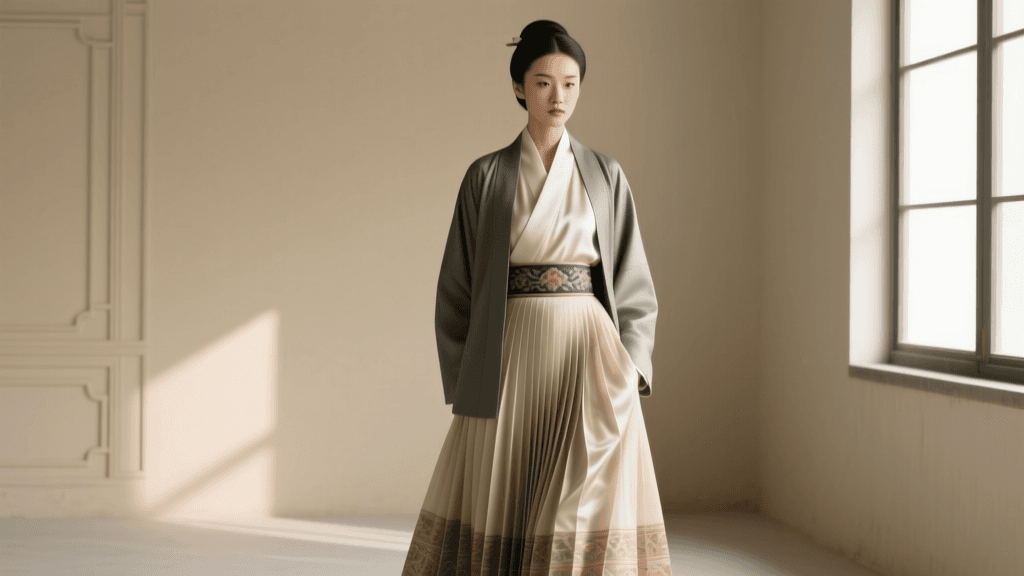
The Mamianqun (马面裙), literally translating to the "horse-face skirt," is arguably the most iconic, versatile, and recognizable garment in the modern Hanfu revival movement. Long before it graced the runways of global fashion weeks or the streets of contemporary Shanghai, it was a foundational element of Ming Dynasty court fashion and elite society. The skirt is defined by its unique structural anatomy: two flat, unpleated front and back panels known as "skirt doors" (maqunmen), flanked by deep, structured pleats on the sides. This design was not merely aesthetic; it was deeply practical, allowing for ease of movement, particularly when mounting and dismounting horses, which is how it earned its equestrian moniker.
While the structural roots of the wrap-around pleated skirt can be traced back to the Song, Liao, and Jin dynasties, it was during the Ming Dynasty (1368–1644) that the Mamianqun reached its absolute zenith. It transitioned from a practical garment for nomadic and semi-nomadic horseback riding into a highly regulated, exquisitely crafted symbol of status, wealth, and courtly elegance. Understanding this dynasty evolution is crucial for modern Hanfu enthusiasts who wish to wear the garment with historical accuracy and cultural respect.
Ming Dynasty Court Regulations and Textile Craftsmanship
During the Ming era, clothing was strictly governed by sumptuary laws that dictated who could wear what, based on social rank and imperial decree. The Metropolitan Museum of Art's Heilbrunn Timeline notes that the Ming dynasty saw a massive resurgence in traditional Han Chinese culture and aesthetics following the Mongol-led Yuan dynasty, leading to highly codified court dress systems.
For the imperial court and the nobility, the Mamianqun was frequently crafted using Zhuanghua (woven gold and silver threads) and Kesi (silk tapestry) techniques. The Met Museum's comprehensive guide on Chinese Silk highlights how these intricate weaving methods allowed for complex, seamless patterns that denoted the wearer's rank. Motifs were highly symbolic: the Mang (four-clawed python) and Feiyu (flying fish) were reserved for high-ranking officials and imperial consorts, while commoners were restricted to simpler floral, geometric, or auspicious cloud patterns. The cross-cultural exchange of these textile motifs along ancient trade routes, as documented by the UNESCO Silk Roads Programme, heavily influenced the rich visual vocabulary seen on Ming-era skirts.
Structural Anatomy: What Makes a True Mamianqun?
To appreciate the Mamianqun, one must understand its engineering. Unlike Western gathered skirts, the Mamianqun is constructed from two overlapping rectangular pieces of fabric. When wrapped around the body, the flat "skirt doors" align perfectly at the front and back, while the pleated sections overlap at the sides. This creates a modest, secure fit that prevents the skirt from flying open in the wind, a vital feature for historical modesty standards.
Historical Evolution Comparison Chart
| Dynasty / Era | Primary Function | Key Structural Characteristics | Common Textiles & Motifs |
|---|---|---|---|
| Song / Jin | Equestrian & Daily Wear | Wider pleats, simpler wrap construction, shorter lengths for mobility. | Plain silks, hemp, simple woven florals. |
| Ming | Court Fashion & Elite Society | Deep, sharp knife pleats, wide waistbands, heavy structured drape. | Zhuanghua (woven gold), Kesi, Python and Flying Fish motifs. |
| Qing | Han Women's Ceremonial Wear | Excessive pleating (Baidi / "hundred folds"), heavy ribbon appliques on pleat edges. | Satin, heavy embroidery, butterfly and peony motifs. |
| Modern Revival | Daily Fashion & Cultural Pride | Heat-set pleats, hidden zippers or traditional ties, varied lengths. | Jacquard polyester, organza, woven brocade, modern prints. |
The Modern Hanfu Revival: Actionable Buying & Sizing Guide
As the Hanfu movement has exploded over the last decade, the Mamianqun has become a gateway garment for beginners due to its ease of styling. It can be paired with a traditional Ming-style Ao (cross-collared or round-collared jacket) or seamlessly integrated into modern wardrobes alongside blouses, turtlenecks, and blazers. However, buying an authentic, well-fitting Mamianqun requires specific knowledge of measurements, fabrics, and market timing.
Precise Measurements and Sizing
Unlike modern skirts that rely on elastic waistbands, a traditional Mamianqun requires precise wrapping and tying. When ordering from specialized Hanfu makers on platforms like Taobao or AliExpress, you must provide exact measurements to ensure the "skirt doors" do not gape or misalign.
- Waist Measurement: Measure your natural waist (the narrowest part of your torso). For the skirt waistband, add 2 to 3 centimeters to your natural waist measurement. This extra length is crucial for the overlapping wrap and the tying of the traditional waist tapes.
- Hip Measurement: Measure the widest part of your hips. The skirt doors must be wide enough to cover your front and back completely when sitting. A standard front door width is 30-35 cm, but curvier figures should request custom door widths of 38-42 cm to prevent the side pleats from pulling open.
- Skirt Length: The golden ratio for a floor-sweeping, elegant Ming-style skirt is: Skirt Length = (Total Height x 0.60). For example, if you are 165 cm tall, your ideal skirt length is roughly 99 cm. Always subtract 2-3 cm from your final measurement to account for the height of your shoes, preventing the hem from dragging and ruining the pleats.
- The Waistband (Yaotou): Ensure the skirt features a traditional white cotton or linen waistband. Historically, silk was too slippery and expensive to use for the hidden waistband. A cotton waistband grips the skin and prevents the heavy skirt from sliding down throughout the day.
Cost, Fabrics, and Shopping Timing
The price of a Mamianqun varies wildly based on textile authenticity and manufacturing techniques. Here is a practical breakdown of what to expect when budgeting for your skirt:
- Entry-Level ($30 - $60 USD): Typically made from polyester jacquard or chiffon. The patterns are machine-printed or woven on basic looms. Pleats are heat-set but may lose their sharpness after a few washes. Ideal for casual daily wear and beginners.
- Mid-Tier ($80 - $150 USD): The sweet spot for historical accuracy. These skirts use woven brocade with accurate Ming Dynasty motifs (like the Feiyu or cloud-collar designs). The pleats are high-temperature heat-set and often feature traditional metal buckles or reinforced cotton tie-tapes. The drape is heavier, mimicking the luxurious weight of historical silks.
- High-End & Custom ($300 - $1,000+ USD): Crafted from genuine mulberry silk, Kesi tapestry, or real gold-leaf woven threads. These are often made-to-measure by heritage artisans in Suzhou or Hangzhou. They require dry-cleaning and meticulous care, serving more as collector's items or wedding garments.
Pro-Tip on Timing: To get the best prices on mid-tier and high-end Hanfu, time your purchases around major Chinese e-commerce festivals. The "618" shopping festival (mid-June) and the "Double 11" Singles' Day festival (November 11) offer massive discounts, often reducing a $120 skirt to $75. Additionally, the Taobao Maker Festival in August is an excellent time to find limited-edition, independent designer collaborations.
Pleat Maintenance and Care
The defining feature of the Mamianqun is its razor-sharp pleats. Modern skirts use synthetic blends to hold heat-set pleats, but they still require careful maintenance. Never put a Mamianqun in a washing machine. Hand wash the skirt gently in cold water using a pH-neutral silk detergent. After washing, do not wring the fabric. Instead, gently press out the water with a towel. While the skirt is still damp, align the pleats carefully on a flat surface, use binder clips or a specialized pleat board to hold them in place, and let it air dry. If the pleats begin to soften over time, a light steaming while the skirt is laid flat and clipped will restore their architectural sharpness.
Conclusion
The Mamianqun is a masterclass in the intersection of utility, art, and social hierarchy. From its pragmatic origins as an equestrian skirt to its elevated status as a canvas for Ming Dynasty courtly wealth, the horse-face skirt represents the pinnacle of traditional Chinese garment engineering. Today, as the Hanfu revival continues to blend historical reverence with modern practicality, the Mamianqun stands as a bridge between eras. By understanding its history, respecting its structural anatomy, and applying precise measurements and care techniques, modern wearers can confidently carry forward a legacy of Asian sartorial excellence that has survived for over a millennium.