Mastering Japanese Dye Arts: Shibori, Yuzen & Kasuri
The Living Canvas: An Introduction to Japanese Textile Arts
Japanese textile arts represent a pinnacle of human craftsmanship, where fabric is transformed into a living canvas of cultural expression. For collectors, enthusiasts, and historians, understanding the nuanced differences between traditional dyeing techniques is essential. While modern mass production often blurs the lines with digital printing and synthetic dyes, authentic traditional garments rely on centuries-old methods that require immense skill, patience, and an intimate understanding of natural materials. Among the most revered of these methods are Shibori, Yuzen, and Kasuri. Each technique offers a distinct visual language, tactile experience, and historical context. In this comprehensive guide, we will explore the technical processes behind these three iconic dyeing arts, provide actionable advice for identifying authentic pieces, and outline best practices for preserving your textile collection.
Shibori: The Sculptural Art of Shaped Resist Dyeing
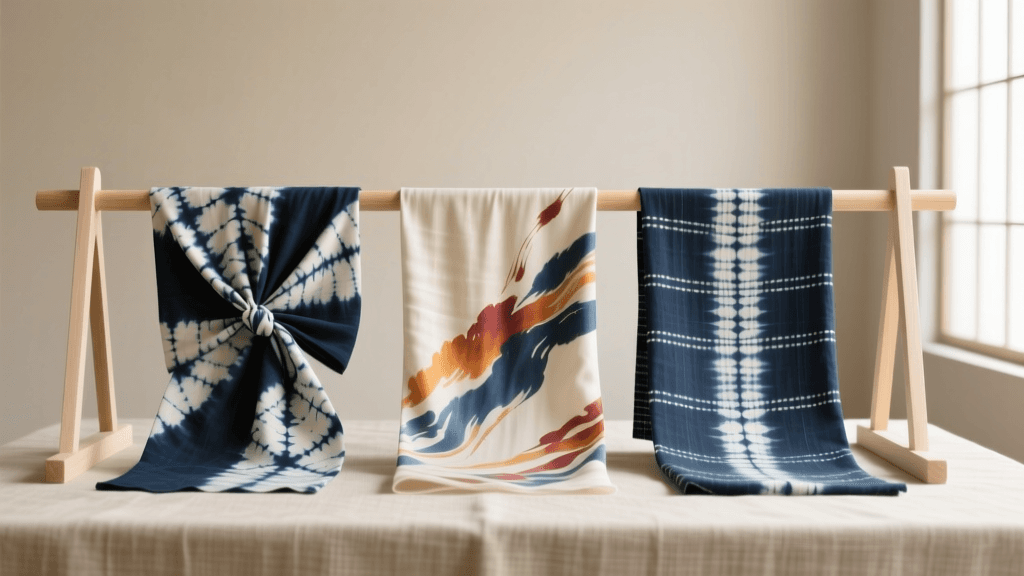
Derived from the Japanese verb shiboru (meaning to wring, squeeze, or press), Shibori is a shaped resist dyeing technique that dates back to the 8th century. Unlike flat dyeing methods, Shibori is inherently three-dimensional. The artisan manipulates the fabric through binding, stitching, folding, twisting, or compressing it before submerging it in a dye vat, traditionally natural indigo. The physical resistance created by these manipulations prevents the dye from penetrating certain areas, resulting in organic, fluid patterns. According to the Victoria and Albert Museum, Shibori experienced a massive resurgence during the Edo period when sumptuary laws restricted the lower classes from wearing luxurious silks and elaborate patterns, prompting a boom in creative, accessible indigo-dyed cottons.
Identifying Authentic Shibori Techniques
Authentic Shibori is categorized by the specific manipulation technique used. When inspecting a garment, look for these hallmark styles:
- Kanoko Shibori (Fawn Spot): Created by pinching and binding tiny sections of fabric with thread. The resulting pattern resembles the spots on a fawn's back. High-quality Kanoko features incredibly tight, uniform dots.
- Nui Shibori (Stitched): The fabric is stitched with a running stitch, then the thread is pulled taut and secured before dyeing. This allows for highly controlled, intricate geometric or floral patterns.
- Kumo Shibori (Spiderweb): Fabric is pleated and bound tightly at regular intervals, creating a radiating, web-like design.
- Arashi Shibori (Storm): The cloth is wrapped diagonally around a cylindrical pole, tightly bound, and then pushed down to compress the fabric before dyeing, resulting in striking diagonal lines reminiscent of driving rain.
- Itajime Shibori (Clamped): Fabric is folded and sandwiched between carved wooden blocks or shapes, then clamped tightly to create repeating geometric resist patterns.
Tactile Verification and Care
The most reliable way to authenticate Shibori is by touch and by examining the reverse side of the fabric. Because the fabric is physically compressed, authentic Shibori retains a subtle, textured topography even after pressing. The reverse side will show the undyed resist patterns mirroring the front. To care for Shibori silk, always hand wash in cold water using a pH-neutral silk detergent. Never wring the fabric; instead, roll it in a clean towel to absorb excess moisture and lay it flat to dry. For vintage cotton Shibori, gentle machine washing on a delicate cycle in a mesh bag is acceptable, but avoid high heat, which can flatten the sculptural texture.
Yuzen: The Painterly Mastery of Silk
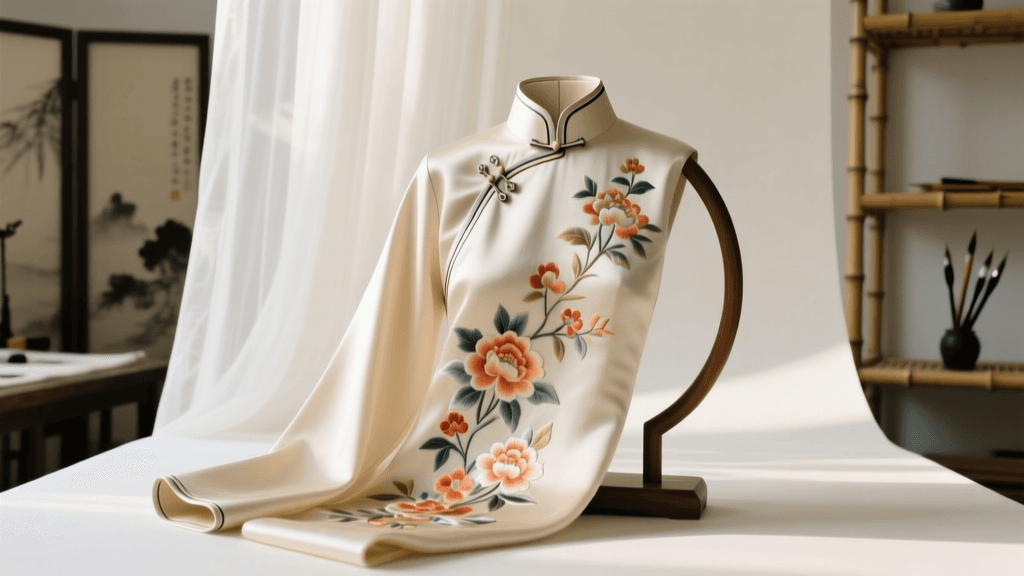
If Shibori is sculptural, Yuzen is painterly. Invented in the late 17th century by the Kyoto fan painter Miyazaki Yuzensai, this technique revolutionized Japanese fashion by allowing artisans to paint intricate, multi-colored designs directly onto silk without the colors bleeding into one another. As noted by the Metropolitan Museum of Art, Yuzen became the premier method for decorating the luxurious kimono worn by the wealthy merchant class and samurai elite during the Edo period.
The Yuzen Process: Rice Paste Resist
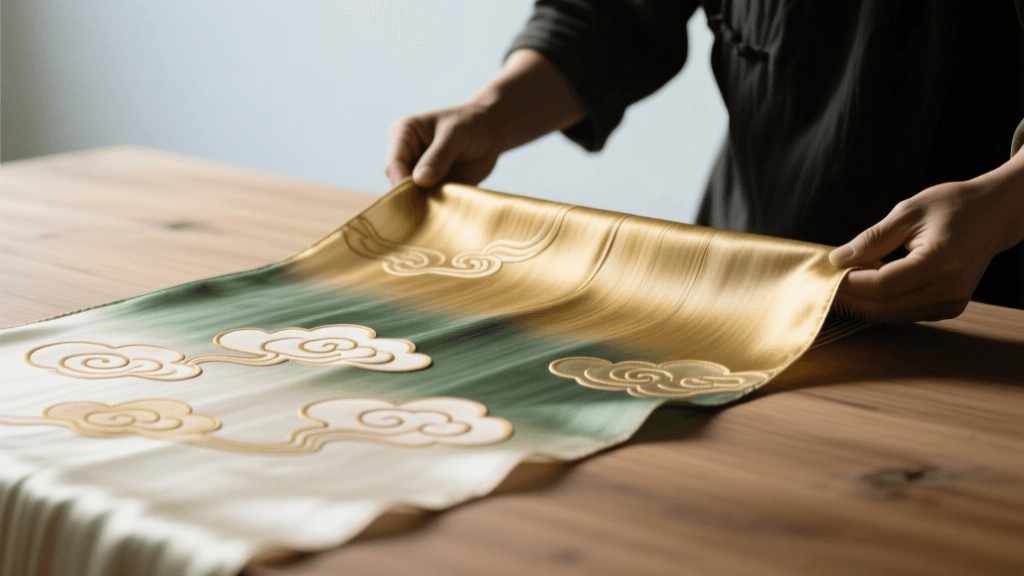
The secret to Yuzen's crisp, vibrant lines lies in itome-nori, a specialized rice-paste resist. The artisan first sketches the design onto the silk using a dayflower juice that washes away later. They then apply the rice paste along the outlines of the sketch. Once dry, this paste acts as a dam. The artisan can then hand-paint the interior sections with vibrant dyes, confident that the colors will not cross the paste barriers. After dyeing, the fabric is steamed to set the colors and then washed in flowing water to remove the paste, revealing crisp, white outlines that separate the vivid colors.
Kyo-Yuzen vs. Kaga-Yuzen
Collectors must distinguish between the two primary regional styles of Yuzen:
- Kyo-Yuzen (Kyoto): Characterized by stylized, elegant motifs, extensive use of gold and silver leaf, and a vibrant, sometimes pastel color palette. The designs often feature classical court aesthetics, flowing water, and auspicious symbols.
- Kaga-Yuzen (Kanazawa): Famous for its hyper-realistic, nature-inspired motifs. Kaga-Yuzen strictly utilizes a palette of five traditional colors (indigo, crimson, ochre, green, and purple) and employs a technique called kuma-bokashi (shading from the outside of a motif inward) to create a three-dimensional, botanical illustration effect. It rarely uses gold leaf.
Caring for Yuzen Silk
Yuzen silk is highly sensitive to water spots and UV degradation. Never attempt to wash a Yuzen kimono at home; the water can cause the dyes to bleed or leave permanent rings. Always rely on a professional dry cleaner who specializes in traditional Japanese garments. When storing Yuzen, avoid direct sunlight, which will rapidly fade the delicate natural dyes, and wrap the garment in unbleached cotton or acid-free tissue paper to allow the silk to breathe.
Kasuri: The Poetic Blur of Ikat Weaving
While Shibori and Yuzen are dyeing techniques applied to woven cloth, Kasuri (the Japanese term for Ikat) involves dyeing the threads before they are woven. The word Kasuri translates roughly to 'blurred' or 'hazy,' referring to the characteristic soft, feathered edges of the patterns where the dyed and undyed sections of the threads meet during weaving.
The Mathematics of Kasuri
Creating Kasuri requires staggering mathematical precision. The artisan calculates the exact placement of the pattern on the final woven cloth, then binds specific sections of the warp (vertical) and/or weft (horizontal) threads with cotton string to resist the dye. After dyeing, the bindings are removed, and the threads are mounted on the loom. As the weaver passes the shuttle, they must manually adjust the weft threads with a small pick to ensure the dyed sections align perfectly to form the pattern. This manual adjustment is what creates the signature blurred edge, a hallmark of hand-woven Kasuri that machine-made imitations cannot replicate.
The beauty of Kasuri lies not in rigid perfection, but in the poetic blurring of the threads, a testament to the human hand guiding the loom and embracing the organic nature of the craft.
Regional Variations
Japan boasts several legendary Kasuri traditions. Kurume Kasuri from Fukuoka is renowned for its intricate, small-scale geometric and pictorial patterns woven in deep indigo cotton, historically favored by farmers and merchants for its durability. Bingo Kasuri from Hiroshima often features larger, bolder geometric motifs. There are three structural types: tate-gasuri (warp ikat), yoko-gasuri (weft ikat), and the highly complex tate-yoko-gasuri (double ikat), where both sets of threads are dyed, requiring immense skill to align on the loom.
Comparative Guide: Shibori vs. Yuzen vs. Kasuri
For collectors and wardrobe curators, understanding the structural differences between these techniques is vital for authentication and valuation. The table below provides a quick-reference comparison.
| Feature | Shibori | Yuzen | Kasuri |
|---|---|---|---|
| Primary Process | Shaped resist (binding/folding) before dyeing | Rice-paste resist applied to woven fabric | Threads dyed before weaving (Ikat) |
| Visual Hallmark | Organic, fluid patterns with soft edges | Crisp, painterly designs with white outlines | Geometric or pictorial motifs with blurred edges |
| Tactile Quality | Textured, 3D surface (if not heavily pressed) | Smooth, flat surface (unless embellished) | Flat woven texture, identical on both sides |
| Common Materials | Silk, Hemp, Cotton | Primarily Silk | Primarily Cotton, sometimes Silk |
| Care Level | Moderate (hand wash or dry clean) | High (professional dry clean only) | Low to Moderate (gentle wash for cotton) |
Practical Advice for Collectors and Enthusiasts
When acquiring vintage or antique Japanese textiles, the market is unfortunately flooded with modern screen-printed imitations. To ensure you are investing in authentic traditional crafts, employ the 'Reverse Side Test.' Turn the fabric over. In authentic Shibori, the resist pattern will be clearly visible, and the texture will mirror the front. In authentic Yuzen, while the colors may not penetrate fully to the back, the crisp white resist lines and the general design layout will be faintly visible, and you will not see the uniform dot-matrix pattern characteristic of digital or screen printing. In authentic Kasuri, because the threads are dyed before weaving, the pattern will be virtually identical on the reverse side, just mirrored.
Furthermore, engage your sense of smell. Vintage indigo-dyed Shibori and Kasuri will often retain a faint, earthy, organic scent, especially when slightly warmed by your hands. Synthetic chemical dyes, commonly used in mid-century and modern mass-produced garments, will lack this depth and may even emit a slight chemical odor when warmed. Finally, when building your collection, prioritize pieces with documented provenance or those purchased from established dealers specializing in Japanese boroboro (antique textiles) and kimono. Proper storage is paramount: always store your textiles flat or loosely rolled around acid-free cardboard tubes. Never hang heavy vintage silk or cotton garments on wire hangers, as the weight of the fabric will distort the weave and cause irreversible shoulder damage over time. By respecting the history and material reality of Shibori, Yuzen, and Kasuri, you become not just a collector, but a custodian of Japan's extraordinary textile heritage.