Suzhou Embroidery: A Guide to Su Xiu in Hanfu and Qipao
The Legacy of Su Xiu in Chinese Textile Arts
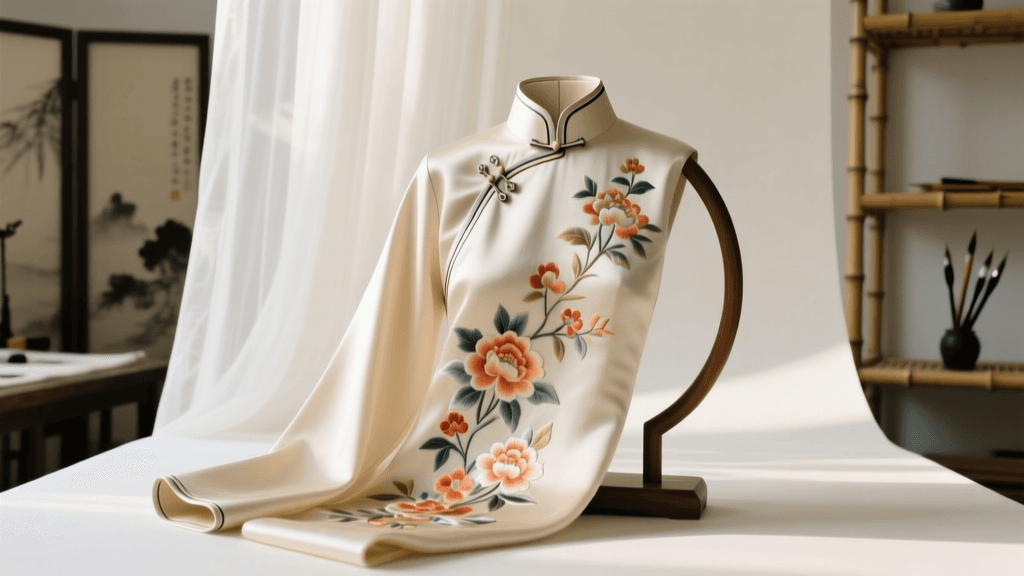
Suzhou embroidery, universally known as Su Xiu, represents the pinnacle of Chinese silk needlework. Originating over 2,000 years ago in the Wu region of Jiangsu province, this meticulous craft has historically adorned the robes of emperors, the trousseaus of noblewomen, and the ceremonial garments of the literati. Today, Su Xiu is experiencing a magnificent renaissance, serving as the defining textile art for high-end traditional garments, particularly the modern Hanfu revival and bespoke Qipao (Cheongsam) tailoring.
Recognized for its delicate patterns, elegant colors, and lively needlework, Su Xiu is deeply intertwined with China's broader silk heritage. As noted by UNESCO's Intangible Cultural Heritage registry, the sericulture and silk craftsmanship of China form the foundational bedrock upon which regional embroidery styles like Su Xiu are built. For enthusiasts and collectors of Asian traditional garments, understanding Su Xiu is essential to appreciating the true value of a handcrafted Hanfu or Qipao.
Decoding the Four Major Embroidery Styles
While China boasts dozens of regional embroidery techniques, four are historically classified as the 'Major Styles.' Understanding these distinctions helps buyers and collectors identify the specific aesthetic and structural qualities of their garments.
| Style | Origin | Defining Characteristics | Common Garment Applications |
|---|---|---|---|
| Su Xiu (Suzhou) | Jiangsu | Refined, elegant, hyper-realistic shading, extensive thread splitting. | Bespoke Qipao, Ming-style Ao Qun, Yunjian (cloud shoulders). |
| Xiang Xiu (Hunan) | Hunan | Bold colors, rich textures, often features lions and tigers. | Ceremonial jackets, theatrical costumes, heavy winter coats. |
| Yue Xiu (Guangdong) | Guangdong | Vibrant, high contrast, often uses gold and silver couching threads. | Qun Kwa (wedding jackets), festive Cheongsam, opera costumes. |
| Shu Xiu (Sichuan) | Sichuan | Soft, smooth, satin-stitch heavy, focuses on nature and pandas. | Everyday Hanfu accessories, silk scarves, lighter summer robes. |
The Magic of Thread Splitting and Double-Sided Embroidery
The most astonishing technical achievement of Su Xiu is the artisan's ability to split a single strand of silk thread. A standard silk thread can be divided into 2, 4, 8, 16, 32, or even 128 microscopic filaments. When embroidering the scales of a koi fish or the delicate veins of a peony leaf, a master artisan will use a 1/64th strand to achieve a photorealistic gradient that machine embroidery simply cannot replicate.
Another marvel is Shuangmian Xiu (double-sided embroidery). In this technique, the artisan hides all knots and thread ends within the stitches, resulting in a flawless image on both sides of the silk. This is highly prized for Yunjian (detachable cloud shoulders worn over Hanfu) and Qipao collars, where the reverse side of the fabric might be visible during movement. According to the Metropolitan Museum of Art, the evolution of such complex silk embroidery techniques highlights the sophisticated aesthetic demands of Chinese court and elite society throughout the Ming and Qing dynasties.
Practical Guide: Commissioning Custom Embroidered Garments
If you are looking to commission a custom Su Xiu Hanfu or Qipao, the process requires patience, precise measurements, and an understanding of textile economics. Here is an actionable guide to navigating a bespoke order.
1. Selecting the Right Silk Base
Embroidery places immense tension on fabric. A lightweight silk will pucker and tear under the weight of dense metallic or multi-strand silk threads.
- For Qipao: Request 22 to 30 momme heavy crepe de chine or silk satin. This weight provides the necessary structural integrity for a form-fitting silhouette while supporting dense floral motifs.
- For Hanfu (Ming Dynasty Ao Qun): Opt for 19 to 22 momme silk twill or damask for the upper jacket (Ao), and a heavier 30 momme pleated silk for the skirt (Qun).
2. Measurements and Timing
A bespoke Qipao requires up to 15 distinct measurements, including the hollow-to-hem, armhole depth, and precise bust/waist/hip ratios. For Hanfu, the critical measurements are the arm span (wingspan), shoulder width, and waist-to-floor length.
Timeline: True hand-embroidered Su Xiu is a slow art. A fully embroidered Qipao with a continuous bodice motif takes between 3 to 6 months to complete. A heavily embroidered Yunjian (cloud shoulder) can take over 800 hours of continuous labor.
3. Cost Breakdown
Authentic hand-embroidery is an investment. Here is a realistic cost breakdown for a custom, hand-embroidered garment from a reputable atelier in Suzhou or Shanghai:
- Base Silk Fabric & Tailoring: $300 – $600 USD
- Light Embroidery (Cuffs, collar, hem accents): $400 – $800 USD
- Medium Embroidery (Bodice panels, scattered motifs): $1,200 – $2,500 USD
- Heavy/Full Embroidery (Dense coverage, thread-splitting, double-sided): $3,500 – $10,000+ USD
Identifying Authentic Su Xiu vs. Machine Embroidery
As the demand for Hanfu and Qipao has surged, so has the market for machine-made imitations. Use these actionable checks to verify authenticity:
- Inspect the Reverse Side: Machine embroidery relies on a continuous bobbin thread, creating a uniform, often slightly raised grid on the back. Hand-embroidered Su Xiu will show slight variations in tension, and in double-sided embroidery, the back will be identical to the front with no visible bobbin threads.
- The Burn Test: Authentic Su Xiu uses 100% mulberry silk thread. If you carefully snip a single loose thread and burn it, real silk will burn slowly, self-extinguish, smell like burning hair, and crush into a fine ash between your fingers. Synthetic rayon or polyester threads will melt into a hard, plastic bead.
- Color Gradients: Machines achieve gradients by densely packing different colored threads side-by-side. Su Xiu artisans achieve gradients by twisting two different colored micro-filaments together into a single needle, creating a seamless, painterly transition.
Actionable Care Tips for Silk Embroidered Textiles
Preserving the integrity of Su Xiu requires strict adherence to proper textile care. The Victoria and Albert Museum emphasizes that light, moisture, and improper handling are the primary enemies of historic and contemporary silk embroidery.
- Washing: Never machine wash or dry clean a heavily embroidered garment, as the chemical solvents can strip the silk's natural sericin, and machine agitation will snap the micro-threads. Spot clean only. If a full wash is necessary, hand wash in cold water using a pH-neutral detergent like Eucalan Fine Fabric Wash.
- Drying and Ironing: Never wring the silk. Roll it in a clean cotton towel to absorb moisture. Iron on the lowest 'silk' setting while the garment is still slightly damp. Crucial: Always iron on the reverse side using a cotton press cloth to prevent crushing the three-dimensional embroidery stitches.
- Storage: Do not store embroidered silk in plastic bags, which trap moisture and cause yellowing. Wrap the garment in unbuffered, acid-free tissue paper and store it flat in a breathable cotton garment bag. For heavily embroidered Qipao, hanging can cause the silk base to stretch and distort under the weight of the threads; flat storage is always preferred.
"To wear Su Xiu is to wear a painting woven from light and patience. It is not merely a garment, but a canvas of Chinese cultural memory."
— Master Artisan of the Suzhou Embroidery Institute
Conclusion
Suzhou embroidery remains one of the most breathtaking textile arts in the world. Whether you are commissioning a traditional Ming-style Hanfu for ceremonial wear or a sleek, modern Qipao adorned with subtle floral cuffs, understanding the mechanics, costs, and care of Su Xiu ensures your investment will last for generations. By supporting authentic artisans and prioritizing high-grade mulberry silk, you actively participate in the preservation of this magnificent Asian tradition.