Kimono in Sci-Fi: Global Pop Culture & Cosplay Guide

The intersection of traditional Japanese clothing and global pop culture is one of the most fascinating sartorial phenomena of the modern era. From the sweeping, layered robes of interstellar peacekeepers in science fiction epics to the neon-lit, tech-wear infused silhouettes of cyberpunk anime, the kimono, hakama, and haori have transcended their geographical origins to become universal symbols of mystique, discipline, and futuristic elegance. For fans of cinema, cosplay, and avant-garde fashion, understanding the roots of these garments is essential. This guide explores how traditional Japanese dress shaped global media and provides actionable advice on how to source, measure, and style these iconic pieces for your own wardrobe or theatrical endeavors.
The Cinematic Legacy of the Kimono and Hakama
When George Lucas conceptualized the Jedi Order for Star Wars, he drew heavily from the cinematic language of Akira Kurosawa’s samurai films. The iconic Jedi robe is essentially a modified, heavy-linen interpretation of the traditional kimono and haori, layered with a tabard that mimics the structured draping of a hakama. Similarly, the menacing silhouette of Darth Vader was famously inspired by the kabuto (samurai helmet) and the flowing, wide-stanced draping of formal samurai court dress. As noted by textile historians and exhibitions at The Metropolitan Museum of Art, the T-shaped silhouette of the kimono offers a unique architectural quality that translates beautifully to the silver screen, allowing costume designers to create characters that feel both ancient and otherworldly.
In the realm of cyberpunk and anime, the influence is equally profound. Franchises like Ghost in the Shell and Blade Runner frequently utilize the haori as a futuristic outerwear piece, often rendered in transparent PVC, synthetic leather, or LED-embedded textiles. The rigid, pleated lines of the hakama are frequently reimagined as tactical tech-wear trousers, blending Edo-period functionality with dystopian survival aesthetics. The Kyoto Costume Institute Digital Archives provides extensive documentation on how these historical garments were constructed, offering a blueprint for modern costume designers who wish to replicate these silhouettes with historical accuracy before adding their own sci-fi twists.
Deconstructing the Pop Culture Silhouette
To accurately recreate or draw inspiration from these media looks, one must first understand the foundational garments. Pop culture often conflates different items of Japanese dress into a single generic "robe," but authentic styling requires a nuanced understanding of the layers. Below is a breakdown of how traditional garments map to popular media archetypes.
| Pop Culture Archetype | Traditional Garment | Key Features & Media Examples |
|---|---|---|
| The Space Monk / Jedi | Kimono & Haori | T-shaped sleeves, wide lapels, and layered obis. Seen in Star Wars and Dune. |
| The Cyberpunk Ronin | Hakama & Jinbaori | Deep pleats, wide stance, sleeveless tabards. Seen in Cyberpunk 2077 and Ghost in the Shell. |
| The Fantasy Scholar | Yukata & Heko Obi | Lightweight cotton, soft sash tying, relaxed drape. Common in Genshin Impact and anime. |
| The Imperial Villain | Kamishimo & Kabuto | Stiff, winged shoulders (kataginu), rigid geometry. Inspired Darth Vader and Shogun villains. |
Sourcing Authentic Pieces for Cosplay and Wardrobe Integration
Whether you are building a high-accuracy cosplay or integrating a vintage haori into your daily streetwear, sourcing authentic pieces requires specific knowledge of Japanese sizing and textile types. Unlike Western clothing, traditional Japanese garments are constructed from straight bolts of fabric (tanmono) and are meant to be folded flat rather than hung on curved hangers.
Understanding Measurements
When shopping on vintage import sites or specialized online retailers, you will encounter specific Japanese measurement terms. Knowing these will save you from costly returns:
- Yuki (裄): The sleeve length, measured from the center back of the neck, across the shoulder, and down to the wrist. For a traditional fit, the yuki should reach the back of your hand. In pop culture and modern styling, a slightly shorter yuki is acceptable and often preferred for mobility.
- Mitake (身丈): The back length of the garment, measured from the base of the collar to the bottom hem. For a kimono, this should ideally match your height. For a haori (jacket), it typically falls between the hip and mid-thigh.
- Girth (Haba): The width of the garment from side seam to side seam. Because traditional garments wrap and overlap, you need a haba that is at least 1.2 times your actual hip or waist measurement to ensure the front panels overlap correctly without pulling.
Textiles and Price Ranges
The Victoria and Albert Museum highlights the incredible diversity of Japanese textile arts, which directly impacts the cost and drape of the garments you source:
- Yukata (Cotton): Ideal for beginners and summer cosplay. Lightweight, easy to wash, and affordable. Expect to pay $30 to $80 for vintage or new pieces.
- Chirimen (Crepe Silk): Features a textured, crinkled surface that dyes beautifully. It has a heavy, luxurious drape perfect for dramatic, flowing sci-fi robes. Vintage pieces range from $100 to $300.
- Tsumugi (Pongee Silk): A rustic, matte-finish silk woven from pre-dyed threads. It looks and feels somewhat like raw linen or wool, making it perfect for gritty, earth-toned fantasy or post-apocalyptic costumes. Prices range from $150 to $400.
Styling Traditional Garments for Modern and Theatrical Wear
Integrating these garments into a modern wardrobe or a theatrical costume requires an understanding of how to manipulate the obi (sash) and layer effectively without looking like you are wearing a misplaced costume.
The Haori as Modern Outerwear
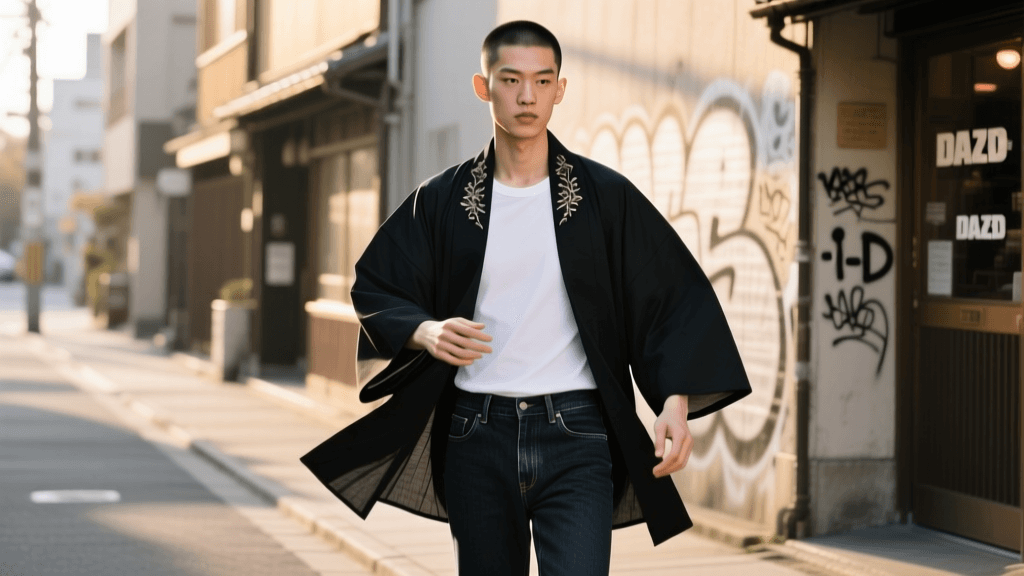
The haori is the most accessible entry point for daily wear. Traditionally worn open, it functions similarly to a duster coat or a cardigan. To style a vintage silk haori for a cyberpunk or streetwear look, pair it with a high-neck turtleneck, tailored trousers, and chunky boots. Use a haori himo (the decorative front cords) or replace them with a sleek, modern leather clasp to bridge the gap between Edo-period tradition and futuristic minimalism.
Tying the Obi for Action and Combat
If you are cosplaying a martial artist or an action-oriented character, a standard decorative knot (like the taiko musubi) will restrict movement and look bulky under armor. Instead, utilize the kaku obi (a stiff, woven men's sash) or a heavy canvas belt. Tie it using the karate knot (a simple, flat square knot positioned slightly off-center) to keep the silhouette streamlined and allow for high kicks and acrobatics.
Hakama Pleat Maintenance
The hakama’s sharp pleats are its defining feature, but they are notoriously difficult to maintain during conventions or long shoot days. When purchasing a synthetic hakama for cosplay, the pleats are often heat-set. If you are using an authentic silk or cotton hakama, you must fold it using the traditional tatamikata (folding method) after every wear. Use binder clips along the hem and waistband while storing it flat to preserve the rigid geometry that gives the hakama its commanding, wide-stanced presence.
Respectful Representation vs. Cultural Appropriation
As traditional Japanese garments continue to inspire global media, it is vital for cosplayers, designers, and fans to navigate the line between appreciation and appropriation. Wearing a kimono or haori as a tribute to a specific character, or integrating it respectfully into your fashion as an homage to Japanese textile arts, is widely celebrated by Japanese cultural institutions and artisans who rely on global interest to keep these crafts alive.
However, context matters. Avoid mixing sacred or highly specific ceremonial items (like a Shinto priest's jo-e or a bride's uchikake) with sexualized or mocking costume elements. When sourcing garments, prioritize buying from authentic Japanese vintage sellers, local artisans, or established importers rather than purchasing cheap, mass-produced "geisha costumes" that degrade the cultural significance of the clothing. By understanding the history, construction, and proper styling of these garments, you honor the centuries of artistry that brought them to life, ensuring their legacy continues to inspire global pop culture for generations to come.