Miao Traditional Clothing: Silver Jewelry & Embroidery
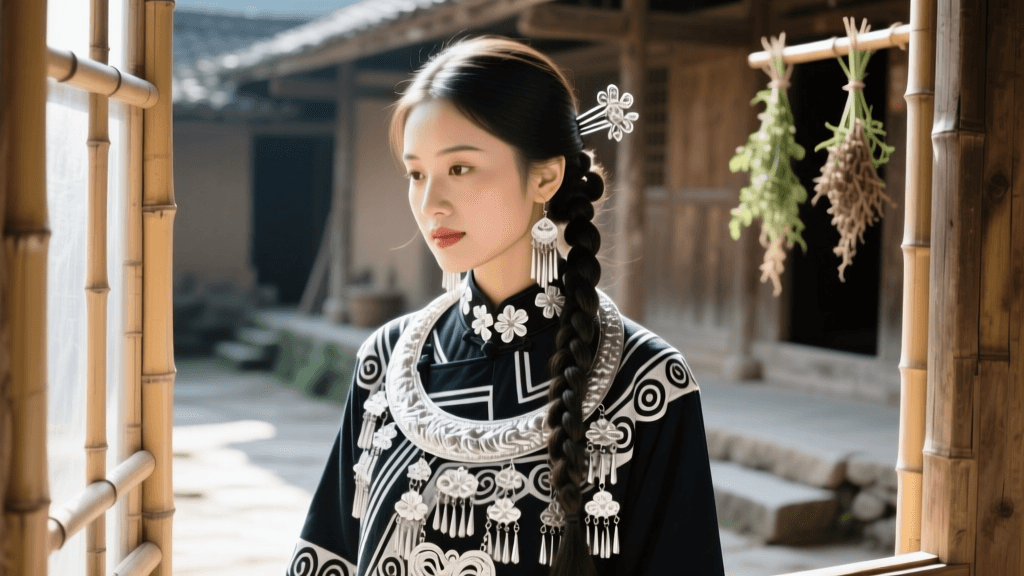
The Wearable History of the Miao People
The Miao people, widely known in the West as the Hmong, represent one of China's most culturally vibrant ethnic minority groups. Concentrated primarily in the mountainous regions of Guizhou, Yunnan, and Hunan provinces, the Miao have historically lacked a formalized written language. As a result, their history, mythology, and migratory patterns are not recorded in books, but rather stitched into their garments and forged into their jewelry. According to the UNESCO Intangible Cultural Heritage registry, the cultural expressions of the Miao, particularly during the Miao New Year, rely heavily on these intricate textile and metalwork traditions to pass down ancestral knowledge.
For collectors, cultural enthusiasts, and travelers, understanding Miao traditional clothing requires looking beyond the vivid colors. Each motif, stitch, and silver ornament serves as a historical document. This guide explores the craftsmanship behind Miao embroidery and silverwork, providing actionable advice on how to identify, purchase, and care for authentic pieces.
The Intricacies of Miao Embroidery (Xiu Hua)
Miao embroidery is renowned for its complexity, vibrant color palettes, and three-dimensional textures. Unlike the subtle, tone-on-tone silk embroidery of the Han Chinese Suzhou tradition, Miao embroidery is bold, utilizing thick cotton or silk threads on indigo-dyed or dark cotton backgrounds.
Key Techniques and Motifs
- The Butterfly Mother (Die Ma): The most sacred motif in Miao culture. According to the Miao Epic Chanting tradition, the Butterfly Mother mated with a water bubble to hatch the first humans, dragons, and beasts. You will frequently see stylized butterflies on the shoulders and back panels of festival jackets.
- Seed Stitch (Dazi Xiu): A painstaking technique where tiny, individual knots are tied to form raised, textured patterns. A single sleeve panel using the seed stitch can take an artisan up to three months to complete.
- Braid Stitch (Bian Xiu): Silk threads are braided into flat ribbons and then coiled and stitched onto the fabric, creating a raised, ribbon-like effect often used to depict rivers and mountains, symbolizing the Miao's ancestral migration routes.
The Hundred-Bird Jacket (Bai Niao Yi)
One of the most prized collector's items is the 'Hundred-Bird Jacket.' Originally worn by chieftains and shamans, this heavily embroidered coat features dozens of distinct bird motifs, alongside dragons and mythical beasts. Authentic vintage Hundred-Bird jackets are incredibly rare and are now mostly housed in institutions like the British Museum's Miao Collection or private archives.
Indigo Dyeing and Batik (Laran)
Before embroidery begins, the canvas must be prepared. Miao women are masters of indigo dyeing and batik. The process involves fermenting indigo leaves in wooden vats mixed with rice wine and ash. The fabric is dipped repeatedly—sometimes up to twenty times—to achieve a deep, lustrous navy blue that borders on black. For batik (Laran), artisans use a specialized brass-tipped bamboo pen to draw intricate geometric patterns with melted beeswax onto white cotton. After the indigo dyeing process, the fabric is boiled to remove the wax, revealing crisp white patterns against the deep blue background. Authentic hand-dyed indigo has a distinct, earthy scent and a slightly stiff hand-feel that softens beautifully over time.
Miao Silver Jewelry: Craftsmanship and Cultural Weight
While embroidery tells the story of the Miao, silver jewelry displays the family's wealth, status, and spiritual protection. During festivals, a Miao woman may wear up to 10 kilograms of silver, including horned headdresses, multi-layered necklaces, chest plates, and hairpins.
Understanding Silver Purity: Zu Yin vs. Miao Yin
When shopping in ethnic markets, it is crucial to understand the difference between traditional silver and tourist-grade alloys.
- Zu Yin (Pure Silver): Historically, Miao silversmiths melted down silver coins to create jewelry with a purity of 92.5% to 99%. Pure Miao silver is soft, heavy, and produces a dull, low-pitched 'thud' when tapped.
- Miao Yin (Miao Silver / White Copper): Today, much of the 'silver' sold in commercial tourist hubs is actually 'Miao Yin,' an alloy of white copper, nickel, and zinc. It is harder, lighter, and produces a high-pitched 'clink' when struck. While beautiful for costume wear, it holds no intrinsic precious metal value.
Comparison Chart: Authentic Handmade vs. Commercial Machine-Made
When navigating markets in Guizhou, use this table to evaluate the garments and accessories you encounter.
| Feature | Authentic Handmade (Village Artisan) | Machine-Made (Tourist Market) |
|---|---|---|
| Embroidery Technique | Irregular stitches, raised 3D textures, seed/braid stitch | Flat, uniform cross-stitch, visible grid backing |
| Material & Dye | Hand-spun cotton, natural fermented indigo, silk threads | Synthetic polyester blends, chemical aniline dyes |
| Silver Purity | 92.5% - 99% pure silver (Zu Yin), heavy weight | White copper alloy (Miao Yin), lightweight |
| Production Time | 1 to 3 years for a full festival suit | Mass-produced in factories within hours |
| Average Cost (Jacket) | 15,000 - 45,000 RMB ($2,100 - $6,300 USD) | 200 - 600 RMB ($28 - $85 USD) |
| Investment Value | High; appreciates as vintage/antique textile art | Zero; purely decorative souvenir |
Actionable Guide: Purchasing and Commissioning Miao Garments
If you are looking to acquire authentic Miao textiles or silver, skip the main commercial streets of Xijiang Thousand Households Miao Village. Instead, follow these practical steps:
1. Where to Go
Travel to Kaili, the capital of the Qiandongnan Miao and Dong Autonomous Prefecture. The Kaili Ethnic Minority Museum offers a baseline for authentic motifs. For purchasing, visit the weekly rural markets in Shiqiao (famous for paper and batik) or Zhouxi. These are working markets where locals buy and sell, ensuring higher authenticity and lower prices.
2. Commissioning Custom Embroidery
If you wish to commission a piece, be prepared for a significant time investment. Approach village cooperatives rather than individual street vendors. A custom-embroidered jacket panel (approx. 40cm x 60cm) using traditional seed stitch will cost between 3,000 and 5,000 RMB and take 4 to 6 months to complete. Always request a small physical sample of the artisan's previous work to verify stitch density.
3. Buying Silver: The Magnet and Sound Test
When purchasing silver hairpins or bracelets in Kaili's silver streets, carry a small neodymium magnet. Pure silver and white copper are both non-magnetic, but many cheap tourist fakes contain iron cores and will stick to the magnet. Next, perform the sound test: drop the piece gently on a wooden table. Pure silver emits a soft, dull thud, while copper alloys emit a sharp, ringing ping. Expect to pay the daily global spot price of silver plus a 20-40% craftsmanship premium for genuine Zu Yin (roughly 15 to 25 RMB per gram).
Care and Maintenance of Ethnic Textiles and Silver
Authentic Miao garments require specialized care to preserve their structural integrity and vibrant colors.
Caring for Indigo and Embroidery
- Washing: Never machine wash hand-dyed indigo or silk-embroidered cotton. The indigo will bleed profusely, and the silk threads will fray. If cleaning is necessary, spot clean with cold water and a mild, pH-neutral soap.
- Color Fixing: If you purchase a newly dyed indigo piece that smells strongly of fermentation and bleeds color, soak it in a basin of cold water with one cup of white vinegar and half a cup of salt for 30 minutes to help set the remaining dye.
- Storage: Store cotton and silk textiles in a cool, dry place away from direct sunlight, which will rapidly fade the natural dyes. Use acid-free tissue paper to stuff the sleeves and bodice, preventing deep creases that can snap the brittle silk embroidery threads over time.
Maintaining Miao Silver
Pure Miao silver tarnishes quickly when exposed to humidity and sulfur in the air. To maintain the bright, white luster characteristic of festival silver, store the pieces in airtight ziplock bags with anti-tarnish silica strips. If a piece tarnishes, avoid harsh chemical dips. Instead, use a soft-bristled toothbrush with a paste made of baking soda and water, gently working it into the intricate filigree patterns, then rinse with distilled water and dry immediately with a microfiber cloth.
Conclusion
Miao traditional clothing is far more than ethnic fashion; it is a profound expression of resilience, identity, and artistry. Whether you are acquiring a vintage indigo batik cloth, investing in a hand-forged pure silver horn hairpin, or simply studying the migratory maps stitched into a festival jacket, understanding the craftsmanship ensures you respect and preserve this extraordinary cultural heritage. By prioritizing authentic village artisans over mass-produced souvenirs, collectors and enthusiasts play a vital role in sustaining the livelihoods of Miao craftspeople for generations to come.