Traditional Chinese Footwear 2026: Cloud Shoes & Boots Styling
The Xin Zhongshi Movement: Heritage Footwear in 2026
As the Xin Zhongshi (New Chinese Style) movement continues to dominate global fashion runways and street style in 2026, the focus has shifted from traditional garments like the Mamianqun (horse-face skirt) and Song trousers to the foundation of the outfit: footwear. Traditional Chinese footwear is no longer relegated to museum displays or theatrical costumes. Today, heritage shoes are being reimagined with modern orthopedic support, sustainable textiles, and avant-garde silhouettes that seamlessly integrate into contemporary wardrobes.
For enthusiasts of Asian traditions and sartorial history, understanding the nuances of traditional Chinese footwear offers a deeper connection to the culture. According to curators at the Metropolitan Museum of Art's Asian Art Department, the intricate embroidery and structural engineering of historical Chinese shoes reflect profound philosophical beliefs, social hierarchies, and regional craftsmanship. In 2026, modern artisans are honoring these historical techniques while utilizing 3D-woven hemp, vegan silk alternatives, and memory-foam insoles to meet the demands of the modern consumer.
Yunxie (Cloud Shoes): The Upturned Toe Renaissance
The Yunxie, or cloud shoe, is perhaps the most iconic silhouette in Han Chinese footwear history. Characterized by its distinctive upturned toe—often shaped like a ruyi (an ancient ceremonial scepter) or a swirling cloud—this design was originally intended to prevent the hem of long, flowing robes from catching underfoot. Beyond its practical origins, the upturned toe symbolized a spiritual connection to the heavens and a wish for upward mobility and good fortune.
In 2026, the Yunxie has experienced a massive renaissance, particularly among minimalist fashion enthusiasts who appreciate its organic, sculptural lines. Contemporary designers have stripped away the heavy, ornate embroidery of the late Qing dynasty, opting instead for subtle, tone-on-tone silk jacquards and matte-finished organic cottons. The upturned toe is now constructed using flexible, lightweight bio-resins that maintain the iconic shape without the rigid discomfort of historical wooden or paste-layered inserts.
Styling the modern Yunxie is surprisingly versatile. In 2026, fashion editors recommend pairing monochromatic cloud shoes with wide-leg linen trousers or tailored, cropped wool pants. The slight upward sweep of the toe elongates the leg line, making it an excellent choice for both professional environments and casual weekend wear.
Embroidered Boots and Manchu Platforms
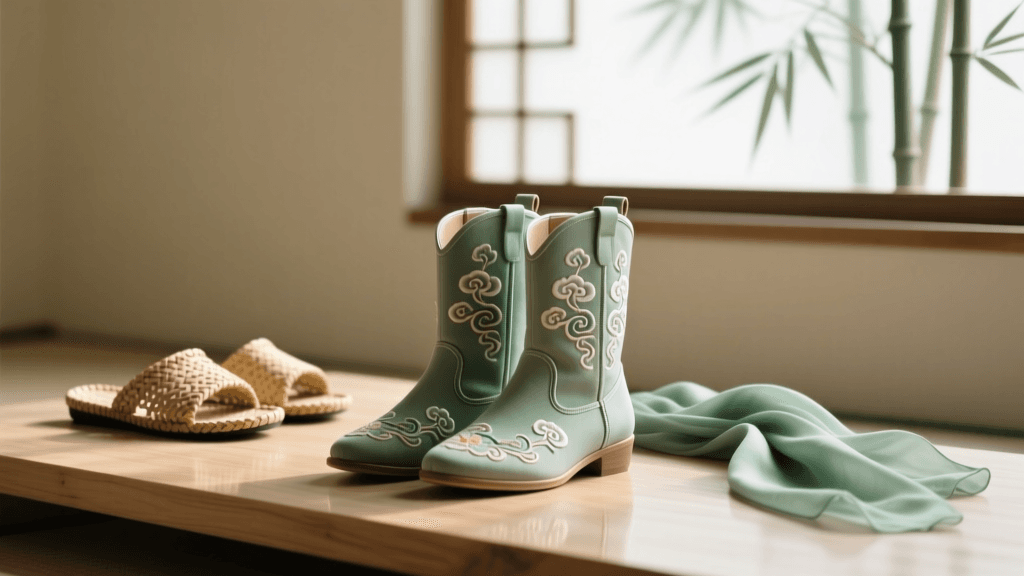
While Han Chinese footwear often favored flat, flexible soles, the Manchu influences of the Qing dynasty introduced structured boots and dramatic platform shoes to the Chinese sartorial lexicon. The Xuezi (traditional boots) were originally crafted from thick cotton or silk, featuring stiff shafts to protect the shins during horseback riding or harsh winters.
For women of the Manchu nobility, the Huapendi (flowerpot-bottom) and Matidi (horse-hoof-bottom) platform shoes were a staple. These towering wooden platforms, often covered in intricate silk embroidery, required immense balance and dictated a specific, swaying gait that was considered highly elegant. According to historical archives preserved by the Victoria and Albert Museum's Chinese Collections, these platform shoes were status symbols, indicating that the wearer did not need to perform manual labor.
In 2026, the historical platform boot has been reinterpreted through the lens of modern chunky footwear trends. High-end heritage brands in Shanghai and Beijing are releasing Matidi-inspired boots featuring lightweight, shock-absorbing EVA foam platforms wrapped in sustainably sourced leather or Piñatex (pineapple leather). The shafts of these modern boots feature subtle, laser-etched motifs of plum blossoms and cranes, offering a nod to traditional embroidery without the fragility of silk thread. These boots are frequently styled with asymmetrical hemlines and structured blazers, creating a powerful, architectural silhouette.
Bu Xie and Cao Xie: Minimalist Cloth and Straw
For those who prefer a grounded, Zen-inspired aesthetic, the Bu Xie (cloth shoe) and Cao Xie (straw sandal) remain highly relevant. The traditional Bu Xie is famous for its Qiancengdi (thousand-layer sole). Historically, this involved stacking dozens of layers of cotton cloth, pasting them together with natural rice glue, and hand-stitching them with thick hemp thread. This process created a sole that was breathable, flexible, and naturally shock-absorbing.
Today, the Qiancengdi technique is recognized as an intangible cultural heritage. While mass-market versions use machine-pressed rubber to mimic the look, premium 2026 releases from artisanal workshops in Beijing still utilize the hand-stitched cotton method, often treating the outer layers with natural tung oil for water resistance. The Bu Xie is the ultimate slip-on loafer, perfect for pairing with relaxed-fit denim or traditional Hanfu for a casual, scholarly look.
Similarly, the Cao Xie (straw sandal) has evolved. Modern eco-fashion brands are weaving organic hemp, bamboo fibers, and recycled cotton cords to create durable, breathable summer footwear. The craftsmanship involved in weaving these sandals, a skill documented by institutions like the Bata Shoe Museum, highlights the ingenuity of ancient Asian agricultural societies in utilizing abundant, biodegradable resources.
2026 Buyer’s Guide: Comparison and Pricing
When investing in traditional Chinese footwear in 2026, it is essential to understand the different categories, their modern adaptations, and their price points. Below is a comprehensive guide to help you navigate the market.
| Footwear Type | Historical Era / Origin | 2026 Modern Adaptation | Average Price (USD) | Best Styling Scenario |
|---|---|---|---|---|
| Yunxie (Cloud Shoe) | Ming / Qing Dynasty | Bio-resin toe, silk jacquard, memory foam | $120 - $280 | Wide-leg trousers, office wear |
| Matidi Platform Boot | Qing Dynasty (Manchu) | EVA foam platform, vegan leather shaft | $250 - $450 | Avant-garde streetwear, evening |
| Bu Xie (Cloth Shoe) | Widespread Historical | Hand-stitched Qiancengdi, tung-oil coated | $85 - $190 | Casual linen, relaxed denim |
| Cao Xie (Straw Sandal) | Ancient Agricultural | Woven bamboo/hemp blend, ergonomic footbed | $45 - $95 | Summer resort, Zen minimalism |
| Embroidered Xuezi | Tang / Song / Ming | Recycled silk thread, waterproofed canvas | $150 - $320 | Winter layering, Hanfu styling |
Sizing, Fit, and Modern Comfort Upgrades
One of the most common challenges for international buyers exploring traditional Chinese footwear is sizing. Historically, shoes were measured using the cun system, but in 2026, almost all heritage brands utilize the standard European (EU) sizing chart, which is the default in mainland China. However, traditional footwear often features a wider toe box and a shallower instep compared to Western lasts.
When purchasing Yunxie or Bu Xie, it is highly recommended to measure your foot length in centimeters and consult the brand's specific size chart. For those with wider feet, the natural cotton and silk uppers of traditional cloth shoes will stretch and mold to the foot over time, much like a bespoke leather loafer. Modern 2026 iterations frequently include removable orthotic insoles, allowing wearers to swap in custom arch supports without compromising the exterior historical aesthetic.
Care and Maintenance of Heritage Footwear
Proper maintenance is crucial for preserving the intricate textiles and structural integrity of traditional footwear. Silk-embroidered boots and cloud shoes should never be machine-washed. Instead, use a soft-bristled brush to remove dry dirt and spot-clean stains with a damp microfiber cloth and a pH-neutral textile cleaner.
For storage, keep your footwear in a cool, dry environment with a relative humidity of around 45% to prevent the silk threads from degrading or the natural paste soles from molding. Insert acid-free tissue paper or untreated cedar shoe trees to maintain the shape of the upturned toes and boot shafts. By treating these garments with the same care as high-end couture, you ensure that the rich legacy of Asian footwear traditions continues to step confidently into the future.