Best Traditional Chinese Footwear 2026: Cloud Shoes & Boots
The 2026 Resurgence of Traditional Chinese Footwear
In 2026, the global fashion landscape has witnessed an unprecedented embrace of the Xin Zhongshi (New Chinese Style) movement, elevating historical garments from museum archives to everyday streetwear. While much attention has been paid to the flowing silhouettes of Mamian skirts and Song Dynasty-inspired trousers, the foundation of these outfits—traditional Chinese footwear—has experienced its own remarkable renaissance. Artisans and contemporary designers are collaborating to revive ancient shoemaking techniques, blending centuries-old craftsmanship with modern ergonomic needs. Whether you are attending a high-profile cultural event, walking the streets of Shanghai during Spring/Summer 2026 Fashion Week, or simply integrating heritage pieces into your daily wardrobe, understanding the nuances of traditional Chinese footwear is essential. This comprehensive guide explores the intricate world of Yuntou (cloud shoes) and Xuezi (traditional boots), offering actionable advice on styling, purchasing, and preserving these wearable works of art in the modern era.
Yuntou (Cloud Shoes): Anatomy, Craftsmanship, and Symbolism
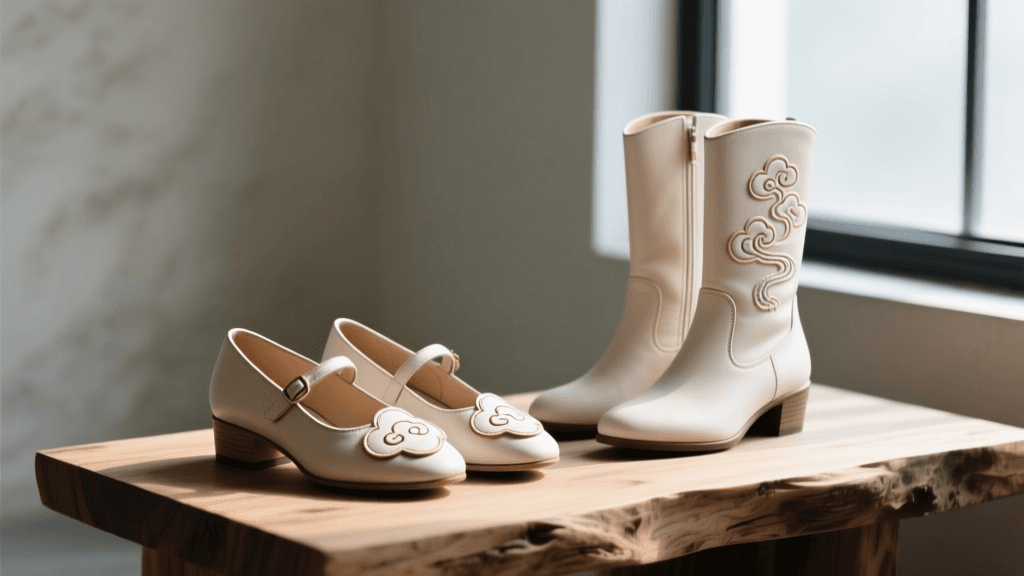
Yuntou, commonly translated as 'cloud shoes,' are among the most recognizable and elegant forms of traditional Chinese footwear. Characterized by their distinctive upturned toe caps that resemble the swirling shapes of ruyi clouds or blooming lotus petals, these shoes were historically worn by both men and women of the literati and aristocratic classes. In 2026, the Yuntou silhouette has been adapted for contemporary comfort without sacrificing its historical integrity.
The upper part of a traditional Yuntou shoe is typically crafted from premium silk, satin, or finely woven cotton, serving as a canvas for exquisite embroidery. Artisans utilize techniques such as Su embroidery (Suzhou silk embroidery) and Beijing knot stitching to depict auspicious motifs. Common designs include bats (symbolizing good fortune), peonies (representing wealth and honor), and cranes (denoting longevity). According to historical textile analyses preserved in the Metropolitan Museum of Art Asian Art Collection, the precision of these embroidery patterns often indicated the social standing and regional origin of the wearer.
Beneath the embroidered upper lies the true marvel of traditional Chinese shoemaking: the qiancengdi, or 'thousand-layer sole.' Despite the poetic name, the sole is typically composed of 30 to 40 layers of cotton cloth. Artisans cut the cloth into precise shapes, paste them together using natural flour-based adhesives, and compress them under heavy stones. Once dried, the sole is meticulously stitched together using thick, waxed hemp thread. This labor-intensive process creates a sole that is remarkably durable, breathable, and naturally shock-absorbing. In 2026, many heritage brands have begun integrating hidden memory foam layers and flexible rubber heel caps into the qiancengdi construction, allowing wearers to navigate modern concrete and asphalt while maintaining the authentic aesthetic of the cotton sole.
Xuezi (Traditional Boots): From Equestrian Roots to Urban Streets
While cloud shoes represent the refined elegance of the Han literati, Xuezi (traditional boots) reflect the dynamic, equestrian heritage of China's northern and nomadic cultures, particularly gaining prominence during the Yuan and Qing dynasties. Originally designed to protect the feet and lower legs of horseback riders, Xuezi boots feature higher shafts, robust construction, and thick, multi-layered soles. The archives at the Bata Shoe Museum highlight how these boots evolved from purely functional military gear into highly decorated status symbols worn by court officials and wealthy merchants.
In the contemporary 2026 market, Xuezi boots are celebrated for their striking structural presence. Modern iterations often utilize rich velvet, brocade, or sustainably sourced vegan leathers for the shaft, adorned with intricate metallic thread embroidery or subtle embossed patterns. The most iconic variation is the huapendi (flower-pot bottom) boot, historically worn by Manchu women, which features a tall, central wooden or cork platform. While the extreme heights of the Qing dynasty are rarely seen in daily modern wear, 2026 designers have introduced 'neo-huapendi' boots with modest, wedge-like platform soles that provide a dramatic silhouette while remaining comfortable for all-day wear.
For men and women seeking a more grounded option, flat-soled Xuezi boots with upturned toes remain a staple of the Xin Zhongshi wardrobe. These boots often feature side-fastening toggles or hidden modern zippers that preserve the clean, unbroken lines of the historical design. The thick cotton and hemp soles provide excellent insulation during colder months, making them a popular choice for autumn and winter fashion in northern climates.
2026 Buyer’s Guide: Comparing Cloud Shoes and Boots
Navigating the market for authentic traditional footwear requires an understanding of materials, construction methods, and pricing. In 2026, the gap between mass-produced costume replicas and genuine artisanal footwear is significant. Below is a comparative guide to help you make an informed purchase.
| Footwear Type | Primary Materials (2026) | Sole Construction | Best Use Case | Avg. Artisan Price (USD) |
|---|---|---|---|---|
| Yuntou (Cloud Shoes) | Mulberry silk, satin, organic cotton | Qiancengdi (Cotton/Hemp) with hidden EVA insert | Spring/Summer events, indoor wear, formal styling | $180 - $450 |
| Xuezi (Flat Boots) | Velvet, brocade, hemp-canvas | Compressed cotton with rubberized heel cap | Autumn/Winter daily wear, streetwear, travel | $220 - $600 |
| Huapendi (Platform Boots) | Silk brocade, cork, lightweight wood | Carved cork platform wrapped in cotton | Runway, photography, ceremonial events | $350 - $850+ |
When purchasing, always verify the origin of the embroidery. Machine-embroidered shoes are widely available for under $50, but they lack the dimensional texture, durability, and cultural authenticity of hand-stitched pieces. Reputable heritage brands in 2026 provide certificates of authenticity detailing the artisan's name, the number of embroidery hours, and the specific stitching techniques used.
Styling Xin Zhongshi: Pairing Footwear with Modern Silhouettes
Integrating traditional footwear into a 2026 wardrobe requires a balance of proportion, texture, and color. The Xin Zhongshi movement thrives on juxtaposing historical elements with contemporary tailoring. Here are actionable styling rules for the modern wearer:
- Proportion and Hemlines: Yuntou cloud shoes are best showcased with cropped trousers, wide-leg Song pants, or Mamian skirts that end just above the ankle. Allowing the upturned toe and intricate embroidery to remain visible is crucial. Avoid floor-length garments that obscure the shoe's defining features.
- Color Coordination: In 2026, monochromatic styling is highly favored. Pair ivory silk cloud shoes with a cream-colored linen suit or a pale beige Hanfu-inspired wrap dress. For a bolder look, use the footwear as a statement piece—such as pairing deep emerald velvet Xuezi boots with a tailored charcoal wool overcoat and dark denim.
- Gender-Fluid Styling: Traditional Chinese footwear has a rich history of gender-fluid design. Men can confidently wear embroidered cloud shoes with relaxed-fit, pleated trousers and structured linen blazers. The delicate embroidery contrasts beautifully with sharp, modern menswear tailoring.
- Accessorizing: Echo the motifs on your footwear in your accessories. If your cloud shoes feature peony embroidery, carry a clutch or wear a silk scarf with complementary floral patterns. This creates a cohesive narrative across your outfit without appearing overly theatrical.
Preservation and Care: Maintaining Silk and Cotton Soles
Traditional footwear requires specialized care to ensure longevity, particularly when dealing with delicate silks and natural cotton soles. Textile conservationists at the Victoria and Albert Museum Asian Collections note that improper storage and moisture exposure are the primary causes of degradation in historical silk garments and footwear. Follow these maintenance protocols to protect your investment in 2026:
Cleaning the Uppers
Never submerge silk or velvet uppers in water. For minor stains on silk cloud shoes, use a specialized, pH-neutral dry foam upholstery cleaner. Apply a small amount to a microfiber cloth and gently dab the affected area. For velvet Xuezi boots, use a soft-bristled brush to restore the nap of the fabric and remove surface dust. Always brush in the direction of the velvet pile to avoid damaging the fibers.
Protecting the Qiancengdi (Cotton Soles)
The traditional thousand-layer cotton sole is highly susceptible to water damage and mold. If you plan to wear your traditional shoes outdoors in 2026, it is imperative to treat the soles with a modern, breathable nano-waterproofing spray designed for natural textiles. Apply two light coats, allowing 24 hours of drying time between applications. This creates a hydrophobic barrier that repels rain and street puddles without altering the visual texture of the cotton. If the soles do become damp, stuff the shoes with acid-free tissue paper and allow them to air-dry in a well-ventilated room away from direct heat sources, which can cause the natural flour adhesives to crack.
Storage and Shape Retention
When not in use, store your footwear in breathable cotton dust bags—never in plastic, which traps moisture and encourages mildew. Insert cedar shoe trees or rolled acid-free paper into the toes to maintain the structural integrity of the upturned cloud tips and boot shafts. Keep the shoes in a climate-controlled environment, ideally with a relative humidity of around 50%, to prevent the silk threads from becoming brittle over time.
Conclusion
The revival of traditional Chinese footwear in 2026 is more than a fleeting trend; it is a profound reconnection with centuries of artisanal excellence and cultural symbolism. Whether you are drawn to the elegant, sweeping curves of Yuntou cloud shoes or the bold, grounded presence of Xuezi boots, these pieces offer a unique opportunity to anchor your modern wardrobe in deep historical roots. By understanding their construction, styling them with contemporary intention, and committing to their careful preservation, you ensure that the artistry of traditional Chinese shoemaking continues to walk confidently into the future.