Traditional Chinese Footwear: Cloud Shoes & Boots 2026
The 2026 Xin Zhongshi Renaissance: Grounding Your Look
As the Xin Zhongshi (New Chinese Style) movement matures in 2026, fashion enthusiasts and cultural preservationists alike are moving beyond apparel to complete their silhouettes with historically grounded footwear. While pairing modern sneakers with Hanfu or Mamianqun (horse-face skirts) was a transitional trend in previous years, 2026 has firmly established traditional Chinese footwear as a staple in both high fashion and daily streetwear. At the forefront of this renaissance are two iconic silhouettes: the elegant Yuntou (cloud shoes) and the structured Xue (traditional boots). Understanding the history, anatomy, and modern styling of these garments is essential for anyone looking to authentically participate in this cultural revival.
Yuntou (Cloud Shoes): History, Anatomy, and Modern Appeal
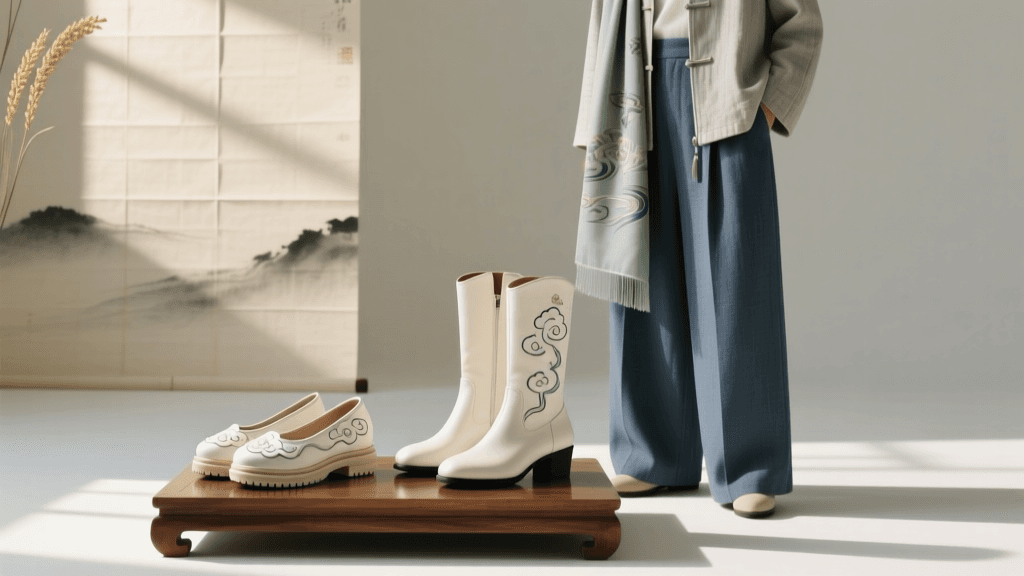
Yuntou shoes, instantly recognizable by their upturned, cloud-shaped toe caps, have been a symbol of elegance and auspiciousness in Chinese culture for centuries. The cloud motif, or Xiangyun, represents celestial connection, good fortune, and smooth journeys. Historically worn by women of the Ming and Qing dynasties, these shoes were masterpieces of textile art, featuring intricate silk embroidery and delicate layering.
In 2026, the anatomy of the Yuntou shoe has been thoughtfully updated to meet the demands of modern urban walking while preserving its heritage aesthetic. The most significant innovation is the modernization of the Qianceng Di, or 'thousand-layer sole.' Historically, artisans would stitch together dozens of layers of cotton cloth to create a durable, breathable, and shock-absorbing sole. Today, heritage brands are utilizing a hybrid approach: a lightweight, ergonomic EVA foam core wrapped in traditional hand-stitched cotton and silk layers. This provides the necessary arch support and cushioning required for navigating modern concrete sidewalks, a crucial selling point for contemporary consumers.
The uppers of 2026 cloud shoes frequently feature sustainable peace silk (Ahimsa silk) and recycled brocade, aligning traditional craftsmanship with modern eco-conscious values. According to the Bata Shoe Museum's extensive archives, the evolution of the Chinese sole is a testament to the region's historical emphasis on textile-based footwear over leather, a tradition that modern artisans are fiercely protecting.
Xue (Traditional Boots): From Equestrian Roots to Runway
While cloud shoes dominate the realm of delicate femininity, Xue (traditional boots) offer a structured, commanding presence. Originally developed for equestrian activities and northern climates, Xue were adopted by court officials and military personnel, eventually becoming a unisex staple in traditional wardrobes. Characterized by their thick soles, high shafts, and rigid structure, these boots were designed to protect the wearer from the elements while projecting authority.
The 2026 interpretation of the Xue boot leans heavily into the 'dark academia' and 'avant-garde heritage' aesthetics that are currently dominating Asian fashion weeks. Designers are offering ankle-height and mid-calf Xue crafted from rich velvet, matte vegan leather, and heavy-weight silk damask. The embroidery on these boots often utilizes Su Xiu (Suzhou embroidery), a technique so meticulous it is recognized on UNESCO's Intangible Cultural Heritage list. Modern Xue boots feature hidden side zippers for ease of wear and rubberized, anti-slip outsoles that mimic the stacked wooden or leather heels of the Qing dynasty, ensuring safety on wet city streets without compromising the historical profile.
The Symbolism of Embroidery Motifs in 2026 Footwear
When investing in artisan footwear this year, understanding the embroidered motifs is key to selecting a piece that resonates with your personal intentions. In 2026, heritage brands are reviving specific regional motifs that had been lost to mass production:
- The Bat (Fu): A homophone for 'good fortune,' often embroidered in red or gold thread on the toe cap of cloud shoes to invite prosperity.
- The Peony: The king of flowers, symbolizing wealth and honor. Frequently found wrapping around the shaft of a traditional Xue boot.
- Plum Blossoms: Representing resilience and perseverance, as they bloom in winter. A popular motif on velvet winter boots in the 2026 collections.
- Lotus Flowers: Symbolizing purity and spiritual awakening, often stitched in subtle tonal threads on minimalist, everyday cloud shoes.
2026 Styling Matrix: Pairing Footwear with Modern Tailoring
Styling traditional footwear in 2026 is all about balancing historical volume with contemporary tailoring. The goal of the Xin Zhongshi movement is not to wear a costume, but to integrate heritage elements into a functional, modern wardrobe. Below is a guide on how to pair these shoes with current garment trends.
Styling Yuntou (Cloud Shoes)
Cloud shoes are best paired with garments that allow the toe cap to be fully visible. They are the perfect companion for the Mamianqun (horse-face skirt). Ensure the hem of the skirt rests just above the ankle bone, allowing the cloud motif to take center stage. For a more contemporary office look, pair minimalist, unembroidered silk cloud shoes with wide-leg, high-waisted Songku (Song dynasty trousers) and a structured, mandarin-collar blazer. The contrast between the sharp tailoring of the blazer and the soft, curved toe of the shoe creates a striking visual harmony.
Styling Xue (Traditional Boots)
Boots require a bit more volume to balance their visual weight. In the winter months, pair embroidered velvet Xue with thick, wool-blend Hanfu skirts and a padded, quilted jacket (Bijia). For an edgier, streetwear-inspired look, tuck straight-leg denim or heavy cotton trousers into mid-calf Xue boots, topping the outfit with an oversized, deconstructed Ru (upper garment). The rigid structure of the boot grounds the flowing fabrics of the upper body.
Comparative Buyer’s Guide: Cloud Shoes vs. Traditional Boots
To help you navigate the 2026 market, we have compiled a comparison of these two essential footwear categories. Prices reflect the current market for authentic, artisan-crafted pieces featuring genuine embroidery and high-quality materials.
| Feature | Yuntou (Cloud Shoes) | Xue (Traditional Boots) |
|---|---|---|
| Silhouette | Low-cut slip-on with upturned toe | Ankle to mid-calf shaft, structured |
| Best Season | Spring, Summer, Early Autumn | Autumn, Winter |
| 2026 Price Range (USD) | $85 - $220 | $150 - $380 |
| Ideal Hemline | Ankle-grazing or cropped trousers | Floor-length skirts or tucked trousers |
| Maintenance Level | Moderate (protect from rain) | High (requires shaft stuffing and conditioning) |
| Primary Material | Silk brocade, cotton, peace silk | Velvet, heavy damask, matte leather |
Sizing, Fit, and the 'Half-Size' Dilemma
One of the most common hurdles for international buyers entering the traditional footwear market is sizing. Historically, Chinese shoes were crafted with a wider, flatter toe box to accommodate foot wraps and a more relaxed fit. In 2026, artisan brands have adopted international sizing standards, but discrepancies still exist between mass-market factory shoes and bespoke artisan pairs.
When purchasing Yuntou or Xue, always measure your foot in centimeters from heel to the longest toe, and consult the brand's specific size chart. Because traditional silk and brocade do not stretch like modern knitwear or leather, buyers with wider feet or high arches are strongly advised to size up by a half-size. For Xue boots, pay special attention to the calf circumference measurements provided by the seller, as the rigid historical silhouettes do not feature elastic gussets.
Caring for Brocade, Silk, and Velvet Footwear
Traditional footwear is an investment in wearable art. Proper maintenance is crucial to ensure these pieces survive the elements and retain their structural integrity. Follow these 2026 best practices for footwear care:
- Waterproofing: Never wear silk or brocade cloud shoes in heavy rain. Apply a specialized, textile-safe hydrophobic spray designed for delicate silks before the first wear. This creates an invisible barrier against water spots and street oil.
- Dust Removal: Use a soft-bristled makeup brush or a dedicated suede brush to gently sweep dust out of the embroidery threads. Never use a wet cloth on Su Xiu embroidery, as water can cause the silk threads to bleed or lose their luster.
- Shape Retention: Xue boots must be stored with cedar shoe trees or acid-free tissue paper stuffed into the shafts. This prevents the heavy velvet or brocade from creasing and collapsing, which can lead to permanent fiber breakage.
- Climate Control: Store your footwear in breathable cotton dust bags inside a climate-controlled closet. Avoid plastic bins, which can trap moisture and lead to mildew, especially in humid summer months.
Sourcing Authentic Artisan Footwear in 2026
As the Xin Zhongshi trend has gone global, the market has been flooded with cheap, machine-embroidered imitations. To find authentic pieces, look for brands that transparently list their artisan cooperatives, typically based in Suzhou, Hangzhou, or the historic textile districts of Beijing. Genuine artisan shoes will feature hand-stitched soles (visible on the bottom as tightly wound cotton thread) and embroidery that has a distinct, raised texture on the reverse side of the fabric.
For those seeking historical accuracy in their purchases, studying museum archives is highly recommended. The Victoria and Albert Museum's Asian collections offer incredible digital resources where buyers can zoom in on the stitch density and motif placement of historical garments, providing a benchmark to judge the quality of modern reproductions. By investing in authentic, ethically crafted footwear, you are not only elevating your personal style but also actively funding the survival of centuries-old textile traditions in the modern era.