2026 Guide To Traditional Chinese Footwear: Cloud Shoes & Boots
The 2026 Renaissance of Traditional Chinese Footwear
As the global fashion landscape continues to embrace the Xin Zhongshi (New Chinese Style) movement in 2026, traditional Chinese footwear has moved from the realm of historical reenactment into the forefront of everyday luxury and streetwear. No longer confined to museum displays or ceremonial costumes, heritage designs like the Yuntou Xie (cloud shoes) and traditional Xue (boots) are being reimagined by contemporary artisans. These pieces now feature ergonomic advancements, sustainable textiles, and versatile silhouettes that seamlessly integrate into modern wardrobes. According to the Metropolitan Museum of Art's Asian Art department, the structural evolution of Chinese footwear reflects centuries of shifting social dynamics, trade along the Silk Road, and intricate regional craftsmanship. Today, understanding how to select, style, and maintain these garments is essential for any enthusiast of Asian sartorial traditions.
Yuntou Xie: The Art and Anatomy of the Cloud Shoe
The Yuntou Xie, instantly recognizable by its upturned, bifurcated toe resembling a Ruyi scepter or stylized clouds, has a lineage tracing back to the Ming and Qing dynasties. Historically, the exaggerated toe served both an aesthetic and practical purpose: it protected the delicate silk embroidery on the vamp from scuffing against the ground and allowed the hem of long, flowing robes to drape elegantly without catching on the footwear.
In 2026, master cobblers in Suzhou and Hangzhou have adapted the cloud shoe for modern pavements. While traditional versions relied on layered cotton and paste for the sole (known as qiancengdi or "thousand-layer sole"), modern 2026 iterations utilize vulcanized rubber and memory foam insoles hidden beneath brocade exteriors. The embroidery, often featuring Su-style silk threads, now incorporates waterproofing nano-coatings, allowing wearers to sport these delicate textiles during the spring monsoon season without fear of water damage. The upturned toe has been subtly flattened by a few degrees to accommodate the biomechanics of modern walking, ensuring that the shoe remains comfortable for all-day wear at international design weeks or urban commutes.
Xue Boots: Equestrian Heritage Meets Modern Ergonomics
While cloud shoes represent the delicate artistry of Han civilian life, traditional boots, or Xue, speak to the equestrian and military heritage of Northern China and the Manchu dynasties. Historically, Manchu riding boots featured thick, rigid soles and uppers made from heavy leather or stiffened satin, designed to secure the foot in a stirrup and protect the shins from brush and cold winds.
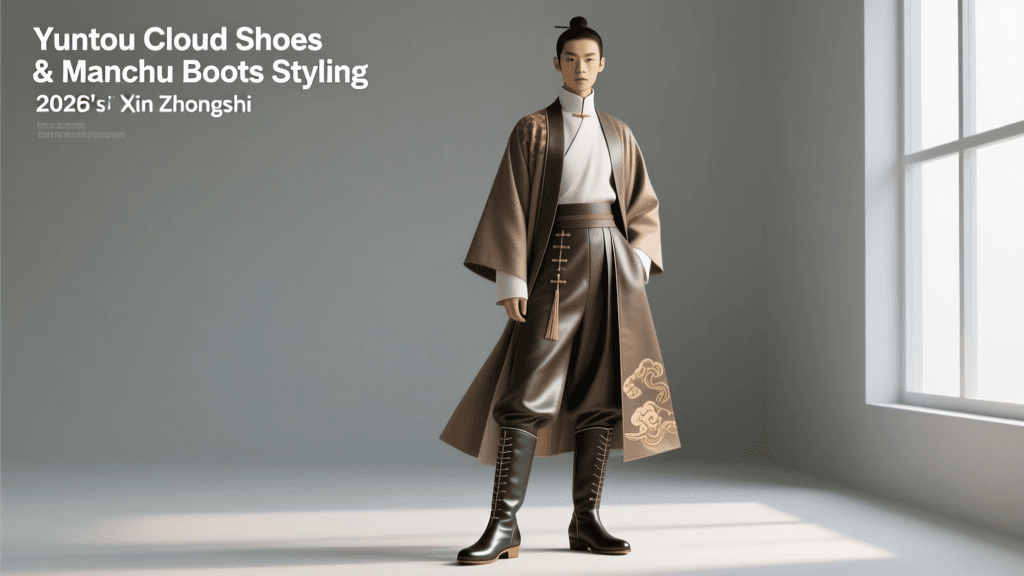
The 2026 revival of the Xue boot focuses on the "Scholar-Official" aesthetic—a sleek, ankle-height boot with a slight heel and a rounded toe. Modern artisans are utilizing plant-based vegan leathers and upcycled silk blends to create boots that are both cruelty-free and historically resonant. The Victoria and Albert Museum's extensive Asian collections highlight how historical boots were often canvases for exquisite embroidery, featuring motifs of cranes, pine trees, and auspicious clouds. Today's boot makers honor this tradition by utilizing laser-etching alongside hand-embroidery, creating tonal, textured patterns that appeal to the minimalist sensibilities of contemporary Xin Zhongshi fashion.
2026 Buyer’s Guide and Market Pricing
Navigating the market for authentic traditional footwear requires an understanding of materials, construction methods, and fair artisan pricing. Fast-fashion knockoffs often use synthetic polyesters that lack the drape and breathability of genuine textiles. Below is a comprehensive comparison chart for buyers in 2026.
| Footwear Type | Historical Era / Origin | 2026 Material Innovations | Average Artisan Price (USD) | Best Styling Pairing |
|---|---|---|---|---|
| Yuntou (Cloud) Flats | Ming / Qing Dynasty | Waterproofed Song Brocade, Memory Foam Insoles | $120 - $280 | Mamianqun (Horse-face skirts), wide-leg linen trousers |
| Manchu Ankle Boots | Qing Dynasty | Plant-based Leather, Laser-etched Vamps | $180 - $350 | Tailored wool coats, straight-leg denim, winter Hanfu |
| Thousand-Layer Sole Shoes | Widespread Historical | Hemp-cotton blends, Ergonomic Arch Support | $85 - $150 | Casual cotton Hanfu, daily streetwear, tea ceremonies |
| Scholar's Silk Loafers | Song / Ming Dynasty | Stain-resistant Mulberry Silk, Cork Footbeds | $140 - $220 | Pleated midi skirts, modern qipao, office attire |
Styling Cloud Shoes and Boots in the Xin Zhongshi Era
Integrating traditional footwear into a 2026 wardrobe relies on the principle of contrast and silhouette balancing. The Xin Zhongshi aesthetic thrives on juxtaposing historical garments with contemporary tailoring.
- The Mamianqun Pairing: The pleated horse-face skirt (Mamianqun) remains a staple in 2026. When wearing a mid-calf Mamianqun, a pair of embroidered Yuntou cloud shoes draws the eye downward, anchoring the outfit. Ensure the skirt's hem falls at least two inches above the shoe's vamp to showcase the Ruyi toe motif.
- Tailored Trousers and Boots: For a sharper, gender-neutral look, pair Manchu-style ankle boots with high-waisted, wide-leg wool trousers. The structured leather of the boot provides a grounding weight to the flowing fabric of the trousers, creating a striking silhouette suitable for both the office and evening events.
- Color Theory: In 2026, tonal dressing is highly favored. Instead of contrasting a bright red shoe with a neutral outfit, stylists recommend matching the embroidery thread of the cloud shoe to the primary color of your outerwear, creating a cohesive, deliberate look that references traditional color-blocking.
Sizing, Lasts, and Fit
One of the most common hurdles for international buyers is navigating traditional Chinese shoe lasts. Historically, Asian footwear was constructed on narrower, straighter lasts compared to Western footwear, which often features a wider toe box and pronounced arch curvature. In 2026, heritage brands have introduced "Global Fit" lasts, which widen the toe box by 4 millimeters and incorporate a moderate arch support to accommodate diverse foot shapes. When ordering bespoke or artisanal cloud shoes, it is crucial to measure your foot length in millimeters and provide the artisan with your instep circumference, as the rigid brocade materials used in Yuntou shoes do not stretch significantly over time.
Archival Care and Maintenance
Investing in handcrafted silk and leather footwear requires a dedicated maintenance routine to preserve the textiles and structural integrity. As noted in conservation guidelines outlined by resources like Britannica's comprehensive guides on historical dress, organic fibers are highly susceptible to environmental degradation.
Cleaning Brocade and Silk
Never submerge embroidered cloud shoes in water. In 2026, the recommended method for cleaning Song brocade is to use a specialized, pH-neutral textile foam. Apply the foam with a soft-bristled brush, working in the direction of the weave, and gently lift the dirt with a microfiber cloth. For the metal-wrapped threads often used in luxury embroidery, use a dry, soft makeup brush to dust away particulate matter to prevent tarnishing.
Leather Boot Conditioning
For traditional Xue boots made from genuine or high-grade vegan leathers, apply a beeswax-based conditioner every three months. This prevents the material from cracking, particularly around the ankle crease. If the boots become wet, stuff them with acid-free tissue paper to maintain their shape and allow them to air dry away from direct heat sources, which can warp the historical stiffening techniques used in the shaft.
Storage and Humidity Control
Store your footwear in breathable cotton dust bags—never in plastic, which traps moisture and encourages mold growth on silk fibers. For collectors in humid climates, placing silica gel packets inside the shoe boxes and utilizing a dehumidifier in the storage room is critical. Insert cedarwood shoe trees into your boots to maintain the vertical structure of the shaft and naturally repel insects that are attracted to organic dyes and silk threads.
Conclusion
The 2026 landscape of traditional Chinese footwear is a testament to the enduring appeal of heritage craftsmanship. Whether you are stepping out in a pair of meticulously embroidered Yuntou cloud shoes or striding confidently in modernized Manchu boots, these garments offer a profound connection to Asian history. By understanding their anatomical roots, styling them with contemporary intention, and caring for them with archival precision, you ensure that these walking pieces of art continue to traverse the globe for generations to come.