Iconic Hanfu: Recreating Outfits of Famous Chinese Figures

The Sartorial Legacy of China's Greatest Icons
Traditional Chinese clothing, or Hanfu, is far more than a collection of historical garments; it is a woven tapestry of philosophy, social hierarchy, and artistic evolution. Over the past decade, a massive cultural renaissance has swept through China and the global diaspora, with millions of young people embracing these ancient silhouettes. According to reporting by BBC News, the modern Hanfu movement has transformed from a niche subculture into a multi-billion-dollar industry, driven by a desire to reconnect with ancestral aesthetics. For historical garment enthusiasts, the ultimate sartorial achievement is accurately recreating the iconic outfits worn by China's most legendary historical figures. By studying the wardrobes of emperors, consorts, and scholars, we can decode the structural layering, fabric choices, and etiquette that defined their eras.
Wu Zetian: The Imperial Majesty of the Yuanlingpao
Wu Zetian, the only female emperor in Chinese history, ruled during the zenith of the Tang Dynasty. Her wardrobe was a masterclass in power dressing, heavily featuring the Yuanlingpao (round-collar robe). While the round-collar silhouette originally drew influence from Central Asian nomadic dress, the Tang court adapted it into a symbol of supreme imperial authority. As noted by Encyclopedia Britannica, the Tang Dynasty was an era of unprecedented cosmopolitanism, and this cross-cultural exchange was vividly reflected in court fashion.
Deconstructing the Imperial Robe
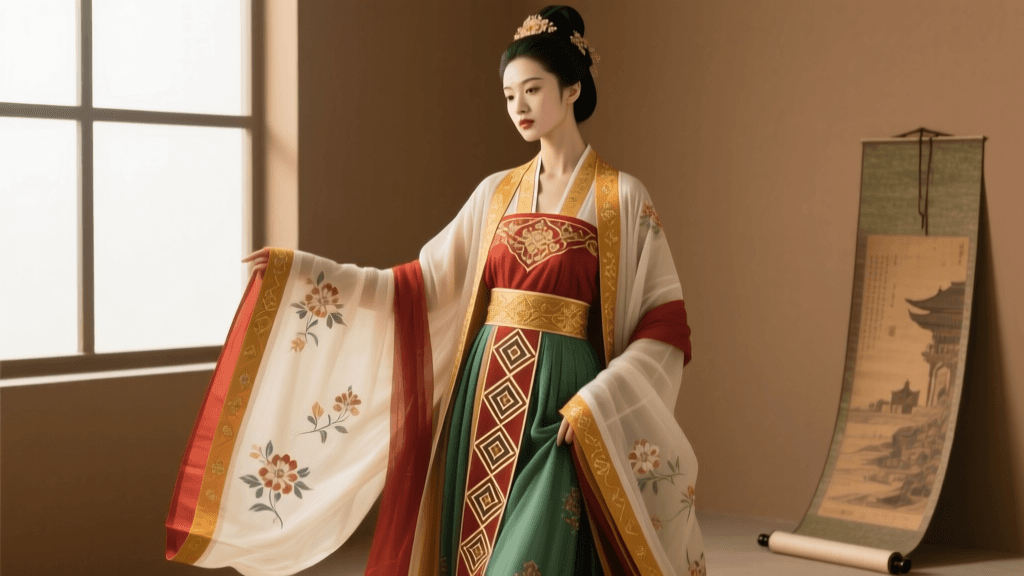
Wu Zetian’s formal Yuanlingpao was characterized by its stiff, perfectly circular neckline, wide sleeves, and sweeping hem that brushed the floor. The garment was typically dyed in imperial yellow or deep crimson, adorned with woven gold threads forming phoenix and dragon motifs. To recreate this look today, structural integrity is paramount. The round collar must not collapse; it requires a heavy canvas or buckram interfacing hidden between the silk layers.
- Fabric Choice: Opt for 30-momme heavy silk brocade or silk crepe de chine. The high momme weight ensures the fabric drapes regally without clinging, while supporting the weight of metallic embroidery.
- Measurements: The sleeve span (tongxiu) should be at least 2.2 meters from cuff to cuff to achieve the imposing, wing-like silhouette characteristic of Tang court portraits.
- Accessories: A leather or jade-inlaid Diexie belt is essential to cinch the waist, from which ceremonial jade pendants and silk sashes are suspended.
Yang Yuhuan: The Romantic Elegance of the Tang Ruqun
Yang Yuhuan, famously known as Consort Yang, remains one of the most celebrated beauties of the Tang Dynasty. Her signature style was the Qixiong Ruqun (chest-high skirt), a garment that epitomized the romantic, voluptuous, and opulent aesthetic of the 8th-century court. The Silk Road played a massive role in bringing exotic textiles and motifs to the Tang capital of Chang'an. As detailed by The Metropolitan Museum of Art, the influx of Central Asian and Persian textiles via the Silk Road deeply influenced the intricate patterns and vibrant dyes favored by Tang aristocrats.
Styling the Chest-High Ruqun
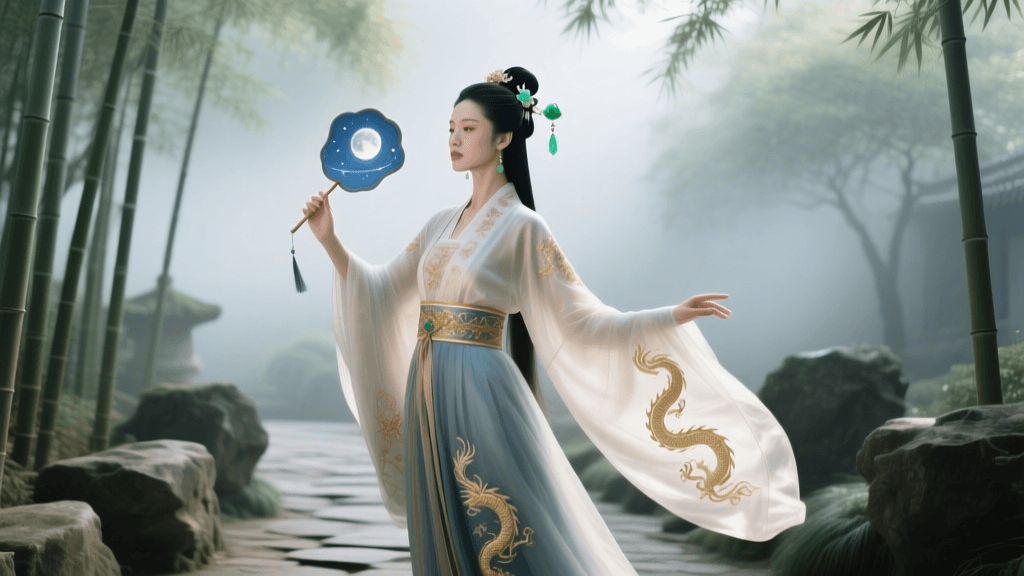
The Qixiong Ruqun consists of a short upper jacket (shan) tucked into a voluminous skirt that sits high on the chest, just below the collarbone. This silhouette elongates the lower body and creates an ethereal, goddess-like proportion. Consort Yang was often depicted with a Pibo (a long, flowing silk shawl) draped loosely over her arms, catching the wind as she walked through the imperial gardens.
- Fabric Choice: The skirt requires fluid, lightweight fabrics to achieve the signature drape. Use 12-momme silk chiffon or silk georgette. For the Pibo, an 8-momme silk gauze provides the necessary translucent, floating effect.
- Pleating and Yardage: A historically accurate Tang skirt is incredibly full. You will need a minimum of 3.5 to 4 meters of fabric width to create the deep, knife-pleated or gathered waistband that wraps securely around the chest.
- Color Palette: Pomegranate red, peony pink, and marigold yellow, often featuring resist-dyed or block-printed floral medallions.
Su Shi and the Song Literati: The Understated Grace of the Lanshan
Moving from the opulent Tang Dynasty to the intellectually rigorous Song Dynasty, we find Su Shi, the legendary poet, statesman, and gastronome. The Song Dynasty marked a philosophical shift toward Neo-Confucianism, which favored restraint, minimalism, and inner virtue over outward extravagance. The iconic garment of the Song scholar-official was the Lanshan (scholar's robe) or the Daopao.
The Minimalist Scholar Aesthetic
Su Shi’s wardrobe would have consisted of straight-cut, cross-collared robes with narrow sleeves and side slits. The beauty of the literati Hanfu lies not in gold thread, but in the exquisite texture of the fabric and the impeccable cut. Recreating the Song scholar look requires an appreciation for wabi-sabi and natural fibers.
- Fabric Choice: Avoid shiny silks. Instead, source high-quality ramie, raw silk, or a heavy linen-cotton blend (around 180-220 GSM). These fabrics offer a matte finish and a structured, papery drape that perfectly captures the Song aesthetic.
- Color Palette: Celadon green, ink black, slate grey, and unbleached off-white.
- Styling: Pair the robe with a simple black Futou (scholar's hat) and a modest leather belt. The collar should be worn strictly Jiaoling Youren (left side crossing over the right), a fundamental rule of Hanfu etiquette symbolizing life and civilization.
Comparison Chart: Recreating the Iconic Looks
To help modern enthusiasts and tailors plan their historical recreations, below is a structured comparison of these three iconic styles, including estimated costs for custom, high-quality reproductions.
| Historical Figure | Era | Signature Garment | Primary Fabric | Est. Custom Cost (USD) | Key Styling Element |
|---|---|---|---|---|---|
| Wu Zetian | Tang | Yuanlingpao (Round Collar) | 30mm Silk Brocade | $350 - $600 | Stiff interfaced collar, jade belt |
| Yang Yuhuan | Tang | Qixiong Ruqun (Chest Skirt) | 12mm Silk Chiffon | $200 - $400 | Flowing Pibo shawl, high waist |
| Su Shi | Song | Lanshan (Scholar Robe) | 200 GSM Ramie/Linen | $150 - $250 | Matte texture, narrow sleeves |
Practical Guide to Sourcing, Tailoring, and Etiquette
Recreating historical Hanfu requires more than just buying a costume online; it demands an understanding of traditional tailoring and etiquette. If you are commissioning a tailor or sewing these garments yourself, keep the following actionable advice in mind.
1. Mastering the Measurements
Unlike Western tailoring, which focuses on form-fitting darts and seams, traditional Hanfu relies on flat-pattern cutting and draping. The crucial measurements you must provide to a tailor include:
- Tongxiu (Sleeve Span): Measured from one wrist, across the back of the neck, to the other wrist. For Tang court robes, this should exceed your height.
- Yichang (Garment Length): Measured from the base of the neck to the desired hemline. For formal robes, the hem should sit exactly 2 centimeters off the ground when wearing traditional cloud-toe shoes.
- Jiaokuan (Hem Width): The total circumference of the bottom hem. A majestic Tang robe requires a hem width of at least 2.5 meters to create the proper sweeping effect.
2. Sourcing Authentic Textiles
The modern market is flooded with synthetic polyester masquerading as silk. When sourcing fabrics for high-end historical recreations, perform a burn test on swatches. Real silk will smell like burning hair and leave a crushable, black ash, while polyester will melt into a hard plastic bead. For authentic silk brocades and damasks, look for specialized suppliers in Suzhou and Hangzhou, the historical epicenters of Chinese silk weaving, many of which now operate global e-commerce storefronts catering to the Hanfu community.
3. The Rule of Jiaoling Youren
The most critical rule of Hanfu etiquette is Jiaoling Youren—the left lapel must always cross over the right lapel. In traditional Chinese cosmology, the left represents Yang (life, light, and the living), while the right represents Yin (death, darkness, and the spiritual realm). Crossing the right over the left (Zuoren) is strictly reserved for dressing the deceased for burial. Ensuring your collar is correctly crossed is a fundamental sign of respect for the culture and the historical figures you are honoring.
Conclusion
Whether you are drawn to the commanding presence of Wu Zetian’s round-collar robes, the romantic, wind-swept elegance of Consort Yang’s silk shawls, or the quiet intellectualism of Su Shi’s linen scholar robes, recreating these iconic outfits is a profound way to engage with Asian traditions. By paying meticulous attention to fabric weights, historical measurements, and cultural etiquette, modern wearers can step into the footsteps of giants, keeping the sartorial legacy of China’s greatest historical figures alive for generations to come.