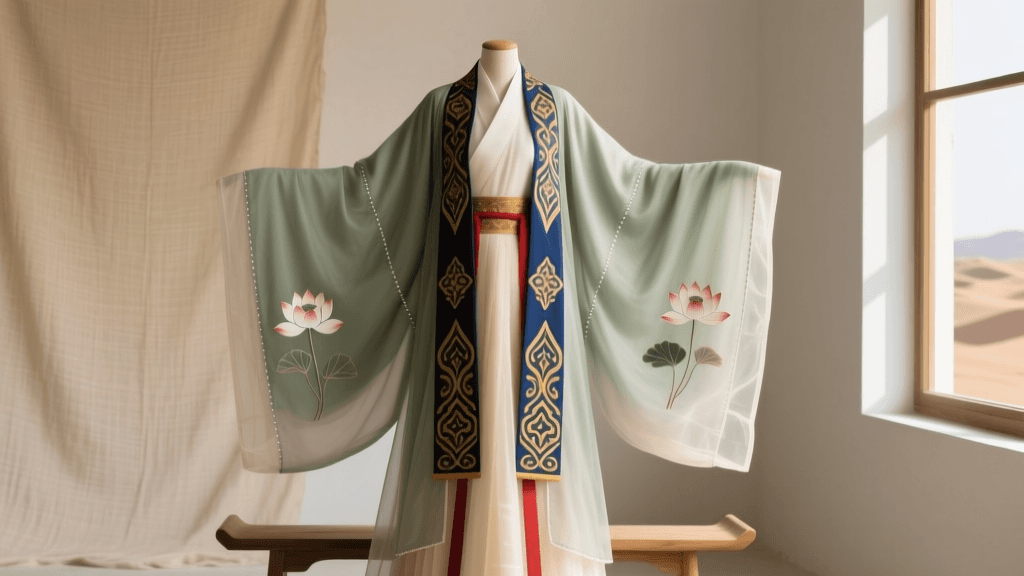
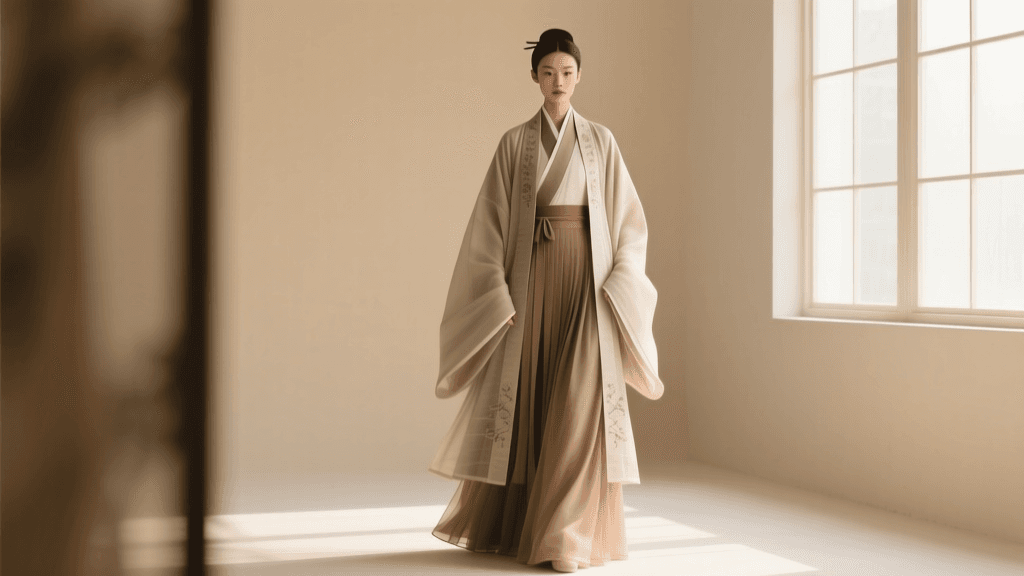
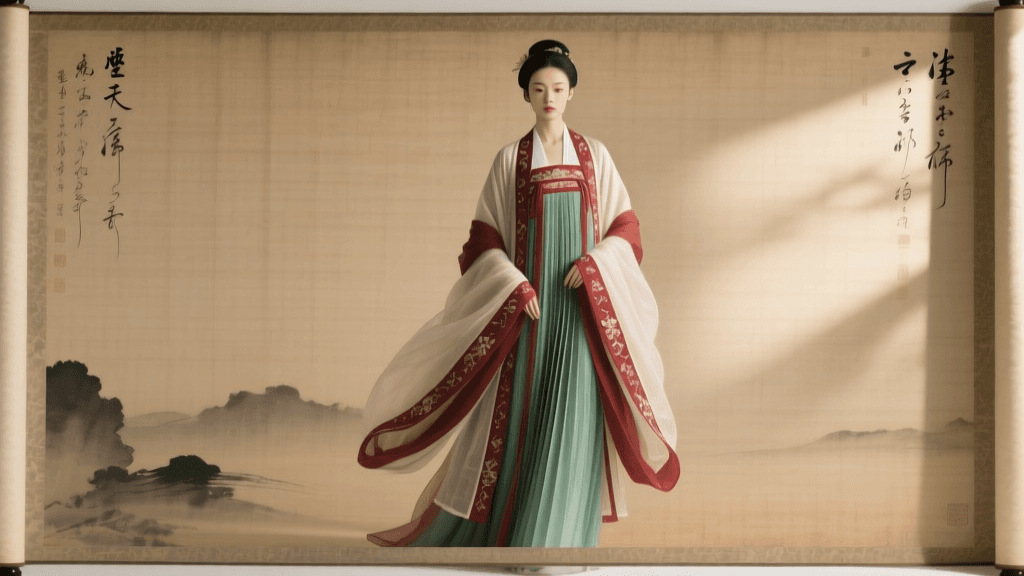
Tang Dynasty Hanfu: Silk Road Influences on Round-Collar Robes
The Silk Road's Sartorial Legacy in Tang China
The Silk Road was not merely a conduit for spices and precious metals; it was a vibrant superhighway of sartorial exchange. During the Tang Dynasty (618–907 CE), the capital city of Chang’an (modern-day Xi’an) stood as the cosmopolitan heart of the world. Here, Han Chinese traditions collided and merged with the customs of Sogdian merchants, Persian diplomats, and Turkic nomads. According to the Metropolitan Museum of Art, this era of unprecedented cross-cultural pollination profoundly altered the trajectory of Chinese fashion, introducing new silhouettes, textiles, and motifs that remain highly sought after by modern Hanfu enthusiasts.
The Anatomy of the Yuanlingpao: A Cross-Cultural Silhouette
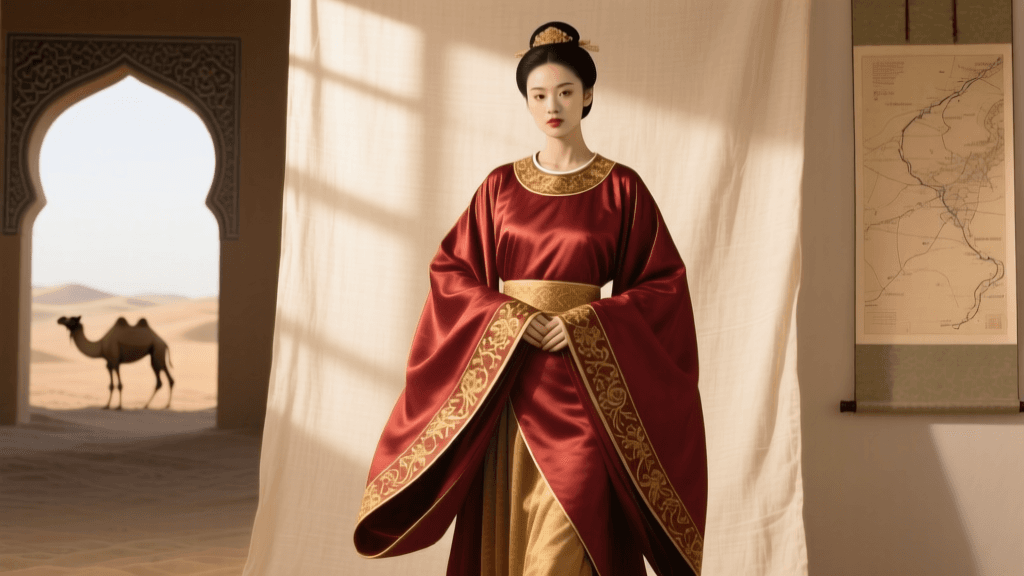
The most iconic garment to emerge from this Silk Road synthesis is the Yuanlingpao, or round-collar robe. Prior to the Tang Dynasty, traditional Han clothing predominantly featured cross-collars (jiaoling) that wrapped left over right. However, the influx of Central Asian and Persian horse-riding cultures introduced the round collar, which was better suited for equestrian activities and harsh steppe winds.
The Yuanlingpao adapted the Sogdian caftan for Han tastes. While Sogdian garments often featured double lapels and asymmetrical closures, Tang tailors refined the silhouette into a symmetrical, elegant robe with a distinct round neckline. A unique feature of the Tang Yuanlingpao is the hidden shoulder pleat and the option to unbutton the right side of the collar and fold it down, transforming the round collar into a lapel (fanling). This dual-functionality was a direct nod to the nomadic styles of the northern steppes, allowing the wearer to adapt to shifting temperatures while projecting a worldly, cosmopolitan image.
Textiles and Motifs: Pearls, Lions, and the Senmurv
The cross-cultural influence extended far beyond the cut of the fabric; it revolutionized Chinese textile design. As noted by the World History Encyclopedia, the Silk Road facilitated the exchange of complex weaving techniques, particularly the weft-faced compound twill (samite), which allowed for vibrant, intricate patterns.
Tang weavers eagerly adopted Sasanian Persian and Sogdian motifs. The most prominent of these is the 'pearl roundel'—a circular border of pearls enclosing mythical beasts, lions, or ducks. Another fascinating import was the Senmurv (or Simurgh), a mythical creature with the head of a dog or bird and the body of a peacock, which frequently appeared on high-status Tang silks.
'The integration of foreign motifs into Tang textiles was not mere imitation, but a sophisticated localization. Chinese weavers combined Persian pearl roundels with traditional Chinese lotus flowers and clouds, creating a hybrid aesthetic that defined the golden age of the Silk Road.' — Textile historians at the UNESCO Silk Roads Programme.
Buyer’s Guide: Sourcing Authentic Silk Road-Inspired Hanfu
For modern collectors and enthusiasts, acquiring a historically accurate Tang Dynasty Yuanlingpao requires an understanding of fabrics, measurements, and market pricing. Unlike the flowing, wide-sleeved garments of the later Ming or Song dynasties, Tang round-collar robes feature narrower sleeves and a more structured, tailored fit.
Crucial Measurements
- Robe Length: Should hit mid-calf. For a person 170cm tall, aim for a length of 115cm to 120cm.
- Sleeve Width: Tang Yuanlingpao sleeves are relatively narrow to reflect their equestrian origins. Look for a cuff circumference of 35cm to 45cm.
- Shoulder Seam: Authentic Tang robes often feature a dropped shoulder seam or hidden pleats to allow for arm movement without pulling the collar.
Fabric Comparison and Cost Guide
When shopping from specialized Hanfu makers (such as Minghuatang, Shiyu, or independent Taobao artisans), fabric choice dictates both historical accuracy and price.
| Fabric Type | Historical Accuracy | Cost Range (USD) | Best Use Case |
|---|---|---|---|
| Polyester Jacquard | Low | $40 - $70 | Cosplay, casual streetwear, stage performance |
| Cotton-Linen Blend | Medium | $80 - $130 | Summer travel, daily historical reenactment |
| Silk-Cotton Damask | High | $150 - $250 | Photography, cultural festivals, museum visits |
| Pure Mulberry Silk Damask | Museum-Grade | $300 - $600+ | Serious collectors, formal ceremonies, weddings |
Pro-Tip on Timing: If you are ordering custom-woven silk damask featuring specific Sasanian pearl roundels or Senmurv motifs from artisan workshops in Suzhou or Hangzhou, expect a lead time of 45 to 60 days. Always order well in advance of major cultural events or historical symposiums.
How to Style and Wear the Yuanlingpao Today
Styling the Yuanlingpao correctly is essential to honoring its Silk Road heritage. The garment was inherently masculine in the Tang Dynasty, though it was famously adopted by progressive Tang women who sought to emulate the cosmopolitan, horse-riding lifestyle of Central Asian men.
The Die-Xie Belt
No Tang round-collar robe is complete without the Die-Xie belt. Originating from nomadic steppe cultures, this leather belt features multiple small hanging straps used to carry practical items like knives, flint, and pouches. Today, you can purchase replica Die-Xie belts made of tooled leather with brass fittings for $60 to $120. Ensure the belt sits snugly at the natural waist to create the slight blousing effect characteristic of Tang portraiture.
Footwear and Headwear
Pair the robe with traditional Tang leather boots, which feature upturned toes and sturdy soles designed for stirrups. Modern reproductions cost between $50 and $90. For headwear, the Putou (a stiffened black gauze cap) is the most historically accurate choice for men, while women adopting the cross-dressing trend might opt for a simple silk hair wrap or a stylized Hu hat (foreign cap) adorned with pearls.
Caring for Your Historical Garments
Silk Road-inspired textiles, particularly those woven with metallic threads or delicate silk damask, require meticulous care. Never machine wash pure silk or silk-cotton blends. Instead, spot clean with a pH-neutral silk detergent and cold water. For deep cleaning, rely on professional dry cleaners who specialize in historical garments and vintage textiles. When storing your Yuanlingpao, avoid wire hangers, which will distort the shoulder pleats. Use padded wooden hangers and store the garment in a breathable cotton canvas bag away from direct sunlight to prevent the vibrant dyes from fading.
Conclusion
The Tang Dynasty Yuanlingpao is a testament to an era when borders were porous, and fashion was a shared language across the Eurasian continent. By understanding the Sogdian and Persian roots of the round-collar robe, modern wearers do more than just dress up; they actively participate in the preservation of a rich, interconnected Asian heritage. Whether you are investing in a museum-grade silk damask or styling a cotton replica for a historical festival, the Silk Road's legacy lives on in every fold and motif.