Build Your Hanfu Capsule Wardrobe: Essentials & Styling Guide
The Rise of the Modern Hanfu Capsule Wardrobe
The Hanfu movement has evolved dramatically over the past decade, transitioning from a niche historical reenactment hobby into a vibrant, everyday fashion subculture. For modern enthusiasts, the goal is no longer just to wear a costume for a photoshoot, but to integrate traditional Chinese garments into a functional, daily lifestyle. This is where the concept of a Hanfu capsule wardrobe becomes essential. By carefully selecting versatile, high-quality pieces that can be mixed, matched, and layered, you can create dozens of unique outfits from a handful of foundational garments.
Building a capsule collection requires an understanding of historical silhouettes, textile properties, and modern practicality. Traditional Chinese clothing relies heavily on the separation of upper and lower garments (shangyi xiachang), which naturally lends itself to a modular wardrobe. Furthermore, the deep cultural heritage of Chinese textiles plays a massive role in garment selection. As recognized by UNESCO's Intangible Cultural Heritage list, the sericulture and silk craftsmanship of China have dictated the drape, sheen, and structural integrity of these garments for millennia, making fabric choice just as important as the cut.
Core Principles of a Hanfu Capsule Collection
Before purchasing your first garment, it is crucial to establish the guiding principles of your capsule wardrobe. A successful Hanfu capsule relies on three main pillars:
- Interchangeability: Every top should ideally pair with every bottom. This means sticking to a cohesive color palette and avoiding overly hyper-specific dynasty combinations that clash when mixed.
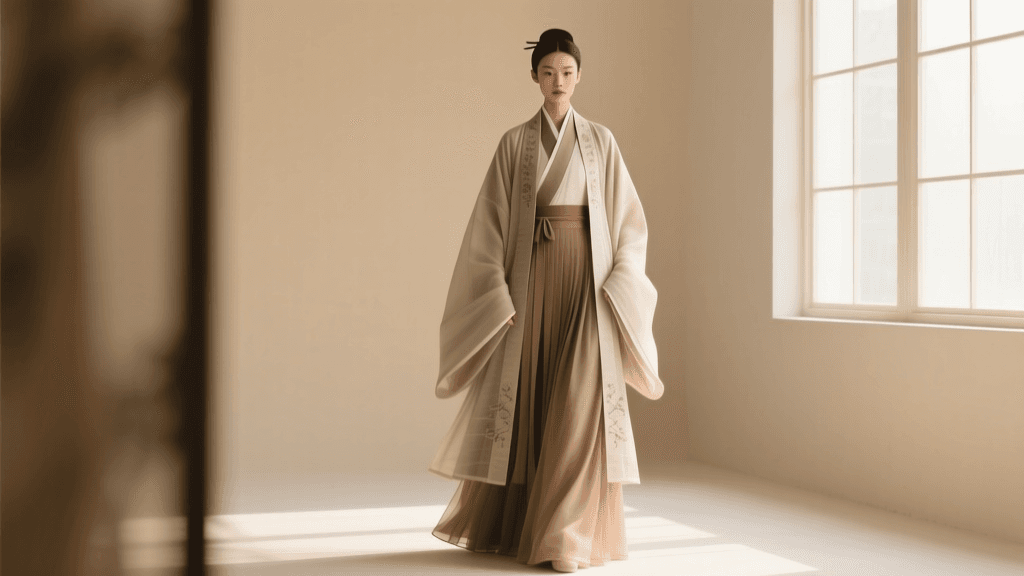
- Proportional Balance: Hanfu styling is all about balancing volume. If you wear a voluminous, heavily pleated skirt, your top should be more fitted or tucked in. Conversely, a wide-sleeved outer jacket pairs best with a streamlined, narrow skirt.
- Textile Harmony: Mixing heavy winter brocades with sheer summer linens creates visual dissonance. Group your capsule by seasonal weight to ensure every combination looks intentional and historically grounded.
The Foundational Pieces: Your Hanfu Capsule Checklist
To build a functional wardrobe, focus on the Ming and Song dynasties. These two eras offer the most practical, structured, and easily adaptable garments for modern daily wear, commuting, and casual events.
1. The Mamianqun (Horse-Face Skirt)
The undisputed queen of the modern Hanfu wardrobe is the Ming dynasty Mamianqun. Characterized by two flat, unpleated panels at the front and back, with heavily pleated sides, this skirt is a masterclass in functional design. The flat panels allow for beautiful embroidery or woven motifs (zhuanghua), while the side pleats provide immense freedom of movement. For a capsule wardrobe, invest in two Mamianqun: one in a neutral, solid color (like navy, black, or cream) for daily wear, and one with a subtle woven metallic or floral pattern for special occasions. A standard Mamianqun requires about 5 to 7 meters of fabric, giving it a luxurious, heavy drape that anchors any outfit.
2. The Beizi (Song Dynasty Outer Jacket)
The Beizi is a long, open-front outer jacket that was wildly popular during the Song dynasty. It features a straight collar (zhiling) that runs down the front, and dramatic side slits (kaicha) that start from the underarm and go down to the hem. The Beizi functions similarly to a modern duster coat or longline cardigan. It elongates the silhouette, adds a layer of sophistication, and is incredibly easy to throw on over a simple top and skirt. A knee-length or calf-length Beizi in a lightweight linen or cotton blend is an absolute must-have for transitional weather.
3. The Ao (Lined Top) and Shan (Unlined Top)
Upper garments are the workhorses of your capsule. The Shan is an unlined, single-layer top perfect for spring and summer, while the Ao is a lined, thicker top designed for autumn and winter. For a versatile capsule, look for Ming dynasty-style tops with a stand collar (liling) secured by delicate metal buttons (zikou), or a classic round collar (yuanling). The sleeves often feature the iconic Pipa shape—narrow at the wrist and wide at the armhole—which accommodates layering while keeping the cuffs out of your way during daily tasks.
Dynasty Comparison: Structuring Your Capsule
When deciding which historical era to base your capsule upon, it helps to understand the distinct vibes and practical applications of the two most popular daily-wear dynasties. Below is a comparison to help you choose your primary aesthetic.
| Feature | Song Dynasty Style | Ming Dynasty Style |
|---|---|---|
| Silhouette | Slender, elongated, narrow, and understated. | Structured, voluminous, regal, and layered. |
| Best Season | Spring and Summer (lightweight, breathable). | Autumn and Winter (lined, heavy brocades). |
| Key Outerwear | Beizi (long open duster), Duanxiao (short jacket). | Pifeng (cape), Bijia (sleeveless vest), Ao (lined top). |
| Primary Skirt | Baijianqun (hundred-pleat skirt), Liangpianqun. | Mamianqun (horse-face skirt). |
| Modern Vibe | Minimalist, academic, elegant, 'old money' aesthetic. | Bold, aristocratic, highly decorative, high-fashion. |
Seasonal Layering Techniques
The genius of traditional Chinese clothing lies in its layering system, which allows for seamless adaptation to changing climates. The historical evolution of silk production and textile arts meant that ancient wardrobes were designed to be layered with varying weights of fabric rather than relying on a single heavy coat.
Spring/Summer Layering: Start with a lightweight, breathable Zhongyi (inner garment) made of cotton or ramie to protect your outer silk layers from sweat. Layer a sheer, unlined Shan over it, and finish with a lightweight linen Beizi. This provides sun protection and modesty while allowing air to circulate through the side slits of the garments.
Autumn/Winter Layering: Begin with a thermal inner layer. Add a lined Ao with a high stand collar to trap heat around the neck. For extreme cold, the Ming dynasty Bijia (a sleeveless, lined vest) or a padded Pifeng (cape) can be worn over the Ao. The Mamianqun is naturally wind-resistant due to its overlapping flat panels and heavy fabric weight, making it surprisingly warm in winter when paired with fleece-lined tights underneath.
Footwear and Accessories
A capsule wardrobe is incomplete without the right accessories to tie the historical look together. For footwear, traditional cloud-toe shoes (Yuntouxie) are beautiful but can be impractical for long commutes. Many modern enthusiasts opt for minimalist leather Mary Janes, pointed-toe flats, or clean white sneakers for a contemporary fusion look that doesn't clash with the hem of a Mamianqun.
For hair and jewelry, invest in a few versatile hairpins (Zan). A simple jade or wooden hair stick can secure a modern low bun elegantly. Additionally, a waist pendant (Jinbu) or a jade ornament tied to the skirt's waistband adds a subtle auditory and visual charm that elevates the garment from mere clothing to a full cultural experience.
Budgeting, Sourcing, and Care
Building a Hanfu capsule is an investment. Entry-level, mass-produced garments from online marketplaces typically range from $30 to $60 per piece. These are great for testing silhouettes but often use synthetic polyester blends that do not breathe well. Mid-tier garments from specialized Hanfu brands, featuring better tailoring, cotton-linen blends, and authentic woven patterns, range from $80 to $150. For investment pieces, such as genuine silk brocade Mamianqun or hand-embroidered Ao, expect to pay upwards of $250.
Proper care is vital to maintaining your capsule. Institutions like the China National Silk Museum emphasize the fragility of historical textiles, a principle that applies to modern replicas. Always hand-wash silk and delicate brocades in cold water with a pH-neutral detergent. Never wring out pleated skirts; instead, press them gently in a towel and hang them to dry in the shade to prevent UV fading. Use a steamer rather than a direct iron to maintain the crispness of the Mamianqun pleats and the drape of the Beizi.
Conclusion
Creating a Hanfu capsule wardrobe is a deeply rewarding journey that bridges the gap between ancient Chinese aesthetics and modern practicality. By focusing on the versatile structures of the Song and Ming dynasties, prioritizing high-quality textiles, and mastering the art of modular layering, you can curate a collection that is both historically respectful and uniquely your own. Whether you are commuting to the office, attending a cultural festival, or simply enjoying a weekend tea ceremony, your Hanfu capsule will ensure you are dressed with elegance, intention, and a profound connection to Asian sartorial traditions.