Best Tai Chi Uniforms: Traditional Martial Arts Practice Wear Guide
The Philosophy of Movement and Garment Design
Tai Chi (Taijiquan) is far more than a simple sequence of physical exercises; it is a profound moving meditation and a highly sophisticated internal martial art. Rooted in traditional Chinese philosophy, the practice emphasizes the smooth, uninterrupted flow of Qi (vital energy) throughout the body. To facilitate this flow, practitioners require clothing that offers zero resistance, allowing for deep, diaphragmatic breathing and expansive, sweeping limb movements. The intersection of martial arts and traditional Chinese garments has given rise to specialized practice wear that honors historical aesthetics while meeting the rigorous physical demands of modern training.
According to the Encyclopedia Britannica, Tai Chi originated as a martial art in China, integrating principles of yin and yang, physical conditioning, and self-defense. Historically, practitioners trained in their everyday clothing, which often included loose-fitting Hanfu or Qing dynasty-era garments like the Changshan (long shirt) and Tangzhuang (Tang suit). Today, traditional Tai Chi uniforms are carefully engineered descendants of these historical garments, designed specifically to accommodate the deep stances, weight shifts, and rotational twists inherent to the art.
Anatomy of a Traditional Tai Chi Uniform
A complete traditional Tai Chi uniform, often referred to as a Tai Chi suit or Wushu uniform, generally consists of two primary components: the jacket and the trousers. Each element is constructed with specific tailoring techniques that distinguish it from standard casual wear.
The Tai Chi Jacket (Tangzhuang Style)
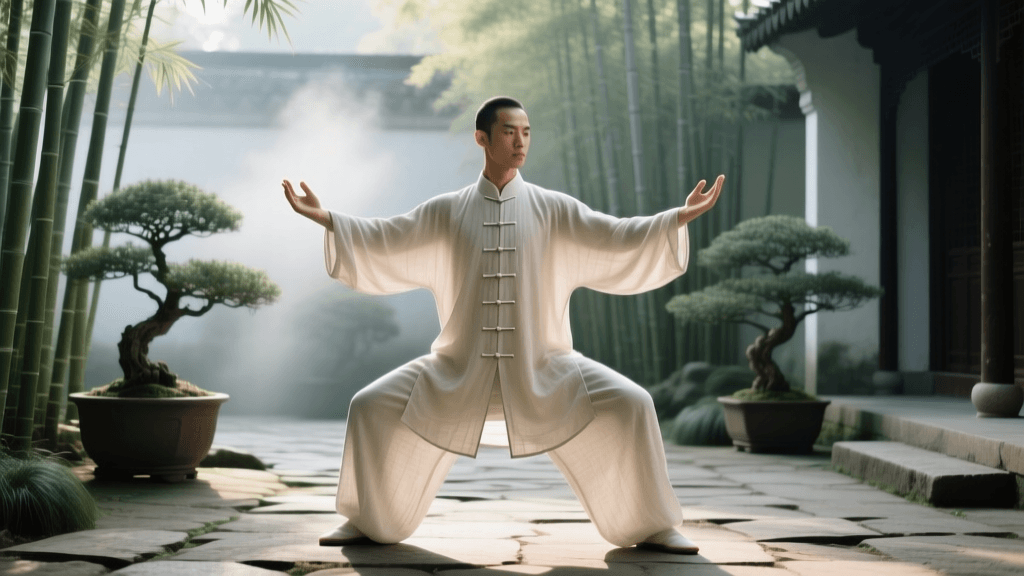
The traditional top features a Mandarin collar (a short, unfolded stand-up collar) and a central or asymmetrical button closure. Instead of standard plastic or metal buttons, authentic jackets utilize Pankou (frog buttons). These are intricate, hand-woven knots made from fabric cords that serve as both functional fasteners and decorative elements representing good fortune and longevity. The sleeves are typically cut wide and loose, ending at the wrist without tight cuffs, ensuring that the arms can extend fully during forms like 'White Crane Spreads Its Wings' without the fabric pulling at the shoulders.
The Tai Chi Trousers
Unlike modern athletic leggings or restrictive joggers, Tai Chi trousers are characterized by their exceptionally high rise and wide legs. The most critical feature of a high-quality pair of Tai Chi pants is the gusseted crotch—a diamond-shaped piece of fabric sewn into the inseam. This structural addition is vital for practitioners who perform Ma Bu (horse stance) or Gong Bu (bow stance), as it prevents the seams from tearing under the extreme tension of deep, wide-legged postures. The waistband is traditionally an elasticated drawstring, allowing the pants to sit comfortably above the hips without digging into the lower abdomen, which is the location of the Dantian (the body's energy center).
Fabric Selection: The Core of Comfort
Choosing the right fabric is arguably the most important decision when purchasing a Tai Chi uniform. The material must balance breathability, drape, durability, and temperature regulation. Below is a comprehensive comparison of the most common fabrics used in traditional martial arts practice wear.
| Fabric Type | Breathability | Drape & Flow | Durability | Best Season | Price Range |
|---|---|---|---|---|---|
| 100% Cotton | High | Moderate | Excellent | Spring / Autumn | $25 - $50 |
| Mulberry Silk | Very High | Exceptional | Delicate | Summer | $80 - $200+ |
| Linen | Maximum | Stiff initially | High | Hot Summer | $40 - $90 |
| Bamboo Blend | High | Good | Moderate | All Seasons | $35 - $65 |
| Polyester/Spandex | Low | Moderate | Very High | Indoor / Winter | $15 - $30 |
Cotton remains the most popular choice for daily practice due to its durability, ease of care, and excellent moisture absorption. Silk is highly prized for competitions and demonstrations; its luxurious drape accentuates the fluidity of the movements, making the practitioner's Qi visible to the audience. However, silk requires meticulous care and is prone to snagging. Bamboo blends have surged in popularity recently due to their natural antimicrobial properties and incredibly soft hand-feel, making them ideal for practitioners who train outdoors in humid environments.
Sizing for Qi Flow and Deep Stances
When sizing a Tai Chi uniform, the standard rules of Western fashion tailoring do not apply. A common mistake made by beginners is purchasing a uniform that fits too snugly. The Mayo Clinic highlights that Tai Chi is a powerful tool for stress reduction and mind-body connection, a state that is easily disrupted if your clothing restricts your breathing or movement.
To achieve the proper fit, follow these actionable measuring guidelines:
- Chest and Shoulders: Measure your chest at its widest point and add 3 to 4 inches of ease. The jacket should hang straight down from the shoulders without clinging to the torso.
- Midsection (Dantian Area): This is crucial. Add at least 2 to 3 inches to your natural waist measurement. During deep abdominal breathing, your lower belly expands significantly. A tight waistband will restrict this expansion and impede proper breathing mechanics.
- Inseam and Length: Tai Chi pants should break slightly at the top of the foot but never drag on the floor, as stepping on your own hem during transitions like 'Snake Creeps Down' can cause ankle injuries. Measure your inseam while wearing the flat-soled shoes you intend to practice in.
Footwear: Grounding Your Practice
The connection between the foot and the earth is paramount in Tai Chi. The practice requires acute proprioception—the ability to sense your body's position and weight distribution in space. Harvard Medical School notes that Tai Chi significantly improves balance and reduces fall risk in older adults, largely due to the heightened sensory feedback developed in the lower extremities.
Therefore, thick, cushioned running shoes are entirely counterproductive for Tai Chi. They elevate the heel, alter the natural alignment of the spine, and numb the sensory receptors in the soles of the feet. Instead, practitioners should invest in dedicated martial arts shoes. The most iconic and widely used is the Feiyue shoe, originally developed in China in the 1920s. Feiyue shoes feature a thin, flexible rubber sole, a canvas upper, and zero arch support or heel drop. This completely flat profile allows the practitioner to 'root' into the ground, feeling the subtle shifts in weight from the heel to the ball of the foot. Another excellent option is the traditional Wushu slipper, made of soft leather or cotton with a thin cowhide sole, often used for indoor practice or on smooth wooden floors.
Garment Care and Maintenance
Proper maintenance of your traditional practice wear ensures longevity and preserves the integrity of the fabrics and Pankou knots.
Washing Instructions
- Cotton and Bamboo: Machine wash on a gentle cycle with cold water. Use a mild, color-safe detergent. Avoid fabric softeners, as they coat the fibers and reduce the fabric's natural breathability and moisture-wicking capabilities.
- Silk: Always hand wash silk uniforms in cold water using a pH-neutral detergent specifically formulated for delicate proteins (like baby shampoo or dedicated silk wash). Never wring or twist silk; instead, press the water out gently between two clean towels.
Drying and Ironing
Air drying is mandatory for all traditional martial arts garments. Hang cotton and bamboo suits on wide, padded hangers to prevent shoulder dimples. Silk should be dried flat away from direct sunlight to prevent UV degradation and color fading. When ironing, use a low heat setting and always place a pressing cloth between the iron and the garment, especially when ironing over the delicate frog buttons, which can melt or deform under direct high heat.
Conclusion
Investing in a high-quality, properly fitted Tai Chi uniform is an investment in your practice. The right traditional martial arts practice wear does more than just look authentic; it actively supports your physical mechanics, facilitates deep breathing, and honors the rich cultural lineage of the art. By carefully selecting the appropriate fabric, ensuring a generous fit for deep stances, and grounding yourself with flat-soled footwear, you remove all physical distractions, allowing your mind and body to unite in the seamless, flowing harmony that Tai Chi demands.