Japan's Regional Garments: Ainu, Ryukyuan & Mainland Dress Guide
Beyond the Mainland: Exploring Japan's Regional Garments
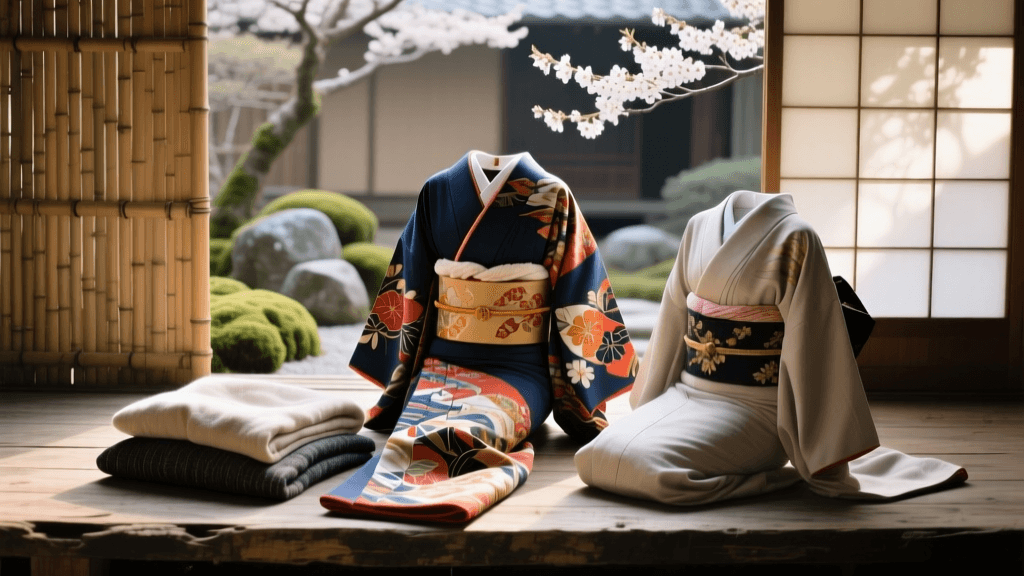
When the world thinks of traditional Japanese clothing, the image that invariably comes to mind is the mainland kimono—a structured, T-shaped robe wrapped left over right and secured with a wide obi sash. However, Japan’s vast archipelago is home to a rich tapestry of indigenous and regional clothing traditions that differ drastically from the Kyoto-centric mainstream. From the subtropical, vibrantly dyed textiles of the Ryukyu Islands in the deep south to the rugged, spiritually embroidered bark-fiber garments of the Ainu people in the northernmost reaches of Hokkaido, Japan's regional garments tell stories of distinct climates, trade routes, and cosmologies.
For textile collectors, cultural travelers, and fashion historians, understanding these regional variations is essential. This guide explores the unique characteristics of Okinawan Ryusou, Ainu attire, and specific mainland prefecture variations, providing actionable advice on sourcing, sizing, and preserving these extraordinary garments.
Okinawa: The Vibrant Ryusou and Bingata Traditions
Okinawa, once the independent Ryukyu Kingdom, developed a sartorial culture heavily influenced by its maritime trade with China, Southeast Asia, and mainland Japan. The traditional Okinawan garment is known as Ryusou. Unlike the restrictive mainland kimono, Ryusou is designed for a humid, subtropical climate. It features wider, shorter sleeves, a looser fit, and is traditionally worn without a tightly bound obi. Instead, it is secured with a lightweight, woven sash or a simple tie, allowing for greater airflow and ease of movement.
Bingata: The Stencil-Dyed Masterpiece
The most iconic textile associated with Okinawan Ryusou is Bingata, a brilliant resist-dyeing technique utilizing hand-cut paper stencils. Historically, the colors and motifs of Bingata were strictly regulated by the Ryukyuan royal court. Yellow backgrounds were reserved exclusively for royalty, while nobles wore red or blue. Commoners were restricted to darker, muted tones. Motifs often feature tropical flora and fauna, such as hibiscus, palm trees, koi fish, and dragons, reflecting the island's lush environment and Chinese cultural influences.
'The garments of the Ryukyu Kingdom are not merely clothing; they are a canvas of maritime trade, reflecting centuries of exchange with China, Southeast Asia, and mainland Japan.'
Bashofu: The Breath of Okinawa
Before the widespread introduction of silk and cotton, Okinawans relied on Bashofu, a remarkably lightweight and breathable textile woven from the fibers of the Japanese fiber banana plant. The production of Kijoka-no-Bashofu is incredibly labor-intensive; it takes roughly 200 banana plants to produce enough fiber for a single adult's kimono. Today, authentic Bashofu is a highly prized luxury textile, celebrated for its cool touch and sheer, linen-like texture.
Practical Guide to Purchasing Okinawan Textiles
If you are looking to acquire authentic Okinawan garments, the Tsuboya and Shuri districts in Naha are your best destinations. According to the Kogei Japan database, which outlines the strict regional criteria for traditional crafts, authentic Bingata must be dyed using traditional stencils and natural or high-quality synthetic pigments in Okinawa.
- Costs: A hand-dyed Bingata obi (sash) typically ranges from 40,000 to 150,000 JPY ($270 to $1,000 USD). A custom, full-length Bashofu kimono can exceed 800,000 JPY ($5,400 USD) due to the extreme labor involved.
- Timing: Commissioning a custom Bingata piece requires 2 to 4 months. If you want a lightweight summer yukata or Ryusou, begin your commission by February to ensure delivery before the humid summer season.
- Studios to Visit: Look for heritage studios like Shuri Ryusen, which not only sell authentic pieces but also offer tourist-friendly stencil-dyeing workshops.
Hokkaido: The Earthy Resilience of Ainu Attire
Traveling to the northernmost island of Hokkaido reveals the deeply spiritual and earthy garments of the Ainu, Japan's indigenous people. Ainu clothing is fundamentally different from mainland Japanese weaving traditions, rooted in the hunter-gatherer lifestyle and a profound animistic belief system where kamuy (spirits) inhabit all natural phenomena.
Attus and Moreu: Craftsmanship of the North
The foundational garment of the Ainu is the Attus, a robe woven from the inner bark of the Manchurian elm tree. Attus is incredibly durable, water-resistant, and breathable, making it ideal for Hokkaido's harsh winters and damp summers. The bark is stripped, boiled, dried, and split into fine threads before being woven on a simple backstrap loom.
Over the Attus, or later over cotton robes acquired through trade with the mainland (known as kosonte), Ainu women applied intricate embroidery and appliqué work known as Moreu and Aiushi. These patterns are not merely decorative; they are protective talismans. The signature Ainu motif resembles thorny brambles or swirling vines, designed to blind and ward off evil spirits from entering the body through the garment's openings at the neck, cuffs, and hem.
Sourcing Authentic Ainu Garments
True antique Ainu garments are rare and highly sought after by ethnographic collectors. Historical textile archives, such as those preserved in the Victoria and Albert Museum's Asian Collections, reveal the evolution of these garments as trade cotton replaced elm bark for outer layers. Today, the best place to understand and ethically source modern interpretations of Ainu crafts is the Upopoy National Ainu Museum in Shiraoi, Hokkaido.
- Costs: Antique Attus robes range from 50,000 to 300,000 JPY ($340 to $2,000 USD) depending on the complexity of the embroidery and provenance. Modern, ethically made Ainu-embroidered accessories (like coin purses or small pouches) range from 5,000 to 15,000 JPY.
- Where to Buy: The town of Nibutani (Biratori) is the heartland of Ainu craftsmanship. Avoid mass-produced 'souvenir' shop items; seek out certified indigenous artisan cooperatives.
Mainland Prefecture Variations: Kaga vs. Kyo Yuzen
Even within the mainstream mainland kimono tradition, regional prefecture variations are stark. The most famous comparison is between the Kyo Yuzen of Kyoto and the Kaga Yuzen of Ishikawa Prefecture (Kanazawa). Both utilize a rice-paste resist-dyeing technique, but their aesthetic philosophies diverge significantly.
Kyo Yuzen is characterized by its stylized, elegant, and often opulent designs, frequently incorporating gold leaf, silver leaf, and embroidery. It reflects the courtly and geisha culture of the ancient capital. In contrast, Kaga Yuzen is renowned for its pictorial realism and the use of the Kaga Gosai (five base colors): indigo, crimson, ochre, grass green, and royal purple. A defining, unique feature of Kaga Yuzen is the mushikui (insect-bitten leaf) motif, where leaves and flowers are depicted with realistic decay and insect bites, reflecting a wabi-sabi appreciation for the imperfection of nature.
Regional Garment Comparison Chart
| Region / Prefecture | Garment / Textile | Primary Material | Key Motifs & Features | Average Cost (JPY) |
|---|---|---|---|---|
| Okinawa (Ryukyu) | Bingata Obi / Ryusou | Silk, Ramie, Cotton | Hibiscus, dragons, vibrant stencil dye | 40,000 - 150,000 |
| Okinawa (Kijoka) | Bashofu Kimono | Banana Plant Fiber | Sheer texture, kasuri (ikat) patterns | 800,000+ |
| Hokkaido (Ainu) | Attus / Moreu | Elm Bark, Trade Cotton | Thorn/bramble embroidery for protection | 50,000 - 300,000 (Antique) |
| Ishikawa (Kanazawa) | Kaga Yuzen Kimono | Silk Crepe (Chirimen) | Kaga Gosai colors, mushikui (insect bites) | 300,000 - 1,500,000 |
| Kyoto | Kyo Yuzen Kimono | Silk, Rinzu (Satin) | Gold leaf, stylized florals, court motifs | 250,000 - 2,000,000+ |
Actionable Advice for Collectors and Travelers
Acquiring regional Japanese garments requires an understanding of traditional measurements and specialized care protocols. Unlike Western clothing, kimonos and regional robes are constructed from straight bolts of fabric (tanmono) and are meant to be tailored to the individual.
Essential Measurements
- Yuki (裄): The most critical measurement. Measure from the prominent bone at the base of your neck (the nape), across the top of your shoulder, and down to your wrist bone. This determines the sleeve and shoulder width.
- Mitake (身丈): The back length. For women's mainland kimono, the mitake is generally equal to the wearer's total height, as the excess fabric is folded under the obi at the waist (the ohashori). For men's kimono and Okinawan Ryusou, the garment is worn without a waist fold, so the mitake is measured from the nape of the neck to the ankle.
- Shoulder Width and Hips: Crucial for determining the width of the front and back panels to ensure the garment wraps comfortably without pulling.
Care and Preservation
Regional textiles demand specific care. Bingata and silk Kaga Yuzen should never be washed at home; the rice-paste resist and delicate dyes require professional dry cleaning by specialists familiar with Japanese silks. Bashofu and hemp garments can be gently hand-washed in cool water with a neutral pH detergent, but must be dried in the shade, as direct sunlight will rapidly degrade the natural plant fibers. Antique Ainu Attus should be stored flat in acid-free tissue paper in a climate-controlled environment, avoiding mothballs which can chemically react with the natural elm bark oils and trade-cotton dyes.
Conclusion
Japan’s traditional garments extend far beyond the standard silk kimono. Whether you are marveling at the tropical brilliance of an Okinawan Bingata, tracing the protective embroidery of an Ainu robe, or admiring the realistic decay of a Kanazawa leaf motif, engaging with these regional variations offers a profound glimpse into the diverse ecosystems, histories, and spiritualities of the Japanese archipelago. By understanding the origins, costs, and proper care of these textiles, collectors and travelers can ethically support and preserve these extraordinary sartorial traditions for generations to come.