The Qipao Evolution: Modern Cheongsam Styling & Fit Guide
The Journey from Manchu Robes to Shanghai Glamour
The qipao, widely known in the West as the cheongsam, is arguably the most recognizable garment in Chinese fashion history. However, the form-fitting, high-slit dress that dominates global perceptions of traditional Chinese clothing is a relatively modern invention. According to the Victoria and Albert Museum, the qipao evolved from the loose, straight-cut robes worn by Manchu women during the Qing Dynasty into a symbol of modern femininity and urban sophistication in 1920s Shanghai. Today, the garment is experiencing a massive renaissance, driven by the 'Xin Zhongshi' (New Chinese Style) movement, which blends heritage tailoring with contemporary streetwear sensibilities. This guide explores the historical evolution of the qipao and provides actionable advice on measuring, sourcing, and styling this iconic piece for the modern wardrobe.
Decoding the Silhouette: A Century of Change
To understand how to style the qipao today, one must first understand its shifting silhouette. The garment has never been static; it is a canvas that reflects the socio-political climate of its era.
1920s: The Dawn of Modernity
In the 1920s, early Republican-era women adopted the qipao as a statement of gender equality, borrowing from the traditionally male scholar's robe. These early iterations were characterized by an A-line, tubular silhouette, dropped shoulders, wide sleeves, and hemlines that grazed the ankle. The fit was intentionally modest and forgiving, prioritizing comfort and intellectual liberation over physical form.
1930s to 1940s: The Golden Era of Tailoring
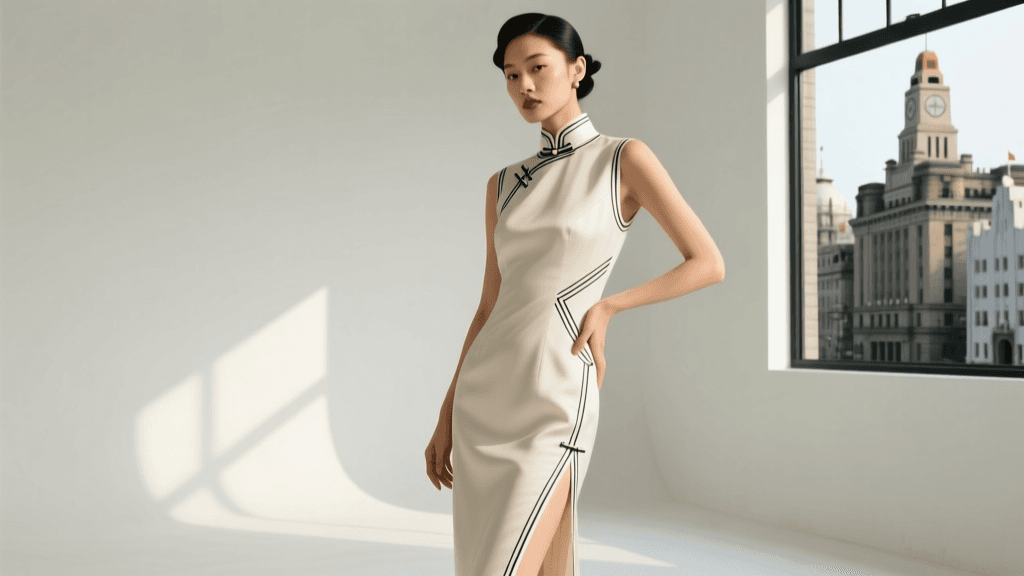
This era birthed the 'iconic' qipao. Influenced by Western tailoring techniques introduced to Shanghai, the garment became highly structured. Tailors implemented darts, gussets, and set-in sleeves to contour the bodice. Hemlines rose to the mid-calf, and the signature high thigh-slits were introduced to allow for mobility, often revealing sheer silk stockings. This is the era most frequently referenced in period dramas and vintage-inspired fashion.
1960s: The Hemline Revolution
As Western mod fashion swept the globe, the qipao adapted. The 1960s saw the introduction of the 'mini-qipao,' featuring shorter hemlines, sleeveless cuts, and bold, geometric jacquard prints. This era proved that the qipao could be playful, youthful, and highly adaptable to global trends.
2020s: Xin Zhongshi and the New Chinese Style
Today's qipao is defined by deconstruction. The 'New Chinese Style' movement embraces asymmetrical hemlines, oversized fits, mixed-media fabrics (like pairing silk brocade with distressed denim or neoprene), and the removal of the traditional mandarin collar in favor of open or draped necklines. As noted by The Metropolitan Museum of Art in their extensive archives on Chinese dress, the continuous reinvention of the garment is what ensures its survival and relevance in global fashion.
A Practical Guide to Qipao Measurements and Fit
Unlike Western garments that rely on standard S/M/L sizing, a properly fitted qipao requires precise, multi-point measurements. The traditional tailoring method accounts for the body's natural curves without relying on stretch fabrics. If you are ordering a custom qipao or shopping from specialized Asian boutiques, you will need to provide the following measurements, along with specific 'ease' allowances to ensure you can sit and breathe comfortably.
| Measurement Point | How to Measure | Standard Ease Allowance |
|---|---|---|
| Bust | Measure around the fullest part of the chest, keeping the tape level. | + 2 to 3 inches (5-7 cm) |
| Waist | Measure at the natural waistline, typically the narrowest point above the navel. | + 1.5 to 2 inches (4-5 cm) |
| Hips | Measure around the fullest part of the hips and buttocks. | + 2 to 3 inches (5-7 cm) |
| Hollow to Hem | Measure from the hollow at the base of the neck down to the desired hemline. | Exact (no ease added) |
| Slit Height | Measure from the hemline upward to the desired starting point of the slit. | Typically knee-level or mid-thigh |
Pro Tip: When ordering online, always ask the tailor if their size chart includes the ease allowance. If it does not, you must add these inches to your raw body measurements before submitting your order to avoid receiving a garment that is uncomfortably restrictive.
Modern Styling: Taking the Cheongsam to the Streets
The most common styling mistake modern wearers make is treating the qipao exclusively as formalwear. To integrate the cheongsam into a contemporary, everyday wardrobe, you must juxtapose its inherent elegance with casual, utilitarian, or edgy elements.
Footwear Pairings
Ditch the traditional stiletto pumps. For a modern streetwear aesthetic, pair a midi-length cotton or linen qipao with chunky loafers, combat boots (like Dr. Martens), or minimalist leather sneakers. The contrast between the delicate frog closures (pankou) and heavy footwear grounds the outfit, making it suitable for daytime city exploration or casual dinners.
Layering Techniques
The qipao is an exceptional layering piece. In cooler months, wear a fitted, ribbed turtleneck underneath a sleeveless, heavy brocade qipao. Alternatively, treat a short-sleeved, knee-length qipao as a tunic and layer an oversized leather moto jacket or a cropped denim jacket over it. For a high-fashion editorial look, wear a sheer, organza qipao over a simple silk slip dress or tailored wide-leg trousers.
Accessory Curation
While jade bangles and pearl drop earrings are beautiful heritage choices, modern styling calls for architectural metal jewelry. Pair a high-collared qipao with oversized geometric gold hoops or a sculptural silver cuff bracelet. Because the mandarin collar draws the eye upward, avoid heavy necklaces; instead, opt for statement earrings or a sleek, low bun secured with a minimalist metal hairpin.
Sourcing Your Qipao: Custom Tailors vs. Ready-to-Wear
Acquiring a qipao that fits perfectly and aligns with your aesthetic requires knowing where to shop and what to expect regarding timelines and costs.
The Custom Tailor Route
For a traditional, made-to-measure garment, visiting a tailor in Shanghai, Hong Kong, or Taipei is the gold standard. Renowned shops like Shanghai's 'Hanyi' or 'Lao Shanghai' offer bespoke services. Timing: Expect the process to take 3 to 4 weeks, including an initial consultation, a muslin mock-up fitting, and a final silk fitting. Cost: A custom qipao using mid-range silk crepe de chine will typically start around $300 to $500 USD, while heavy silk brocades or hand-embroidered velvet can easily exceed $1,500 USD. If you cannot travel, many heritage tailors now offer virtual consultations and ship globally, though you must be extremely precise with your self-measurements.
Ready-to-Wear and Indie Designers
For those seeking the 'Xin Zhongshi' aesthetic without the bespoke wait time, contemporary indie designers are your best resource. Brands like MS MIN, Shiatzy Chen, and smaller independent labels on platforms like Etsy or specialized Asian fashion marketplaces offer ready-to-wear qipaos that incorporate modern cuts and unconventional fabrics. Cost: Ready-to-wear pieces generally range from $120 to $400 USD. Tip: When buying ready-to-wear, prioritize garments with a back zipper rather than a pure side-wrap closure, as modern factory production often struggles to align the intricate frog buttons perfectly on standard sizing, which can cause gaping at the bust.
Ultimately, the qipao is not a relic confined to a museum; it is a living, breathing garment that continues to evolve. By understanding its history, mastering the fit, and styling it with contemporary confidence, you honor the legacy of the cheongsam while firmly planting it in the modern fashion landscape.