Silk Road Threads: Tang Hanfu and Uyghur Textile Exchange
The Silk Road: A Highway of Sartorial Exchange
For over two millennia, the Silk Road was far more than a mere conduit for spices and precious metals; it was a vibrant artery of cultural, artistic, and sartorial exchange. Spanning from the ancient Chinese capital of Chang'an (modern-day Xi'an) through Central Asia and into the Mediterranean, this vast network of trade routes facilitated an unprecedented blending of aesthetics. According to the UNESCO Silk Roads Programme, the movement of Sogdian merchants, Persian artisans, and nomadic steppe tribes introduced revolutionary textiles, dyeing techniques, and garment silhouettes to the Chinese heartland, forever altering the trajectory of Asian traditional clothing.
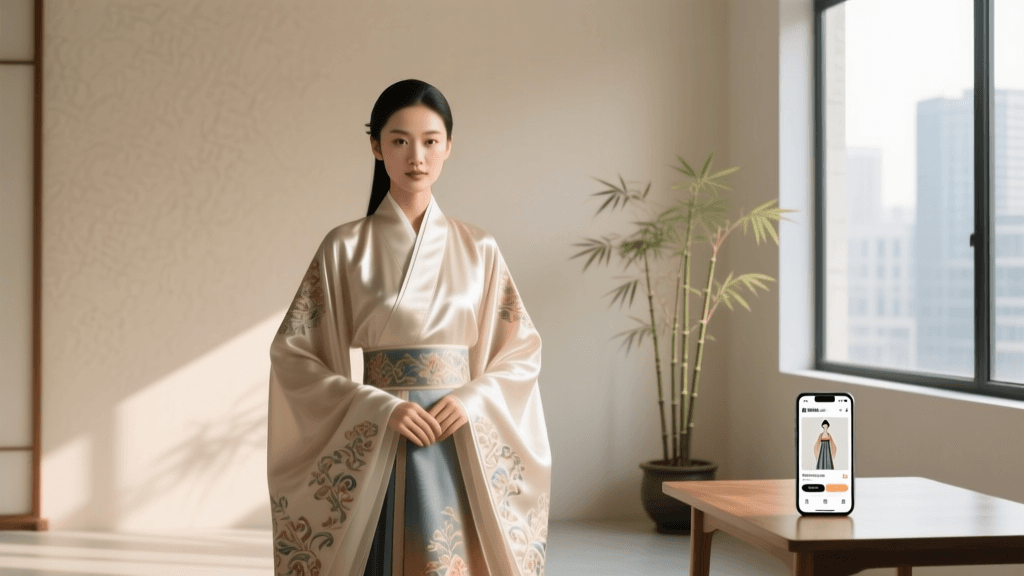
This cross-cultural pollination reached its zenith during the Tang Dynasty (618–907 CE). The Tang era was characterized by a cosmopolitan openness that eagerly absorbed foreign influences. Traditional Hanfu, which had historically been defined by its flowing, cross-collared robes and wide sleeves, began to incorporate structured, practical, and highly decorative elements from Central and Western Asia. Simultaneously, the indigenous textile traditions of China's western frontier, particularly the vibrant ikat silks of the Uyghur people in Xinjiang, flourished as they absorbed and adapted motifs from Persian and Indian traders.
Tang Dynasty Hanfu: Embracing Foreign Silhouettes
During the Tang Dynasty, the fascination with foreign cultures gave rise to the widespread popularity of 'Hufu' (barbarian or foreign clothing). The Metropolitan Museum of Art's Heilbrunn Timeline of Art History notes that Tang aristocrats, both men and women, frequently donned Hufu for horseback riding, hunting, and even casual court wear. This marked a radical departure from the rigid Confucian dress codes of previous eras.
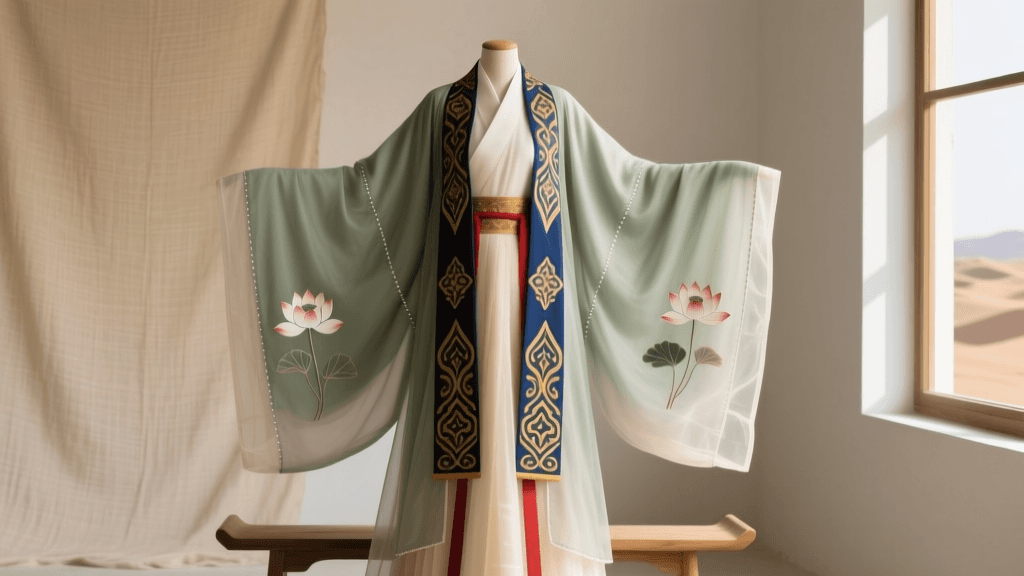
The most iconic garment to emerge from this exchange was the 'Yuanlingpao', a round-collared robe that fastened on the right side. Unlike the sweeping, floor-length robes of traditional Hanfu, the Yuanlingpao featured narrower sleeves, a fitted bodice, and was often worn with leather boots and a thick belt—adaptations perfectly suited for the equestrian lifestyle of the Central Asian steppes. Furthermore, Tang weavers began integrating Persian 'pearl roundels' (circular borders made of pearls enclosing confronted animals like lions, ducks, or boars) into their silk brocades, creating a hybrid aesthetic that was distinctly Sino-Sogdian.
Uyghur Textiles: Atlas Silk and Ikat Mastery
While the Tang court absorbed foreign silhouettes, the oasis cities of the Tarim Basin in Xinjiang became the crucible for one of Central Asia's most spectacular textile traditions: Atlas silk. The Uyghur people, situated at the crossroads of the Northern and Southern Silk Road routes, mastered the 'ikat' technique—a complex resist-dyeing process where threads are tied and dyed before weaving.
As detailed by Encyclopedia Britannica, the Silk Road allowed Uyghur weavers in cities like Hotan and Kashgar to access diverse natural dyes, including indigo from India and madder root from Persia. Authentic Atlas silk is characterized by its bold, blurred geometric patterns and vibrant, contrasting colors (often incorporating saffron yellow, pomegranate red, and malachite green). Historically, the number of colors and the complexity of the pattern indicated the wearer's social status and regional origin, making Atlas silk not just a garment, but a woven map of Silk Road demographics.
Comparative Guide: Traditional Hanfu vs. Tang Hufu
To understand the profound impact of the Silk Road on Chinese fashion, one must contrast the indigenous Hanfu with the foreign-influenced Hufu that captivated the Tang elite.
| Feature | Traditional Hanfu (Pre-Tang) | Tang Hufu (Foreign-Influenced) |
|---|---|---|
| Collar Style | Cross-collar (Jiaoling), always right over left | Round-collar (Yuanling) or folded lapels |
| Sleeves | Extremely wide, flowing, and floor-draping | Narrow, fitted at the wrist for mobility |
| Fastening | Fabric ties and sashes | Leather belts, metal buckles, and toggle buttons |
| Footwear | Flat silk or hemp shoes, cloud-toed slippers | Knee-high leather riding boots |
| Motifs | Dragons, phoenixes, clouds, indigenous flora | Persian pearl roundels, confronted lions, lotus |
Sourcing and Styling: A Buyer's Guide
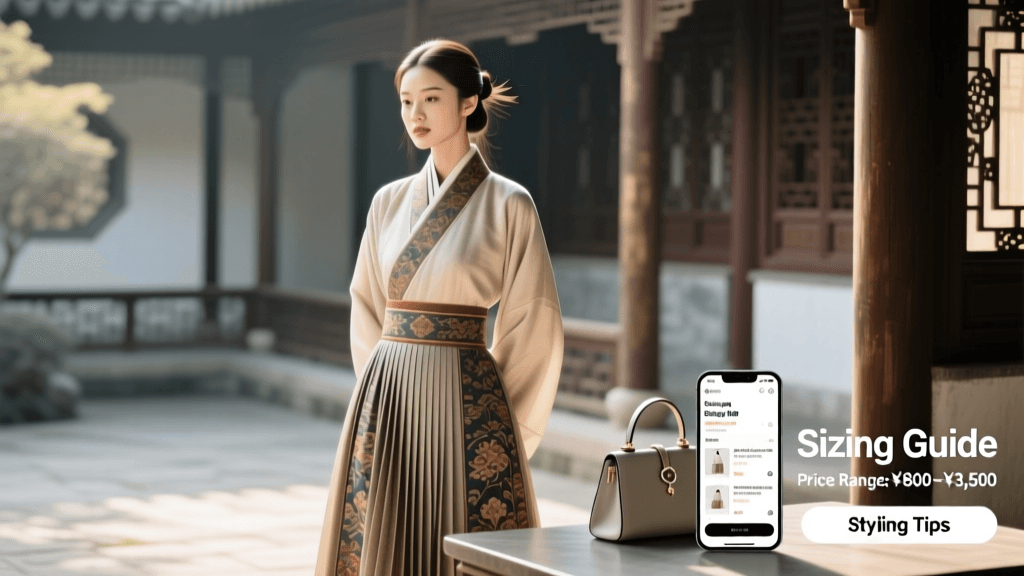
For modern enthusiasts, collectors, and cultural practitioners, sourcing garments that accurately reflect this historical cross-cultural exchange requires specific knowledge of textiles, tailoring measurements, and market pricing. Below is a practical guide to acquiring Tang-style Hufu and authentic Uyghur Atlas silk.
1. Commissioning a Tang-Style Yuanlingpao (Round-Collar Robe)
If you are commissioning a custom Yuanlingpao from a traditional tailor or a specialized Hanfu studio, precise measurements are critical, as Hufu is much more structured and fitted than traditional Hanfu.
- Essential Measurements: Provide your Chest (add 4 inches for ease of movement), Waist, Hips, Shoulder Width, and Garment Length (measured from the nape of the neck to the mid-calf). Crucially, specify the Sleeve Length from the nape to the wrist bone, rather than the shoulder, to accommodate the traditional drop-shoulder seam.
- Fabric Selection: Request 'Tang Brocade' (Tangzhuang fabric) featuring metallic gold or silver threads woven into pearl roundel motifs. Avoid stiff, modern upholstery brocades; opt for a silk-cotton blend or a lightweight mulberry silk jacquard for historical drape.
- Cost Expectations: A high-quality synthetic or poly-blend Yuanlingpao will cost between $80 and $150 USD. A historically accurate, 100% mulberry silk robe with genuine metallic thread embroidery will range from $400 to $800 USD.
- Timing: Custom tailoring typically takes 4 to 6 weeks. However, if ordering during the pre-Lunar New Year rush (November to January), expect lead times of 8 to 12 weeks.
2. Sourcing Authentic Uyghur Atlas Silk
Atlas silk is highly sought after for its striking visual impact, but the market is flooded with synthetic imitations printed with ikat patterns. True Atlas silk is woven in Xinjiang using traditional wooden looms.
- Identifying Authenticity: Authentic Hotan Atlas Ikat has a distinct 'blurred' edge to its geometric patterns because the threads are dyed before weaving. If the pattern is perfectly sharp and identical on both sides of a thick fabric, it is likely a modern digital print. Furthermore, real Atlas silk is exceptionally lightweight and narrow (often only 16 to 20 inches wide due to traditional loom constraints).
- The Burn Test: If purchasing raw yardage, request a swatch. Burning a few threads of genuine silk will produce a smell akin to burning hair and leave a crushable, dark ash. Synthetic polyester will melt into a hard, plastic bead.
- Cost and Sourcing: Authentic, hand-loomed Atlas silk costs between $30 and $55 USD per yard. Because of the narrow loom width, you will need to purchase 6 to 8 yards to construct a full-length dress or robe, and you must account for pattern-matching at the seams.
3. Accessorizing the Cross-Cultural Look
To complete a Tang-era Hufu ensemble, the accessories are just as vital as the garment. Source a 'DieXie' belt—a traditional leather belt featuring multiple small, hanging leather strips and metal rings, originally used by nomadic horsemen to carry tools and weapons. Pair the robe with knee-high leather boots featuring a slight heel and an upturned toe, a direct nod to the equestrian cultures of the Eurasian steppe. For jewelry, look for replications of Tang dynasty gold hairpins featuring 'buyao' (step-shake) elements, which often incorporated lapis lazuli and turquoise imported via the Silk Road.
Preserving the Legacy of Trade Route Fashion
The sartorial legacy of the Silk Road is a testament to the fact that fashion has never existed in a vacuum. The blending of Han Chinese weaving techniques with Central Asian silhouettes and Persian motifs created some of the most dynamic and visually stunning garments in Asian history. Whether you are studying the structural evolution of the Yuanlingpao or draping yourself in the vibrant, blurred geometries of Uyghur Atlas silk, engaging with these garments is an act of preserving a profound history of global connection. By understanding the historical context, demanding authentic textiles, and supporting traditional artisans, modern wearers can keep the vibrant threads of the Silk Road alive for generations to come.