The Hanfu E-Commerce Boom: From Niche Markets to Digital Giants
The Evolution of Hanfu Retail: From Streets to Screens
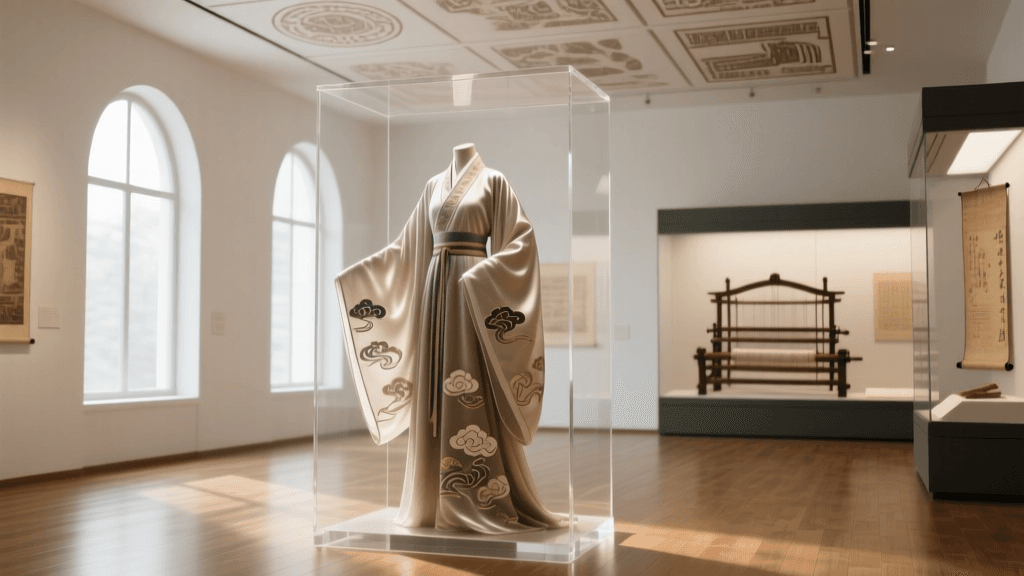
Two decades ago, acquiring a historically accurate Hanfu garment was an arduous, deeply localized endeavor. Enthusiasts in the early 2000s relied on physical textile markets, such as Beijing’s Muxiyuan or the sprawling Zhongda fabric market in Guangzhou. Shoppers had to personally select bolts of silk, linen, or brocade, negotiate prices with wholesalers, and then transport these raw materials to independent local tailors. This traditional market approach required significant expertise in textile grading and garment construction. Furthermore, the financial and temporal costs were steep. A single custom-made Ming Dynasty Aoqun (jacket and skirt set) could take up to three months to complete, with costs frequently exceeding 3,000 RMB (approximately $420 USD), placing authentic traditional clothing out of reach for the average student or young professional. The physical market model, while rich in tactile experience and artisanal connection, inherently bottlenecked the growth of the Hanfu revival movement.
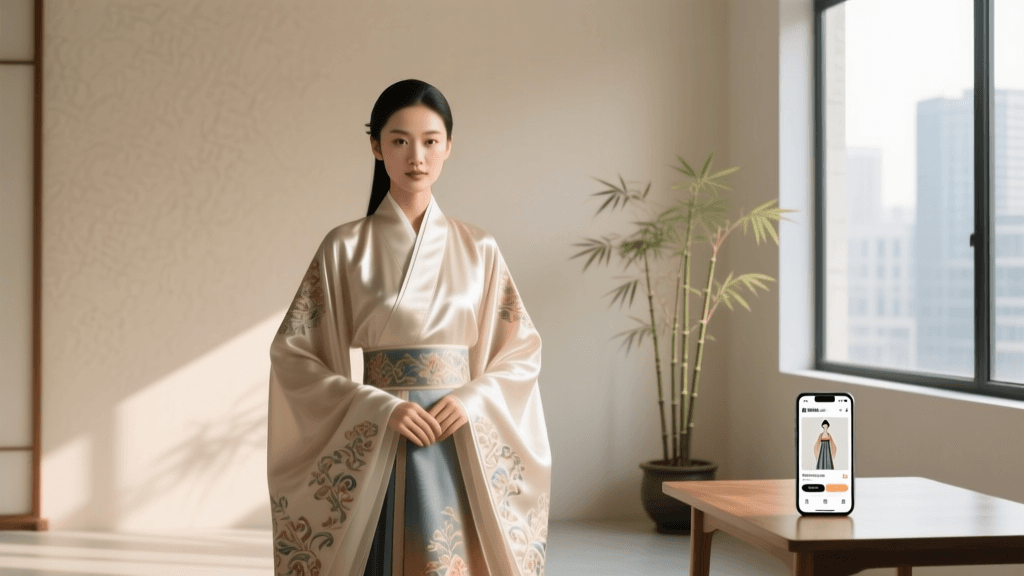
Today, the landscape is unrecognizable. The Hanfu industry has transformed into a multi-billion-dollar retail powerhouse, driven almost entirely by e-commerce platforms like Taobao, Tmall, and JD.com. What was once a niche hobby requiring physical market haggling is now a seamless digital experience, complete with virtual try-ons, live-streamed fabric showcases, and global shipping networks. Understanding this shift is crucial for modern consumers looking to navigate the vast digital marketplace of traditional Chinese clothing.
The Catalysts of the Hanfu E-Commerce Boom
The transition from physical stalls to digital storefronts was catalyzed by a convergence of social media influence, supply chain digitization, and a rising sense of cultural pride among Chinese youth. As noted in a comprehensive report by Reuters, the commercialization of Hanfu has been heavily fueled by platforms like Douyin (the Chinese version of TikTok) and Xiaohongshu (Little Red Book), where influencers showcase historical aesthetics to millions of followers. These platforms seamlessly integrate 'shoppable' links, allowing viewers to purchase a specific Tang Dynasty Ruqun or Song Dynasty Beizi with a single tap.
Simultaneously, the digitization of China's garment manufacturing hubs—particularly in Caoxian, Shandong province, and Guangzhou, Guangdong—allowed small, independent Hanfu studios to scale rapidly. By utilizing the 'Yushou' (pre-sale) model on Taobao, brands can gauge consumer demand, collect upfront capital, and produce garments in precise batches, virtually eliminating the inventory risks that plagued early physical market vendors.
Practical Guide: Buying Hanfu Online
Navigating Chinese e-commerce platforms for Hanfu requires an understanding of specific terminology, sizing paradigms, and pricing tiers. Whether you are a domestic shopper or an international buyer using a proxy agent, these actionable steps will ensure a successful purchase.
1. Mastering the Terminology and Search Filters
To find authentic, high-quality garments, avoid generic terms. Use specific dynasty and garment-type keywords on Taobao or Tmall:
- Ming Dynasty (明制): Search for 'Mamianqun' (马面裙 - horse-face skirt) or 'Pifeng' (披风 - cloak).
- Song Dynasty (宋制): Search for 'Beizi' (褙子 - long outer jacket) or 'Songku' (宋裤 - wide-leg trousers).
- Original Design (原创): Always include '原创' in your search to filter out cheap, mass-produced knockoffs and support independent designers.
2. Decoding Traditional Sizing
Unlike Western fashion, which relies on standardized S/M/L charts based on body contours, Hanfu sizing is rooted in flat-pattern cutting and historical proportions. Most brands sell by 'height and weight' or specific flat measurements.
- Chest Circumference (Xiong Wei): Measure around the fullest part of your bust. For traditional cross-collar tops, add 10-15 cm to your actual measurement to ensure the necessary structural drape and overlap.
- Waist (Yao Wei): Crucial for Mamianqun. Measure your natural waist, as these skirts sit higher than modern skirts and rely on precise flat-width pleating.
- Arm Span / Sleeve Length (Tong Xiu): Historical garments often feature elongated sleeves. Check the 'Tong Xiu' measurement to ensure the sleeves will cover your wrists when your arms are extended, a key marker of historical accuracy.
3. Understanding the Pricing Tiers
Budgeting for Hanfu online is highly tiered based on fabric, historical accuracy, and brand prestige:
- Entry-Level (150 - 300 RMB / $20 - $40 USD): Typically made of polyester blends or basic cotton. Great for beginners, festivals, and daily wear, though breathability may be an issue in summer.
- Mid-Tier (400 - 800 RMB / $55 - $110 USD): The sweet spot for most enthusiasts. Features high-quality jacquard, rayon, or linen-cotton blends with accurate historical patterning and better tailoring.
- High-End & Bespoke (1,500 - 5,000+ RMB / $200 - $700+ USD): Reserved for luxury brands like Minghuatang. Utilizes genuine mulberry silk, real gold-leaf brocade (Zhuanghua), and meticulous historical research.
Comparison Chart: Physical Tailors vs. E-Commerce Brands
To fully appreciate the digital transformation, it is helpful to compare the traditional market experience with the modern e-commerce model.
| Feature | Physical Markets & Local Tailors | E-Commerce Brands (Taobao/Tmall) |
|---|---|---|
| Base Cost | 2,000 - 5,000+ RMB | 150 - 800 RMB (Mid-Tier) |
| Lead Time | 4 to 12 weeks | 3 to 45 days (Pre-sale model) |
| Accessibility | Local (Major cities/fabric hubs only) | Global (Via shopping agents) |
| Customization | High (Bespoke measurements) | Low (Standardized flat sizing) |
| Quality Control | Variable (Depends on tailor skill) | Standardized (Brand guarantees/returns) |
Navigating Sizing and Fabrics in the Digital Space
One of the greatest challenges of buying Hanfu online is the inability to touch the fabric. Traditional markets allowed buyers to test the drape, weight, and breathability of textiles. In the digital space, you must rely on product descriptions and fabric composition tabs. According to cultural analyses by the South China Morning Post, the modern Hanfu consumer is highly educated on textiles, demanding historical accuracy not just in silhouette, but in material.
When reviewing an online listing, always check the material composition (材质). Here is a quick guide to digital fabric selection:
- Polyester (聚酯纤维): Highly durable, holds pleats perfectly (ideal for Mamianqun), but traps heat. Best for autumn/winter or air-conditioned environments.
- Rayon / Viscose (粘纤): Excellent drape and breathability. Mimics the flow of silk at a fraction of the cost. Ideal for Tang and Song dynasty summer garments.
- Ramie / Linen (苎麻 / 亚麻): The historically accurate choice for ancient summer wear. It is crisp, highly breathable, and possesses a beautiful, natural texture, though it wrinkles easily.
- Mulberry Silk (桑蚕丝): The pinnacle of luxury. Requires delicate care and dry cleaning. Always check the 'momme' weight; for Hanfu, 16-19 momme is standard, while 22+ momme offers a heavier, more luxurious drape.
Top E-Commerce Hubs and Brands to Watch
The digital marketplace is dominated by a few key players who have successfully bridged the gap between historical research and modern retail. Shisanyu (十三余) is arguably the most recognizable brand, known for its fantasy collaborations and accessible Ming and Tang dynasty pieces. Zhongling (钟灵记) offers exquisite Song dynasty elegance with a focus on refined, everyday wearability. For the purist, Minghuatang (明华堂) remains the gold standard. Operating almost entirely through digital pre-sales, Minghuatang's garments are treated as investment pieces, often requiring wait times of over a year due to their meticulous weaving processes and historical exactitude.
Advice for International Buyers
For global enthusiasts, the shift to e-commerce has been a revelation, though it requires navigating proxy services. Platforms like Superbuy, Wegobuy, or CSSBuy act as intermediaries. The most actionable advice for international buyers is to utilize the 'warehouse consolidation' feature. Hanfu sets often consist of multiple layers (inner shirt, top, skirt, outer jacket). Purchasing these from different Taobao vendors and consolidating them into a single parcel at the agent's warehouse can reduce international shipping costs by up to 40%. Always request 'detailed photos' (QC pics) from your agent before finalizing international shipment to check for loose threads or inaccurate pleating.
The Future of Digital Hanfu Retail
As the industry matures, the digital Hanfu market is integrating advanced technologies to solve the inherent challenges of online clothing retail. AI-driven virtual try-on rooms and augmented reality (AR) fabric draping simulations are currently in beta testing on Tmall, allowing users to see how a heavy winter brocade will move compared to a lightweight summer linen. Furthermore, the rise of cross-border e-commerce platforms like AliExpress and dedicated Hanfu export sites is slowly eliminating the need for complex proxy agents, bringing traditional Chinese garments directly to global doorsteps.
The journey from the bustling, chaotic aisles of physical fabric markets to the streamlined, algorithm-driven storefronts of modern e-commerce represents more than just a retail shift. It is the democratization of cultural heritage. Today, a student in New York or a professional in London can access the same high-quality, historically resonant garments as a resident of Beijing, ensuring that the vibrant tapestry of Asian traditions continues to weave its way into the global wardrobe.