Hanfu for Extreme Climates in 2026: Tropical to Tundra
The Global Hanfu Renaissance of 2026
As we navigate through 2026, the global appreciation for traditional Chinese clothing has transcended its temperate origins. The Hanfu movement is no longer confined to the moderate seasons of the Yangtze River basin; enthusiasts are now proudly wearing these historical garments in the sweltering humidity of Southeast Asia, the arid heat of the Middle Eastern deserts, and the biting winds of Northern European winters. This geographical expansion has necessitated a fascinating evolution in textile choices, layering techniques, and modern fabric engineering.
Adapting Hanfu for extreme climates requires a deep understanding of both historical precedent and contemporary textile science. Historically, Chinese garment makers were masters of environmental adaptation, utilizing specific weaves and natural fibers to combat local weather extremes. As documented by the Metropolitan Museum of Art, Chinese silk weaving techniques evolved over millennia to produce everything from heavy, insulated brocades to gossamer-thin gauzes designed specifically for summer heat. Today, modern Hanfu wearers are combining this ancient wisdom with 2026's cutting-edge sustainable fabric technologies to ensure comfort, durability, and historical silhouettes remain intact regardless of the thermometer's reading.
Tropical Climates: Mastering Humidity with Luo and Ramie
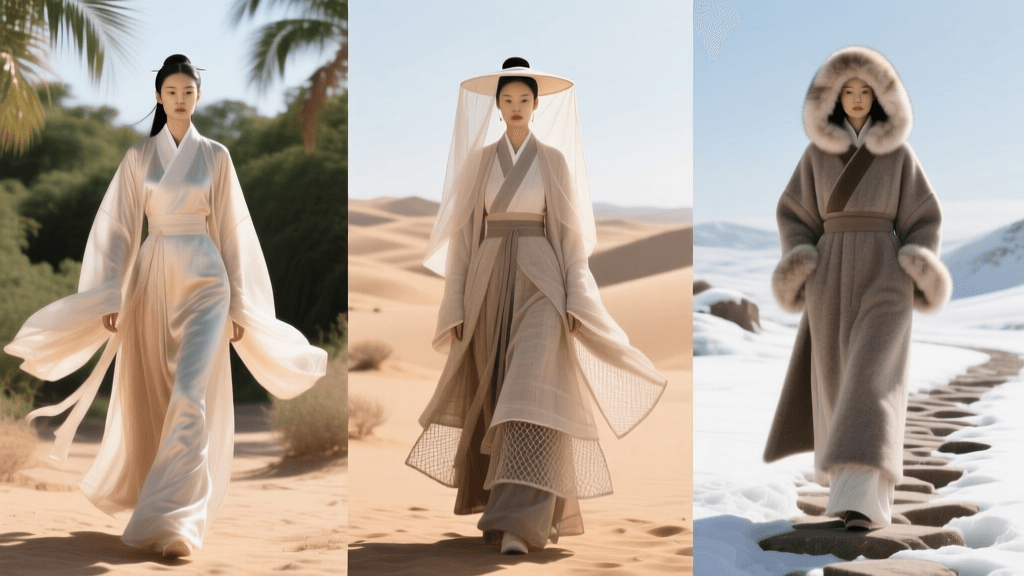
Wearing Hanfu in tropical regions like Singapore, Kuala Lumpur, or Miami presents a unique challenge: extreme heat coupled with suffocating humidity. The primary goal in these environments is moisture management and maximizing airflow. Heavy silks and dense cottons are entirely unsuitable, as they trap heat and cling to the skin, ruining the elegant drape of the garment.
For tropical wearers in 2026, the historical go-to fabric is Xia (ramie), a bast fiber known for its exceptional breathability and natural stiffness, which keeps the fabric away from the skin. Modern textile mills have refined ramie by blending it with Tencel lyocell, creating a fabric that retains the crisp, structured look of traditional Song Dynasty garments while offering superior moisture-wicking properties. The Song Beizi (a long, open-front jacket) is the ideal silhouette for this climate. Its side slits and open front allow for continuous cross-breezes, while the straight cut prevents the fabric from wrapping too tightly around the body.
Another historical marvel utilized for tropical heat is Luo (gauze silk). Unlike standard satin weaves, Luo features a twisted warp structure that creates microscopic pores in the fabric, allowing for unparalleled ventilation. In 2026, eco-friendly botanical dyes, such as indigo and lotus stem extracts, are frequently applied to Luo silk. These natural dyes not only provide a gorgeous, muted color palette but also possess inherent antibacterial properties that prevent odor buildup in high-humidity environments.
Desert Climates: Sun Protection and Thermal Regulation
Desert environments, such as those found in Dubai, the American Southwest, or Central Australia, require a completely different approach. The challenge here is twofold: protecting the skin from intense, direct ultraviolet (UV) radiation during the day, and retaining body heat during the rapid temperature drops at night. Furthermore, the dry air demands fabrics that do not draw moisture away from the skin too aggressively, which can lead to rapid dehydration.
The Ming Dynasty Dao Pao (a side-slit, wide-sleeved robe) is highly effective in desert climates when tailored from mid-weight linen or a cotton-linen blend. The generous sleeves and loose body create a microclimate of cooler air trapped between the skin and the fabric, shielding the wearer from direct solar radiation while allowing sweat to evaporate slowly. For the ultimate desert adaptation in 2026, many enthusiasts turn to Xiangyunsha (gambiered Canton gauze). This extraordinary fabric is dyed with the tannin-rich juice of the Dioscorea cirrhosa tuber and coated with iron-rich river mud. The foundational techniques of sericulture and specialized dyeing, recognized by UNESCO as Intangible Cultural Heritage, provide the baseline for this textile, which is naturally UV-resistant, water-repellent, and exceptionally cooling against the skin.
To combat the chilly desert nights, layering is essential. A lightweight, unlined Hanfu robe can be paired with a modern, ultra-think merino wool Zhongyi (inner garment). Merino wool is a 2026 staple for desert travelers due to its ability to regulate temperature dynamically, keeping the wearer cool in the afternoon sun and warm under the starlit sky.
Cold Regions: Aerogel Insulation and the Ming Ao Qun
When the temperature plummets below freezing in cities like Harbin, Hokkaido, or Reykjavik, the structural integrity and insulating properties of Hanfu are put to the ultimate test. The traditional approach to winter Hanfu involves heavy layering, which can quickly become cumbersome and restrict movement. The historical Ming Dynasty Ao Qun (a lined, high-collared jacket paired with a pleated skirt) is the foundational winter uniform, but 2026's material innovations have revolutionized how it is constructed.
Instead of relying on five or six layers of cotton padding, modern winter Hanfu jackets are now being lined with aerogel-infused textiles and graphene thermal sheets. These materials, originally developed for aerospace and extreme alpine gear, provide immense thermal retention with a fraction of the bulk. This allows the Ao jacket to maintain its sleek, historical silhouette without making the wearer look overly puffy. The high, standing collar of the Ming Ao is particularly beneficial, as it protects the neck and chest from biting winds, eliminating the need for modern winter scarves that can clash with the traditional aesthetic.
For outerwear, the Doupeng (a sweeping, sleeveless cloak) remains the most dramatic and effective cold-weather garment. In 2026, premium Doupeng are crafted from windproof, water-resistant recycled nylon shells, lined with ethically sourced goose down or advanced synthetic bio-fleece. The cloak's floor-length design traps a column of warm air around the body, while the traditional tie-closures at the neck prevent drafts. According to research highlighted by the Textile Society of America, integrating modern breathable polymers with traditional garment shapes significantly enhances the functional viability of historical dress in sub-zero environments.
2026 Climate Adaptation Comparison Table
| Climate Zone | Ideal Hanfu Silhouette | Traditional Fabric | 2026 Modern Adaptation |
|---|---|---|---|
| Tropical (Hot/Humid) | Song Beizi, Qixiong Ruqun | 100% Ramie (Xia), Luo Gauze | Ramie-Tencel blends, antibacterial lotus dyes, laser-cut ventilation hems. |
| Desert (Hot/Dry/Cold Nights) | Ming Dao Pao, Banbi | Xiangyunsha, Heavy Linen | UV-blocking botanical mud dyes, merino wool inner layers for night thermal regulation. |
| Tundra (Freezing/Windy) | Ming Ao Qun, Doupeng | Silk Brocade, Cotton Padding | Aerogel thermal linings, graphene heating elements, windproof recycled shells. |
Practical Care and Maintenance in Extreme Zones
Owning Hanfu designed for extreme climates also requires specialized care to ensure the longevity of both traditional and modern fabrics. In tropical climates, the high ambient moisture can lead to mildew on natural fibers like silk and ramie. It is crucial to store these garments in climate-controlled closets with silica gel desiccants and cedar wood blocks, which naturally repel insects and absorb excess moisture. Never leave tropical Hanfu in direct sunlight to dry, as the intense UV rays will rapidly degrade the protein structure of the silk.
In desert regions, the primary enemy is dust and particulate sand, which can work its way into the twisted warp threads of Luo gauze or the textured surface of Xiangyunsha. Rather than frequent washing, which strips the natural oils and mud coatings from these specialized fabrics, use a soft-bristled garment brush to gently sweep away dust after every wear. When washing is necessary, use a pH-neutral, enzyme-free detergent specifically formulated for heritage textiles.
For cold-weather Hanfu featuring advanced insulation like aerogel or graphene, always follow the manufacturer's specific cleaning instructions. Many of these high-tech linings can be damaged by high heat in commercial dryers. Instead, spot clean the outer shell with a damp microfiber cloth and air-dry the garment in a well-ventilated indoor space. Proper storage during the off-season involves folding the garments with acid-free tissue paper to prevent deep creases from forming in the stiff, insulated fabrics.
Conclusion
The year 2026 marks a thrilling era for traditional Chinese fashion, proving that Hanfu is not merely a relic of the past, but a living, breathing wardrobe capable of adapting to any environment on Earth. By respecting the historical ingenuity of ancient weavers and embracing the sustainable, high-performance textiles of the modern era, enthusiasts can confidently wear their heritage from the equator to the poles. Whether you are navigating the humid streets of Southeast Asia or braving the snowy winds of the north, the right fabric and silhouette will ensure your Hanfu remains as comfortable as it is culturally profound.