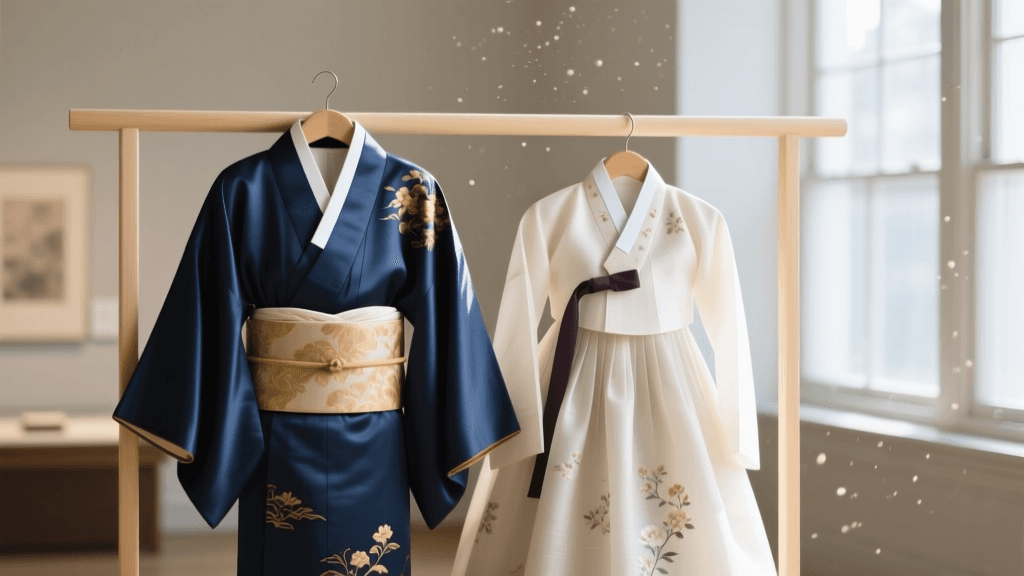
Kimono Travel Packing Guide 2026: Transport & On-The-Go Care
The Renaissance of Kimono Travel in 2026
The landscape of Japanese cultural tourism has evolved significantly by 2026. While renting a kimono for a day in Kyoto or Kanazawa remains popular, a growing number of international enthusiasts, diaspora members, and serious collectors are choosing to travel with their own personal silk garments. Bringing a cherished kimono on a trip—whether for a family wedding, a tea ceremony, or a cultural festival—presents unique logistical challenges. Silk is a delicate protein fiber that reacts acutely to changes in humidity, compression, and temperature.
Unlike Western tailored clothing, which is cut and sewn to follow the curves of the body, the kimono is constructed from straight bolts of fabric. According to the Metropolitan Museum of Art, this T-shaped, straight-lined structure is not only a hallmark of Japanese aesthetic philosophy but also a highly practical design that allows the garment to be completely disassembled, washed, and folded flat. This flat construction is the secret to traveling with a kimono, provided you understand the traditional methods of folding, wrapping, and climate control required to protect the textile in transit.
The Foundation: Hon-Datami (Traditional Folding)
Before you even consider packing your kimono into a suitcase or garment bag, it must be folded correctly. The standard folding method is known as hon-datami (true folding or book folding). This technique aligns the seams perfectly, ensuring that the weight of the fabric is distributed evenly and that no sharp, unnatural creases are pressed into the delicate silk weaves, such as chirimen (crepe) or rinzu (satin damask).
The Victoria and Albert Museum highlights how the garment's flat construction allows it to be stored compactly without stressing the threads. To execute the hon-datami fold for travel, follow these precise steps:
- Prepare the Surface: Lay the kimono face down on a clean, dry, and smooth surface. Ensure your hands are free of oils and lotions.
- Fold the Collar: Fold the right side of the collar inward toward the center back seam.
- Align the Panels: Bring the left front panel over to align perfectly with the right edge of the back panel. The seams must match exactly to prevent diagonal wrinkling.
- Tuck the Sleeves: Fold the sleeves inward so they lay flat within the rectangular boundary of the body. Do not let the sleeve edges extend beyond the folded body width.
- The Book Fold: Fold the garment in half lengthwise, then fold it in half or thirds horizontally, depending on the length of the kimono and the size of your travel bag.
When folded correctly, the kimono should form a neat, uniform rectangle. This shape is critical because it allows the garment to slide into specialized travel sleeves without catching or bunching.
Essential Gear: Kimono Travel Bags & Moisture Control
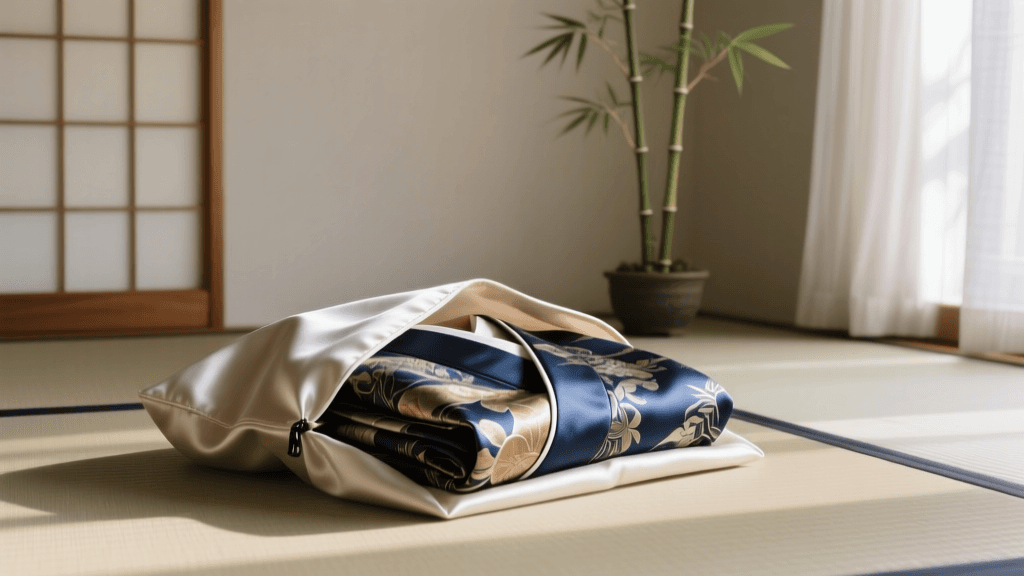
In 2026, the market for textile travel gear has expanded, offering options that bridge traditional Japanese preservation techniques with modern travel durability. The traditional storage wrapper is called a tatou-shi or tatoshi. Historically made of thick, unbleached washi paper or cotton, these wrappers protect the silk from dust and light while allowing the fiber to breathe.
However, for air travel and transit through varying climate zones, modern travelers require more robust solutions. As noted by the Canadian Conservation Institute, natural protein fibers like silk are highly susceptible to damage from fluctuating relative humidity and prolonged compression. Therefore, your packing strategy must include both physical protection and moisture regulation.
2026 Kimono Transport Carriers Comparison
| Carrier Type | Material & Features | Best Use Case | Estimated 2026 Cost |
|---|---|---|---|
| Traditional Washi Tatoshi | Acid-free, unbleaved Japanese paper. Highly breathable, zero off-gassing. | Short domestic trips, ryokan storage, long-term closet storage. | $15 - $25 |
| Breathable Cotton Garment Sleeve | Unbleached organic cotton with tie closures. Protects from dust and minor friction. | Carry-on luggage, train travel, protecting the folded rectangle. | $30 - $45 |
| Rigid Waterproof Kimono Tube | Polycarbonate or EVA hard-shell cylinder with silicone desiccant compartments. | Checked luggage, high-humidity environments, international flights. | $85 - $140 |
| Modern Nylon Travel Wrap | Water-resistant ripstop nylon with micro-fleece interior lining and velcro straps. | Backpacking, multi-city tours, quick-access transit. | $50 - $75 |
Moisture and Pest Management on the Go
Silk is hygroscopic, meaning it absorbs moisture from the air. If you are traveling to Japan during the tsuyu (rainy season) or the peak humidity of late summer, trapping a kimono in a plastic bag without desiccants will invite mold and mildew, which can permanently stain the fabric. Always place a few packets of silica gel desiccant inside your cotton or nylon travel wrap. Avoid traditional shou-nao (camphor) or naphthalene mothballs when traveling; their strong odors will permeate the silk and can be overwhelming in confined spaces like airplane cabins or bullet trains. Instead, rely on silica for moisture and airtight sealing for pest prevention during transit.
Transporting Your Kimono: Carry-On vs. Checked Luggage
When flying internationally in 2026, the golden rule of traveling with high-value, irreplaceable traditional garments is to never check them. The cargo hold of an aircraft is subject to extreme temperature fluctuations and low humidity, which can make silk fibers brittle. Furthermore, the risk of lost luggage is a gamble no collector or enthusiast should take.
Instead, pack your folded and wrapped kimono in your carry-on luggage. Place the kimono at the very top of your bag, or in a dedicated flat compartment if your carry-on features one. Do not pack heavy items like shoes, toiletries, or electronics on top of the kimono, as the sustained pressure will create deep, stubborn creases in the silk weave. If you are using a rigid kimono tube, it can easily be strapped to the handle of your rolling luggage or carried via its shoulder strap through the airport.
When passing through airport security, you may be asked to remove the garment from your bag. Politely inform the security personnel that it is a delicate, traditional silk garment. In most major international airports in 2026, security staff are trained to handle cultural and delicate textiles with care, but it is always best to be prepared to unwrap it yourself on the stainless steel inspection table to ensure it is handled gently.
On-the-Go Care: Steaming and Wrinkle Removal
Even with perfect hon-datami folding, some minor creasing is inevitable after a long-haul flight. Because kimonos are rarely washed—relying instead on airing out and spot cleaning—you cannot simply throw the garment in a dryer or use a traditional iron. Direct heat from a standard iron will scorch the silk and flatten the textured threads of a chirimen weave, ruining the fabric's dimensionality.
The Portable Steamer Solution
The most essential tool for the traveling kimono enthusiast in 2026 is a high-quality, dual-voltage portable garment steamer. Look for models that offer a continuous steam output of at least 20 grams per minute and come with a delicate fabric spacer attachment. When steaming a kimono:
- Hang the kimono on a specialized emonkake (kimono hanger). Standard Western hangers are too narrow and will create shoulder bumps. An emonkake features a wide, flat bamboo or padded wooden crossbar that supports the full width of the sleeves.
- Hold the steamer at least two inches away from the fabric. Never let the metal head of the steamer touch the silk directly.
- Steam in downward strokes, following the grain of the fabric. Focus on the hem, the back panel, and the sleeves where creases naturally form.
- Allow the garment to air dry completely in a well-ventilated room before wearing or re-folding. Putting a damp kimono away will cause water spots and potential mildew.
The Ryokan Bathroom Trick
If you are traveling light and cannot bring a portable steamer, the traditional 'bathroom steam' method remains highly effective, particularly in modern Japanese hotels and ryokans. After taking a hot shower, hang the kimono on the bathroom door or a sturdy hook in the steamy room for about 20 to 30 minutes. The ambient moisture will relax the silk fibers, allowing gravity to pull out minor wrinkles. Be careful not to place the garment so close to the shower that it gets splashed with water. Once the wrinkles have relaxed, move the kimono to the main bedroom, near an open window or air conditioning vent, to let the moisture evaporate completely.
Conclusion
Traveling with a kimono in 2026 is a rewarding endeavor that connects you deeply to Asian textile traditions, allowing you to participate in cultural events with authenticity and personal pride. By mastering the hon-datami fold, investing in breathable, moisture-controlled transport gear, and utilizing gentle steaming techniques on the go, you can ensure your silk garments arrive at your destination in pristine condition. Whether you are attending a summer matsuri in Kyoto or a formal tea gathering in Tokyo, proper preparation guarantees that your kimono remains a flawless expression of heritage and artistry, no matter where your travels take you.