The Modern Qipao: Fusion Fashion and Streetwear Styling Guide
The Evolution of the Qipao in Modern Fusion Fashion
The qipao, also known as the cheongsam, has long been synonymous with 1930s Shanghai glamour, formal banquets, and Lunar New Year celebrations. However, the contemporary fashion landscape has birthed a revolutionary movement known as Xin Zhongshi, or 'New Chinese Style.' This movement strips the qipao of its rigid, ceremonial constraints, reimagining it as a versatile staple for modern streetwear, office attire, and avant-garde fusion fashion. Today, the garment is no longer confined to the wardrobe of older generations or reserved solely for weddings; it is a dynamic canvas for youth culture and global fashion enthusiasts.
According to industry analysts at Jing Daily, the resurgence of traditional Chinese aesthetics among Gen Z and Millennial consumers is not merely a nostalgic trend, but a profound reclamation of cultural identity through a modernized lens. Young designers are actively deconstructing the classic silhouette, mixing heritage craftsmanship with contemporary urban textiles. The historical foundation of these garments is well-documented. As highlighted by the Metropolitan Museum of Art's landmark exhibition China: Through the Looking Glass, the cross-pollination of Eastern silhouettes and Western tailoring techniques has been a driving force in global fashion for over a century. Today's fusion fashion is simply the latest, most rebellious chapter in this ongoing dialogue.
Deconstructing the Modern Qipao: Fabrics and Cuts
Traditional qipaos are typically crafted from heavy silk brocade, velvet, or delicate lace, fabrics that demand careful maintenance and dictate a formal posture. Modern fusion fashion, however, prioritizes mobility, durability, and everyday wearability. Designers are now utilizing industrial and casual fabrics to create a striking juxtaposition between the historic Mandarin collar and modern utilitarianism.
| Fabric Type | Drape & Structure | Best Fusion Application | Maintenance & Care |
|---|---|---|---|
| Heavy Silk Brocade | Stiff, highly structured, reflective | Formal events, winter outerwear, editorial shoots | Dry clean only; high cost and delicate |
| Cotton-Linen Blend | Breathable, matte, relaxed drape | Summer office wear, casual midi dresses, layering | Machine wash cold; prone to natural wrinkling |
| Neoprene / Scuba | Thick, architectural, holds shape | Tech-wear, avant-garde streetwear, structured tops | Wipe clean or gentle hand wash; highly durable |
| Washed Denim | Durable, casual, molds to the body | Cropped tops, everyday layering, Y2K aesthetics | Machine wash; fades beautifully over time |
Furthermore, reports from the South China Morning Post's fashion coverage highlight how local boutiques are increasingly blending traditional pan kou (knot buttons) with industrial hardware like metal zippers, carabiners, and snap fasteners, bridging the gap between heritage craft and utilitarian streetwear.
Actionable Styling Guide: Qipao Meets Streetwear
Integrating a qipao into a modern wardrobe requires an understanding of proportion and contrast. Here are three actionable styling formulas to adapt the qipao for contemporary life.
Look 1: The Tech-Wear Cyber Qipao
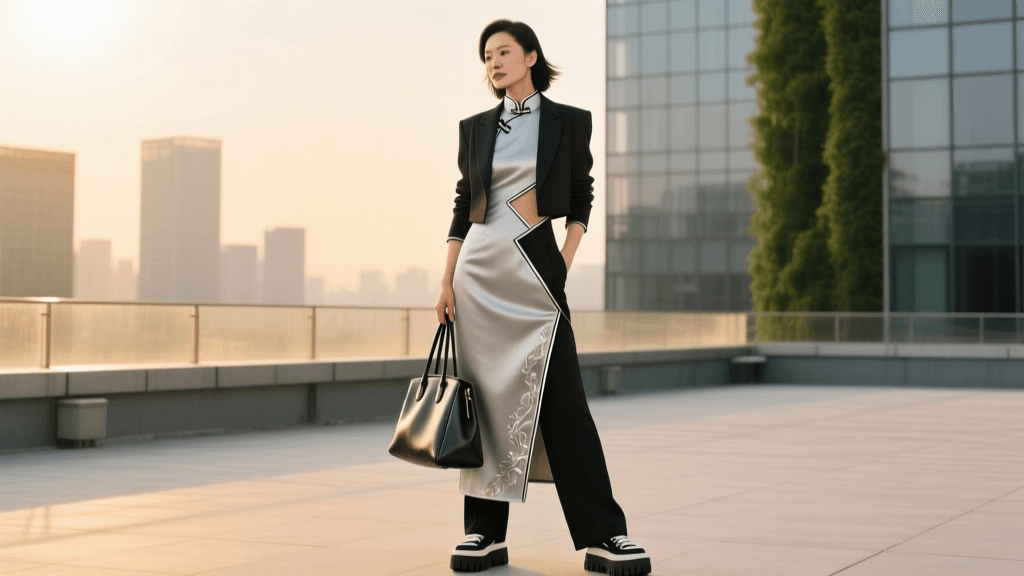
For an edgy, futuristic streetwear look, opt for a sleeveless, asymmetrical hem qipao crafted from black neoprene or scuba fabric. The architectural stiffness of the fabric holds the Mandarin collar perfectly upright without the need for internal wiring. Pair this with black, wide-leg cargo trousers featuring utility straps and chunky, platform combat boots. Accessorize with a matte black crossbody chest rig and silver chain jewelry. This look is ideal for underground music events, gallery openings, or bold weekend streetwear.
Look 2: The Minimalist Office Midi
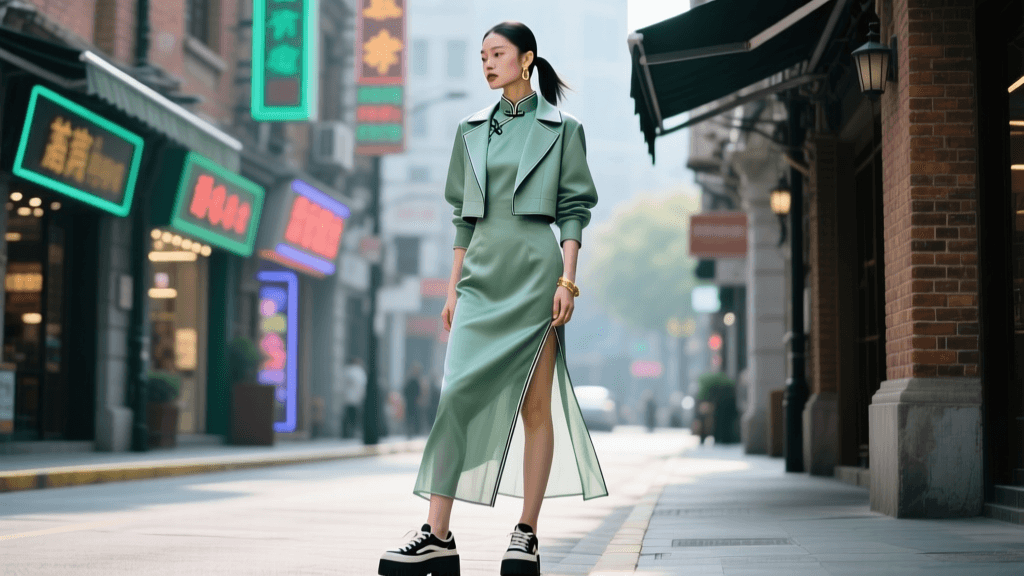
The 'New Chinese Style' is highly adaptable for the modern workplace. Choose a midi-length qipao in a muted, earthy tone like sage green or slate grey, made from a breathable cotton-linen blend. The key to making this office-appropriate is layering. Wear an oversized, structured charcoal blazer over the qipao, allowing the intricate frog buttons and collar to peek through. Finish the look with leather mules or minimalist loafers and a structured tote bag. The side slits of the qipao will provide ease of movement during your commute, while the blazer maintains professional decorum.
Look 3: The Y2K Cropped Streetwear
Cropped qipao tops have become a massive trend in Asian street fashion. Look for a cropped denim or ribbed-knit qipao top that ends just above the navel, featuring a modernized, lower Mandarin collar. Pair this with ultra-baggy, low-rise parachute pants or distressed wide-leg jeans. Footwear should be retro chunky sneakers. This high-low contrast between the form-fitting, historic top and the voluminous, casual bottoms creates a quintessential fusion silhouette perfect for casual outings and travel.
Tailoring and Sizing: Getting the Perfect Fusion Fit
When commissioning or purchasing a fusion qipao, standard Western sizing often fails to accommodate the unique structural requirements of the garment. If you are working with a tailor or ordering online, pay close attention to these specific measurements:
- The Mandarin Collar (Yuanling): Traditional collars stand at 5 to 7 centimeters, which can restrict neck movement and feel stifling in warm weather. For a modern, streetwear-friendly adaptation, request a collar height of exactly 3 to 3.5 centimeters. This provides the visual cue of the qipao without sacrificing daily comfort.
- The Side Slits (Kaicha): A formal evening qipao might feature a slit starting high at the thigh. For urban commuting and streetwear, request a slit starting 10 to 15 centimeters above the knee. This allows for dynamic movement, especially when pairing the garment with wide-leg trousers or cycling.
- Frog Button (Pan Kou) Spacing: In traditional tailoring, buttons are placed tightly together. In fusion designs, spacing them 4 to 5 centimeters apart, or replacing them entirely below the chest with a hidden side zipper, modernizes the look and reduces bulk.
Cost and Timeline Breakdown
Investing in a qipao requires understanding the market tiers. Bespoke tailoring in Shanghai's historic French Concession or Hong Kong's Central district typically ranges from $350 to $850 USD, depending on the complexity of the hand-knotted buttons and fabric sourcing. The timeline for bespoke is usually 3 to 4 weeks, requiring at least two in-person fitting sessions. Conversely, ready-to-wear (RTW) fusion brands operating online offer modern qipao tops and dresses between $45 and $150 USD, with immediate shipping. For beginners in fusion fashion, RTW cropped tops are the most accessible entry point.
Accessorizing the New Chinese Style
The traditional pairing of a qipao with jade bangles and pearl drop earrings is beautiful but can feel costumey in a streetwear context. To anchor the qipao in the modern era, swap heritage jewelry for contemporary metals and industrial materials. Chunky, oxidized silver rings, minimalist gold ear cuffs, and resin-based geometric jewelry complement the clean lines of the Mandarin collar without competing with it. When it comes to bags, avoid small, embroidered clutches. Instead, opt for structured leather shoulder bags, nylon crossbody bags, or even minimalist canvas totes to reinforce the fusion aesthetic.
Conclusion
The modern adaptation of the qipao is a testament to the resilience and adaptability of Asian sartorial traditions. By experimenting with unconventional fabrics, recalibrating historical measurements for modern comfort, and styling the garment with global streetwear staples, fashion enthusiasts can honor the legacy of the cheongsam while pushing it boldly into the future. Whether you are navigating the corporate world or the underground streetwear scene, the fusion qipao offers a powerful, elegant, and distinctly modern statement.