Edo Period Kimono: Sumptuary Laws, Iki Aesthetics, and the Obi
The Edo Period: A Crucible for Japanese Fashion
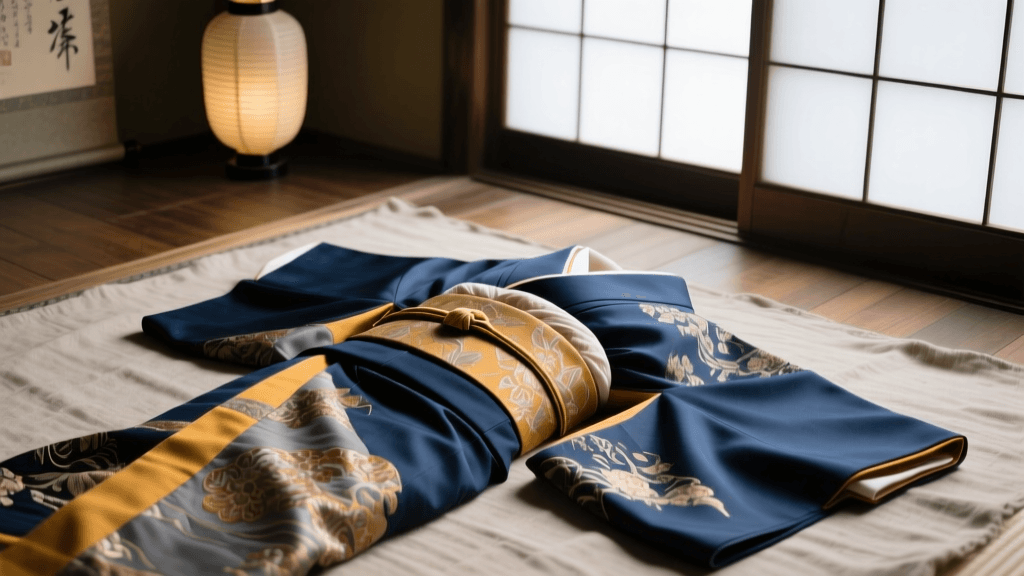
The Edo period (1603–1867) stands as one of the most transformative eras in the history of Japanese textiles and garment construction. Under the rule of the Tokugawa shogunate, Japan experienced over two and a half centuries of relative peace, rapid urbanization, and the rise of a wealthy merchant class known as the chonin. This socio-economic shift fundamentally altered the trajectory of Japanese dress. What began as a rigid, class-based sartorial system eventually blossomed into a highly sophisticated fashion culture, giving birth to the modern kimono silhouette, the wide obi, and the subtle aesthetic philosophy of iki. For contemporary collectors, historical reenactors, and traditional garment enthusiasts, understanding the Edo period is essential to appreciating the mechanics and cultural weight of Japanese clothing.
From Kosode to Kimono: The Structural Shift
Before the Edo period, the primary outer garment for the aristocracy was the elaborate, multi-layered junihitoe, while the kosode (literally 'small sleeves') was worn as an undergarment or informal wear by commoners. As the samurai class consolidated power and society shifted toward practical, urban living, the kosode emerged as the primary outer garment for both men and women. According to the Metropolitan Museum of Art's overview of the Edo Period, the kosode's transition into the modern kimono involved significant structural changes, particularly in sleeve proportions, lining, and the method of securing the garment at the waist.
Measurements and Tailoring: Edo vs. Modern Proportions
One of the most common mistakes modern enthusiasts make when attempting to recreate an Edo-period look is using standard modern kimono measurements. The Edo kosode was cut with a much narrower sleeve opening and a shorter overall sleeve drop, which drastically changes how the garment drapes and how the obi sits on the body. Below is a comparison chart detailing these crucial structural differences.
| Garment Feature | Early Edo Kosode (17th Century) | Late Edo / Modern Kimono (19th-21st Century) |
|---|---|---|
| Sleeve Length (Sode-take) | 30 - 40 cm | 45 - 50+ cm |
| Sleeve Opening Width | Narrow (approx. 20 cm) | Wide (up to 30 cm) |
| Body Width (Mihaba) | Approx. 30 cm per panel | Approx. 34 - 36 cm per panel |
| Lining Construction | Unlined (hitoe) or light hemp | Full silk habutae lining (awase) |
| Hem Treatment | Trailing or tied with shigoki | Tucked at waist (ohashori) |
Sumptuary Laws and the Birth of 'Iki'
The Tokugawa shogunate frequently issued sumptuary laws designed to enforce strict class distinctions and curb the conspicuous consumption of the wealthy merchant class. Edicts routinely banned the use of luxurious fabrics like gold-brocaded silk, tie-dyed shibori, and certain vibrant colors for anyone outside the samurai and aristocratic classes. However, the merchant class circumvented these restrictions through a sophisticated aesthetic known as iki.
'Iki is an expression of understated elegance, a rebellion of hidden luxury. It is the plain, dark indigo exterior that conceals a lining of breathtaking, hand-painted crimson silk.'
This philosophy gave rise to garments that appeared modest on the outside but featured extravagant linings (hakkake) and hidden inner collars. For modern buyers seeking authentic Edo-style aesthetics, this means prioritizing garments with high-contrast, ornate linings rather than heavily patterned exteriors.
The Yuzen Revolution and Textile Artistry
In the late 17th century, a Kyoto fan painter named Miyazaki Yuzensai popularized a paste-resist dyeing technique that would revolutionize Japanese textiles: Yuzen-zome. By applying rice paste to outline designs, artisans could paint intricate, pictorial scenes directly onto the silk, bypassing early bans on woven brocades and complex tie-dyes. As highlighted by the Victoria and Albert Museum's Kimono exhibition archives, Yuzen dyeing allowed for a level of artistic expression previously unseen in wearable garments, turning the kosode into a walking canvas of seasonal motifs, literary references, and auspicious symbols.
The Evolution of the Obi: From Thin Sash to Maru Obi
Perhaps the most dramatic evolution during the Edo period was the transformation of the obi. In the early 1600s, the obi was a narrow, unadorned sash, roughly 5 to 10 centimeters wide, tied in a simple knot at the front. As the kosode's sleeves grew longer and wider, the obi had to widen to balance the visual proportions of the garment. By the late Edo period, the obi had expanded to over 30 centimeters in width and was tied at the back, giving birth to the maru obi—a heavily brocaded, fully patterned sash that required significant skill to tie. This shift also necessitated the invention of the ohashori (the waist tuck), which is standard in modern kimono dressing but was virtually nonexistent in early Edo fashion.
Practical Guide: Sourcing and Wearing Edo-Style Garments Today
For collectors, historical costumers, and traditionalists looking to acquire or recreate Edo-period garments, navigating the modern market requires specific knowledge of textiles, measurements, and sourcing channels. Here is actionable advice for building an authentic Edo-inspired wardrobe.
1. Sourcing Authentic Vintage and Reproductions
- Where to Buy: For genuine late-Edo to Taisho-era transitional pieces, visit the Toji Temple Flea Market in Kyoto (held on the 21st of every month) or the Oedo Antique Market in Tokyo (1st and 3rd Sundays). For high-quality modern reproductions of Edo textiles, commission artisans in the Nishijin weaving district of Kyoto.
- Expected Costs: Authentic, fragile late-Edo kosode can range from $300 to $1,500 USD depending on condition and Yuzen complexity. Modern, custom-woven reproductions using traditional Tango chirimen (crepe silk) and hand-applied Yuzen will cost between $2,500 and $6,000+ USD.
- Online Platforms: Reputable exporters like Yamatoku and Ichiroya frequently stock 'antique' (pre-1920s) kimono. Search specifically for 'Edo komon' (micro-patterns) or 'antique kosode'.
2. Crucial Measurements for Historical Accuracy
If you are commissioning a reproduction or altering a vintage piece for historical reenactment, you must adjust your measurements to match the Edo silhouette:
- Sleeve Drop (Sode-take): Request a drop of no more than 40 cm. Modern standard is 49 cm, which will ruin the historical silhouette.
- Sleeve Opening: Ensure the sleeve opening is narrowed to roughly 22 cm. This prevents the modern 'pigeon' effect where the inner arm fabric sags heavily.
- Length (Mitake): In the Edo period, women of the samurai and merchant classes often wore the kosode trailing slightly on tatami mats, or gathered at the waist with a separate, thin silk sash called a shigoki. Do not tailor the garment to require a modern ohashori tuck if you are strictly portraying pre-1800s fashion.
3. Selecting the Right Textiles
Avoid modern synthetic blends and heavy, stiff modern brocades. For early Edo reenactment, seek out chirimen (silk crepe) or tsumugi (slubbed pongee silk), which were favored for their matte finish and subtle drape. For late Edo merchant-class fashion, look for Edo Komon—a stencil-dyeing technique that creates incredibly fine, micro-geometric patterns that appear solid from a distance but reveal intricate detail up close.
Conclusion
The Edo period was not merely a time of sartorial restriction; it was an era of profound textile innovation. The tension between the shogunate's sumptuary laws and the merchant class's desire for beauty birthed the sophisticated aesthetics of iki and the revolutionary Yuzen dyeing techniques. By understanding the structural differences between the historical kosode and the modern kimono, and by carefully sourcing garments with accurate proportions and textiles, today's enthusiasts can authentically preserve and wear the living history of Japan's most dynamic fashion era. For further visual research, the Kyoto Costume Institute's digital archives remain an invaluable resource for studying the precise drape and textile weights of surviving 18th-century garments.