Tai Chi Practice Wear: Choosing Silk, Cotton, and Blends
The Philosophy and Purpose of Tai Chi Practice Wear
Taijiquan, universally recognized as Tai Chi, is far more than a sequence of gentle movements; it is a profound Chinese martial art deeply rooted in Daoist philosophy, traditional Chinese medicine, and the cultivation of internal energy, or Qi. In 2020, the cultural significance of this practice was globally affirmed when it was added to the UNESCO Intangible Cultural Heritage list. As practitioners seek to harmonize their mind, body, and breath, the clothing they wear—commonly referred to as Tai Chi Fu—plays an indispensable role in facilitating this connection.
Unlike modern athletic wear designed for high-impact friction and sweat-wicking, traditional Tai Chi practice wear is engineered for fluidity, modesty, and unrestricted circulation. The garments must accommodate deep, expansive postures such as the Ma Bu (horse stance) while allowing the practitioner to maintain the core Tai Chi principle of 'sinking the shoulders and dropping the elbows.' Choosing the right fabric and cut is not merely an aesthetic decision; it is a functional requirement that directly impacts your mobility, temperature regulation, and overall martial arts experience.
Historical Evolution: From Hanfu to Modern Tai Chi Fu
The modern Tai Chi uniform draws heavy inspiration from traditional Chinese garments, specifically the Hanfu and the Tangzhuang (Tang suit). Historically, martial artists practiced in their daily clothing, which consisted of loose-fitting cotton or hemp tunics and trousers tied with sashes. As Tai Chi transitioned from a closely guarded family martial art to a public health practice in the 20th century, a standardized uniform began to emerge.
Today's practice wear retains the Mandarin collar, the wide-legged trousers, and the iconic Pankou (frog buttons) of its ancestors, but it has been adapted for contemporary needs. The silhouette remains intentionally loose to prevent the restriction of blood flow and lymphatic drainage, aligning with the medical and health benefits of the practice. According to Harvard Medical School, Tai Chi is highly effective for improving balance, reducing stress, and enhancing cardiovascular health, all of which require a physical environment—starting with your clothing—that promotes deep relaxation and unimpeded movement.
Fabric Guide: Choosing the Right Material
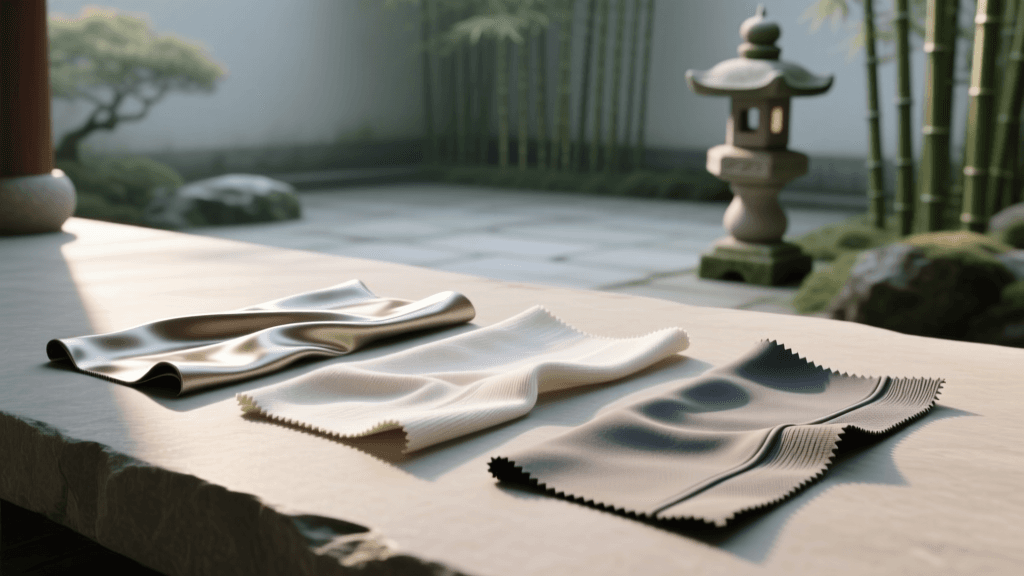
The fabric of your Tai Chi suit dictates how it drapes, breathes, and moves with your body. Below is a comprehensive comparison of the most common materials used in traditional practice wear.
| Fabric Type | Breathability | Mobility & Drape | Best Season | Avg. Cost (USD) |
|---|---|---|---|---|
| Mulberry Silk | High | Fluid, Elegant | Spring / Summer | $80 - $250+ |
| 100% Cotton | Very High | Soft, Structured | All Seasons | $30 - $70 |
| Linen Blend | Maximum | Crisp, Lightweight | Summer | $45 - $90 |
| Poly/Spandex Blend | Low / Medium | Stretchy, Durable | All Seasons | $20 - $50 |
1. Mulberry Silk (The Premium Choice)
Silk is the most prestigious fabric for Tai Chi uniforms, favored for competitions, demonstrations, and serious daily practitioners. High-quality mulberry silk or heavy silk crepe offers a beautiful, liquid drape that visually accentuates the continuous, flowing movements of forms like the Yang style. Silk is naturally temperature-regulating and hypoallergenic. However, it requires delicate care, lacks the stretch of modern synthetics, and can be slippery during push-hands (Tui Shou) grappling exercises.
2. Natural Cotton and Linen (The Everyday Workhorses)
For daily practice, especially outdoors in parks, cotton and linen blends are the gold standard. Cotton is highly breathable, absorbent, and soft against the skin, making it ideal for the stress-reduction and mindfulness aspects of Tai Chi. Linen offers superior cooling properties for humid summer mornings but tends to wrinkle easily. A cotton-linen blend provides the best of both worlds: the cooling breeze of linen with the soft structure of cotton.
3. Modern Performance Blends (The Practical Alternative)
Polyester and spandex blends have entered the martial arts market to offer durability, wrinkle resistance, and four-way stretch. While they lack the traditional prestige and natural breathability of silk or cotton, they are highly practical for travel, frequent machine washing, and vigorous Wushu-influenced Tai Chi routines that involve deep lunges and rapid directional changes.
Essential Design Elements for Unrestricted Qi Flow
When shopping for Tai Chi practice wear, pay close attention to the traditional tailoring techniques that serve specific martial and physiological purposes:
- The Mandarin Collar: A stiff, upright collar that gently frames the neck. It encourages the practitioner to keep the head suspended as if by a string from the crown (Baihui point), promoting proper spinal alignment.
- Pankou (Frog Buttons): Hand-knotted fabric buttons that secure the jacket. Unlike rigid zippers or tight modern buttons, Pankou allow the chest cavity to expand fully during deep, diaphragmatic abdominal breathing.
- Drop Shoulders: The seam of a traditional Tai Chi jacket falls below the natural shoulder line. This design prevents the fabric from pulling or binding when the arms are raised or extended, honoring the principle of relaxed, sunken shoulders.
- Wide-Leg Trousers: The pants must feature a gusseted crotch and wide legs to allow for deep stances without resistance. The waistband is typically elasticated with a drawstring to avoid compressing the lower abdomen, where the Dantian (the body's energy center) is located.
Footwear: Grounding Your Practice
No Tai Chi uniform is complete without the proper footwear. Modern running shoes with thick, cushioned heels are detrimental to Tai Chi practice; they elevate the heel, shift the center of gravity forward, and disconnect the practitioner from the ground, increasing the risk of knee strain. Traditional Tai Chi shoes feature a completely flat, thin rubber or canvas sole. Brands like Feiyue or specialized martial arts slippers allow the toes to grip the floor, facilitating the subtle weight transfers and 'rooting' techniques essential to internal martial arts.
Sizing and Fit: A Practical Buying Guide
Tai Chi uniforms should fit looser than standard street clothing. When taking your measurements or ordering from a traditional tailor, follow these guidelines:
- Chest and Shoulders: Add 2 to 3 inches to your actual chest measurement. The jacket should drape cleanly without pulling across the back when your arms are crossed.
- Sleeve Length: Sleeves should end right at the wrist bone. If they extend over the hands, they will obscure the precise hand forms and finger alignments required in advanced sets.
- Trouser Inseam: The pants should rest just above the ankle bone. Fabric pooling around the ankles can be a tripping hazard during sweeping steps or lotus kicks.
Garment Care and Maintenance
To preserve the integrity of your practice wear, proper care is essential. Cotton and linen blends can generally be machine washed on a gentle cycle with cold water and hung to dry to prevent shrinkage. Silk uniforms must be hand-washed using a pH-neutral detergent specifically formulated for delicate proteins, or dry-cleaned. Never wring silk; instead, roll it in a clean towel to absorb excess moisture and lay it flat in the shade. Ironing should be done on the lowest heat setting, preferably with a pressing cloth between the iron and the garment, to maintain the crisp lines of the Mandarin collar and frog buttons.
'The clothing of a martial artist is an extension of their discipline. It should not distract the mind, nor restrict the body, but rather serve as a quiet vessel for the flow of energy.' — Traditional Wushu Proverb
Investing in high-quality, traditionally tailored Tai Chi practice wear is an investment in your martial arts journey. Whether you prefer the luxurious drape of mulberry silk for a morning competition or the humble, breathable comfort of cotton for daily park practice, the right garment will elevate your focus, honor the heritage of the art, and allow your Qi to flow without obstruction.