Decoding Kimono Motifs: Japanese Pattern and Color Symbolism
The Philosophy of Kisetsu-kan: Wearing the Seasons
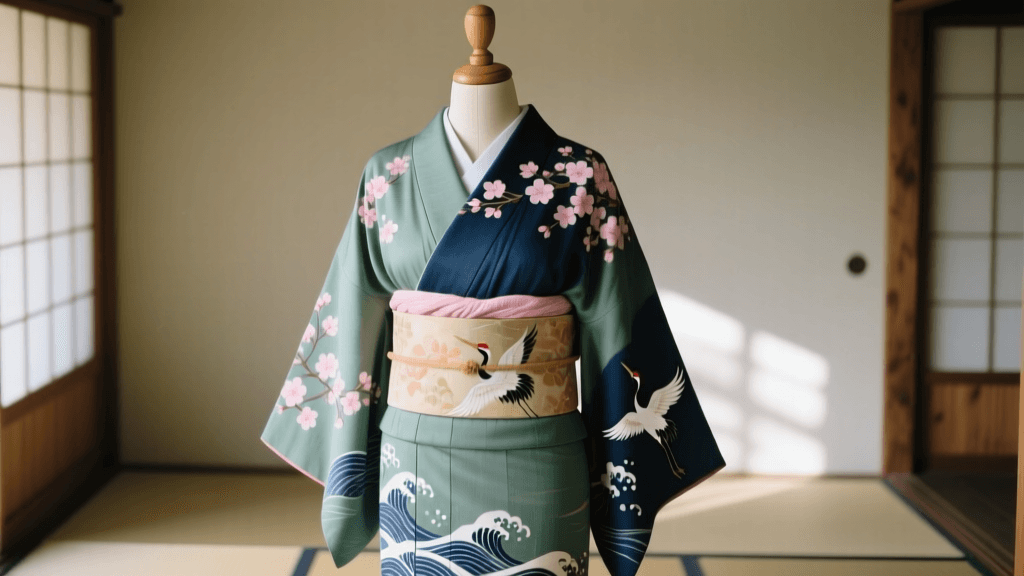
The traditional Japanese kimono is far more than a simple garment; it is a wearable canvas that reflects the natural world, social status, and deep-seated cultural philosophies. At the heart of kimono styling is kisetsu-kan, the profound Japanese awareness of the changing seasons. Unlike Western fashion, which often anticipates seasons by a matter of weeks, traditional Japanese dress requires the wearer to embody the season just as it is about to peak. Wearing a cherry blossom motif while the flowers are already falling is considered a fashion faux pas; instead, one wears the motif to invite the season's arrival.
According to the Victoria and Albert Museum, the kimono's T-shaped, straight-seamed construction was specifically designed to act as a flat backdrop, allowing the intricate dyeing techniques and symbolic motifs to take center stage. Understanding these patterns and colors is essential for anyone looking to wear, collect, or appreciate traditional Japanese garments authentically.
The Language of Colors: Natural Dyes and Status
Historically, the colors of a kimono were strictly regulated by sumptuary laws and the immense cost of natural dyes. The hue of a garment immediately communicated the wearer's age, marital status, and social rank.
Red (Kurenai) and Safflower Dye
Vibrant red, derived from the safflower (benibana), was historically one of the most expensive dyes to produce. It takes thousands of dried safflower petals to yield a small amount of pigment. Red is heavily associated with youth, vitality, and the warding off of evil spirits. Today, a kimono featuring deep, natural safflower red is a luxury item, often reserved for young, unmarried women wearing furisode (long-sleeved kimono) at coming-of-age ceremonies.
Indigo (Ai) and the Samurai Class
Indigo dyeing (aizome), utilizing fermented polygonum leaves (sukumo), was the workhorse of Japanese textiles. Beyond its beautiful spectrum of blues, indigo was highly valued for its practical properties: it repels insects, masks odors, and strengthens cotton fibers. Samurai frequently wore indigo-dyed undergarments and hakama for these functional benefits. Today, a genuine hand-dipped natural indigo yukata costs between $300 and $600, whereas synthetic indigo alternatives retail for around $50.
Purple (Murasaki) and Aristocracy
Dyed using the roots of the gromwell plant (shikon), purple was historically reserved for the highest echelons of the imperial court. The dye process is incredibly temperamental, requiring precise temperature control, which kept the color rare and expensive.
Seasonal Motifs: A Guide to Timing and Meaning
Choosing the correct motif requires a nuanced understanding of the lunar calendar and natural phenomena. The general rule of thumb for timing is to begin wearing a seasonal motif roughly two to three weeks before the season or event actually begins, and to stop wearing it the moment the natural phenomenon passes its peak.
| Season | Primary Motifs | Timing to Wear | Symbolic Meaning |
|---|---|---|---|
| Spring | Plum Blossom (Ume), Cherry Blossom (Sakura), Wisteria (Fuji) | February to Early April | Renewal, ephemeral beauty, elegance, and aristocratic grace. |
| Summer | Morning Glory (Asagao), Goldfish (Kingyo), Fireflies (Hotaru) | May to Early July | Coolness, refreshing water elements, and the vibrant energy of life. |
| Autumn | Maple Leaves (Momiji), Chrysanthemum (Kiku), Susuki Grass | August to Late October | Harvest, maturity, longevity (chrysanthemum), and wistful melancholy. |
| Winter | Pine (Matsu), Bamboo (Take), Snow Rings (Yukiwa) | November to Early January | Resilience, steadfastness, purity, and enduring strength through hardship. |
Auspicious Motifs for Celebrations
For weddings, tea ceremonies, and New Year celebrations, garments feature kissho-moyo (auspicious patterns). The most prominent is Sho-chiku-bai, the combination of pine, bamboo, and plum. Pine represents longevity and steadfastness; bamboo symbolizes resilience and flexibility; plum stands for perseverance and hope, as it blooms in the late winter snow.
Another vital motif is Tsuru-Kame (crane and turtle). According to Japanese folklore, the crane lives for a thousand years and the turtle for ten thousand. Together, embroidered in gold thread on a black tomesode or vibrant uchikake (wedding overcoat), they bestow the ultimate blessing of a long, harmonious life upon the wearer.
'The kimono is not merely a covering for the body, but a reflection of the soul's harmony with nature and the cosmos.' — Traditional Kyoto Textile Proverb
Beyond the Mainland: Ainu and Ryukyuan Symbolism
While the kimono dominates the global perception of Japanese dress, the ethnic minority traditions of the Ryukyu Islands (Okinawa) and the indigenous Ainu of Hokkaido possess equally rich, yet distinct, symbolic vocabularies.
Ryukyuan Bingata: Subtropical Vibrancy
Ryukyuan traditional dress utilizes Bingata, a resist-dyeing technique characterized by explosive, vibrant colors that reflect the subtropical Okinawan climate. Unlike the subdued elegance of mainland Edo-period kimono, Bingata features bright sulfur yellows, vivid pinks, and deep blues. Motifs often include local flora like the deigo flower, as well as dragons and clouds, reflecting the Ryukyu Kingdom's historical tributary trade with Ming Dynasty China. The Smithsonian Asian Art collections note that the use of brilliant yellow was strictly reserved for Ryukyuan royalty, mirroring the Chinese imperial color codes.
Ainu Attush and Spiritual Protection
The indigenous Ainu people of northern Japan and Sakhalin created garments from the inner bark of the elm tree, woven into a durable textile called attush. Ainu motifs are deeply spiritual, designed not for seasonal aesthetics, but for protection. The Moreu (spiral) and Aiushi (thorn) patterns are embroidered or appliqued using indigo-dyed cotton or dark bark fibers. These continuous, unbroken thorny lines are placed at the vulnerable openings of the garment—neck, cuffs, and hem—to tangle and ward off evil spirits (wen-kamuy) from entering the wearer's body.
Practical Guide: Buying, Measuring, and Styling
If you are looking to purchase and wear a traditional kimono or yukata, understanding measurements, construction costs, and styling rules is crucial for an authentic experience.
Sizing and Measurements (Kitsuke)
Unlike Western clothing, kimono are sold based on length rather than chest or waist size, as the width is wrapped and folded to fit the body. The critical measurement is the mi-take (body length).
- Calculating Mi-take: The ideal kimono length is roughly your total height minus 20 to 25 centimeters (or Height x 0.85). For example, a person who is 160 cm tall should look for a kimono with a back-length (se-take) of about 130 cm.
- The Ohashori Fold: Women's kimono are worn with a visible fold at the waist called the ohashori. If the kimono is too long, the excess fabric is folded under the obi (sash). If it is too short, it cannot be worn properly.
Costs and Investment Tiers
The price of a kimono varies wildly based on the dyeing technique, material, and whether it is new or vintage.
- Vintage Silk Kimono ($45 - $150): Purchasing from vintage shops (recycle shops) in Kyoto or Tokyo is the most cost-effective way to own authentic, hand-dyed silk garments. Look for the yuzen dye technique, identifiable by a thin white outline around the colored motifs.
- New Machine-Washed Silk or High-End Polyester ($200 - $600): Modern washable silks and high-quality polyesters offer the look of traditional garments with zero maintenance anxiety, ideal for beginners.
- Bespoke Kaga Yuzen ($5,000 - $20,000+): For serious collectors, commissioning a hand-painted Kaga Yuzen kimono from Kanazawa is the pinnacle of textile art. Artisans paint directly onto the silk using five distinct natural colors (kaga gosai), creating hyper-realistic botanical motifs with subtle shading (bokashi). This process takes up to six months.
Styling Rules for Beginners
When styling your garment, always remember the cardinal rule of the collar: the left side must always cross over the right side (hidari-mae). Crossing right over left is strictly reserved for dressing the deceased for burial. Furthermore, as highlighted by The Metropolitan Museum of Art, the evolution of kimono styling shows that the obi knot should reflect the wearer's age and the formality of the event; younger women wear elaborate, high knots like the fukura-suzume, while older women wear subdued, flat knots like the otaiko.
Conclusion
Whether it is the fleeting cherry blossoms on a Kyoto silk kimono, the protective thorns of an Ainu attush, or the vibrant subtropical flora of a Ryukyuan bingata, traditional Japanese garments are deeply encoded texts. By understanding the symbolism of color, the strict timing of seasonal motifs, and the practicalities of fit and cost, you do more than just wear a piece of clothing—you participate in a centuries-old dialogue between humanity and the natural world.