Miao Silver and Embroidery: Guide to Hmong Textiles
The Living Archive: An Introduction to Miao Sartorial Heritage
The Miao people, widely known in Southeast Asia and Western contexts as the Hmong, possess one of the most visually stunning and culturally profound sartorial traditions in Asia. Concentrated primarily in the mountainous regions of China's Guizhou, Yunnan, and Guangxi provinces, the Miao have historically utilized their clothing as much more than mere protection from the elements. In the absence of a traditional written script, Miao garments serve as a wearable archive, encoding clan identity, spiritual beliefs, historical migration routes, and mythological epics directly into the fabric of their daily lives.
For collectors, cultural enthusiasts, and ethical fashion buyers, understanding the nuances of Miao silver and embroidery is essential. The market is currently flooded with mass-produced, synthetic replicas aimed at the tourist trade. However, authentic, handcrafted Miao textiles and silverwork remain highly sought after for their unparalleled craftsmanship and deep cultural resonance. This guide provides actionable, practical advice on how to identify, source, purchase, and care for genuine Miao ethnic garments and accessories.
The Spiritual and Economic Weight of Miao Silver
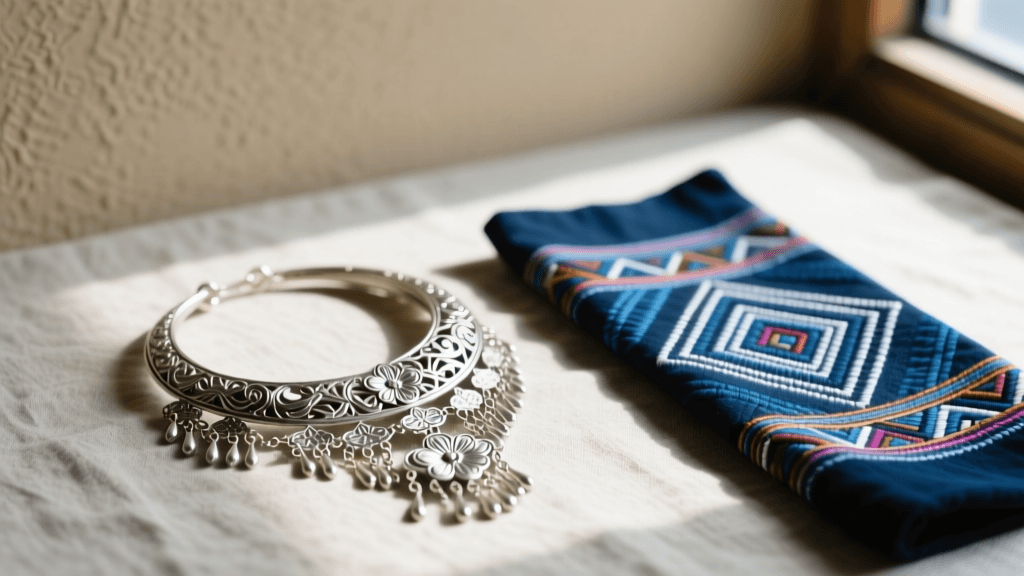
In Miao culture, silver is not simply a decorative metal; it is a vital store of generational wealth, a spiritual talisman meant to ward off evil spirits, and a crucial component of a woman's dowry. A full set of traditional Miao bridal silver jewelry can weigh anywhere from 2 to 5 kilograms, comprising elaborate horned headdresses, layered neck rings, chest plates, and intricate hairpins. The sheer weight of the silver is a direct reflection of the family's prosperity and their devotion to the bride.
Practical Buying Guide: Purity, Weight, and Cost
When sourcing authentic Miao silver, buyers must understand the metallurgy and pricing structures unique to this craft. Traditional Miao silversmiths typically use 999 pure silver, which is softer and more malleable than the 925 sterling silver commonly used in Western jewelry. This high purity allows for the intricate wire-drawing and filigree techniques characteristic of the region.
- Purity Verification: Authentic village-made pieces are often 99% pure. They will feel slightly softer and may lack the bright, rhodium-plated shine of commercial sterling silver. Look for the deep, intentional oxidation in the crevices of the metalwork, which highlights the repoussé and chasing techniques.
- Pricing Structure: While the raw market price of silver fluctuates around $0.70 to $0.90 per gram, authentic handmade Miao silver jewelry commands a premium for labor. Expect to pay between $2.00 and $5.00 per gram for genuine artisan work directly from regions like Kaili or Xijiang.
- Identifying Handmade vs. Cast: Mass-produced tourist pieces are often cast in molds and soldered together. Genuine handmade pieces will feature tiny, hand-twisted filigree wires, seamless hammered joints, and slight, organic asymmetries that prove human craftsmanship.
Miao Silver Jewelry Buyer's Comparison Chart
| Item Type | Average Weight | Estimated Cost (Artisan) | Primary Occasion & Notes |
|---|---|---|---|
| Silver Horn Headdress | 1.5 kg - 3.0 kg | $3,000 - $6,000+ | Weddings, New Year. Requires custom fitting and structural support. |
| Layered Neck Torcs | 0.5 kg - 1.2 kg | $1,000 - $2,400 | Festivals. Often worn in sets of 3 to 5 graduated rings. |
| Repoussé Chest Plate | 0.3 kg - 0.8 kg | $600 - $1,600 | Dance festivals. Features suspended bells that chime during movement. |
| Hairpins / Comb Sets | 50g - 150g | $100 - $300 | Daily wear and minor festivals. Excellent entry-level collectible. |
Decoding Miao Embroidery: The Wearable Archive
According to The Metropolitan Museum of Art, Hmong and Miao textiles serve as a vital visual language, encoding clan identity and historical narratives in the absence of a written script. Miao embroidery is renowned for its staggering complexity, utilizing over a dozen distinct stitching techniques, including the famous double-needle lockstitch, appliqué, and couching.
Key Techniques and Motifs
The most prized Miao embroidery involves silk thread splitting. Master artisans will split a single strand of silk thread into 8, 16, or even 32 micro-threads to achieve a painterly, almost three-dimensional effect on the fabric. The base fabric is traditionally hand-woven cotton, dyed repeatedly in natural indigo vats until it achieves a deep, metallic-looking midnight blue.
When examining a piece, look for these foundational mythological motifs:
- The Butterfly Mother (Mai Bang): The most sacred Miao motif, representing the primordial ancestor who birthed the first humans, animals, and spirits. Often depicted with elaborate, multi-colored wings.
- The Buffalo Dragon: Unlike the fearsome dragons of Han Chinese mythology, the Miao water buffalo dragon is a benevolent, agrarian protector, often depicted with a bovine head and serpentine body.
- The Ji Yu (Mythical Bird): A recurring avian motif symbolizing freedom, migration, and the spiritual messengers between the earthly realm and the ancestors.
Sourcing Authentic Embroidered Textiles
The market for Miao embroidery is divided into three distinct tiers, and knowing the difference is crucial for buyers seeking authentic cultural artifacts. As reported by Sixth Tone, the push to commercialize these crafts has led to a surge in machine-embroidered replicas, making provenance and material analysis vital.
- Antique / Vintage (Pre-1980s): Made with hand-spun cotton, natural indigo, and split silk threads. These pieces are museum-quality. Measurements: Standard jacket panels are 40cm x 50cm; baby carriers are 90cm x 100cm. Cost: $300 to $1,500+ depending on condition and stitch density.
- Contemporary Handmade: Crafted by modern village artisans using commercial cotton and synthetic rayon or polyester threads. While handmade, the colors are often brighter and the thread lacks the luster of silk. Cost: $80 to $250 for a full jacket.
- Commercial / Tourist Grade: Machine-embroidered on thin, synthetic fabrics with stamped plastic 'silver' accents. Cost: $20 to $50. Avoid these if seeking genuine cultural textiles.
Timing Your Purchase: Festivals and Markets
To witness the garments in their intended context and to purchase directly from the artisans, timing your visit to Guizhou province around major festivals is highly recommended. The two most significant events are the Sisters' Meal Festival (typically held in April or May, depending on the lunar calendar) and the Miao New Year (usually falling in November). During these periods, village squares transform into impromptu markets where families sell older, authentic pieces to upgrade their silver holdings, providing a rare opportunity for serious collectors to acquire verified, heirloom-quality garments directly from the source.
Care and Maintenance of Ethnic Garments
Preserving Miao textiles and silver requires specific care protocols to maintain their structural integrity and historical patina.
Indigo Bleed Warning: Natural indigo dye is not permanently fixed. Never wash authentic Miao indigo garments in warm water or with chemical detergents, as this will strip the dye and ruin the fabric's structural stiffness.
- Washing Textiles: Spot clean only when possible. If a full wash is necessary, submerge the garment in cold water with a pH-neutral, eco-friendly detergent for no more than five minutes. Rinse in cold water and lay flat to dry in the shade. Direct sunlight will degrade the natural dyes.
- Storing Embroidery: Store flat, interleaved with acid-free tissue paper. Never hang heavy, embroidered jackets on wire hangers, as the weight of the thread and silver accents will warp the hand-woven cotton base over time.
- Polishing Silver: Miao silver relies on the contrast between polished high points and dark, oxidized recesses. Never use chemical silver dips or ultrasonic cleaners, as these will strip the intentional oxidation and ruin the three-dimensional effect of the repoussé work. Instead, gently rub the raised areas with a dry, soft microfiber cloth or a specialized silver polishing cloth.
Conclusion
Investing in authentic Miao silver and embroidery is an act of cultural preservation. By understanding the metallurgy, the mythological motifs, and the proper care techniques, collectors and enthusiasts can ensure that these breathtaking wearable archives continue to be respected, protected, and celebrated for generations to come.