Kimono Buying Guide: Compare Types, Costs, and Formality
The Art of Choosing: Navigating the Kimono Market
Purchasing a traditional Japanese kimono is an investment in wearable art, cultural heritage, and meticulous craftsmanship. Whether you are a seasoned collector, a practitioner of traditional arts, or a fashion enthusiast looking to incorporate authentic Japanese garments into your wardrobe, understanding the nuances of kimono types is essential. The market can be overwhelming, with prices ranging from a few dollars for vintage finds to tens of thousands of dollars for bespoke, hand-woven silk masterpieces. According to cultural resources like the Japan Guide, the kimono is not merely a piece of clothing but a complex system of symbols, seasonal references, and strict formality rules. This comprehensive buying guide will demystify the process, helping you compare types, understand costs, and find the perfect garment for your needs.
Kimono Types and Formality Matrix
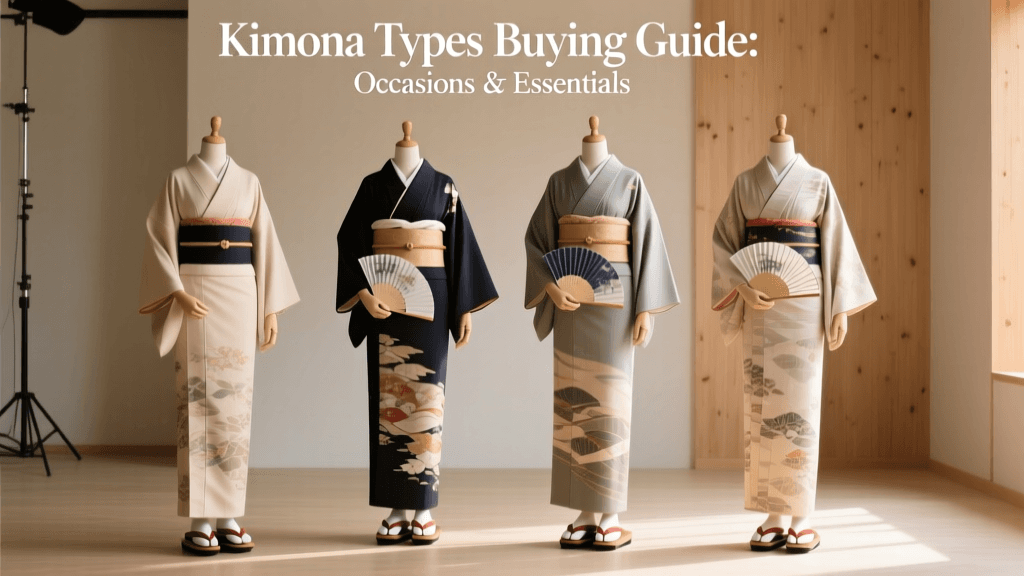
Before making a purchase, it is crucial to understand where different kimono fall on the spectrum of formality. Wearing a highly formal garment to a casual event, or vice versa, is considered a faux pas in traditional Japanese culture. Below is a comparison chart to help you identify the right type for your intended occasion.
| Kimono Type | Formality Level | Sleeve Length | Best Occasion | Average Cost (USD) |
|---|---|---|---|---|
| Yukata | Casual | Standard (approx. 49cm) | Summer festivals, lounging | $30 - $150 |
| Komon | Informal / Everyday | Standard (approx. 49cm) | Casual outings, classes | $50 - $400 |
| Houmongi | Semi-Formal | Standard (approx. 49cm) | Weddings, tea ceremonies | $300 - $2,500+ |
| Furisode | Highly Formal | Long (100cm - 114cm) | Coming of Age Day, weddings | $1,000 - $5,000+ |
Yukata: The Gateway to Summer Festivals
The yukata is the most accessible and widely recognized form of Japanese clothing globally. Originally worn as a bathrobe by the nobility during the Heian period, it evolved into the standard summer garment for all classes. Yukata are made from unlined cotton or hemp, making them breathable and perfect for hot, humid weather. Because they are informal, they are worn with a simple 'hanhaba' (half-width) obi and geta (wooden sandals) without tabi socks. When shopping for a yukata, look for high-quality cotton that feels substantial rather than flimsy. Modern retail shops often sell yukata sets (which include the kimono, obi, and geta) for around $100 to $150, making them an excellent starting point for beginners.
Komon: The Canvas of Everyday Elegance
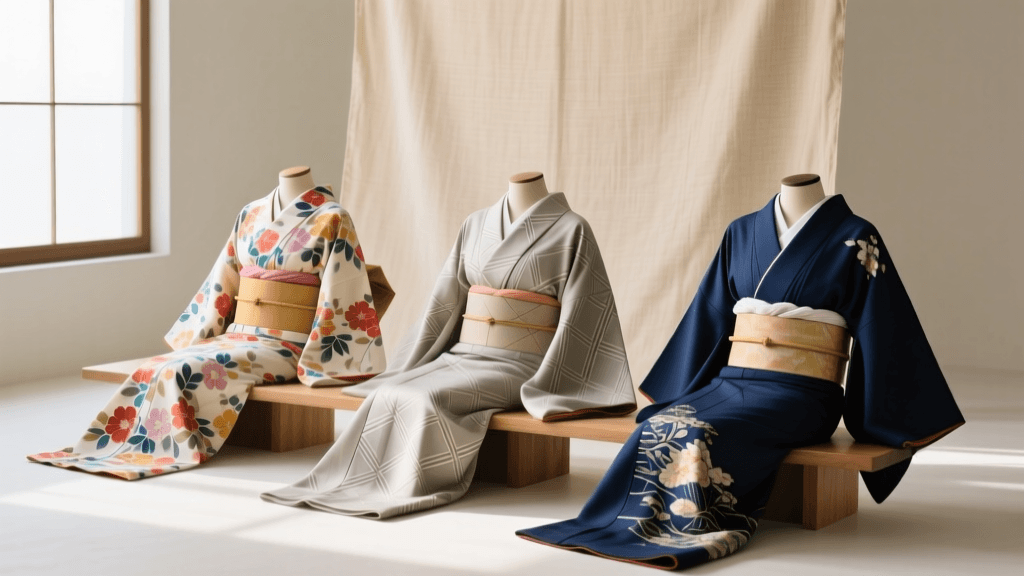
Komon translates to 'fine pattern' and refers to kimono featuring a repeating design that covers the entire garment. Unlike more formal kimono, the patterns on a komon do not align at the seams. This makes them highly versatile and suitable for everyday wear, casual dining, or attending cultural classes like ikebana or pottery. Komon can be made from silk, wool, or modern synthetic blends. Vintage silk komon are incredibly abundant in Japanese recycle shops and can be purchased for as little as $30 to $100. When buying a komon, pay attention to the scale of the pattern; smaller, more subdued patterns are generally easier to style and can be dressed up slightly with a more formal obi.
Houmongi: The Standard of Semi-Formal Grace
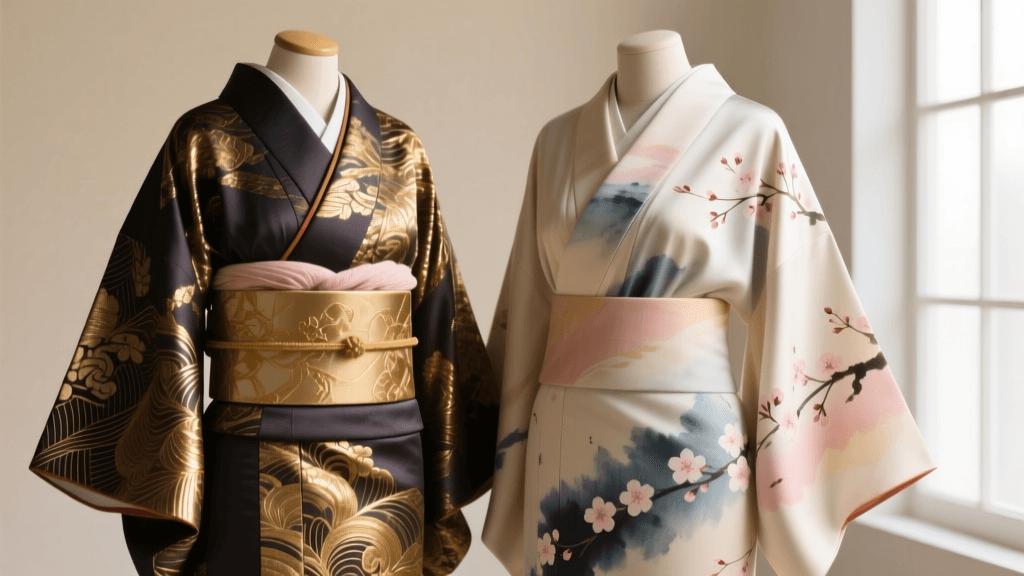
The houmongi, meaning 'visiting wear,' is the workhorse of a formal kimono wardrobe. It is characterized by 'eba-moyo,' a technique where the dyed or embroidered patterns flow continuously across the seams, creating a unified picture when the kimono is laid flat. Houmongi are appropriate for a wide range of semi-formal events, including attending weddings as a guest, participating in tea ceremonies, and celebrating holidays. Because of the complex dyeing process and the high-quality silk used, new houmongi are quite expensive, often starting at $1,500 and reaching well over $5,000 for pieces featuring intricate Nishijin-ori weaving or Yuzen dyeing. For buyers on a budget, vintage houmongi in excellent condition can be found for $300 to $800.
Furisode: The Pinnacle of Unmarried Formality
Furisode is the most formal kimono worn by unmarried women. Its defining feature is its dramatically long, swinging sleeves, which historically were believed to ward off evil spirits and express deep emotion. The sleeves typically measure between 100cm and 114cm in length. Furisode are adorned with lavish, auspicious motifs such as cranes, pine trees, and flowing water, often accented with heavy gold and silver leaf. Today, they are primarily worn during 'Seijin no Hi' (Coming of Age Day) and by bridesmaids at traditional weddings. Due to their specialized use and the sheer amount of fabric and artistry required, furisode are the most expensive type of kimono. Purchasing a new, custom-tailored furisode ensemble can easily exceed $10,000, though vintage options are available for $800 to $2,000.
Decoding Kimono Measurements and Sizing
Unlike Western clothing, kimono are not sized by small, medium, or large. They are constructed using a straight-line cutting method, which allows for significant adjustments when dressing. As noted by the Metropolitan Museum of Art, this structural approach means that the width of the garment is generally forgiving, but the length and arm span must be carefully considered. When buying a kimono, you must understand two critical measurements:
- Mitake (Length): This is the measurement from the back of the neck to the hem. The ideal mitake is roughly your total height minus 10 centimeters. For example, if you are 160cm tall, look for a kimono with a mitake of around 150cm. The extra length is folded and tied at the waist with a 'koshihimo' (tying cord) to create the 'ohashori' fold.
- Yuki (Arm Span): This is measured from the center back of the neck, across the shoulder, and down to the wrist. To find your ideal yuki, measure from the prominent bone at the base of your neck, over your shoulder, and down your arm. A standard yuki is around 64cm to 66cm, but taller individuals will need to seek out custom or specifically sized vintage pieces.
Where to Buy: New vs. Vintage (Recycle Shops)
The modern kimono market is divided primarily into new, bespoke garments and the thriving vintage market. For those seeking brand-new, authentic kimono, Japanese department stores like Mitsukoshi, Takashimaya, and Daimaru offer dedicated kimono floors. Here, you can commission custom pieces, select your own fabrics, and receive professional dressing lessons. However, the barrier to entry is high, both in terms of cost and language.
Conversely, the vintage market, known in Japan as 'recycle shops,' is a treasure trove for international buyers and collectors. Chains like Tansuya and Chicago have dozens of locations across Tokyo and Kyoto. These shops sort, clean, and price vintage kimono based on condition, material, and rarity. Shopping at recycle shops is not only budget-friendly but also an act of sustainable fashion, giving a second life to garments that might otherwise be forgotten. When buying online from auction sites or specialized vintage exporters, always request detailed photos of the lining, the hem, and the underarms, as these areas are most prone to hidden damage.
Vintage Inspection Checklist
If you are purchasing a vintage silk kimono, use this checklist to ensure you are getting a quality garment:
- The Collar (Eri): Check for heavy makeup stains or yellowing around the neckline. While the collar can be replaced, it adds to your restoration costs.
- The Underarms: Inspect the inner lining under the arms for sweat stains or fabric degradation, which is common in older silk.
- The Hem (Suso): Look for mud splatters, fraying, or white stress marks where the fabric folds at the bottom.
- The Lining (Uraji): Ensure the inner silk lining is not brittle or tearing, as replacing a full lining is an expensive and specialized tailoring job.
- Odor: Vintage kimono often carry the scent of camphor or old cedar. While airing them out usually resolves this, avoid garments with deep-set mildew smells, as they are nearly impossible to remove from silk.
Budgeting for the Full Ensemble
Buying the kimono itself is only the first step. To wear it properly, you must budget for the essential accessories. The most expensive accessory is the 'obi' (the sash). A formal 'fukuro obi' can cost as much as the kimono itself, while a casual 'nagoya obi' might range from $50 to $200. Additionally, you will need an 'obiage' (silk scarf tied above the obi), an 'obijime' (decorative cord), a 'datejime' (under-belt), several 'koshihimo' (tying cords), a 'juban' (under-kimono), and 'tabi' (split-toe socks). When calculating your budget, always add an extra $150 to $300 to cover these foundational dressing tools.
Conclusion: Preserving a Living Tradition
Acquiring a kimono is a deeply rewarding experience that connects you to centuries of Japanese textile history. Whether you opt for a breezy cotton yukata for a summer evening or invest in a breathtaking vintage houmongi for a formal tea gathering, understanding the rules of formality, sizing, and condition will ensure your purchase is both culturally respectful and personally satisfying. As highlighted by the extensive research on kimono craftsmanship at the Victoria and Albert Museum, these garments are masterpieces of design and engineering. By supporting both traditional artisans and the sustainable vintage market, buyers play a vital role in keeping this magnificent sartorial tradition alive for future generations.