Yunjin Brocade & Huaji Loom Weaving Techniques in 2026
The Resurgence of Imperial Silk in 2026
In 2026, the global fashion landscape has seen an unprecedented surge in the Xin Zhongshi (new Chinese style) movement, driving a renaissance for traditional Asian textiles. At the absolute pinnacle of this hierarchy sits Yunjin brocade, a fabric so luxurious and technically complex that it historically took two weavers an entire day to produce just five centimeters. Originating from Nanjing and revered during the Ming and Qing dynasties for imperial dragon robes, Yunjin represents the zenith of Chinese traditional looms and ancient weaving techniques. Today, understanding the mechanics of the Huaji drawloom is not just an exercise in historical appreciation; it is essential for collectors, designers, and cultural enthusiasts seeking authentic heritage garments in the modern market.
The Architectural Marvel of the Huaji Drawloom
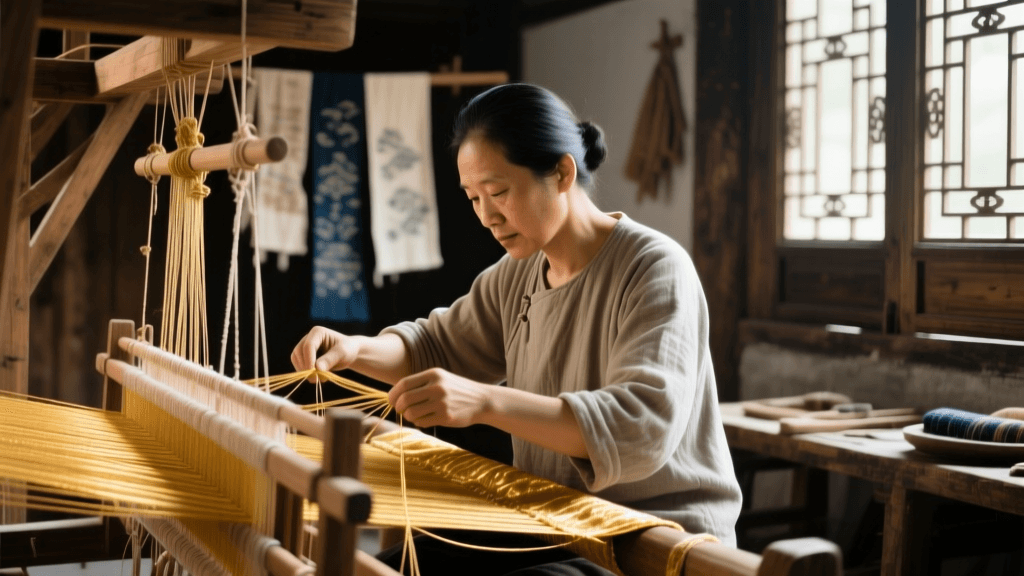
Unlike standard floor looms or pedal looms used for basic silk weaves, the Huaji (花楼) drawloom is a massive, multi-story wooden structure that functions as an ancient analog computer. Measuring approximately 5.6 meters in length and 4 meters in height, the Huaji loom requires a two-person operation. The weaver sits at the lower level, managing the shuttle and the beat-up of the weft threads, while the 'drawboy' (or drawgirl) sits on the upper platform, known as the huajiao.
The upper platform houses the intricate system of draw cords that control the warp threads. This system allows for the creation of massive, non-repeating, and highly complex asymmetrical patterns—such as sprawling dragons, phoenixes, and elaborate cloud motifs—that are impossible to achieve on standard harness looms. According to the UNESCO Intangible Cultural Heritage registry, this specific drawloom technology is a masterpiece of human ingenuity, preserving a continuous lineage of craftsmanship that dates back over 1,600 years.
The Ancient Binary Code: Pattern Drafting (Jie Ben)
Before a single thread is woven on the Huaji loom, master artisans must engage in Jie Ben, the meticulous process of pattern drafting. The designer translates a visual motif into a grid system, which is then converted into a sequence of knotted draw cords. This knotting system acts remarkably like a binary code or an early punch-card system, predating the European Jacquard loom by centuries.
When the drawgirl pulls specific cords based on the weaver's rhythmic chanting, the corresponding warp threads are lifted. This creates the 'shed' through which the shuttle passes. Because a single Yunjin pattern can require hundreds of thousands of individual cord lifts, the mental and physical synchronization between the two weavers is paramount. A single mispulled cord can ruin the structural integrity of a motif that took hours to weave.
Materials of the Gods: Gold, Silver, and Peacock Feathers
What truly separates Yunjin from other silk textiles, such as Suzhou Song brocade or Shu brocade, is its extravagant use of materials. As documented by the Metropolitan Museum of Art's Heilbrunn Timeline of Art History, Chinese silk weaving has long incorporated precious metals, but Yunjin takes this to an extreme. Artisans use genuine gold and silver foil, sliced into microscopically thin threads and wrapped around a silk core.
In 2026, the most highly sought-after Yunjin pieces also incorporate peacock feather yarn. The iridescent eye of the peacock feather is carefully stripped, twisted with silk, and woven into the fabric to create a shimmering, color-shifting effect that synthetic dyes and modern metallic yarns simply cannot replicate. This integration of organic and precious materials gives the fabric its famous moniker: 'an inch of Yunjin is worth an inch of gold.'
Loom Technology Comparison Chart
To understand the value of Huaji-woven textiles in today's market, it is helpful to compare the traditional drawloom with other weaving technologies available to modern textile producers.
| Feature | Huaji Drawloom (Traditional) | Standard Multi-Harness Floor Loom | Modern Electronic Jacquard Loom |
|---|---|---|---|
| Operation | 2 Weavers (Synchronized) | 1 Weaver | Automated / 1 Technician |
| Pattern Complexity | Unlimited / Free-form / Asymmetrical | Geometric / Repeating / Limited by harnesses | High, but constrained by digital file repeats |
| Daily Output | 5 - 6 centimeters | 1 - 2 meters | 50+ meters |
| Material Compatibility | Heavy metallics, feathers, thick raw silk | Standard cotton, linen, fine silk | Standard synthetics, fine mercerized silk |
| 2026 Market Value | 15,000 - 35,000 RMB per meter | 500 - 1,500 RMB per meter | 100 - 400 RMB per meter |
Sourcing and Experiencing Yunjin Weaving in 2026
For collectors and designers looking to source authentic Yunjin brocade or experience the Huaji loom firsthand in 2026, Nanjing remains the undisputed epicenter. However, navigating the market requires a discerning eye, as machine-made imitations using synthetic metallic yarns flood the e-commerce space.
Where to Buy Authentic Yunjin
- Nanjing Yunjin Museum & Institute: The most reliable source for certified, hand-loomed Yunjin. Pieces purchased here come with a certificate of authenticity detailing the master weaver, the loom used, and the material composition. Expect to pay upwards of 20,000 RMB for a standard panel.
- Bespoke Xin Zhongshi Atelier: High-end fashion houses in Shanghai and Beijing now offer bespoke services where clients can select specific Huaji-woven Yunjin accents for modern garments. A custom jacket featuring genuine hand-loomed Yunjin lapels and cuffs typically starts at 85,000 RMB in 2026.
Workshops and Masterclasses
For those wishing to understand the tactile reality of the Huaji loom, several heritage centers in Nanjing and Suzhou now offer immersive workshops. A half-day masterclass, which includes an introduction to Jie Ben drafting and a guided session operating the shuttle on a simplified drawloom, costs approximately 1,200 RMB per person in 2026. These sessions are highly recommended for fashion students and textile historians.
Archival Care and Maintenance for Brocade Garments
Owning a garment woven on a traditional Huaji loom is an investment in wearable antiquity. Because Yunjin incorporates delicate organic materials like peacock feathers and pure gold leaf, standard dry cleaning methods will destroy the textile. To preserve these garments for future generations, follow these strict archival guidelines:
Storage Environment
- Humidity Control: Maintain a stable relative humidity between 50% and 55%. Fluctuations can cause the silk core of the gold threads to expand and contract, leading to the flaking of the precious metal foil.
- Light Exposure: UV radiation is the enemy of natural dyes. Store garments in a dark environment, and when displaying them, use UV-filtering glass and limit ambient lighting to under 50 lux.
Handling and Folding
Never hang a heavy Yunjin brocade jacket or robe on a standard hanger; the sheer weight of the metallic threads will warp the silk warp over time. Instead, pad the interior with acid-free tissue paper to prevent hard creases, and store the garment flat in a cedarwood chest. Cedar naturally repels moths and insects without the need for chemical desiccants or mothballs, which can tarnish the silver and gold threads.
The Future of the Huaji Loom
As we move through 2026, the survival of the Huaji drawloom relies on a delicate balance between strict historical preservation and modern commercial viability. While the daily output of five centimeters will never satisfy fast fashion, the growing appreciation for slow, intentional, and culturally rich garments ensures that the clatter of the wooden drawloom will continue to echo through the workshops of Nanjing. By understanding the immense technical and material value of these ancient weaving techniques, modern enthusiasts play a vital role in keeping China's most luxurious textile tradition alive.