Mythology-Inspired Hanfu: Dressing as Chinese Deities
The Intersection of Chinese Mythology and Traditional Garments
Chinese mythology is a vast, intricate tapestry of gods, spirits, and legendary heroes that has captivated imaginations for millennia. From the ancient texts of the Shanhaijing (Classic of Mountains and Seas) to the epic adventures of Journey to the West, these stories are deeply intertwined with the visual culture of historical China. For modern Hanfu enthusiasts, translating these mythological figures into wearable art is one of the most exciting frontiers of traditional dress. Dressing as a deity or spirit requires more than just putting on a historical garment; it demands an understanding of color symbolism, textile weight, and the ethereal silhouettes that separate mortals from the divine.
According to the Encyclopedia Britannica's comprehensive guide to Chinese dress, the motifs and colors used in historical garments were strictly regulated and deeply symbolic, often denoting cosmic alignment, elemental forces, and spiritual rank. When we adapt these principles for mythology-inspired Hanfu, we are participating in a long lineage of visual storytelling. Whether you are preparing for a cultural festival, a Hanfu convention, or an elaborate photoshoot, this guide will provide actionable advice on how to accurately and beautifully style traditional clothing inspired by Chinese legends.
Signature Styles of Popular Mythological Figures
Before sourcing your garments, it is essential to understand the visual codes associated with specific mythological archetypes. Below is a comparison chart detailing the signature garments, color palettes, and estimated budgets for four iconic figures in Chinese mythology.
| Mythological Figure | Signature Garment | Key Colors | Fabric Recommendation | Est. Budget (USD) |
|---|---|---|---|---|
| Chang'e (Moon Goddess) | Qixiong Ruqun (Chest-high skirt) | Silver, Pearl White, Icy Blue | Silk Organza, Chiffon | $80 - $150 |
| Huli Jing (Fox Spirit) | Beizi (Long outer jacket) & Songku | Crimson, Gold, Charcoal | Jacquard Brocade, Faux Fur Trim | $120 - $250 |
| Long Wang (Dragon King) | Yuanlingpao (Round-collar robe) | Imperial Yellow, Azure, Deep Teal | Heavy Song Brocade, Damask | $150 - $350+ |
| Guanyin (Bodhisattva) | Dahu (Sleeveless vest) & Mamianqun | Lotus Pink, Pure White, Jade Green | Linens, Soft Mulberry Silk | $90 - $180 |
Chang'e: The Ethereal Moon Goddess
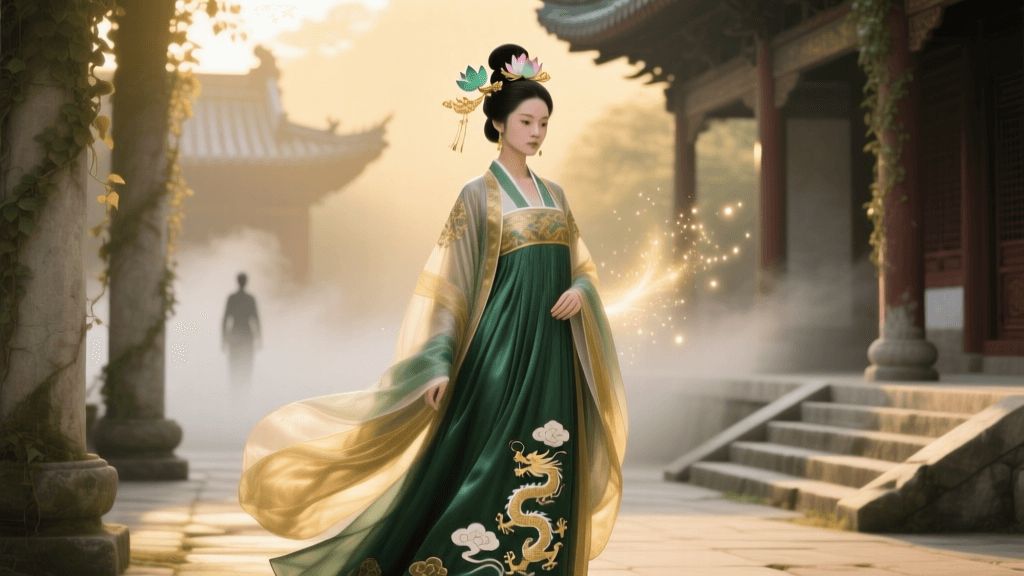
Chang'e, the goddess who resides on the moon, is defined by her weightless, floating silhouette. To achieve this, the Qixiong Ruqun (chest-high wrap skirt) is your foundational garment. The key to a mythological Chang'e look is the Pibo, a long silk ribbon draped over the arms. Actionable Tip: Do not settle for standard-sized ribbons. For a dramatic, gravity-defying effect suitable for outdoor photography, your Pibo should measure at least 280 cm in length and 40 cm in width. Look for silk organza or pearlescent chiffon, which catch the wind and light beautifully. Seek out skirts with subtle silver-foil moon rabbit or osmanthus flower embroidery.
Huli Jing: The Enigmatic Fox Spirit
The Nine-Tailed Fox Spirit is a creature of immense power, seduction, and mystery. The styling here leans towards the Song and Ming dynasty silhouettes, utilizing the Beizi (a long, open-front outer jacket) layered over a Jiaoling Youren (cross-collared top) and wide-leg Songku trousers. To capture the fox aesthetic, focus on the collar layering and sleeve lengths. The inner collar should peek out precisely 2 to 3 centimeters above the outer jacket. Incorporate subtle faux-fur trims on the cuffs or hem of the Beizi, and look for jacquard fabrics featuring hidden fox-fire or peony motifs in deep crimsons and metallic golds.
Long Wang: The Majestic Dragon King
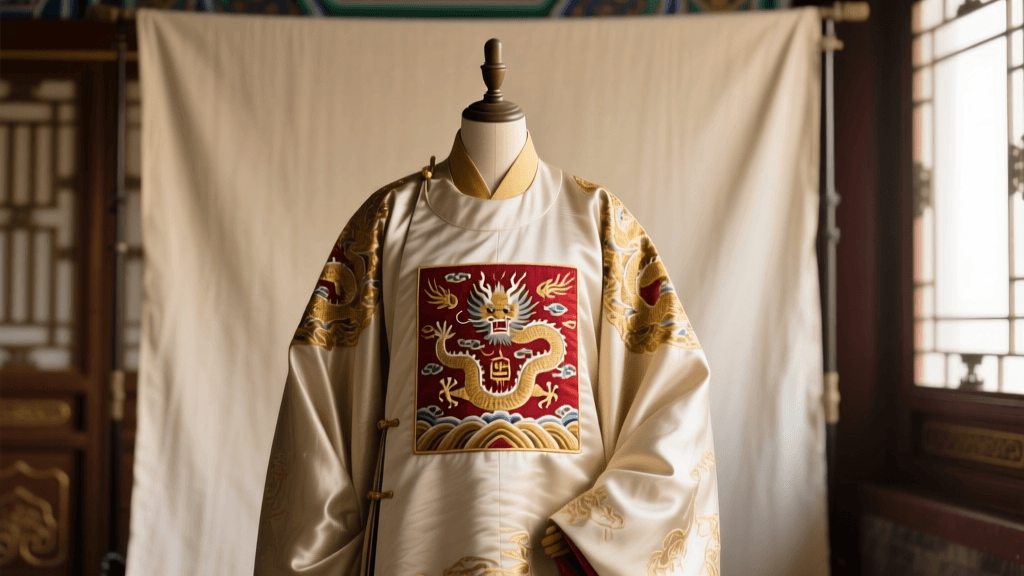
Rulers of the seas and weather, the Dragon Kings command authority. Their wardrobe is rooted in the Yuanlingpao (round-collar robe), often worn with a leather or stiffened fabric belt. The defining feature of a Dragon King ensemble is the textile pattern. Look for Mang (four-clawed dragon) or Feiyu (flying fish) patterns woven directly into heavy brocades. The fabric must have structural weight to convey majesty; flimsy materials will ruin the illusion. Dark teals, azure blues, and imperial yellows are appropriate, often accented with wave and cloud motifs at the hem.
Practical Guide: Sourcing and Styling Your Mythological Hanfu
Fabric Selection and the Importance of Silk
The material you choose dictates how the garment moves, drapes, and photographs. For deities associated with the heavens or water, lightweight, translucent fabrics are paramount. For earthly or underworld deities, heavier, structured brocades are required. The historical significance of Chinese silk cannot be overstated in this context. As noted by UNESCO's Intangible Cultural Heritage list, Chinese sericulture and silk craftsmanship involve complex, traditional techniques that produce textiles with unmatched luster and durability. When shopping for high-end mythology Hanfu, look for authentic mulberry silk or Xiangyunsha (gambiered Canton gauze) for wealthy, dragon-inspired ensembles. While polyester jacquards are budget-friendly and accessible for beginners, they lack the breathability and natural sheen required for a truly divine appearance.
Essential Accessories and Hair Ornaments
A mythological Hanfu outfit is incomplete without its corresponding headwear and jewelry. The Buyao (step-shake hairpin) is essential for female deities. These pins feature dangling elements that tremble with the wearer's movements, mimicking the flickering of spiritual energy.
- For Moon Goddesses: Opt for silver-plated brass hairpins adorned with freshwater pearls and rabbit or crescent moon motifs. Budget around $25-$45 for high-quality copper gilding.
- For Fox Spirits: Choose asymmetrical hairpieces featuring red agate, gold filigree, and dangling tassels that mimic the swish of a fox's tail.
- For Dragon Kings: Male or masculine-presenting deities should utilize Guan (hair crowns) made of carved resin or faux jade, secured with a single, ornate hair stick. A jade-textured belt pendant (Yujin) is also mandatory to weigh down the robes and add a dignified sway to your walk.
Budgeting for a Deity-Inspired Wardrobe
Building a mythology-inspired Hanfu wardrobe requires careful financial planning, as the layering and accessories can quickly escalate costs. Here is a structured breakdown of what to expect when budgeting for a complete, convention-ready deity ensemble:
- Base Garments (Inner top and skirt/trousers): $40 - $80. Cotton or polyester blends are acceptable here as they are mostly hidden.
- Outerwear (Beizi, Pibo, or Yuanlingpao): $60 - $150. This is where you should invest your money. High-quality brocades or real silk organza will elevate the entire look.
- Footwear (Cloud shoes or embroidered boots): $25 - $50. Ensure the toe curvature matches the historical Yuntouxie (cloud-head shoes) silhouette.
- Hair and Makeup (Wigs, Buyao, Huadian): $50 - $120. Do not forget the Huadian (forehead ornament), which is crucial for celestial beings. Authentic lacquer or mother-of-pearl appliqués cost around $15 each.
When curating a mythological look, the silhouette and movement of the fabric are just as important as the historical accuracy of the cut. The gods of Chinese legend are defined by their mastery over the elements; your clothing should reflect the wind, water, and fire they command.
Theatrical Elements: Makeup and Posture
To truly embody a figure from Chinese mythology, one must look beyond the textiles and consider theatrical presentation. The Metropolitan Museum of Art's Heilbrunn Timeline of Art History highlights how historical costume and theatrical representation have always influenced one another in Chinese culture. For a Huli Jing (Fox Spirit), elongate the eyeliner sharply towards the temples and use a deep crimson lip stain applied in a gradient (darker in the center, fading outwards) to mimic a traditional, alluring pout. For celestial maidens, use pale, luminous foundation and dust the cheekbones and collarbones with fine cosmetic pearl powder to simulate an otherworldly glow.
Posture is equally vital. Deities do not slouch. When wearing a Yuanlingpao or a heavily layered Mamianqun, practice walking from the hips, keeping the upper body entirely still. This allows the heavy pleats of the skirt and the wide sleeves of the robe to glide smoothly, creating the illusion that you are hovering just above the ground rather than walking upon it.
Conclusion
Dressing as a deity from Chinese mythology is a profound way to engage with the Asian Traditions of textile arts, folklore, and spiritual symbolism. By paying close attention to the specific measurements of your Pibo, the structural weight of your brocades, and the symbolic color palettes of the pantheon, you can transform a standard Hanfu outfit into a breathtaking mythological tableau. Whether you are channeling the serene grace of Chang'e or the formidable power of the Dragon King, the key lies in respecting the historical garments while embracing the fantastical elements of the legends they represent.