Mastering Kyo-Yuzen: Inside Kyoto's Kimono Dyeing Workshops
The Legacy of Kyo-Yuzen: Kyoto's Crown Jewel of Textile Art
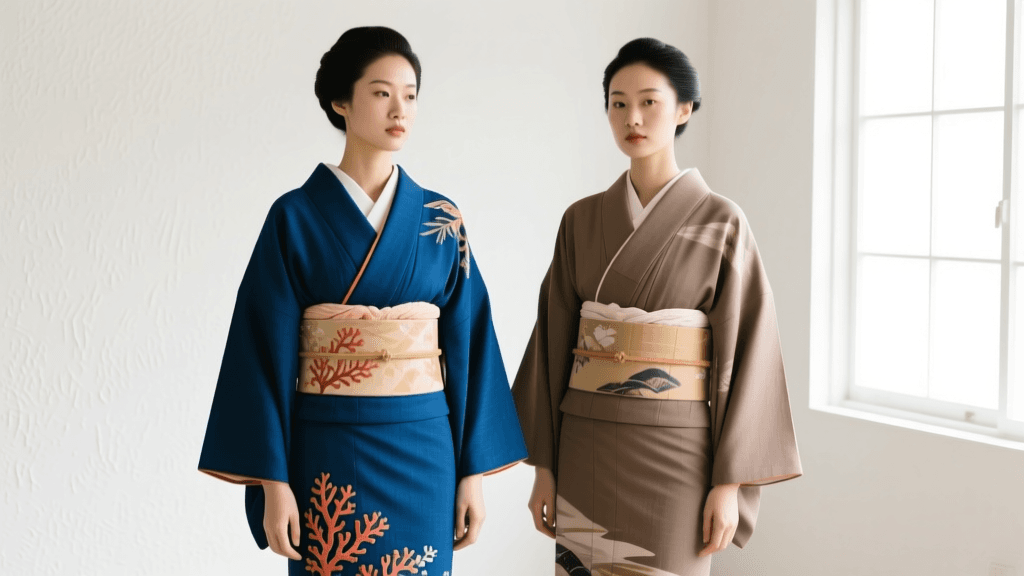
The legacy of Kyo-Yuzen dates back to the Genroku era (1688–1704), a period of immense cultural flourishing in Japan. Named after Miyazaki Yuzensai, a fan painter from Kyoto, this revolutionary technique allowed for the creation of pictorial, free-flowing designs on silk, breaking away from the rigid geometric patterns of earlier weaving methods. Today, Kyo-Yuzen remains the pinnacle of Japanese textile artistry, characterized by its vibrant, multi-colored motifs and exquisite use of gold and silver leaf. According to the Victoria and Albert Museum's Kimono exhibition, the evolution of these dyeing techniques fundamentally transformed the visual landscape of Japanese fashion, turning the kimono into a canvas for wearable art. Unlike the more subdued, nature-inspired Kaga-Yuzen of Kanazawa, Kyo-Yuzen embraces opulence, featuring bold contrasts, elaborate embroidery accents, and a diverse color palette that reflects the cosmopolitan energy of Kyoto's historical merchant class.
The Artisan Process: From White Silk to Wearable Art
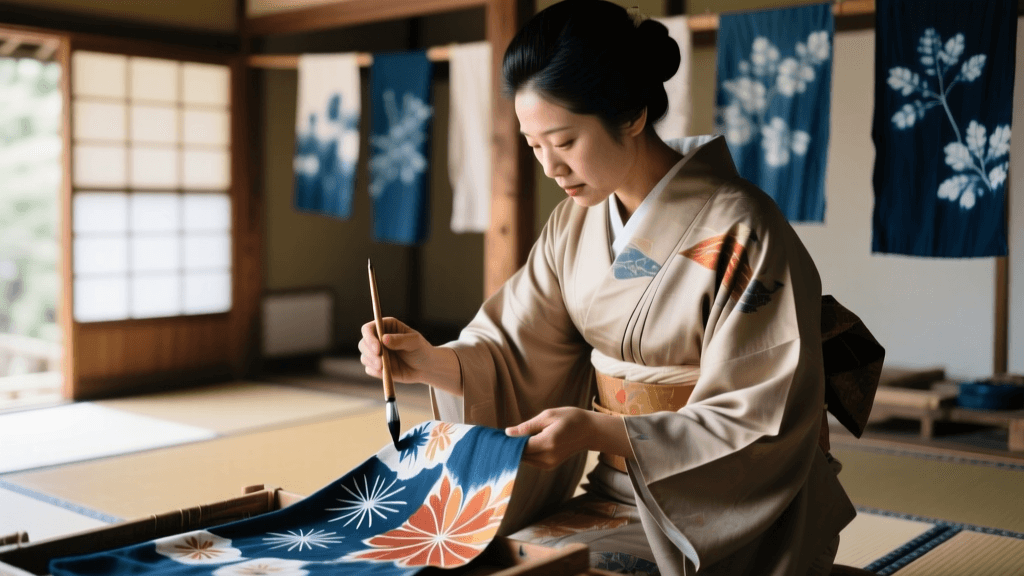
The creation of a single Kyo-Yuzen kimono is a monumental task that involves over twenty distinct steps, often requiring the collaborative effort of multiple specialized artisans. The process begins with aobana (dayflower) sketching. The artisan uses the blue juice of the dayflower, which is water-soluble, to draw the design directly onto the white silk. This ensures that the guidelines will wash away completely later. Next comes the crucial itome-nori (rice paste resist) application. Using a specialized conical metal tip, the artisan applies a fine line of glutinous rice paste along the outlines of the sketch. This paste acts as a dam, preventing colors from bleeding into one another. Master artisans can control the width of this paste line to an astonishing precision of 0.5 to 1 millimeter, a skill that takes decades to perfect.
Once the paste dries, the irosashi (coloring) phase begins. Artisans use a variety of brushes, from broad hake brushes for gradients to fine menso brushes for intricate details. They mix synthetic and natural dyes with a soybean milk base, which helps the pigment bind to the silk fibers. After the colors are applied and dried, the fabric undergoes jizome (background dyeing). The entire piece is then steamed at exactly 100 degrees Celsius for 20 to 40 minutes. This high-heat steaming opens the silk pores, allowing the dyes to penetrate deeply and permanently. Finally, the silk is washed. Historically, this was done in the cold, rushing waters of the Kamo River—a practice known as yuzen-nagashi. Today, to comply with environmental protection laws and ensure consistent water quality, most workshops use large, temperature-controlled indoor water tanks with filtered, flowing water to rinse away the rice paste and excess dye, revealing the crisp, white outline that defines the Yuzen style.
'The beauty of Yuzen lies not just in the vibrancy of the colors, but in the pristine, untouched white of the silk that outlines every motif, a testament to the artisan's mastery of resist dyeing.'
Essential Tools of the Yuzen Artisan
To achieve the breathtaking precision required in Kyo-Yuzen, artisans rely on a highly specialized toolkit. The brushes are paramount; artisans use menso brushes, made from the fine hair of weasels or horses, which can taper to a microscopic point for detailing facial features or flower stamens. The rice paste is extruded through a tsutsu—a waterproof paper cone tipped with a small metal pipe. The diameter of the metal pipe dictates the thickness of the resist line, with master artisans keeping a collection of over fifty different tsutsu tips ranging from 0.3mm to 3.0mm. The silk itself is stretched tightly over a wooden frame called a shinshi, utilizing small metal hooks that pierce the fabric's selvage to maintain perfect tension, ensuring the dye flows evenly across the microscopic valleys of the silk weave.
Experiencing the Craft: Top Artisan Workshops in Kyoto
For travelers and textile enthusiasts, Kyoto offers several exceptional artisan workshops where you can observe this meticulous process and even try your hand at dyeing. The Official Kyoto Travel Guide frequently highlights these cultural experiences as essential for understanding the city's artisanal heritage. Two of the most prominent workshops open to the public are Marumasu-Nishimuraya and Some-no-Koryukan. Marumasu-Nishimuraya, located near the Okazaki shrine area, operates out of a traditional machiya (wooden townhouse) and offers comprehensive courses ranging from simple handkerchief dyeing to multi-day kimono panel creation. Some-no-Koryukan, situated near the Horikawa river, provides a more museum-like experience with extensive historical displays alongside hands-on studios.
Workshop Comparison Chart: Planning Your Visit
| Workshop Name | Location | Duration | Cost (JPY / USD) | Output Item | Booking Lead Time |
|---|---|---|---|---|---|
| Marumasu-Nishimuraya | Okazaki, Sakyo Ward | 90 - 120 mins | ¥4,500 / ~$30 | Silk Furoshiki or Stole | 2 - 4 Weeks |
| Some-no-Koryukan | Horikawa, Kamigyo Ward | 60 - 90 mins | ¥3,000 / ~$20 | Cotton Handkerchief | 1 - 2 Weeks |
| Kyoto Yuzen Center | Nishijin Textile Center | 120+ mins | ¥15,000 / ~$100 | Full Obi Panel | 2 - 3 Months |
Practical Guide: Booking, Etiquette, and Costs
When planning your visit to a Kyo-Yuzen workshop, practical preparation is key. Booking must be done well in advance, particularly during the peak tourist seasons of spring (cherry blossom season in April) and autumn (foliage season in November). It is highly recommended to secure your reservation 2 to 3 months prior to your arrival. For a standard 90-minute handkerchief or furoshiki (wrapping cloth) dyeing experience, costs generally range from 3,000 to 5,000 JPY (approximately $20 to $35 USD). If you wish to dye a full obi sash or a kimono panel, expect to pay between 20,000 and 50,000 JPY, and the process will require multiple sessions spanning several days. The Japan National Tourism Organization (JNTO) advises international visitors to confirm whether the workshop offers English-language instruction or visual guidebooks, as the technical terminology of Yuzen dyeing can be complex to translate on the fly.
Etiquette in these traditional spaces is paramount. Always follow these guidelines to ensure a respectful and productive visit:
- Punctuality: Arrive at least 15 minutes early to allow time for changing into the provided protective aprons and arm covers.
- Photography: While photography is usually permitted in the museum or retail sections, you must always ask for explicit permission before photographing the working artisans or their proprietary design sketches.
- Attire: Wear clean, dark clothing that you do not mind getting stained, as Yuzen dyes are highly pigmented and permanent.
- Footwear: Bring a pair of clean, white cotton socks; many traditional workshops require you to remove your shoes before stepping onto the tatami mats or raised wooden platforms where the silk is stretched.
Caring for Your Yuzen-Dyed Masterpiece
Caring for a genuine Kyo-Yuzen dyed garment requires specialized knowledge. Because the silk is dyed with a soybean milk binder and features delicate rice-paste outlines, standard dry cleaning or home washing will ruin the fabric. Water spotting is a major risk; even a few drops of rain can leave permanent rings on the silk. If your Yuzen kimono becomes soiled, it must be taken to a specialized shiro-arai (traditional kimono cleaner) who understands the chemical composition of the dyes and the structural integrity of the silk.
When storing your Yuzen piece, avoid plastic garment bags, which trap moisture and cause yellowing. Instead, wrap the garment in acid-free tatoushi paper and store it in a dark, climate-controlled cedar chest (tansu) with natural camphor to deter insects without introducing harsh chemical odors that could degrade the vibrant Yuzen pigments. By understanding the immense labor and artistry behind Kyo-Yuzen, visitors not only gain a profound appreciation for Japanese traditional crafts but also help sustain the artisan workshops that keep this magnificent heritage alive.